
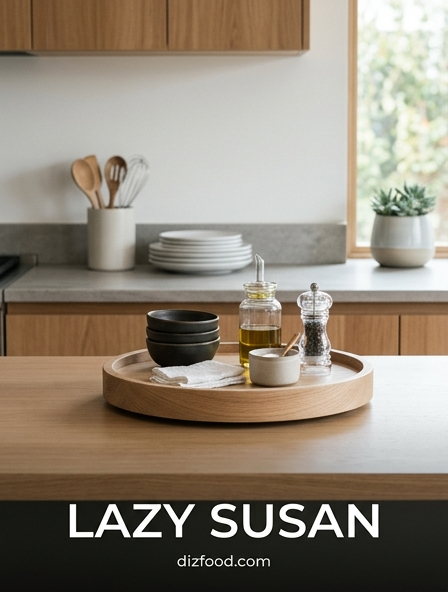
The Problem with Inaccessible Deep Cabinets
Standard kitchen cabinetry often includes deep, cavernous spaces that quickly become the "black holes" of the home. When a shelf extends beyond arm's length, the items placed at the very back are effectively lost to time. This lack of visibility leads to several chronic organizational issues, such as purchasing duplicate ingredients because the original container was hidden behind larger boxes. Furthermore, the physical strain of crouching and reaching into dark corners can be significant, especially for those with mobility issues or back pain. These "dead zones" are particularly common in corner units where the architecture of the cabinet prevents easy access from the door.
The primary challenges associated with deep, static shelving include:
- Reduced inventory awareness leading to food waste and expired products.
- Physical discomfort and potential injury from awkward reaching maneuvers.
- Inefficient use of square footage, as the back half of the cabinet remains underutilized.
- Constant clutter resulting from moving front items to reach those in the rear.
Ultimately, traditional deep cabinets fail to support the fast-paced flow of a modern kitchen, turning meal preparation into a frustrating search mission rather than an efficient process.
Benefits of Installing a Lazy Susan
Integrating a Lazy Susan into your kitchen layout offers a transformative solution to the aforementioned storage frustrations. By utilizing a 360-degree rotating platform, these tools bring the back of the cabinet directly to the front, ensuring that every inch of storage space is functional and visible. This mechanical rotation eliminates the need to rummage through layers of containers, significantly speeding up the cooking and cleaning processes. Beyond mere accessibility, Lazy Susans promote a sense of order and aesthetic cleanliness that static shelves struggle to maintain.
The advantages of this installation can be summarized through several key improvements to the kitchen environment:
- Ergonomic Efficiency: Minimizes the need for deep bending or stretching to reach heavy or small items.
- Maximum Visibility: Provides a full view of all contents with a single spin, preventing items from being forgotten.
- Better Inventory Management: Allows for quick visual checks before grocery shopping, reducing unnecessary spending.
- Space Optimization: Effectively utilizes corner "dead space" that would otherwise be wasted or cluttered.
By shifting from a linear storage model to a circular one, homeowners can reclaim their kitchen's utility and improve the overall flow of their culinary workspace.
Selecting the Perfect Turntable Size
Choosing the correct dimensions for a Lazy Susan is critical for both functionality and cabinet longevity. If a turntable is too large, it will scrape against the cabinet walls or prevent the door from closing. Conversely, a unit that is too small leaves excessive wasted space around the perimeter, defeating the purpose of the upgrade. You must account for the "swing" of the turntable, ensuring there is at least an inch of clearance on all sides to prevent friction. When selecting a model, consider the weight of the items you intend to store, as larger diameters often require more robust center poles or ball-bearing bases to maintain smooth movement.
The following table outlines common sizes and their typical applications in a standard kitchen environment:
| Turntable Diameter | Common Use Case | Cabinet Type |
|---|---|---|
| 10" - 12" | Spices and small condiments | Upper wall cabinets |
| 18" - 24" | Canned goods and baking supplies | Standard base cabinets |
| 28" - 32" | Pots, pans, and small appliances | Corner "blind" cabinets |
Always double-check the interior width and depth of your cabinet before purchasing to ensure a seamless fit that maximizes every available square inch.
Maximizing Vertical Space with Tiers
While a single-tier Lazy Susan solves the depth problem, it often leaves a vast amount of vertical space unused, especially in tall base cabinets or pantries. To truly optimize your storage, multi-tiered units are the gold standard. These systems feature two or three rotating platforms stacked vertically, often supported by a central telescopic pole. By stacking items, you double or triple the storage capacity within the same footprint. This is particularly effective for storing items of varying heights; for example, shorter cans can sit on a middle tier while taller olive oil bottles reside on the bottom where there is more clearance.
When implementing a tiered strategy, consider these design features:
- Adjustable Heights: Look for units where the tiers can be moved up or down to accommodate specific bottle sizes.
- Rimmed Edges: Higher walls on each tier prevent tall items from tipping over and jamming the mechanism during rotation.
- Weight Distribution: Place heavier items on the lowest tier to maintain the structural integrity and balance of the central pole.
Tiered turntables are the ultimate solution for homeowners looking to store a high volume of small to medium-sized items in a consolidated, easy-to-reach location.
Best Items to Store on a Turntable
Not every kitchen item is a perfect candidate for a Lazy Susan. The best items are those that are frequently used and relatively uniform in shape. Round containers, such as spice jars, canned goods, and condiment bottles, are ideal because they naturally fit the circular geometry of the turntable. Oils, vinegars, and sauces are also excellent choices, as these often leak or leave rings; a plastic or wooden turntable is much easier to wipe clean than the interior wood of a permanent cabinet shelf. Furthermore, small items that usually get lost in the back-like baking extracts or sprinkles-benefit immensely from the increased visibility.
Consider grouping the following categories on your rotating shelves:
- Baking Essentials: Flour canisters, sugar, baking soda, and food coloring.
- Breakfast Station: Honey, peanut butter, jam, and syrup bottles.
- Daily Spices: Salt, pepper, garlic powder, and frequently used herbs.
- Cleaning Supplies: Spray bottles, sponges, and dish soap under the sink.
Avoid storing extremely wide or rectangular items, as they can overhang the edge of the circle and catch on the cabinet frame, causing the rotation to jam or items to fall off.
Material Options for Kitchen Efficiency
Lazy Susans are available in a variety of materials, each offering different aesthetic and functional advantages. The choice of material should depend on the location of the unit and the weight of the items it will hold. For example, a turntable used for heavy cast-iron pans requires a different level of durability than one used for lightweight spices. Additionally, since kitchens are high-moisture environments, the material must be resistant to humidity and easy to sanitize. Selecting the right finish ensures that your organizational system remains beautiful and functional for years to come without warping or rusting.
Compare the most popular material options in the table below:
| Material | Pros | Cons |
|---|---|---|
| Plastic/Polymer | Affordable, easy to clean, lightweight | Can crack under heavy weight |
| Hardwood (Maple/Birch) | Aesthetically pleasing, very sturdy | Susceptible to staining and moisture |
| Stainless Steel | Modern look, rust-proof, durable | Noisier during rotation; more expensive |
| Glass | Sleek, easy to see through | Fragile; shows fingerprints easily |
For most hidden cabinet applications, high-impact polymers or hardwoods are preferred for their balance of cost and long-term resilience.
Step by Step Measuring Guide
Success in installing a Lazy Susan begins with precise measurements. Unlike a standard shelf, a turntable requires clearance for its rotational arc. Measuring only the width of the cabinet door is a common mistake that leads to purchasing a unit that cannot actually spin once inside. You must account for the narrowest point of entry as well as the widest interior diameter. If your cabinet has face frames or hinges that protrude into the opening, these must be subtracted from your total available width. Follow a disciplined approach to measurement to ensure your hardware fits the first time without the need for frustrating returns.
Use this sequence to gather your dimensions:
- Door Opening: Measure the clear width of the door opening at its narrowest point (often between the hinges).
- Interior Depth: Measure from the back wall to the inside of the front cabinet face.
- Interior Width: Measure the total side-to-side distance inside the cabinet carcass.
- Vertical Clearance: Measure from the floor of the cabinet to the ceiling or the bottom of the shelf above.
Subtract at least one to two inches from your interior width and depth measurements to determine the maximum diameter of the turntable you can install comfortably.
Organizing Strategies for Corner Cabinets
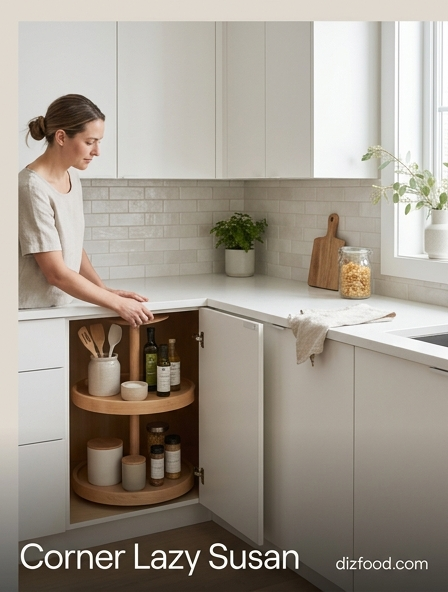
Corner cabinets are notoriously difficult to organize because of their "L" shape or deep "blind" corners. A Lazy Susan is the most effective way to reclaim this space, but it requires a strategic approach to item placement. To prevent items from falling off the back of the turntable into the "void" of the cabinet corner, always place taller, heavier items toward the center of the tray. This lowers the center of gravity and reduces centrifugal force that might push items outward. Using small bins or wedges specifically designed for Lazy Susans can also help categorize items while keeping them securely in place during a spin.
Effective strategies for these tricky zones include:
- Zone Grouping: Use one tier for savory items (soups, beans) and another for sweet (baking, snacks).
- Labeling: Place labels on the lids of jars so they are identifiable even when you are looking down at the tray.
- Weight Balancing: Distribute weight evenly across the circle to prevent the mechanism from leaning or dragging.
By treating the Lazy Susan as a series of zones rather than a single dump-all shelf, you maintain the organization long after the initial setup is complete.
Installation Tips for Smooth Rotation
A poorly installed Lazy Susan will wobble, squeak, or drag, eventually damaging the cabinet floor. The most critical factor for smooth rotation is ensuring the base or central pole is perfectly level. If the cabinet floor is sloped, use shims to level the base before screwing it down. For pole-mounted units, use a bubble level to check the vertical alignment; an angled pole will cause the shelves to drift to one side. Additionally, check the tension of the ball-bearing mechanism. Some units allow for slight adjustments to make the spin tighter or looser depending on the weight load.
For a professional-grade installation, follow these tips:
- Pre-drill Holes: Always drill pilot holes to prevent the cabinet wood from splitting during mounting.
- Clearance Check: Spin the unit manually before fully tightening screws to ensure no part of the tray hits the door or walls.
- Lubrication: Apply a small amount of food-grade silicone lubricant to the bearings if the rotation feels "gritty" out of the box.
- Secure the Hardware: Use the provided heavy-duty screws to ensure the unit doesn't detach when fully loaded with heavy cans.
Taking these extra steps during installation ensures the mechanism remains silent and effortless to use throughout the life of your kitchen.
Maintaining Your Organized Cabinet System
Even the best organizational systems require occasional maintenance to stay efficient. Over time, dust, crumbs, or spilled liquids can accumulate on the surface of the Lazy Susan or, worse, inside the ball-bearing track. A sticky bearing will hinder the rotation and make the unit feel heavy. Once every few months, it is wise to clear the shelves entirely and wipe them down with a damp cloth and mild detergent. This is also the perfect opportunity to check for expired goods and reorganize items that may have migrated from their designated zones. A clean system is a used system.
To keep your turntable in top condition, implement these simple maintenance habits:
- Quarterly Wipe-downs: Remove all items and sanitize the trays to prevent grease buildup.
- Bearing Inspection: Check for hair or debris caught in the rotating mechanism and remove it immediately.
- Inventory Purge: Discard any items that haven't been used since the last cleaning to keep the trays from becoming overcrowded.
- Hardware Check: Periodically tighten the center pole or base screws if they begin to loosen from frequent use.
Consistent care prevents mechanical failure and ensures that your kitchen remains a streamlined environment for meal preparation and storage.


Comments