
Finding the right rhythm for your kitchen and your wallet often boils down to a single choice: do you plan by the week or by the month? While weekly planning offers agility and fresh ingredients for busy households, monthly planning acts as a high-level strategy that slashes grocery bills through bulk purchasing and eliminates daily decision fatigue. Whether you're looking to reclaim your Sunday afternoons or seeking the ultimate budget-friendly hack to curb mid-week takeout spending, understanding how these two frameworks impact your schedule and savings is the first step toward a more organized, cost-effective lifestyle.
| Feature | Weekly Meal Planning | Monthly Meal Planning |
|---|---|---|
| Primary Focus | Short-term variety and fresh ingredients. | Bulk efficiency and inventory management. |
| Estimated Savings | 10-15% by targeting local weekly sales. | 25-35% through wholesale and bulk buys. |
| Time Commitment | 1-2 hours weekly (consistent routine). | 5-8 hours once a month (marathon prep). |
| Flexibility | High; easy to pivot for social events. | Low; requires strict adherence to avoid waste. |
| Storage Needs | Standard refrigerator and small pantry. | Deep freezer and significant shelf space. |
| Decision Fatigue | Moderate; occurs every 7 days. | Very Low; decisions made once per month. |
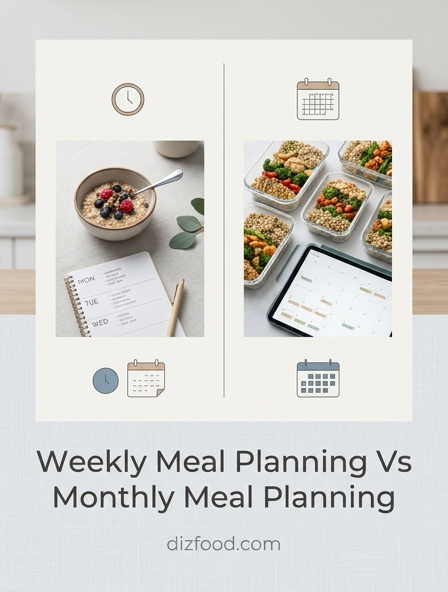
Weekly vs Monthly Meal Planning Pros and Cons
Choosing between a weekly and monthly meal planning strategy often depends on your domestic rhythm and storage capacity. Weekly planning is highly favored for its adaptability. It allows households to incorporate seasonal produce and react to the varying energy levels of the family members. However, the constant need to sit down and devise a new menu every seven days can lead to decision fatigue over time.
- Weekly Pros: High flexibility, fresh ingredients, lower upfront costs, and easier management of perishables.
- Weekly Cons: Frequent trips to the grocery store and the repetitive task of planning every weekend.
- Monthly Pros: Major time savings on shopping, significant cost reduction through bulk buying, and a "set it and forget it" mindset.
- Monthly Cons: High initial financial outlay, significant storage requirements, and the risk of "meal boredom."
Monthly planning offers a bird's-eye view of nutrition and spending, making it easier to ensure variety across several weeks. Yet, it requires a disciplined approach to inventory management. If a sudden event disrupts a monthly plan, it can cause a ripple effect that impacts three weeks of scheduled meals. Conversely, weekly planning acts as a short-term sprint, allowing for quick pivots but requiring consistent attention to maintain momentum in the kitchen.
Cost Comparison of Weekly and Monthly Grocery Cycles
The financial implications of your meal planning cycle are significant. Monthly planning typically favors the budget-conscious consumer who has the liquidity to invest in bulk purchases. By buying larger quantities of staples like grains, proteins, and canned goods, the price per unit drops significantly. However, this requires a large "sunk cost" at the beginning of the month which may not be feasible for all households.
| Feature | Weekly Cycle | Monthly Cycle |
|---|---|---|
| Upfront Cost | Low to Moderate | High |
| Bulk Discounts | Rarely utilized | Primary driver of savings |
| Impulse Buys | Higher frequency | Lower frequency |
| Sale Utilization | Excellent for weekly flyers | Difficult for perishables |
Weekly planning excels at capitalizing on loss leaders and short-term grocery store sales. If a specific protein is on deep discount for one week, the weekly planner can pivot their entire menu to maximize those savings. While the monthly planner saves on fuel and time, they may miss out on these fluctuating discounts. Ultimately, the monthly cycle is often cheaper in the long run for shelf-stable goods, while the weekly cycle is more efficient for managing the costs of fresh produce and meat.
Time Management Benefits of Planning Meals Weekly
Time management in the kitchen is not just about cooking; it is about the mental labor of deciding what to eat. Weekly planning reduces the cognitive load by breaking the task into manageable chunks. Spending 20 minutes every Sunday is often more palatable for busy professionals than dedicating an entire afternoon to planning 30 days of nutrition. This shorter cycle prevents the dread associated with massive administrative tasks.
The primary time benefit of the weekly model is the reduction in "emergency" grocery runs. Because the plan only covers seven days, the accuracy of the shopping list is usually higher. You are less likely to forget a crucial ingredient for a meal happening in two days than for a meal happening in three weeks. Furthermore, weekly planning allows for a "leftover night" or a "pantry raid," which clears out the fridge and saves time on food preparation mid-week.
- Quick assessment of the current fridge inventory takes less than five minutes.
- Shopping lists are shorter and easier to navigate in the store.
- Prep sessions can be limited to 60-90 minutes for the upcoming work week.
- Adjustments for unexpected social invitations are easy to integrate.
While monthly planning saves time on the actual commute to the store, weekly planning saves daily time by ensuring the ingredients on hand are fresh and ready to use without the need for extensive thawing or re-processing of bulk-prepped components.
The Ultimate Guide to Monthly Bulk Meal Prep
Monthly bulk meal prep is a marathon strategy that transforms the kitchen into a high-efficiency production line. The goal is to dedicate one or two days to preparing the majority of the month's components. This often involves "component cooking"-preparing large batches of taco meat, roasted vegetables, or grains-and freezing them in portioned containers. Alternatively, many practitioners choose the "dump meal" method, where raw ingredients are placed in freezer bags to be cooked in a slow cooker later.
Success in monthly prep requires meticulous organization. You must ensure you have enough containers, freezer space, and clear labels. Labeling is vital; after two weeks in the freezer, many red sauces or stews look identical. Include the date of preparation and the final cooking instructions on the label to save time later. This strategy is particularly effective for those who work long hours and want to avoid the temptation of takeout, as a homemade meal is always just a defrost cycle away.
The kitchen workflow during a monthly prep session usually follows a specific order: washing and chopping all vegetables first, starting long-simmering sauces, browning meats in multiple pans, and finally assembling the containers once everything has cooled. Safety is paramount; ensuring food reaches the correct temperature before storage and cooling it rapidly is essential for preventing foodborne illness in long-term storage.
Reducing Food Waste Through Strategic Weekly Planning
Food waste is a significant issue that weekly meal planning is uniquely positioned to solve. By focusing on a short timeframe, you can more accurately predict exactly how much produce your family will consume before it spoils. The "first in, first out" (FIFO) method is much easier to implement when you are only managing a week's worth of perishables. This prevents the "hidden drawer syndrome," where vegetables are forgotten in the back of the crisper.
Strategic weekly planning also allows for "ingredient cross-utilization." For example, if a recipe calls for half a head of cabbage, a weekly planner can intentionally schedule another meal later in the week that uses the remaining half. This level of precision is difficult to maintain over a thirty-day period. Additionally, weekly cycles allow you to adjust for leftovers; if Tuesday's dinner was more filling than expected, Wednesday's plan can be pushed back or modified to incorporate the extra food.
- Inventory your fridge before every weekly shopping trip.
- Plan meals based on the most delicate produce first (e.g., spinach before cabbage).
- Use a "must-go" shelf in the fridge for items nearing their expiration.
- Adjust portions based on the previous week's actual consumption patterns.
By tightening the loop between purchase and consumption, the weekly planner minimizes the environmental and financial impact of discarded food. This creates a leaner, more efficient kitchen environment where every item purchased has a clear and immediate purpose.
Storage Requirements for Long Term Monthly Menus
Transitioning to a monthly meal planning system necessitates a re-evaluation of your kitchen's infrastructure. Standard refrigerator-freezer combos are rarely sufficient for a full month of prepped meals, especially for families. To be successful, many households invest in a dedicated chest freezer or an upright deep freezer. This allows for the storage of bulk meat purchases, frozen vegetables, and the dozens of prepped containers required to bridge the gap between shopping trips.
Pantry space is equally critical. Monthly planning involves buying dry goods like pasta, rice, and canned beans in large quantities. A well-organized pantry with stackable bins or clear airtight containers is essential to keep these items fresh and accessible. Without a system, the pantry can quickly become cluttered, leading to duplicate purchases of items you already have but cannot find. Effective storage is the backbone of the monthly method; without it, the system collapses into chaos.
Beyond physical space, the quality of storage containers matters. For monthly plans, containers must be freezer-safe, microwave-safe, and ideally uniform in shape to maximize stacking efficiency. Glass containers are excellent for preventing flavor transfer and are more durable for long-term use, though they require more space. Silicone bags are an alternative for those with limited square footage, as they can be laid flat until the contents are frozen, then filed vertically like books on a shelf.
Flexibility vs Structure in Your Meal Planning Routine
The debate between weekly and monthly planning is essentially a choice between flexibility and structure. Weekly planning offers a "loose" structure. It provides a framework for the week but allows for spontaneous changes-such as an impromptu dinner with friends or a sudden craving for a specific cuisine. This flexibility is vital for individuals whose schedules are unpredictable or those who find strict routines stifling and uninspiring in the kitchen.
On the other hand, monthly planning provides a rigid, highly disciplined structure. For many, this rigidity is a benefit rather than a drawback. It eliminates the daily question of "what's for dinner?" for an entire month, which can be incredibly liberating for those with high-stress jobs or large families. The structure ensures that nutritional goals are met and budgets are strictly adhered to. However, this lack of spontaneity can lead to "menu fatigue," where the family loses interest in the pre-planned meals by week three.
Finding the right balance often involves a hybrid approach. Many successful home cooks use a monthly structure for their "anchor" meals-the reliable favorites that everyone likes-while leaving a few nights a week open for weekly flexibility. This allows the kitchen to function with the efficiency of a monthly plan while retaining the creative spark and adaptability of a weekly cycle, ensuring that mealtime remains both practical and enjoyable.
Best Meal Planning Strategy for Large Families
For large families, the scale of food consumption often makes monthly planning the most logical choice. When cooking for five or more people, the cost savings of bulk buying are magnified. Purchasing a 25-pound bag of rice or a whole side of beef can save hundreds of dollars over the course of a year. Furthermore, the sheer volume of dishes and prep required daily for a large family means that "batch cooking" once a month can save dozens of hours of labor throughout the following weeks.
However, the challenge for large families is the diverse range of preferences and schedules. Children may have sports, lessons, or changing tastes that make a rigid monthly plan difficult to enforce. In these cases, a "modular" monthly plan works best. This involves prepping large quantities of base ingredients-like shredded chicken, browned ground beef, or cooked beans-that can be quickly transformed into various dishes such as tacos, salads, or pastas depending on the day's specific needs.
- Focus on "crowd-pleaser" meals that can be easily doubled or tripled.
- Use a calendar in a central location so everyone knows the menu.
- Involve children in the monthly prep day to teach kitchen skills.
- Maintain a strict inventory of the deep freezer to avoid losing meals.
While the initial effort of a monthly plan is higher, the daily peace it brings to a large household is often worth the investment. It transforms the kitchen from a place of constant chaos into a streamlined environment where dinner is a predictable and manageable event.
Grocery Shopping Habits for Weekly and Monthly Schedules
Your meal planning choice dictates your relationship with the grocery store. Weekly planners are "frequent flyers." They often visit the store once a week for a full shop, supplemented by one or two "top-up" trips for fresh milk, bread, or produce. This habit allows them to be very responsive to what looks good in the produce aisle. They can shop with a list but remain open to substitutions based on quality and price, making the shopping experience more sensory and engaged.
Monthly planners, conversely, are "expedition shoppers." Their trips are infrequent but massive. A monthly shopping trip requires a detailed, categorized list and often involves visits to multiple locations, such as a warehouse club for bulk goods and a standard supermarket for specific brands. This style of shopping requires a high level of organization and physical stamina. To manage the load, many monthly planners utilize online ordering and curbside pickup to avoid the temptation of impulse buys and to manage their budget in real-time as they add items to their digital cart.
Regardless of the frequency, both styles benefit from a "perimeter-first" shopping habit, focusing on fresh meats, dairy, and produce before heading into the middle aisles for staples. The key difference lies in the volume of the cart; the weekly planner seeks variety and freshness, while the monthly planner seeks value, volume, and long-term utility for the family pantry.
How to Choose the Right Meal Plan for Your Lifestyle
Deciding which meal planning frequency is right for you requires an honest assessment of your lifestyle, personality, and kitchen setup. There is no one-size-fits-all answer, as the "best" plan is the one you can actually stick to consistently. If you are someone who enjoys the process of cooking and finds inspiration in seasonal ingredients, a weekly plan will likely be more fulfilling. It offers the creative freedom that many home cooks crave while still providing enough structure to keep the kitchen organized.
If you view cooking as a chore or a logistical hurdle to be cleared, the monthly plan might be your best ally. It front-loads all the work, allowing you to spend the rest of the month on autopilot. This is especially helpful for people with demanding careers or those who find daily decision-making exhausting. However, you must ensure you have the necessary infrastructure, such as freezer space and a sufficient budget for that first large grocery haul of the month.
To choose your path, consider the following factors:
- Schedule: Do you have a consistent block of time once a month, or 30 minutes every weekend?
- Space: Do you have a deep freezer and a large pantry?
- Budget: Can you afford a high upfront cost for long-term savings?
- Personality: Do you crave variety or do you prefer the comfort of a set routine?
Ultimately, many people find that their needs change. You might plan monthly during busy school semesters and switch to weekly planning during the summer months when fresh produce is abundant at local markets. The goal is to create a sustainable system that reduces stress and keeps your kitchen running smoothly.




Comments