
Deciding between seasonal meal planning and a year-round strategy is more than just a kitchen logistics choice-it is a balancing act between peak culinary enjoyment and financial efficiency. While year-round planning provides the comfort of a predictable grocery bill and mastered routines, seasonal planning leans into nature's rhythm, capturing fruits and vegetables when their flavor is most intense and their market price is at its lowest due to local abundance. By understanding how these two frameworks impact your wallet and your palate, you can decide whether to prioritize the convenience of global imports or the nutritional density and cost-savings of eating with the harvest. This guide explores which method truly optimizes your resources so you can stop overpaying for bland, out-of-season produce and start eating more vibrantly.
| Feature | Seasonal Meal Planning | Year-Round Planning |
|---|---|---|
| Average Cost | Up to 30% lower; prices drop during peak harvests. | Static; pays a premium for imports/greenhouse goods. |
| Flavor Quality | Peak intensity; produce is harvested at full ripeness. | Standardized; often muted due to long-haul shipping. |
| Nutrient Profile | Maximum density; minimal time from farm to table. | Reduced; vitamins degrade during storage and transit. |
| Prep Time | Higher; requires learning new recipes for shifts. | Lower; relies on "autopilot" meal rotations. |
| Carbon Footprint | Low; supports local yields and fewer food miles. | High; dependent on global logistics and cold storage. |
| Availability | Variable; limited to what is currently in harvest. | Guaranteed; consistent access to all ingredients. |
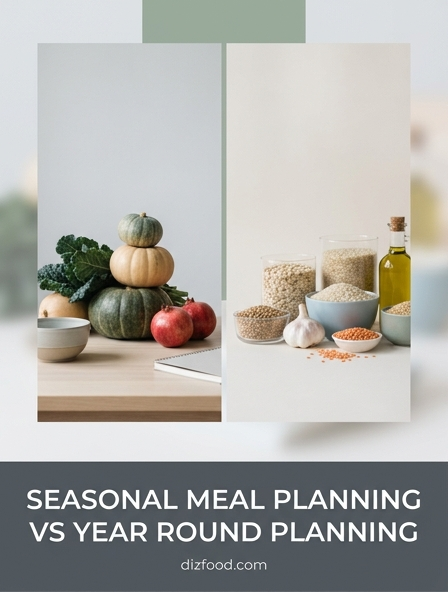
Benefits of Seasonal Meal Planning Versus Year Round Consistency
Choosing between seasonal meal planning and year-round consistency involves a trade-off between culinary variety and operational efficiency. Seasonal planning aligns your kitchen with the natural harvest cycle, ensuring that the ingredients you use are at their peak performance. This approach prevents "palate fatigue" by forcing a rotation of recipes every few months, keeping the dining experience fresh and exciting for the household. In contrast, year-round consistency focuses on the mastery of a specific set of core recipes that can be executed flawlessly regardless of the month.
While seasonal planning encourages creativity, year-round consistency offers the psychological comfort of routine. A consistent plan allows for the perfection of techniques, as the cook prepares the same dishes frequently enough to memorize them. However, many find that the benefits of the seasonal approach outweigh the stability of a fixed menu. By embracing the changes in the environment, you naturally adapt your diet to the needs of the body, such as craving lighter, hydrating foods in the summer and denser, warming meals in the winter.
- Increased Culinary Creativity: New ingredients every season challenge you to learn different cooking techniques.
- Better Ingredient Quality: Produce is harvested at peak ripeness rather than being artificially ripened during transit.
- Reduced Monotony: A rotating schedule ensures that favorite dishes remain special rather than becoming mundane.
- Psychological Connection: Eating with the seasons creates a deeper sense of connection to the natural world.
The Impact of Seasonal Ingredients on Your Monthly Food Budget
The financial implications of meal planning are often dictated by the laws of supply and demand. When a specific fruit or vegetable is in its peak growing season locally, the market is flooded with supply, leading to significant price drops. For example, buying berries in mid-summer is substantially cheaper than purchasing them in the dead of winter when they must be imported from the opposite hemisphere. These savings are not limited to produce alone; seasonal abundance often extends to meat and seafood, depending on regional availability and traditional culling or fishing seasons.
Year-round planning often relies on a "standard basket" of goods that maintains a relatively static price, but this price is usually higher on average than a strategically planned seasonal basket. By centering your meals around what is currently being harvested, you effectively lower your cost-per-plate without sacrificing quality. Furthermore, seasonal planners can take advantage of "gluts"-periods where produce is so abundant that it is sold at a fraction of its normal cost-allowing for bulk preservation through freezing, canning, or dehydrating, which further stabilizes the annual budget.
Ultimately, a seasonal approach requires more active monitoring of prices and availability, whereas year-round planning offers budget predictability. However, for those willing to adjust their menus based on the grocery circular, the savings from seasonal purchasing can reduce monthly food expenditures by as much as twenty to thirty percent.
Nutritional Advantages of Eating Locally with the Seasons
Nutritional density is highly sensitive to the time elapsed between harvest and consumption. When you prioritize seasonal, local ingredients, you are consuming food that has spent more time maturing on the vine or in the soil, allowing it to develop a more complex profile of vitamins, minerals, and antioxidants. In contrast, out-of-season produce is often bred for durability during long-distance transport rather than nutritional content, frequently being picked before it is fully ripe.
The human body also benefits from the dietary diversity that seasonal planning naturally imposes. By shifting your intake throughout the year, you ensure a wider spectrum of micronutrients that might be missed if you stuck to a rigid year-round menu. Following a seasonal path ensures that you are getting the specific nutrients your body requires to handle environmental stressors.
- Peak Vitamin Retention: Produce begins to lose nutrients like Vitamin C immediately after harvest; local seasonal food minimizes this loss.
- Antioxidant Density: Fruits and vegetables grown in their natural season often contain higher levels of polyphenols.
- Natural Dietary Rotation: Seasonal changes prevent over-reliance on a few "superfoods," ensuring a balanced intake of various phytonutrients.
- Reduction in Preservatives: Locally sourced seasonal items require fewer waxes and chemicals to maintain appearance during storage.
How Year Round Planning Simplifies Your Grocery Shopping Routine
The primary advantage of year-round meal planning is the radical simplification of the procurement process. When your menu remains consistent, your grocery list becomes a static document that requires very little mental energy to manage. This allows for the implementation of a "master list" system, where you know exactly which aisles to visit and in what order, reducing the time spent in the store. This efficiency is particularly beneficial for busy families or individuals who view grocery shopping as a logistical task rather than a culinary excursion.
Moreover, year-round planning facilitates the use of subscription services and bulk purchasing. If you know you will be making the same ten to fifteen meals every month, you can buy staples like grains, oils, and frozen proteins in large quantities, significantly lowering the unit price. There is also a reduced risk of "impulse buying" because the plan is rigid; there are no mystery ingredients required for a new recipe that might otherwise distract you from your list. This predictability also makes it easier to delegate shopping duties to other members of the household or to use online ordering platforms, as the "standard order" rarely changes.
While it may lack the excitement of seasonal discovery, the year-round method eliminates the "analysis paralysis" that often occurs when trying to decide what to cook with a new seasonal ingredient. It turns the kitchen into a high-efficiency environment where the focus is on execution and time management.
Seasonal Produce Guide for Sustainable Meal Prep Success
Integrating sustainability into your meal prep requires a fundamental understanding of when specific crops thrive. This knowledge allows you to build a menu that supports local ecology and reduces the energy required for greenhouse heating or refrigerated transport. The following table provides a general guide for rotating your kitchen staples based on the four traditional seasons in temperate climates.
| Season | Key Vegetables | Key Fruits | Cooking Method |
|---|---|---|---|
| Spring | Asparagus, Peas, Radishes | Strawberries, Rhubarb | Light Sautéing, Steaming |
| Summer | Tomatoes, Zucchini, Peppers | Peaches, Berries, Melons | Grilling, Raw Salads |
| Autumn | Pumpkins, Kale, Brussels Sprouts | Apples, Pears, Cranberries | Roasting, Baking |
| Winter | Potatoes, Carrots, Onions | Citrus, Persimmons | Stewing, Braising |
By utilizing this guide, meal preppers can ensure they are using the most resilient and flavorful ingredients available. Sustainable meal prep isn't just about what you eat, but also about the methods you use; for instance, the heavy stews of winter utilize the long-term storage capabilities of root vegetables, while the raw preparations of summer capitalize on the high water content of sun-ripened produce.
Comparing the Environmental Footprint of Different Planning Methods
The environmental impact of your kitchen is heavily influenced by "food miles"-the distance food travels from the farm to your plate. Seasonal meal planning inherently reduces these miles because it prioritizes ingredients that can be grown in your immediate geographic region. When you demand tomatoes in January in a cold climate, those tomatoes must either be grown in energy-intensive heated greenhouses or shipped thousands of miles via plane or truck. Both scenarios contribute significantly more to carbon emissions than eating a locally stored squash or cabbage.
Beyond carbon emissions, year-round planning for out-of-season items often contributes to water scarcity in exporting regions. Many "year-round" staples are grown in industrial monocultures that require heavy irrigation and chemical intervention to maintain yield outside of natural growing cycles. In contrast, seasonal planning supports biodiversity by encouraging farmers to rotate crops and maintain soil health. However, year-round planning can have an environmental benefit if it focuses on shelf-stable, bulk-bought dried goods like lentils and grains, which have a low transport-to-weight ratio and minimal packaging waste compared to fresh produce. The key to minimizing your footprint is balancing the efficiency of year-round staples with the ecological harmony of seasonal fresh items.
Year Round Staples That Complement Every Seasonal Menu
A successful kitchen strategy often blends the two planning methods by maintaining a "permanent pantry" of year-round staples that serve as the foundation for any seasonal dish. These items are the bridge between the different quarters of the year, providing the necessary fats, proteins, and carbohydrates to turn seasonal produce into a complete meal. By keeping these items well-stocked, you reduce the complexity of seasonal transitions, as you only need to learn how to swap the fresh components.
- Whole Grains: Rice, quinoa, and farro provide a neutral base for spring stir-fries or winter grain bowls.
- Healthy Fats: Olive oil, coconut oil, and clarified butter are essential for different temperature cooking methods across seasons.
- Legumes: Dried beans and lentils offer affordable protein that pairs equally well with summer tomatoes or autumn root vegetables.
- Aromatics: Garlic and dried onions are available year-round and provide the flavor backbone for nearly every savory dish.
- Acidic Brighteners: Vinegars and bottled citrus juices can lift the flavor of heavy winter stews or light summer dressings.
- Spices and Herbs: A robust spice rack allows you to shift the flavor profile of the same base ingredients to match the season's mood.
These staples ensure that even if the farmers' market is sparse, you always have the components for a nutritious meal. They provide a safety net for the seasonal planner and a structural framework for the year-round planner.
Mastering the Switch Between Seasonal and Yearly Meal Strategies
The most effective home cooks often employ a hybrid strategy, utilizing the stability of year-round planning for breakfast and lunch while reserving seasonal planning for dinner. Mastering this switch requires a transitional mindset, particularly during the "shoulder seasons" of spring and autumn. During these times, the kitchen inventory undergoes a purge; older, preserved items from the previous season are used up to make room for the incoming fresh harvest. This prevents waste and ensures that your pantry remains in a state of constant rotation.
To master the switch, one should identify "pivot recipes"-dishes that remain the same in structure but change in content. For example, a basic risotto is a year-round strategy, but it becomes seasonal when you add wild ramps in April or butternut squash in October. This approach reduces the cognitive load of learning entirely new recipes while still allowing you to take advantage of seasonal benefits. It also involves adjusting your cooking hardware; as you move into seasonal summer planning, you might move the slow cooker to storage and bring the grill or food processor to the front of the counter. Successful switching is as much about kitchen organization as it is about the ingredients themselves.
Freshness and Flavor Differences in Seasonal Food Planning
The most immediate benefit of seasonal planning is the superior sensory experience. Food that is grown in season and harvested at maturity has a higher sugar content and a more complex aromatic profile. A strawberry in June is a completely different culinary entity than a strawberry in December; the former is fragrant and juicy, while the latter is often watery and fibrous. These differences are not merely subjective; they are the result of the plant's natural biological processes being allowed to reach completion under the correct environmental conditions.
This difference in flavor fundamentally changes how you cook. When ingredients are at their peak, they require very little manipulation. A seasonal summer peach needs nothing more than a pinch of salt or a drizzle of cream to be a world-class dessert. Conversely, out-of-season ingredients often require heavy seasoning, added sugars, or complex sauces to mask their lack of natural flavor. Seasonal planning therefore encourages a "minimalist" cooking style that highlights the ingredient rather than the technique. For the gourmet or the enthusiast, the flavor advantage is often the primary reason to abandon year-round consistency in favor of the seasonal calendar.
Choosing the Best Meal Planning Approach for Your Lifestyle
Ultimately, the choice between seasonal and year-round meal planning depends on your personal priorities, schedule, and geographic location. There is no one-size-fits-all solution; the "best" approach is the one you can sustain consistently without it becoming a source of stress. To determine your ideal method, consider the following lifestyle factors:
- Time Availability: If you have limited time, year-round planning with a fixed rotation of 14 meals is highly efficient.
- Access to Markets: Those living near vibrant agricultural hubs or farmers' markets will find seasonal planning much easier and more rewarding.
- Cooking Skill Level: Beginners may benefit from the repetition of year-round planning, while advanced cooks may find it boring.
- Budgetary Constraints: If saving money is the top priority, a seasonal approach focused on local gluts is generally superior.
- Family Dynamics: Families with picky eaters often find year-round consistency helps maintain peace, while adventurous eaters thrive on seasonal variety.
Many find that a "sliding scale" works best: 70% year-round staples and 30% seasonal highlights. This allows for the efficiency of a routine while still reaping the nutritional and flavor benefits of the changing seasons. Evaluate your kitchen goals every six months to see if your current method still serves your lifestyle.




Comments