
Are you tired of spending your entire Sunday afternoon hunched over a cutting board, or do you find yourself wincing at the premium price tags of pre-packaged produce? Deciding between the ultimate convenience of pre-chopped vegetables and the traditional, cost-effective route of whole food prep is a common kitchen conundrum that balances time against budget and nutrition. While pre-cut bags are lifesavers for busy weeknights and help reduce physical strain, whole produce offers unmatched freshness, a longer shelf life, and significantly lower costs per pound. Ultimately, the best choice for your kitchen depends on whether you prioritize reclaiming your time or maximizing your grocery dollar and flavor quality.
| Feature | Pre-Chopped Veggies | Whole Food Prep |
|---|---|---|
| Average Cost | 30%-100% price markup for labor. | Lowest price per pound; bulk savings. |
| Time Investment | Zero prep; "open and pour" efficiency. | 15-45 mins average active prep time. |
| Shelf Life | Short (2-4 days); high oxidation. | Long (7-14+ days) when stored whole. |
| Nutritional Value | Slight loss of Vit C/B due to air exposure. | Maximum vitamin and enzyme retention. |
| Eco-Footprint | High; excessive single-use plastic. | Low; compostable scraps & minimal wrap. |
| Versatility | Fixed cuts; limited to specific recipes. | Total control (dice, slice, or julienne). |
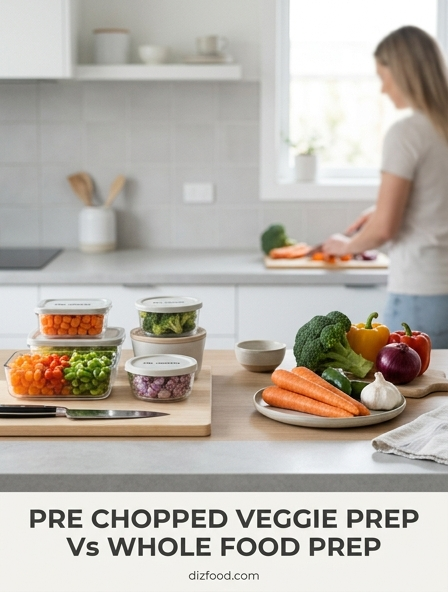
Pre-Chopped vs Whole Veggies Time Comparison
The primary driver behind the popularity of pre-chopped vegetables is the immediate reduction in active labor. For a busy home cook, the difference between starting a stir-fry with a pre-sliced medley versus individual whole vegetables can save upwards of twenty minutes per meal. Preparing whole vegetables requires a sequential workflow: washing, peeling, trimming ends, and executing specific cuts like dicing or julienning. When multiplied across several ingredients like onions, carrots, and bell peppers, the time investment grows significantly.
| Task | Pre-Chopped Time | Whole Food Time |
|---|---|---|
| Butternut Squash Prep | 0 Minutes | 12 Minutes |
| Onion Dicing (2 Medium) | 0 Minutes | 5 Minutes |
| Kale Stemming/Chopping | 0 Minutes | 8 Minutes |
While the speed of pre-cut produce is undeniable, it often bypasses the "mise en place" stage that allows a cook to organize their thoughts. However, for those with physical limitations, such as arthritis or limited mobility, the time saved is less about convenience and more about accessibility. Ultimately, the time comparison favors pre-chopped items for quick weeknight dinners, whereas whole foods are often reserved for weekend cooking where the process of preparation is part of the culinary experience.
Cost Analysis of Pre-Cut Produce vs Bulk Buying
The convenience of pre-cut vegetables comes at a steep financial premium, often referred to as a "convenience tax." Grocery stores factor in the labor costs of staff preparation, the specialized packaging required, and the higher risk of spoilage into the retail price. On average, pre-cut vegetables can cost anywhere from 50% to 300% more per pound than their whole counterparts. For example, a whole head of cauliflower might cost two dollars, while the same weight in pre-washed florets can easily reach six dollars.
- Labor Transfer: You are paying the store to do the work your knife would otherwise do.
- Unit Pricing: Pre-cut items often hide their true cost by being sold in smaller 8-ounce or 12-ounce containers.
- Bulk Discounts: Whole vegetables are frequently available in larger bags (5-pound bags of potatoes or onions) which further lowers the price per unit.
For a household on a strict budget, buying whole foods is the most effective way to lower monthly grocery bills. However, a nuanced cost analysis must also consider the "sunk cost" of food waste. If a consumer buys a whole bunch of celery but only uses two stalks before the rest rots, the per-use cost rises. In specific scenarios where only a small amount of a diverse range of vegetables is needed, a pre-mixed bag may actually prevent the over-purchasing of bulk items that might eventually be discarded.
Nutrient Retention in Processed vs Intact Vegetables
From a nutritional standpoint, the moment a vegetable is cut, its biological clock begins to tick faster. Slicing breaks the cellular structures of the plant, exposing the interior flesh to light, heat, and most importantly, oxygen. This process, known as oxidation, can degrade sensitive vitamins, particularly water-soluble ones like Vitamin C and certain B vitamins. Whole vegetables act as their own protective storage units, keeping nutrients sealed within skin and fiber until the moment of consumption.
The surface area to volume ratio plays a critical role in nutrient loss. A whole carrot has a limited surface area exposed to the air. Once that carrot is shredded into thin "matchsticks," the surface area increases exponentially, allowing for rapid nutrient degradation. Furthermore, some pre-cut vegetables are rinsed in chlorine washes or other preservatives to maintain color and prevent browning, which can slightly alter the chemical profile of the produce. To maximize health benefits, consumers should look for the following:
- Buy whole vegetables and chop them immediately before cooking.
- If buying pre-cut, choose items with the most recent "packaged on" date.
- Store cut vegetables in airtight, opaque containers to minimize light and air exposure.
While the nutrient loss is measurable, it is important to note that eating pre-cut vegetables is still significantly healthier than consuming processed snacks or skipping vegetables entirely due to a lack of preparation time.
Environmental Impact of Pre-Packaged Produce Containers
The environmental footprint of pre-chopped vegetables is significantly larger than that of whole produce. The most obvious issue is the proliferation of single-use plastics. Most pre-cut items are housed in rigid plastic clamshells or thick polyethylene bags designed to withstand moisture and prevent crushing. These materials are often not recyclable in many municipal programs, leading to increased landfill waste. In contrast, whole vegetables can often be purchased loose or in thin, compostable mesh bags.
Beyond the packaging itself, the supply chain for processed produce is more energy-intensive. Pre-chopping usually occurs in centralized processing facilities rather than at the farm or the store. This adds extra steps to the journey, including refrigerated transport to the processing plant, the energy used to power industrial cutting machinery, and the increased refrigeration needs for highly perishable cut items. Whole vegetables are more resilient and can often be transported with less intensive climate control, reducing the overall carbon footprint of the produce department.
Consumers looking to balance convenience with sustainability might seek out stores that offer "bulk bin" prep stations where they can chop their own vegetables into reusable containers, or prioritize buying whole foods to eliminate the need for plastic trays and film entirely. Small changes in purchasing habits can lead to a substantial reduction in a household's annual plastic output.
Shelf Life Differences Between Whole and Cut Veggies
Shelf life is perhaps the most significant functional difference between whole and pre-cut produce. Whole vegetables are living organisms in a state of dormancy; they have natural defenses against bacteria and dehydration. A whole cabbage, for instance, can remain crisp in a refrigerator crisper drawer for several weeks. However, once that cabbage is shredded for coleslaw, its shelf life drops to approximately three to five days. The removal of the protective outer skin and the rupturing of cells trigger the release of enzymes that accelerate decay.
This shortened window creates a logistical challenge for meal planning. When buying whole foods, a shopper can visit the store once a week and still have fresh ingredients by day seven. With pre-cut produce, the risk of "slime" or off-odors increases rapidly after 48 hours. This is due to the increased respiration rate of the vegetable; it is essentially "breathing" faster as it tries to heal its wounds, which uses up its stored energy and leads to wilting. To manage these differences, it is helpful to categorize produce by its durability:
- High Durability: Whole potatoes, onions, carrots, and squash.
- Moderate Durability: Whole broccoli, peppers, and cucumbers.
- Low Durability: Any pre-sliced leafy greens, diced onions, or cut fruit.
Understanding these timelines is crucial for reducing household waste and ensuring that the ingredients used in cooking are both safe and palatable.
Reducing Food Waste with Pre-Portioned Ingredients
While whole foods are generally better for the environment and the wallet, pre-portioned ingredients offer a unique advantage in the fight against household food waste. One of the leading causes of food waste is "over-buying"-purchasing a whole head of celery or a large bunch of parsley for a recipe that only requires a small amount. In these instances, the unused portion often sits in the back of the fridge until it is no longer edible. Pre-cut portions allow consumers to buy exactly what they need for a specific dish.
For individuals living alone or in small households, a pre-packaged "soup kit" containing a small amount of diced onion, celery, and carrots is often more efficient than buying full bags of each. This targeted purchasing eliminates the surplus that typically ends up in the trash. Furthermore, because the prep work is already done, there is a higher likelihood that the vegetable will actually be consumed. Many people buy whole vegetables with good intentions, but if they are too tired to prep them after work, those vegetables are frequently bypassed in favor of easier, less healthy options until they spoil. In this context, the higher cost of pre-cut vegetables can be viewed as an insurance policy against wasting the entire ingredient, provided the consumer uses the package within its short freshness window.
Essential Kitchen Tools for Whole Food Preparation
To transition from pre-cut convenience to whole food preparation, having the right tools is essential. The difficulty of prepping whole foods is often a result of using dull or inappropriate equipment. A sharp, high-quality knife reduces the physical effort required and makes the process safer by preventing the blade from slipping on tough skins. For most kitchen tasks, a standard 8-inch chef's knife is the most versatile option, capable of handling everything from mincing garlic to breaking down large melons.
Beyond a good knife, several secondary tools can drastically speed up prep time. A sturdy, large-format cutting board provides ample space to move chopped items to the side without constantly clearing the surface. A Y-peeler is generally faster and more ergonomic than traditional swivel peelers for carrots and potatoes. Additionally, a bench scraper is an underrated tool that allows you to scoop up large piles of chopped veggies and transfer them to a pan in one motion. Investing in these items creates a more efficient workflow:
- Chef's Knife: For primary slicing and dicing.
- Honing Rod: To keep the blade sharp between uses.
- Mandoline Slicer: For rapid, uniform slices of radishes or cucumbers.
- Salad Spinner: To quickly dry whole leafy greens after washing.
Equipping a kitchen with these essentials removes the friction of food prep, making the choice to buy whole foods feel less like a chore and more like a streamlined part of the cooking process.
Flavor Profiles of Fresh Cut vs Packaged Vegetables
The flavor of a vegetable is largely determined by its volatile compounds-chemical elements that are released into the air and provide aroma and taste. When a vegetable is cut, these compounds are immediately released. This is why a freshly diced onion has a pungent, sharp aroma that can fill a room, while a bag of pre-diced onions often smells muted or slightly "off." Over time, the aromatic oils in vegetables like garlic and ginger oxidize and lose their potency, resulting in a flavor that is flat or bitter compared to the vibrant zing of freshly prepared aromatics.
Texture also plays a major role in the flavor experience. Pre-cut vegetables often suffer from moisture loss or, conversely, may become waterlogged if packaged with too much humidity. A carrot that was cut three days ago will not have the same "snap" as one sliced seconds before hitting the pan. This loss of turgor pressure makes the vegetable feel soft or woody. In dishes where the vegetable is the star-such as a raw salad or a light sauté-the difference in flavor and texture is highly noticeable. For slow-cooked stews or soups, the difference is less pronounced, as the long cooking time mellows the flavors and breaks down textures regardless of when the initial cut was made.
Budget Friendly Strategies for Weekly Meal Prep
Maximizing a grocery budget while maintaining a healthy diet requires a strategic approach to whole food preparation. The most effective method is "component prepping," where a cook spends one to two hours on a Sunday preparing whole vegetables for use throughout the week. By washing, peeling, and chopping in bulk, you achieve the convenience of pre-cut produce without the associated markup. This allows for the purchase of larger, more economical quantities of produce while ensuring they are ready for quick assembly during the work week.
| Strategy | Action | Benefit |
|---|---|---|
| Batch Processing | Chop all onions/garlic at once | Reduces cleanup time |
| Smart Storage | Store in glass with a damp paper towel | Extends life of DIY cut veggies |
| Root-to-Stem | Use broccoli stalks and beet greens | Gets 100% value from the vegetable |
Another budget-friendly tip is to buy seasonal produce. Whole vegetables that are in season are at their cheapest and highest quality. When items like bell peppers are on sale, buying them whole, dicing them, and freezing them in bags provides a "homemade" version of pre-cut frozen veggies at a fraction of the cost. This hybrid approach-combining fresh whole food prep with strategic freezing-ensures that the kitchen is always stocked with ready-to-use ingredients that don't break the bank.
Comparing Grocery Store Convenience and Quality Control
When purchasing pre-cut vegetables, the consumer hands over the responsibility of quality control to the grocery store. It is difficult to assess the original state of a vegetable once it has been processed and bagged. A bag of stir-fry mix might contain pieces of broccoli that were nearing their expiration date or peppers with soft spots that were simply trimmed away. When buying whole, the consumer has the opportunity to inspect the weight, firmness, skin integrity, and color of the produce, ensuring they are taking home the freshest possible product.
Convenience and quality are often in direct opposition in the produce aisle. Pre-cut sections are frequently stocked in areas with high light exposure, which can discolor items like potatoes or turn cauliflower yellow. Furthermore, the "best by" dates on pre-packaged items can be misleading; they indicate safety more than peak culinary quality. For those who prioritize flavor and high-quality ingredients, the control offered by whole food prep is indispensable. However, for a shopper in a "food desert" or someone with a very tight schedule, the convenience of a pre-washed bag of spinach might be the only viable way to include greens in their diet. Balancing these two factors requires an understanding of one's own priorities for each specific meal.


Comments