
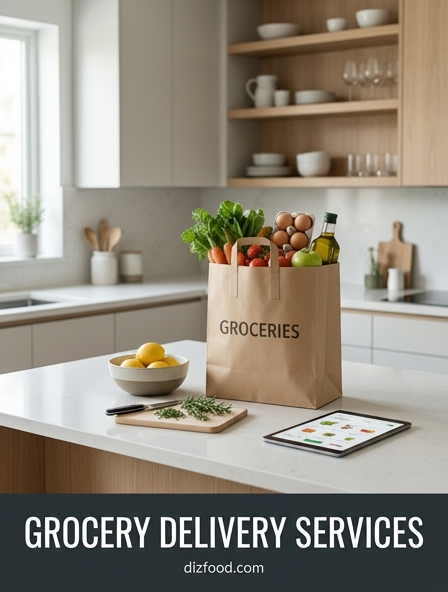
The Economics of Online Grocery Delivery
The rise of digital marketplaces has fundamentally altered the financial landscape of the modern kitchen. At its core, the economics of online grocery delivery involve a complex balance between consumer convenience and the logistical costs of the last-mile supply chain. Platforms must manage diverse revenue streams, including service fees, delivery charges, and item markups, to offset the expenses of personal shoppers and fuel. For the consumer, the economic shift is marked by a move from physical labor to a service-based expense model.
While the sticker price of individual items may occasionally be higher online, the transparency of the digital cart allows for a more calculated approach to household spending. By aggregating data across various retailers, these services create a competitive environment where prices are adjusted dynamically based on demand and local inventory. Understanding this economic framework is essential for households looking to optimize their food budgets while navigating the modern convenience economy. Ultimately, the shift toward delivery represents a broader trend of valuing time as a primary currency in domestic management.
Eliminating Impulse Buys at the Virtual Checkout
One of the most significant financial advantages of transitioning to online grocery services is the drastic reduction in impulse purchasing. Physical supermarkets are meticulously designed to encourage unplanned spending, utilizing strategic product placement, sensory marketing, and high-margin "temptation items" at the checkout aisle. In contrast, the virtual environment is search-driven, allowing consumers to target exactly what they need without being diverted by eye-level displays or limited-time physical endcaps.
- Avoidance of sensory triggers like the smell of fresh bakery items.
- Elimination of the "pester power" often exerted by children during in-store trips.
- Focused searching that bypasses high-margin snack aisles.
- Strict adherence to a pre-defined digital shopping list.
By removing the psychological triggers associated with physical retail, users often find that their total basket value decreases despite the addition of service fees. The digital interface provides a sterile, logic-based shopping experience that favors necessity over whim, leading to more disciplined kitchen management and a healthier bottom line for the household budget.
Comparing Delivery Fees Against Fuel and Transport Costs
To accurately assess the value of grocery delivery, one must conduct a side-by-side comparison of the direct costs associated with traditional shopping. While delivery fees and tips are visible out-of-pocket expenses, the hidden costs of driving to a physical store-such as fuel consumption, vehicle wear and tear, and parking fees-are often overlooked by the average consumer. In urban environments, these "hidden" costs can be particularly high when considering the time spent in traffic and the potential for parking tickets.
| Cost Category | Traditional Shopping | Delivery Service |
|---|---|---|
| Transportation | Fuel & Vehicle Depreciation | Service & Delivery Fees |
| Labor | Personal Time (1-2 hours) | Driver Tip |
| Opportunity Cost | High (Lost free time) | Low (Multi-tasking) |
When these variables are quantified, the gap between the two methods often narrows significantly. For many, the flat fee of a delivery service is a predictable expenditure that replaces the volatile costs of personal transport, making it a viable financial strategy for household budgeting.
Meal Planning Integration for Maximum Budget Efficiency
Digital grocery platforms have evolved to become more than just shopping tools; they are now sophisticated hubs for culinary organization. Many delivery services integrate directly with recipe databases and meal planning software, allowing users to move from a weekly menu to a completed order with a single click. This integration ensures that every item purchased has a specific purpose, eliminating the "aspirational buying" that often leads to ingredients languishing in the pantry.
When consumers plan their meals digitally, they can verify existing inventory before adding items to their cart, preventing the redundant purchase of staples like oils or spices. This level of precision is difficult to achieve in a physical store without a perfectly maintained list. By aligning shopping habits with actual consumption patterns, households can maximize their budget efficiency. The synergy between digital planning and ordering transforms the kitchen from a place of waste into a streamlined operation where every dollar spent contributes to a scheduled meal, reducing the overall cost per serving for the family.
Digital Tools for Real Time Budget Tracking
The digital interface of online grocery apps provides a level of financial transparency that is impossible to replicate in a physical store. As users add items to their virtual cart, the running total is updated in real-time, allowing for immediate adjustments before any money is spent. This constant feedback loop empowers consumers to make informed decisions about trade-offs and priorities.
- Continuous monitoring of the "Running Total" to stay within a weekly limit.
- Instant comparison of unit prices between different brands and sizes.
- Real-time removal of lower-priority items if the budget is exceeded.
- Historical data access to track spending trends over several months.
This granular control over the checkout process eliminates the "sticker shock" that often occurs at the end of a physical shopping trip. By using these digital tools, shoppers can exercise strict fiscal discipline, ensuring that their kitchen expenses remain aligned with their broader financial goals. The ability to see exactly how much a single luxury item affects the total bill encourages more mindful consumption.
The Financial Value of Saved Time in the Kitchen
In the context of modern household management, time is a finite resource with a clear economic value. The transition to grocery delivery saves the average consumer between one and three hours per week-time traditionally spent commuting, navigating aisles, and waiting in checkout lines. To understand the true financial impact, one must apply the concept of opportunity cost to these saved hours. For a professional, this time might be reinvested into billable work; for others, it may be used to prepare healthier meals from scratch, reducing the reliance on expensive takeout.
Furthermore, the reduction in "decision fatigue" is a significant benefit. By outsourcing the physical labor of shopping, individuals retain more mental energy for complex tasks, such as meal prep or financial planning. When the value of this saved time is calculated against the delivery fee, the service often pays for itself. In a busy household, the ability to reclaim several hours of a weekend is not merely a luxury; it is a strategic reallocation of personal resources that enhances both productivity and overall quality of life.
Reducing Food Waste Through Precise Digital Ordering
Food waste is a major contributor to financial inefficiency in the kitchen, with billions of dollars worth of groceries discarded annually. Online delivery services mitigate this issue by promoting high-precision ordering. Because digital shoppers are often working directly from a recipe or a specific list, they are less likely to buy "just in case" items that eventually spoil. The platform's ability to show exact weights and quantities helps users match their purchases to their actual consumption needs.
- Order history analysis to identify frequently wasted items.
- Precise quantity selection for perishable produce and meats.
- Automated reminders for staples, preventing emergency over-buying.
- Easier access to "ugly produce" or discount sections that prioritize consumption.
By reducing the volume of food that goes from the fridge to the bin, consumers effectively lower their overall grocery bill. Precise digital ordering ensures that the kitchen remains stocked with relevant, fresh ingredients, fostering a sustainable cycle of consumption that benefits both the environment and the household's long-term financial health.
Leveraging Online Coupons and Loyalty Program Savings
Online grocery platforms offer sophisticated ways to aggregate savings that often surpass traditional paper couponing. Digital marketplaces can automatically apply relevant manufacturer coupons, store discounts, and loyalty points at the moment of purchase, ensuring that no saving opportunity is missed. This "automatic stacking" of rewards allows for a seamless reduction in the total cost of ownership for kitchen staples. Many apps also feature "smart" recommendations based on previous purchases, highlighting when a frequently bought item is on sale.
Beyond simple discounts, these platforms often provide cash-back incentives or referral bonuses that can be applied to future orders. For the savvy consumer, the ability to filter search results by "on sale" or "special offers" provides a strategic advantage, allowing them to build their weekly menu around the most cost-effective ingredients. This data-driven approach to discounting transforms the chore of coupon clipping into an automated, highly efficient process. Over the course of a year, these incremental digital savings can result in hundreds of dollars returned to the household budget, further offsetting any service-related costs.
Strategic Subscription Models for Regular Household Needs
For frequent users of grocery delivery, subscription models have become a cornerstone of financial strategy. Services like Instacart+, Walmart+, or Amazon Fresh offer annual or monthly memberships that waive delivery fees on orders above a certain threshold. This shift from per-transaction fees to a flat subscription model encourages more frequent, smaller orders, which can lead to fresher ingredients in the kitchen and better inventory management.
| Subscription Benefit | Economic Impact |
|---|---|
| Unlimited Free Delivery | Eliminates variable transaction costs |
| Lower Service Fees | Reduces the markup on individual items |
| Exclusive Member Deals | Provides access to deeper discounts |
By stabilizing the cost of the service through a subscription, households can treat delivery as a fixed utility rather than a variable luxury. This predictability aids in long-term budgeting and ensures that the convenience of the service remains cost-effective for those who rely on it as their primary method of sourcing food and household supplies.
Long Term Impact of Automated Shopping Lists on Spending
Automated shopping lists and "reorder" features represent the ultimate evolution of grocery efficiency. By analyzing past behavior, digital platforms can predict when a household is likely to run out of essentials like milk, eggs, or detergent. This predictive capability has a profound long-term impact on spending by smoothing out the spikes in grocery costs. Instead of massive, disorganized shopping trips, households can maintain a steady, predictable flow of goods.
- Consistency in brand selection prevents accidental overspending on premium labels.
- Predictive restocking reduces the need for expensive, last-minute convenience store runs.
- Long-term data allows for the identification of seasonal price fluctuations.
Over months and years, this automation creates a disciplined spending pattern that is resistant to the emotional highs and lows of traditional shopping. The kitchen becomes a perfectly calibrated system where inventory is managed by algorithms rather than guesswork. Ultimately, the long-term impact of automated lists is a reduction in total household expenditure, driven by the elimination of redundancy and the optimization of every single purchase decision.





Comments