
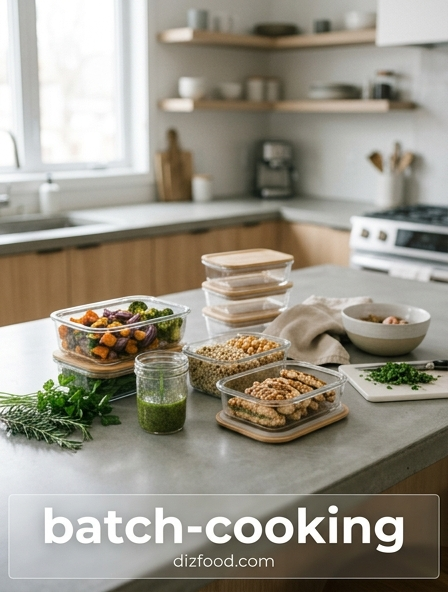
Benefits of High-Volume Batch Cooking
High-volume batch cooking is a transformative approach to kitchen management that yields significant dividends in both time and financial resources. By dedicating a single afternoon to large-scale preparation, individuals can reclaim hours of their workweek that would otherwise be spent on daily meal prep and cleaning. This method reduces the cognitive load of "what to eat" decisions, which often leads to healthier dietary choices and less reliance on processed convenience foods or expensive takeout options. Furthermore, batch cooking is a primary strategy for reducing food waste, as ingredients are utilized in bulk before they expire.
- Significant reduction in weekly grocery expenditures through bulk purchasing.
- Improved portion control and nutritional oversight for all household members.
- Lowered energy consumption by utilizing appliances for fewer, more intensive sessions.
- Minimization of daily kitchen cleanup and dishwashing requirements.
- Enhanced ability to maintain consistent healthy eating habits under stress.
Ultimately, the discipline of batch cooking fosters a more organized domestic environment. It allows home cooks to purchase seasonal produce at peak ripeness and lowest cost, locking in nutrients through proper storage. This systemic approach ensures that high-quality, home-cooked meals are always accessible, regardless of a busy schedule.
Essential Kitchen Tools for Large Scale Prep
To successfully execute high-volume batch cooking, the right equipment is non-negotiable. Standard kitchenware often falls short when processing ten pounds of vegetables or several gallons of stew. Investing in professional-grade tools ensures durability and efficiency, preventing the fatigue that occurs when using undersized or dull equipment. Heavy-bottomed pots and commercial-sized sheet pans are the workhorses of the bulk kitchen, providing even heat distribution and massive surface area.
| Tool Category | Recommended Item | Purpose |
|---|---|---|
| Cookware | 12-Quart Stock Pot | Large batches of soups, stocks, and grains. |
| Processing | 14-Cup Food Processor | Rapid chopping, grating, and pureeing of bulk produce. |
| Baking | Full-Size Rimmed Sheet Pans | Mass roasting of vegetables and proteins. |
| Storage | Vacuum Sealer | Removing air to prevent freezer burn on long-term items. |
In addition to these larger items, a high-quality chef's knife and an extra-large bamboo or composite cutting board provide the necessary workspace for intensive prep. Digital kitchen scales are also vital for ensuring consistent portion sizes across dozens of containers, which is essential for both recipe accuracy and nutritional tracking.
Strategic Meal Planning for Maximum Efficiency
Strategic meal planning serves as the blueprint for a successful batch cooking session. Without a structured plan, the process can quickly become chaotic and counterproductive. The goal is to identify recipes that share common base ingredients, allowing for parallel processing. For example, a single large batch of sautéed onions and garlic can serve as the foundation for a marinara sauce, a chili, and a lentil soup simultaneously.
- Audit current pantry and freezer inventory to minimize redundant purchases.
- Select three to four primary recipes that utilize overlapping ingredients.
- Create a detailed shopping list categorized by grocery store department.
- Develop a "prep order" list to prioritize long-simmering items.
- Designate specific storage containers for each planned meal before cooking starts.
Effective planning also involves considering the "lifecycle" of the meals. Some dishes, like curries and stews, often taste better after the flavors have melded in the refrigerator, making them ideal for early-week consumption. Meanwhile, items destined for the freezer should be selected based on their structural integrity after thawing. By mapping out the week in advance, you eliminate the friction of daily cooking.
Bulk Grocery Shopping and Smart Sourcing
Mastering the art of sourcing is critical when cooking at scale. Buying in bulk not only lowers the unit price of staples but also ensures you have enough inventory to complete large recipes without emergency trips to the store. Warehouse clubs and local wholesalers are excellent resources for grains, oils, and proteins. However, smart sourcing also means looking for seasonal opportunities at farmers' markets, where "seconds" or bulk bushels of produce can be acquired at a steep discount for immediate processing.
- Buy dry goods like rice, beans, and pasta in 10-25 lb bags for maximum savings.
- Source proteins from local butchers who offer "bundle" discounts or quarter-cow options.
- Utilize frozen vegetables for soups and stews to save on prep time and cost.
- Purchase spices in bulk tins rather than small jars to maintain a cost-effective pantry.
- Store bulk grains in airtight, pest-proof containers to preserve freshness.
Inventory management is the final component of smart sourcing. Maintaining a simple "first-in, first-out" (FIFO) system in your pantry ensures that older bulk items are used before newer ones. This prevents the hidden cost of spoiled food and ensures that your batch-cooked meals are always made with the freshest available ingredients.
Mastering the Assembly Line Prep Method
The assembly line method is the secret to professional-level efficiency in the home kitchen. Rather than preparing one recipe from start to finish, this technique involves breaking down all ingredients for all recipes in stages. This "mise en place" on a grand scale minimizes the time spent switching between tools and cleaning workspaces. By focusing on one type of task at a time, such as chopping all aromatics or portioning all proteins, you develop a rhythm that significantly accelerates the process.
- Clear all counters and empty the dishwasher before beginning.
- Wash and dry all produce in one large batch using a colander or salad spinner.
- Execute all knife work (chopping, dicing, slicing) for every recipe at once.
- Group chopped ingredients into bowls labeled for their respective dishes.
- Prepare all sauces or spice blends in small batches before turning on the stove.
Once the prep is complete, the actual cooking becomes a matter of assembly. With all ingredients ready, you can manage multiple pots and pans without the stress of mid-cooking preparation. This systematic approach reduces the physical toll on the cook and ensures that the kitchen remains organized even when producing twenty or thirty portions of food.
Optimizing Cooking Times with Multi-Tasking
True efficiency in batch cooking is achieved by maximizing every square inch of your kitchen's heating surfaces. While a large pot of chili simmers on the back burner, the oven should be utilized for roasting vegetables or baking protein, and the slow cooker can be independently managing a tender roast. The key is to stagger start times based on the required duration of each cooking method, ensuring that everything finishes within a manageable window for cooling and storage.
| Appliance | Ideal Batch Task | Time Optimization Tip |
|---|---|---|
| Oven | Roasted Root Vegetables | Use multiple racks with convection for even browning. |
| Stovetop | Grains and Legumes | Use a lid to accelerate boiling and reduce moisture loss. |
| Instant Pot | Tough Meats or Beets | Utilize pressure cooking to cut traditional times by 70%. |
| Slow Cooker | Bone Broths or Stews | Set for overnight cooking to free up space during the day. |
By coordinating these appliances, a cook can produce several different meal components simultaneously. This "parallel processing" ensures that the kitchen environment remains productive. It is also helpful to use a multi-channel timer to track different dishes, preventing overcooking while your attention is divided among various tasks.
Best Foods and Ingredients for Freezing
Not all foods are created equal when it comes to the freezer. Successful batch cooking requires selecting ingredients that maintain their texture, flavor, and nutritional value after sub-zero storage. Liquid-based dishes and those with high fat content generally freeze exceptionally well, as the moisture helps protect the food from drying out. Conversely, vegetables with high water content, like cucumbers or lettuce, should be avoided as they become mushy upon thawing.
- Soups, stews, and chili (leave room for expansion in the container).
- Cooked grains like brown rice, quinoa, and farro.
- Blanched greens such as spinach or kale for use in future smoothies or bakes.
- Enchiladas, lasagnas, and casseroles (freeze before the final baking stage).
- Pre-marinated raw proteins for quick "dump-and-cook" slow cooker meals.
To optimize results, ensure all foods are cooled to room temperature before freezing. Flash-freezing individual items, like meatballs or berry portions, on a tray before transferring them to a bag prevents them from clumping together. This allows you to remove only what you need for a single serving, further enhancing the convenience of your batch-cooked inventory.
Safe Storage and Labeling Techniques
Safe storage is the most critical phase of batch cooking to prevent foodborne illness and maintain quality. Once cooking is complete, food must be cooled rapidly to exit the "danger zone" where bacteria thrive. Large pots of hot liquid should be divided into smaller, shallow containers to speed up the cooling process. Proper sealing is equally important; removing as much air as possible prevents freezer burn and the absorption of off-odors from other items in the freezer.
- Divide bulk meals into individual or family-sized portions immediately.
- Leave a half-inch of "headspace" in containers for liquids to expand.
- Use moisture-resistant labels and permanent markers for clarity.
- Note the dish name, date of preparation, and specific reheating instructions.
- Place newer items at the back of the freezer to ensure older stock is used first.
Labeling is often overlooked but is essential for maintaining an organized system. A freezer full of unidentified "mystery containers" leads to waste and frustration. By including the date and contents, you can easily track the shelf life of your meals-generally three months for optimal quality in a standard freezer. Transparent containers or clear freezer bags also help with quick visual identification.
Reheating and Serving for Freshness
The final step in the batch cooking cycle is reheating, which must be done correctly to avoid "leftover" flavors or rubbery textures. The goal is to restore the food to its original state by carefully managing heat and moisture. For most frozen meals, thawing in the refrigerator for 24 hours is the safest and most effective method. This gradual temperature change preserves the structural integrity of proteins and vegetables better than rapid defrosting in a microwave.
- Add a splash of water or broth to grains and pasta to prevent drying out.
- Use a toaster oven or air fryer for items that should be crispy, like roasted potatoes.
- Reheat soups and stews on the stovetop over medium heat, stirring frequently.
- Cover dishes with a damp paper towel if using a microwave to create a steam effect.
- Utilize a meat thermometer to ensure food reaches an internal temperature of 165°F.
To elevate a batch-cooked meal, focus on "fresh finishes." Adding a squeeze of citrus, a handful of fresh herbs, or a sprinkle of toasted nuts just before serving can mask the fact that a meal was prepared days or weeks in advance. These small additions provide a contrast in texture and a brightness of flavor that makes every meal feel recently prepared.
Maintaining Variety in Batch-Cooked Menus
One of the primary challenges of batch cooking is "palate fatigue," where eating the same meal repeatedly becomes unappealing. Maintaining variety requires a strategic approach to flavor profiles and modular components. Instead of freezing twenty identical portions of a finished dish, consider freezing "base" components that can be customized with different sauces, spices, or garnishes at the time of serving. This modularity allows for culinary creativity without the labor of starting from scratch.
- Cook large batches of neutral proteins (like shredded chicken) to use in tacos, salads, or pasta.
- Freeze a variety of homemade sauces in ice cube trays for quick flavor swaps.
- Rotate through different global cuisines-Thai one week, Mediterranean the next.
- Mix and match frozen sides; pair a batch-cooked grain with a freshly sautéed vegetable.
- Maintain a "condiment bar" of pickles, hot sauces, and seeds to change the dish's profile.
By focusing on versatile ingredients rather than rigid recipes, you can pivot your meals based on your daily cravings. A single batch of roasted vegetables can be tucked into a frittata for breakfast, added to a grain bowl for lunch, or tossed with pesto for dinner. This flexibility is the key to long-term success with high-volume batch cooking.

Comments