
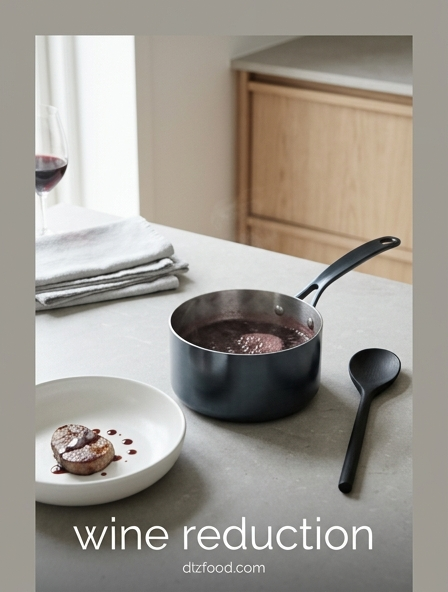
The Art of Developing Deep Fond
The foundation of any superior wine reduction begins with the development of fond, the caramelized protein sugars and fats that adhere to the bottom of a roasting pan or skillet. Achieving a deep, mahogany-colored fond requires patience and precise temperature control during the initial searing of proteins. As the Maillard reaction occurs, complex flavor compounds are created that provide the structural backbone for the finished sauce. This layer of concentrated essence is not merely burnt residue but a rich reservoir of umami that, when correctly managed, dictates the final depth of the reduction.
- Maintain a consistent medium-high heat to prevent carbonization.
- Use fats with high smoke points to facilitate even browning.
- Avoid overcrowding the pan, which leads to steaming rather than searing.
- Look for a rich brown color, similar to a well-toasted coffee bean.
- Deglaze immediately once the desired color is reached to halt the cooking process.
If the fond is allowed to turn black, it becomes bitter and acrid, rendering the subsequent sauce unpalatable. The chef must monitor the surface closely, ensuring that the caramelization is uniform across the pan's interior. This foundational step is what separates a generic sauce from a professional-grade reduction.
Essential Cookware for Professional Deglazing
The choice of cookware significantly impacts the efficiency of the deglazing process and the quality of the resulting wine reduction. Professional chefs prioritize materials that offer high thermal conductivity and a responsive surface. Stainless steel with an aluminum or copper core is often considered the industry standard because it allows for the visible monitoring of fond development while resisting reactive acids found in wine.
| Material | Pros | Cons |
|---|---|---|
| Stainless Steel | Non-reactive, durable, visible fond. | Can have hot spots if thin. |
| Copper | Superior heat control and evenness. | Expensive, requires lining. |
| Enameled Cast Iron | Excellent heat retention for slow reductions. | Heavy, slow to react to heat changes. |
Avoid using non-stick surfaces for this specific application, as they inhibit the formation of fond. The slick coating prevents proteins from adhering and caramelizing effectively. Furthermore, the shape of the pan matters; a wide, shallow sauté pan increases surface area, which accelerates the evaporation of moisture and the concentration of flavors during the reduction phase.
Selecting Premium Acids and Spirits
The quality of the wine used directly correlates to the nuances of the final sauce. A common culinary adage suggests never cooking with a wine that you would not be willing to drink. In professional kitchens, the selection process involves balancing acidity, tannin structure, and residual sugars. Dry wines are generally preferred to avoid an cloying sweetness that can intensify unpleasantly during the reduction process.
- Dry Reds: Cabernet Sauvignon or Pinot Noir provide structure and dark fruit notes.
- Crisp Whites: Sauvignon Blanc or Chardonnay offer bright acidity and citrus undertones.
- Fortified Wines: Port, Madeira, or Sherry add complexity and high sugar content for glazes.
- Vinegars: A splash of Sherry or Balsamic vinegar can brighten a dull reduction.
Beyond traditional wines, the addition of spirits like Cognac or Brandy during the deglazing phase can introduce a sophisticated depth. These high-alcohol liquids should be added with caution, often flambéed to cook off the harsh ethanol while retaining the aromatic esters. The goal is to provide a bright acidic lift that cuts through the richness of the fats and proteins, creating a balanced and vibrant flavor profile.
Managing Heat for Optimal Flavor Extraction
Temperature management is the most critical variable when reducing wine and stock. While a rapid boil might seem efficient for time management, it can lead to the emulsification of impurities and the breakdown of delicate aromatic compounds. A gentle simmer is the preferred state, as it allows for a controlled evaporation of water while the flavors gradually intensify and meld together. High heat can also cause the sugars in the wine to scorch against the sides of the pan, introducing a burnt flavor that cannot be corrected.
As the liquid volume decreases, the chef must progressively lower the heat. The concentration of solutes makes the sauce increasingly sensitive to temperature fluctuations. A reduction that is boiling vigorously at 50% volume may easily burn when it reaches 10% volume. Monitoring the "viscosity of the bubble" is a traditional technique; as the sauce thickens, bubbles become larger and burst more slowly. This visual cue indicates that the reduction is nearing its optimal concentration and requires immediate attention to prevent over-reduction or breaking of the sauce.
Integration of Marinating Elements in Sauces
A sophisticated wine reduction often draws complexity from the elements used in the initial preparation of the protein. If a meat was marinated, the aromatics and residual liquids can be integrated into the pan sauce to create a cohesive flavor bridge. This process requires careful straining and timing to ensure that the fresh herbs and spices do not become overcooked or bitter during the reduction process.
- Mirepoix: Finely diced onions, carrots, and celery provide a foundational sweetness.
- Aromatics: Peppercorns, bay leaves, and thyme sprigs infuse the wine with earthy notes.
- Garlic: Should be added late in the sautéing phase to avoid burning before deglazing.
- Leached Juices: Any resting juices from the cooked meat should be whisked back into the reduction.
The integration of these elements ensures that the sauce is not just a concentrated wine, but a layered expression of the entire dish. When the wine hits the pan, it pulls these aromatic oils into the liquid, suspending them in the reduction. This synergy between the marinade and the deglazing liquid is a hallmark of classical French technique, resulting in a sauce that feels intrinsically linked to the main component of the meal.
Achieving the Perfect Glace de Viande
Glace de viande is the pinnacle of the reduction craft, representing a meat stock that has been reduced until it reaches a syrupy, jelly-like consistency. This process concentrates the natural gelatin found in the bones and connective tissues, resulting in a liquid that is intensely flavorful and naturally thick. When wine is reduced alongside a high-quality brown stock, the transition from a simple reduction to a glace requires precision and a keen eye for texture.
- Start with a well-strained brown veal or beef stock.
- Reduce the liquid by approximately 75% to 90% of its original volume.
- Skim any rising foam or fat continuously to maintain clarity.
- Test the consistency by chilling a small spoonful; it should set firmly.
- Store the final glace in small portions to be used as a flavor "booster."
The resulting glace should have a brilliant sheen and a profound depth of flavor. In the context of wine reductions, a small amount of glace de viande can be added to a pan sauce to provide instant body and a luxurious mouthfeel without the need for additional thickening agents like flour or cornstarch. It is the ultimate tool for achieving professional "nappe" consistency.
Professional Reduction and Consistency Standards
Evaluating the consistency of a sauce is a vital skill for any chef. The standard for a finished wine reduction is typically "nappe," a French culinary term describing a sauce that is thick enough to coat the back of a spoon evenly. Achieving this state requires a precise balance between the evaporation of water and the concentration of proteins, sugars, and fats. If the reduction is too thin, it will run off the food; if too thick, it may become sticky and overly salty.
| Stage | Reduction Amount | Visual/Tactile Cue |
|---|---|---|
| Au Jus | 10-20% | Thin, watery, light flavor. |
| Demi-Reduction | 50% | Starting to coat a spoon, darker color. |
| Nappe | 75-80% | Velvety, leaves a clear trail on a spoon. |
| Glace | 90% | Syrupy, highly concentrated, coats heavily. |
Consistency is also influenced by the collagen content of the base stock. High-collagen stocks will reach a nappe consistency earlier in the reduction process. Conversely, if using a low-gelatin base, the chef may need to rely more heavily on the final emulsification of butter to achieve the desired professional body and sheen.
Advanced Monter au Beurre Emulsification
Monter au beurre, or "mounting with butter," is the classic technique used to finish a wine reduction, providing it with a glossy finish and a rich, velvety texture. This is an emulsification process where cold, unsalted butter is whisked into a hot reduction. The key to success is the temperature of both the sauce and the butter. If the sauce is boiling, the butter will melt too quickly and the emulsion will break, resulting in a greasy, separated liquid.
- Remove the pan from direct heat before adding butter.
- Use chilled, cubed butter to allow for a gradual melt.
- Whisk constantly to incorporate the fat into the liquid phase.
- Keep the sauce warm but never return it to a boil after emulsification.
- Season with salt and pepper only after the butter has been integrated.
The addition of butter not only improves the texture but also mellows the intense acidity of the reduced wine. It creates a suspension where the fat droplets are finely dispersed throughout the reduction, reflecting light to create a professional sheen. This final step transforms a sharp reduction into a luxurious, well-rounded sauce that clings perfectly to the protein.
Mastering the Strain and Sieve Process
A professional sauce must be impeccably smooth and free of any debris, such as peppercorns, herb stems, or coagulated proteins. The straining process is not merely about cleanliness; it is about refining the texture to ensure a superior mouthfeel. For wine reductions, a fine-mesh chinois or a conical sieve is the tool of choice. The sauce should be strained at the optimal moment-usually after the main reduction is complete but before the final monter au beurre.
- Set up a clean saucepan with a fine-mesh chinois resting over it.
- Pour the reduction through the sieve, allowing gravity to do most of the work.
- Use the back of a ladle to gently press on the solids to extract every drop of essence.
- Discard the spent aromatics and mirepoix immediately.
- Return the strained liquid to a low simmer for final adjustments.
For an even more refined result, some chefs use a cheesecloth lining inside the chinois to catch the smallest particles. This level of filtration ensures a glass-like clarity in the finished reduction, which is especially important for elegant presentations where the sauce is drizzled or pooled on a white plate.
Troubleshooting Complex French Pan Sauces
Even seasoned chefs encounter challenges when working with volatile wine reductions. The most common issue is a "broken" sauce, where the fat separates from the liquid, leaving an unappealing oily sheen. This often occurs due to excessive heat or adding butter too quickly. To fix a broken sauce, try whisking in a teaspoon of very cold water or a small amount of heavy cream to re-establish the emulsion. If the sauce is too salty, it is likely over-reduced; adding a small amount of unsalted stock or water can dilute the salinity, though it may require a quick re-thickening.
If the reduction tastes bitter, it may be due to burnt fond or over-reduced tannins from the wine. This is difficult to fully correct, but a pinch of sugar or a drop of honey can sometimes mask the bitterness. Conversely, if the sauce lacks depth, a teaspoon of glace de viande or a drop of high-quality soy sauce can provide an emergency umami boost. Understanding these corrective measures allows for the salvage of expensive ingredients and ensures that every plate leaving the kitchen meets professional standards of excellence.


Comments