
Mastering heat management is the secret to transforming ordinary ingredients into gourmet masterpieces. It's not just about turning a dial; it's about understanding how thermal energy interacts with food to create the perfect sear or a silky reduction. By learning to control temperature gradients and heat distribution, you can ensure consistent textures and vibrant flavors in every dish you prepare. This foundational skill allows you to cook with confidence, preventing scorched surfaces and unlocking deep, complex aromas. Before you even reach the stove, choosing the right prep materials is crucial, so consider the advantages of Stainless Steel vs Non Reactive Ceramic for your culinary needs.
Understanding Marination and Heat Conductivity
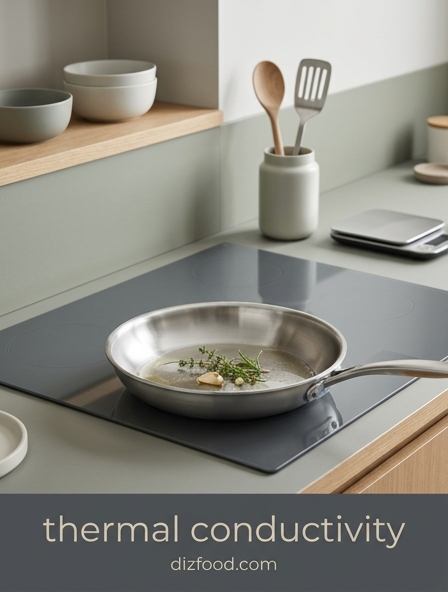
Marination is more than a flavor-enhancing process; it fundamentally alters the physical properties of meat, impacting its thermal conductivity. When a marinade containing salt is applied, it penetrates the muscle fibers and denatures the proteins. This process increases the water-holding capacity of the tissue. Because water is a significantly better conductor of heat than the air pockets or fat deposits found in untreated muscle, a well-marinated piece of protein often exhibits more efficient heat transfer during the cooking process. This enhanced conductivity allows thermal energy to migrate toward the center of the cut more uniformly.
However, the depth of this conductivity change depends on the duration of the soak and the concentration of solutes. If the marinade only penetrates the surface, the chef must account for a gradient in thermal resistance. Furthermore, the presence of dissolved minerals in the marinade can slightly alter the specific heat capacity of the meat, requiring subtle adjustments in timing to ensure that the core temperature rises at the desired rate without overcooking the exterior layers.
Managing Sugar Content to Prevent Burning
The inclusion of sugars such as honey, agave, or molasses in marinades introduces a complex variable in thermal management. Sugars have lower caramelization and combustion points compared to the proteins they coat. When high-sugar marinades are exposed to high thermal energy, the exterior can reach carbonization temperatures long before the interior has benefited from conductive heat transfer. This creates a deceptive appearance where the food looks finished but remains raw inside.
To manage this, it is essential to understand the temperatures at which different sweeteners begin to undergo chemical changes. The following table highlights common marinade sweeteners and their approximate caramelization thresholds:
| Sweetener Type | Caramelization Temperature |
|---|---|
| Fructose (Honey/Fruit) | 230°F (110°C) | Galactose/Lactose (Dairy) | 302°F (150°C) |
| Sucrose (Table Sugar) | 320°F (160°C) |
| Maltose (Malt Syrup) | 356°F (180°C) |
By monitoring the surface temperature, a cook can prevent the bitter flavors associated with burnt sugar while still allowing enough time for heat to conduct inward.
Smoke Points and Oil Selection for Marinades
Oils within a marinade serve as the primary thermal bridge between the heat source-whether a pan or a grill grate-and the protein. The thermal conductivity of oil is much higher than that of air, facilitating rapid energy transfer. However, every oil has a smoke point, the temperature at which it begins to break down and release acrid smoke and free radicals. If the oil in the marinade exceeds this point, the flavor profile is ruined, and the thermal efficiency can be hampered by the resulting carbon buildup on the food surface.
Selecting the right oil depends on the intended cooking method and the desired intensity of the sear. Higher smoke point oils are preferred for high-heat conduction tasks. Consider these common options:
- Avocado Oil: High smoke point (520°F), ideal for searing and intense conduction.
- Grapeseed Oil: Moderate-high smoke point (420°F), good for general pan-frying.
- Extra Virgin Olive Oil: Lower smoke point (375°F), best for low-to-medium heat or short durations.
- Butter: Low smoke point (350°F), primarily used for finishing rather than high-heat conduction.
Searing Techniques for Marinated Proteins
Searing marinated proteins requires a sophisticated understanding of thermodynamics. The goal is to achieve the Maillard reaction-a chemical reaction between amino acids and reducing sugars that gives browned food its distinctive flavor. When meat is wet from a marinade, the initial thermal energy is consumed by the latent heat of vaporization. The temperature of the meat surface cannot exceed 212°F (100°C) until the surface moisture has evaporated. This can lead to "steaming" rather than searing.
To maximize the efficiency of heat conduction during a sear, the protein should be patted dry or the marinade should be highly oil-based. This ensures that the thermal energy from the pan is immediately utilized to raise the surface temperature of the meat to the 285°F-330°F range required for the Maillard reaction. Using heavy-bottomed pans with high thermal mass, such as cast iron, provides a consistent heat reservoir that prevents the temperature from dropping when the moist protein is introduced, ensuring a rapid and effective sear.
Low and Slow Heat for Acidic Marinades
Acidic marinades, utilizing ingredients like vinegar, citrus juice, or yogurt, work by denaturing the connective tissues and weakening the collagen structure of the meat. While this tenderizes the cut, it also makes the protein more susceptible to becoming mushy if high heat is applied too quickly. In these scenarios, utilizing low-intensity thermal conduction is often the most effective strategy. By maintaining a lower temperature gradient between the cooking environment and the food, the heat moves slowly through the meat, allowing the chemically softened fibers to set without constricting violently.
Slow cooking also prevents the exterior-which has been weakened by the acid-from disintegrating before the center reaches the target temperature. This method relies on steady, indirect heat or low-temperature conduction in a braising liquid. The lower thermal flux ensures that the moisture retention gained during the marination process is not lost to rapid evaporation, resulting in a finished product that is both tender and succulent rather than dry and stringy.
Optimizing the Maillard Reaction in Wet Environments
The presence of moisture is the primary enemy of the Maillard reaction. In a wet environment, such as when a protein is heavily coated in a liquid marinade, the thermal energy is prioritized toward boiling off the water. This phase change requires a significant amount of energy (2,260 joules per gram), which keeps the surface temperature too low for browning to occur. To optimize browning in these conditions, the chef must manipulate the heat flux to overcome the cooling effect of evaporation.
One technique is to use a two-stage thermal approach. First, the marinated item is cooked using moderate heat to allow the moisture to evaporate gradually and the internal temperature to rise. Once the surface is dry, the heat intensity is increased to trigger rapid browning. Alternatively, the "reverse sear" method uses low-temperature convection to dry the surface and heat the interior slowly, followed by a brief, high-conduction sear at the very end. This strategy exploits the relationship between thermal conductivity and moisture content to produce a superior crust and flavor profile.
Direct versus Indirect Heat Distribution
In the kitchen, heat is distributed via conduction (direct contact), convection (moving air or liquid), and radiation (infrared waves). When cooking marinated cuts, the choice between direct and indirect heat is vital. Direct heat, such as grilling over coals or pan-searing, relies on high-speed conduction. This is excellent for thin, marinated cuts that require a quick char. However, for thicker marinated cuts, direct heat can be too aggressive, burning the surface before the heat can conduct to the center.
Indirect heat, such as roasting or using the "cool side" of a grill, uses convection to surround the food with warm air. This slower process allows for a more gradual heat transfer, which is safer for marinades containing delicate herbs or high sugar levels. Often, the best results come from a combination:
- Start with indirect heat to gently raise the internal temperature.
- Finish with direct heat to develop the surface texture and aroma.
- Monitor surface moisture throughout to ensure the heat type matches the food's state.
Surface Moisture Control and Caramelization
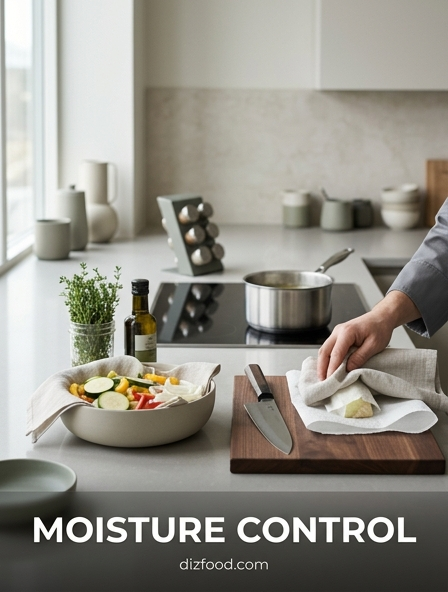
Caramelization and the Maillard reaction are the hallmarks of professional-level cooking, but they are physically impossible in the presence of excessive surface moisture. When a marinade is left on the surface in large quantities, the thermal energy of the pan is diverted away from the food and toward the liquid. Controlling this moisture is the most effective way to manage the rate of caramelization. By removing excess liquid, the cook reduces the thermal load required to reach the "browning zone."
This does not mean the flavor of the marinade is lost; the solutes that have penetrated the meat remain, while the surface solutes concentrate as the remaining thin film of moisture evaporates. This concentration actually accelerates the chemical reactions once the temperature threshold is met. Strategic use of high-smoke-point oils can also help by creating a thin, highly conductive layer that facilitates even browning across the entire surface of the protein, filling in the microscopic gaps between the meat and the cooking vessel to ensure maximum heat transfer efficiency.
Internal Temperature Precision for Marinated Cuts
Predicting the cooking time of marinated meat is difficult because the marinade alters the density and moisture content of the tissue, which in turn changes its thermal diffusivity. Thermal diffusivity is a measure of how quickly a material reacts to a change in temperature. Because marinades increase moisture, they can actually slow down the rate at which the internal temperature rises once the cooking reaches the "stall" point-the stage where evaporative cooling balances out the heat input.
To achieve precision, chefs should rely on internal temperature probes rather than fixed timers. Because marinated meats are often more "forgiving" due to increased moisture, they can sometimes withstand slightly higher internal temperatures without tasting dry, but the goal remains the same: reaching the ideal window for protein coagulation. Using an instant-read thermometer ensures that the core has reached the safety and texture target, regardless of how the marinade might have accelerated or decelerated the heat conduction through the outer layers of the cut.
Post-Cook Resting and Residual Heat Balance
Once meat is removed from the heat source, the process of thermal conduction does not stop. This is known as "carry-over cooking." The exterior of the meat is significantly hotter than the center, creating a temperature gradient. During the resting phase, heat continues to migrate inward toward the cooler core. For marinated meats, which often retain more moisture, this period of thermal equilibration is essential for the redistribution of juices.
As the temperature stabilizes, the protein fibers, which were tightened by the heat, begin to relax, allowing them to reabsorb the moisture that was mobilized during cooking. If a marinated steak is cut too soon, the enhanced moisture levels-the very result of the marination process-will simply run out onto the board. By allowing the meat to rest, the internal pressure drops, and the residual heat completes the cooking process gently. Usually, a rest time of five to ten minutes is sufficient to reach thermal equilibrium, ensuring that the flavor and moisture are locked within the protein matrix before serving.

Comments