
The Science of the Perfect Protein Snap
The "snap" of a perfectly cooked protein is a tactile hallmark of culinary excellence, most often associated with high-quality sausages, poultry skin, and crustacean shells. This sensation is the result of rapid protein denaturation and the subsequent cross-linking of structural proteins under intense heat. To achieve this, the surface must be devoid of excess moisture, allowing the structural integrity of the casing or skin to tighten and become brittle. When heat is applied to a dry surface, the collagen fibers undergo a transformation, shrinking and hardening into a pressurized barrier that resists the initial bite before yielding suddenly.
In addition to collagen transformation, the internal pressure plays a critical role. As the internal moisture heats, it expands against the toughened exterior. This creates a tension that, when breached by a knife or teeth, results in the audible and textural snap. Achieving this requires a delicate balance of temperature control and surface preparation, ensuring the exterior is sufficiently dehydrated to provide resistance while the interior remains succulent and pressurized.
Surface Moisture and Maillard Reaction Efficiency
The Maillard reaction is the chemical cornerstone of flavor development in cooked proteins, occurring between amino acids and reducing sugars. However, this reaction is significantly hindered by the presence of surface moisture. Water acts as a thermal buffer; because it boils at 212°F (100°C), any liquid on the surface of the meat must be completely evaporated before the surface temperature can rise to the 285°F to 330°F range required for browning. This delay often results in overcooked interiors, as the core continues to heat while the exterior struggles to brown.
Efficiency in the Maillard reaction is directly proportional to the dryness of the ingredient's surface. A wet steak will essentially steam in the pan until the liquid is gone, leading to a grey, unappealing exterior. To maximize efficiency, chefs prioritize surface dehydration to ensure that heat energy is immediately used for browning rather than phase-shifting water into steam. This creates a more complex flavor profile and a superior textural contrast between the seared crust and the tender interior.
Impact of Salt on Muscle Fiber Hydration
Salt is a powerful tool for managing moisture at the molecular level. When salt is applied to meat, it initially draws moisture out through osmosis. However, given enough time, the resulting brine dissolves a portion of the muscle proteins-specifically myosin. This process, known as denaturing, allows the muscle fibers to relax and expand, creating a matrix that can reabsorb the moisture and hold it more tightly during the cooking process. This leads to a significantly juicier end product, as the modified protein structure resists the tightening that normally squeezes out water under heat.
The impact of salt on hydration is not just about quantity, but also about the structural integrity of the fibers. By altering the electrical charge of the protein filaments, salt increases the space between them, allowing more water to be trapped within the cellular structure. This creates a buffer against the drying effects of high-heat cooking, ensuring that even as the surface dehydrates to form a crust, the interior remains hydrated and tender.
Essential Dry Brining Techniques for Texture
Dry brining is the process of salting meat well in advance of cooking without the use of added liquid. This technique is superior to wet brining for achieving crisp skins and concentrated flavors. The process follows a specific timeline that dictates the final texture of the protein. By allowing the salt to work its way into the meat over several hours, the exterior becomes exceptionally dry while the interior becomes seasoned and structurally optimized for moisture retention.
- Short Term (30-60 mins): Salt draws out moisture; surface is wet. Avoid cooking during this window unless the surface is patted dry.
- Medium Term (2-6 hours): Moisture begins to reabsorb; protein fibers start to break down. Ideal for thinner cuts like pork chops.
- Long Term (12-24 hours): Surface becomes visibly dry and translucent; interior is fully seasoned. Essential for thick roasts and poultry.
- Extended Term (24-48 hours): Maximum surface dehydration occurs, leading to the ultimate "glass-like" skin on ducks or turkeys.
Air Drying Methods for Restaurant Quality Skin
To achieve the parchment-thin, shatteringly crisp skin found in high-end restaurants, air drying is an indispensable step. This process leverages the low humidity of a commercial or domestic refrigerator to pull moisture away from the skin. For poultry and fish, placing the protein on a wire rack allows for 360-degree airflow, preventing the underside from becoming soggy. As the skin dries, it becomes thinner and more concentrated in fats and proteins, which will eventually fry in their own rendered fat once exposed to heat.
The duration of air drying depends on the thickness of the skin and the desired result. A few hours can improve a salmon fillet, while a whole duck may require up to three days. During this time, the skin undergoes a physical change, turning from opaque and soft to slightly translucent and firm. This pre-dehydration ensures that the cooking phase focuses entirely on rendering fat and crisping the protein, rather than struggling to evaporate water trapped within the skin's layers.
Balancing Marinade Acidity and Protein Integrity
Marinades are often used to impart flavor and tenderize meat, but they must be managed carefully to avoid compromising protein integrity. Acidity, usually from vinegar, citrus, or wine, works by denaturing the surface proteins. While this can provide a pleasant "bite," excessive exposure to acid can lead to a mushy, mealy texture as the proteins break down too far. This chemical cooking can also prevent a proper sear, as the damaged surface proteins lose their ability to form a cohesive, crispy crust.
To balance these effects, chefs must consider the pH level of the marinade and the duration of exposure. Soft proteins like fish require very little time (15-30 minutes), while tougher cuts like flank steak can handle several hours. Balancing the acid with fats and sugars can also buffer the denaturing process, ensuring flavor penetration without destroying the structural "snap" of the meat's exterior. Monitoring the moisture level after marinating is also vital; the protein must be thoroughly dried before hitting the heat.
Thermal Impact of Excess Liquid in the Pan
Effective moisture control is as much about the environment as it is about the ingredient. When a protein with excess surface moisture is placed in a hot pan, it undergoes a rapid phase change. The energy from the burner is redirected toward the latent heat of vaporization-the energy required to turn liquid water into steam. This results in a drastic drop in pan temperature, which can stall the cooking process and prevent the formation of a crust. If the pan is crowded, the released steam becomes trapped, surrounding the meat in a moist environment that effectively boils or poaches the exterior.
| Condition | Thermal Outcome | Resulting Texture |
|---|---|---|
| Dry Surface / High Heat | Direct conduction; no energy loss to steam | Crispy, browned crust |
| Wet Surface / High Heat | Energy diverted to evaporation | Grey, steamed exterior |
| Crowded Pan | Temperature crash; steam entrapment | Tough, rubbery protein |
Tools for Effective Surface Dehydration
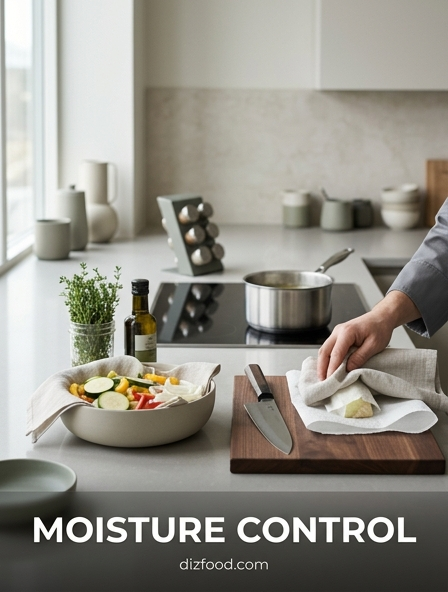
To master moisture control, specific tools are required to ensure the protein's surface is as dry as possible before cooking begins. These tools range from simple household items to specialized equipment designed to accelerate evaporation and fat rendering. Consistent use of these implements can transform the outcome of a dish, moving it from home-style to professional grade.
- Heavy-Duty Paper Towels: The first line of defense; used to aggressively pat dry surfaces immediately before seasoning.
- Wire Racks: Essential for air circulation; elevates the protein to prevent moisture pooling on the underside.
- Box Fans: Used in professional settings to move air rapidly over proteins, significantly shortening the air-drying time.
- Blow Torches: Used for a final, targeted dehydration of the skin or fat cap just before or during the searing process.
- Hair Dryers: A popular "hack" for poultry; provides warm, moving air to quickly tighten and dry the skin.
Mastering Internal vs External Moisture Ratios
The ultimate goal of moisture control in protein cookery is achieving a stark contrast between a dehydrated, crispy exterior and a succulent, hydrated interior. This ratio is the defining characteristic of a well-executed roast or sear. To manage this, one must consider the "thermal gradient." A high-heat sear provides the external texture, but if maintained too long, it will drive internal moisture out, leading to dryness. Conversely, a low-temperature start (like a reverse sear) helps manage internal hydration but requires a final high-heat blast to correct the surface moisture ratio.
Successful chefs often use a two-stage approach. The first stage involves preparing the surface through drying and salt-restructuring to preserve internal juices. The second stage involves the application of heat in a way that respects these two different zones. By understanding that the exterior must lose water to be flavorful and the interior must retain water to be palatable, one can manipulate cooking times and temperatures to achieve the perfect balance of snap and juice.
Rest Periods and the Preservation of Snap
Resting meat after cooking is a critical final step in moisture management. During the intense heat of cooking, muscle fibers contract and push moisture toward the cooler center of the meat. If sliced immediately, this pressurized liquid will escape onto the cutting board, leaving the meat dry and potentially softening the carefully developed crust. Resting allows the muscle fibers to relax and reabsorb that moisture, ensuring it stays within the meat upon service.
However, resting can also be the enemy of "snap." If a crispy protein is tented tightly with foil, the residual steam will be trapped, essentially steaming the crust and turning it soggy. To preserve the exterior texture while allowing for internal moisture redistribution, proteins should be rested on a wire rack in a warm, draft-free area without a heavy covering. This allows the steam to escape while the internal juices stabilize, ensuring that the first bite delivers the intended crunch followed by a burst of internal hydration.


Comments