
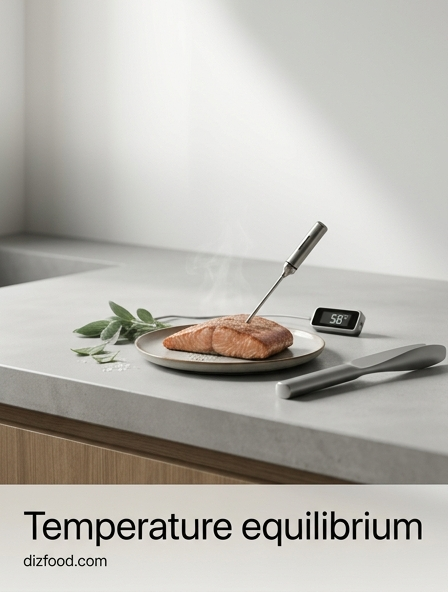
The Science of Temperature Equilibrium
Temperature equilibrium in a culinary context refers to the state where the thermal energy of a food item aligns with its surrounding environment. This thermodynamic process is governed by the second law of thermodynamics, which dictates that heat will naturally flow from a warmer object to a cooler one until a uniform temperature is achieved. In the kitchen, this is often referred to as "tempering," particularly when preparing proteins or fats for high-heat applications. When a steak is pulled from a refrigerator at 38°F, it exists in a state of thermal imbalance relative to the 70°F kitchen air.
Achieving equilibrium is critical because it dictates how kinetic energy interacts with the molecular structure of the food. During this transition, the following factors are influenced:
- Kinetic energy of water molecules within the cellular matrix.
- Viscosity of intramuscular fats and lipids.
- The rate of heat conduction once the food hits the cooking surface.
Without allowing for this period of stabilization, the cook faces a massive "Delta-T," or temperature difference, which forces the exterior to overcook long before the center reaches a safe or desirable temperature. Equilibrium ensures a more predictable and controlled transition of energy during the cooking process.
Preventing Muscle Fiber Contraction
Muscle fibers are primarily composed of proteins like actin and myosin, which are highly sensitive to sudden thermal shifts. When cold meat is introduced to a piping hot cast-iron skillet, the extreme temperature gradient causes these fibers to contract violently. This rapid shortening of the muscle cells acts like a squeezed sponge, forcibly expelling the intracellular moisture that constitutes "juiciness." By allowing the meat to reach temperature equilibrium closer to room temperature, the intensity of this contraction is significantly mitigated.
The physiological response of the tissue during tempering can be summarized as follows:
| State | Fiber Reaction | Moisture Retention |
|---|---|---|
| Cold (Refrigerated) | Rigid and Tense | Low (Expelled quickly) |
| Tempered (Equilibrium) | Relaxed and Pliable | High (Retained in cells) |
A relaxed protein structure allows for a more gradual denaturation. As the heat penetrates the relaxed fibers, they transform into a gel-like state rather than snapping shut. This results in a texture that is perceived as tender rather than chewy or rubbery, highlighting the importance of thermal preparation before the first sear.
Achieving an Even Sear
A perfect sear is the result of the Maillard reaction, a chemical interaction between amino acids and reducing sugars that occurs at high temperatures. However, surface moisture is the enemy of this reaction, as energy is wasted evaporating water before browning can begin. When meat is at temperature equilibrium, the surface tension changes, and surface moisture evaporates more efficiently than when the meat is ice-cold. A cold piece of meat often causes the pan's temperature to plummet, leading to gray, steamed protein rather than a crusty, browned exterior.
To optimize the sear, follow these steps during the equilibrium process:
- Remove the protein from the fridge at least 30 to 60 minutes prior to cooking.
- Pat the surface dry with paper towels to remove any condensation formed during warming.
- Season with salt only after the core temperature has begun to rise.
Because the temperature differential between the meat and the pan is reduced, the heat can focus on carbonizing the surface proteins immediately. This efficiency creates a thinner, more uniform crust that locks in flavor compounds without requiring excessive time on the heat, which would otherwise overcook the interior layers.
The Importance of Room Temperature
The transition to room temperature is perhaps the most debated yet vital step in professional protein preparation. While food safety is paramount, the brief window required to bring a thick-cut chop or steak to equilibrium (usually 45 to 90 minutes) is insufficient for significant bacterial growth but sufficient for thermal leveling. When the internal temperature of the meat rises even by ten degrees, the energy required to reach the final "doneness" stage is lowered. This reduces the total time the food must spend in the high-heat environment of an oven or grill.
The relationship between starting temperature and cooking time is non-linear. A cold center acts as a heat sink, drawing energy away from the layers just beneath the surface. If the core is starting at 40°F, the exterior must be subjected to intense heat for a longer duration to push that core to 130°F. By starting at 65°F, you effectively bridge the gap, ensuring that the transition from raw to cooked happens rapidly and uniformly across the entire cross-section of the ingredient, leading to superior culinary results.
Maximizing Juiciness Through Tempering
Juiciness in cooked meat is not just about fat; it is about the ability of the protein matrix to hold onto water during the heating process. As temperature equilibrium is reached, the water molecules within the meat become less dense and more mobile. If you apply heat to a cold, dense center, the moisture is driven outward toward the heat source, where it eventually evaporates. Tempering allows the moisture to stay "bound" to the proteins more effectively during the early stages of cooking.
Consider the following aspects of moisture management:
- Capillary Action: Warmer proteins allow for better distribution of fluids.
- Vapor Pressure: A tempered steak has a lower internal pressure change when heated.
- Lipid Solubility: Intramuscular fat (marbling) begins to soften, providing a protective coating for the moisture.
When the internal and external temperatures are closer together, the "push" of moisture from the center to the surface is slowed. This preservation of internal fluids ensures that when you finally slice into the meat, the juices remain within the fibers rather than pooling on the cutting board, providing a more succulent eating experience.
Minimizing the Grey Band
The "grey band" is the unappealing layer of overcooked, dry meat that sits between the perfectly seared crust and the tender, pink center. This phenomenon is a direct result of a lack of temperature equilibrium. If the center of the meat is very cold, you must cook the exterior for an extended period to ensure the middle reaches the desired temperature. By the time the center is a perfect medium-rare, the outer half-inch of the meat has been subjected to heat for so long that it has turned grey and leathery.
To eliminate this, the thermal gradient must be narrowed. Using a meat thermometer, you can track the progress of equilibrium. A steak that has been tempered properly will show a much smaller temperature difference between the surface and the core. When this balanced piece of meat hits the pan, the heat travels through it more evenly. The result is an "edge-to-edge" pink interior with only a microscopic layer of browned crust, maximizing the portion of the meat that is cooked to the ideal level of doneness and texture.
Enhancing Marinade Penetration
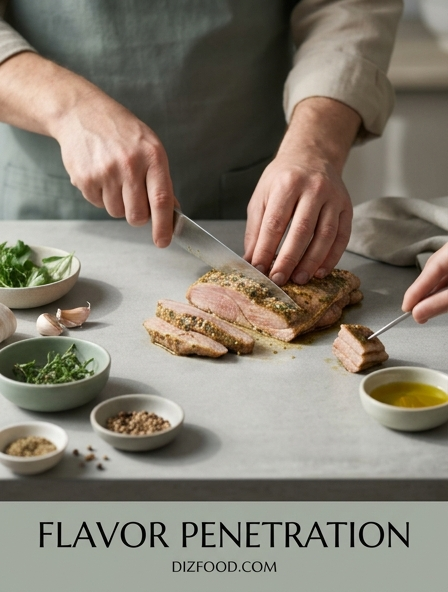
Temperature equilibrium plays a silent but critical role in the efficacy of marinades and dry rubs. At lower temperatures, the molecules in both the meat and the marinade move slowly, and the fats in the protein are often solid and waxy. This creates a barrier that prevents salt, acids, and aromatics from penetrating deep into the muscle tissue. As the meat warms toward room temperature, the fats begin to soften and the protein structure expands slightly, creating "paths" for the marinade to enter.
The benefits of tempering during the marination phase include:
- Increased osmotic pressure, drawing salt deeper into the fibers.
- Faster enzymatic breakdown of connective tissues by acidic components.
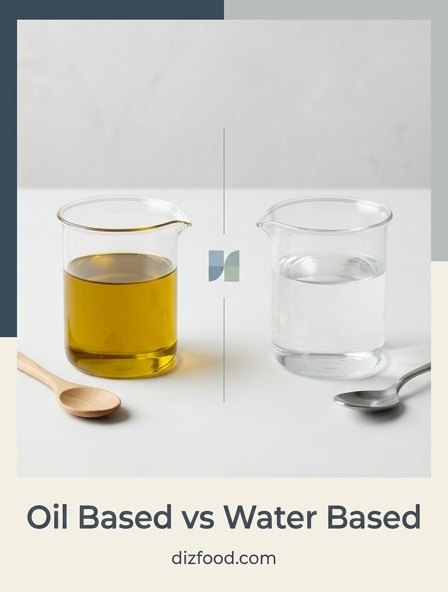
- Better adherence of oil-based marinades as surface fats become more receptive.
By allowing the meat to sit in its marinade as it approaches equilibrium, you are essentially "priming" the protein. The flavors become more integrated rather than just sitting on the surface. This ensures that every bite, not just the outside, carries the intended flavor profile while also helping to tenderize the tougher structural proteins before heat is even applied.
Optimizing Core Heat Distribution
The center of a roast or a thick steak is the hardest part to cook accurately. In physics, heat transfer occurs via conduction, where energy moves from molecule to molecule. If the core is significantly colder than the exterior, it creates a "cold spot" that resists heat penetration. This resistance causes the heat to "pile up" in the outer layers, leading to uneven cooking. Optimizing the core heat distribution requires a period of stabilization where the internal temperature is allowed to rise naturally before being placed in the oven.
Effective core distribution follows a predictable path:
- Thermal energy moves from the ambient air into the surface.
- Conduction slowly carries that energy toward the center.
- Molecular vibration increases throughout the item, creating a baseline heat level.
This baseline heat is vital for large cuts like prime rib or whole chickens. If the core starts at 60°F instead of 35°F, the heat from the oven can penetrate the center much more efficiently. This leads to a shorter cooking window and a significantly more uniform final product, where the center and the exterior reach their peak states simultaneously.
Reducing Thermal Shock
Thermal shock occurs when a material undergoes a rapid change in temperature, causing localized stress. In the kitchen, this affects both the food and the cooking vessel. Dropping a cold, wet piece of protein into a hot pan causes a violent reaction: the water on the surface flashes into steam, and the protein fibers tighten instantly. This shock can cause the meat to curl or warp, preventing even contact with the heat source. By achieving temperature equilibrium, you reduce the intensity of this transition.
Beyond the meat itself, reducing thermal shock protects your equipment and the cooking environment:
| Feature | With Thermal Shock | With Equilibrium |
|---|---|---|
| Pan Temperature | Drops significantly | Stays consistent |
| Oil Reaction | Violent splattering | Controlled sizzling |
| Food Shape | Curling/Warping | Flat/Even contact |
When the temperature difference is minimized, the pan maintains its "thermal mass," allowing for a steady, high-heat environment that is essential for professional-grade results. This stability leads to better browning and a more predictable cooking timeline.
Balancing Internal and External Temperatures
The ultimate goal of all culinary heat application is the perfect balance between the internal and external temperatures. A dish is considered balanced when the exterior has reached its maximum flavor potential through browning or crisping, while the interior has reached its ideal textural state. This balance is nearly impossible to achieve without first addressing temperature equilibrium. If you start with an unbalanced ingredient, you will inevitably end with an unbalanced result-either a burnt exterior or a raw interior.
Achieving this harmony requires a two-step approach: tempering before cooking and resting after cooking. During tempering, you are narrowing the temperature gap from the bottom up. During resting, you are allowing the residual heat from the exterior to migrate inward, a process known as carry-over cooking. These two periods of equilibrium bookend the active cooking process, ensuring that the heat is a tool for transformation rather than a source of stress for the food. When these temperatures are balanced, the structural integrity, flavor, and moisture of the kitchen's most prized ingredients are all preserved.


Comments