
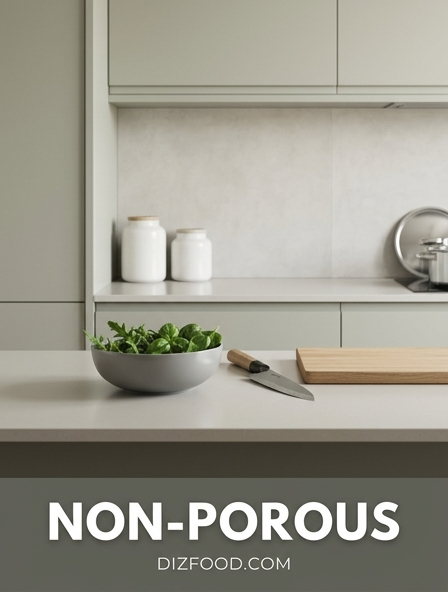
The Science of Non-Porous Surfaces
At the molecular level, non-porous surfaces such as tempered glass, high-grade stainless steel, and certain ceramics are characterized by a dense, tightly packed atomic structure. Unlike organic materials like wood or soapstone, these surfaces lack microscopic voids, capillaries, or fissures. This structural integrity prevents the ingress of liquids and gases, ensuring that the material remains inert when in contact with complex organic compounds. In a kitchen environment, this density is the primary defense against internal degradation and bacterial colonization.
| Material Type | Surface Density | Permeability |
|---|---|---|
| Stainless Steel | Very High | Zero |
| Tempered Glass | High | Zero |
| Natural Oak | Low | High |
The absence of pores means that fluids are forced to remain on the surface, where they can be manipulated or removed entirely. This physical barrier is essential for maintaining the purity of the substrate, as it prevents the "wicking" effect that often leads to deep-seated contamination in more permeable kitchen tools.
Preserving Delicate Marinade Aromatics
Marinades rely on volatile organic compounds (VOCs) to deliver flavor and scent. When these liquids are placed in porous containers, a significant percentage of the aromatic molecules are lost as they are absorbed into the walls of the vessel. Non-porous surfaces ensure that every drop of essential oil, ester, and aromatic aldehyde remains in direct contact with the protein or vegetable being treated. This creates a high-pressure environment for flavor infusion rather than a loss of potency to the container itself.
- Retention of citrus zest oils
- Preservation of fresh herb top notes
- Protection of volatile sulfide compounds in garlic
- Prevention of evaporation at the container interface
By utilizing materials like glass or polished steel, chefs can ensure that the profile of the marinade remains exactly as intended. The lack of surface interaction means the chemical equilibrium of the marinade is not disturbed by the container's own chemical makeup, allowing for a pure olfactory experience from the start of the marination process to the final sear.
Eliminating Cross-Contamination of Flavors
One of the greatest challenges in a high-performance kitchen is "flavor ghosting," where the remnants of a previous dish influence the current one. Porous materials like plastic and wood act as reservoirs for pungent oils and pigments. Even after vigorous scrubbing, molecules from onions, peppers, or heavy spices can remain trapped within the surface matrix. Non-porous materials solve this issue by providing a surface that can be sanitized at a molecular level, leaving no residue behind for the next culinary application.
- Thorough rinsing removes surface-level particulates.
- Surfactants break down lipid bonds without deep-tissue soaking.
- Thermal sanitization eliminates any remaining biological traces.
This level of cleanliness is vital when transitioning between diverse flavor profiles, such as moving from a spicy curry marinade to a delicate vanilla-infused brine. Because the surface does not "remember" the previous ingredients, the integrity of the current dish is never compromised. This reliability is why professional labs and high-end kitchens prioritize non-porous equipment for flavor-sensitive tasks.
Chemical Purity and Food Safety
Food safety is inextricably linked to the physical properties of kitchen surfaces. Non-porous materials are inherently hostile to the formation of biofilms, which are colonies of bacteria that thrive in the moist, protected environments found inside pores. When a surface is truly non-porous, bacteria such as Salmonella or E. coli have nowhere to hide from cleaning agents. This ensures that sanitization protocols are 100% effective, as the chemical disinfectants can reach every square millimeter of the exposed area.
Beyond microbiology, chemical purity involves the prevention of leaching. Many porous synthetic materials contain plasticizers or stabilizers that can migrate into acidic or oily foods. Non-porous surfaces, particularly borosilicate glass and 316-grade stainless steel, are chemically inert. They do not react with vinegar, lemon juice, or high-alcohol marinades, ensuring that the food remains free from metallic taints or synthetic chemical contaminants. This creates a stable environment for long-term food storage and intensive preparation techniques.
Zero Absorption for Maximum Potency
When preparing a concentrated brine or a high-value spice rub, the goal is total transfer of flavor to the food. Porous containers act as a "sponge," siphoning away the most concentrated elements of the liquid. This absorption changes the ratio of the marinade, often leaving the remaining liquid diluted or unbalanced. Non-porous surfaces ensure a zero-absorption environment, maintaining the precise salinity and acidity levels required for effective osmosis during the marination phase.
- Maintains salt-to-water ratios in brines.
- Prevents the loss of expensive oils and extracts.
- Ensures consistent viscosity of thick sauces.
- Allows for precise measurement of liquid volumes.
Because the container does not compete with the food for the marinade, the efficiency of the infusion process is significantly increased. This is especially critical for short-duration marinating where every minute of contact counts. The result is a more potent flavor profile and a more predictable outcome in the final cooked product, as the chef maintains absolute control over the ingredient concentrations.
The Advantage Over Plastic Permeability
While plastic is a ubiquitous kitchen material, it suffers from inherent permeability issues that non-porous alternatives like glass and steel do not. Over time, plastic develops micro-scratches from utensils and cleaning pads. These scratches serve as entry points for fats and pigments, leading to permanent staining and odor retention. Furthermore, the polymer chains in many plastics can actually absorb lipid-soluble flavor compounds, dulling the taste of the food stored within them.
| Feature | Non-Porous (Glass/Steel) | Porous (Plastic/Polymer) |
|---|---|---|
| Odor Retention | None | High |
| Scratch Resistance | High | Low |
| Lipid Absorption | Zero | Moderate |
Switching to non-porous materials eliminates these variables. The surface remains smooth and impermeable regardless of age or frequency of use. This longevity makes non-porous surfaces more cost-effective and safer for rigorous kitchen environments where consistency and hygiene are the top priorities.
Maintaining Consistent Flavor Profiles
In professional culinary arts, consistency is the hallmark of quality. A recipe must taste exactly the same every time it is prepared. Porous surfaces introduce an unwanted variable: the "seasoning" of the tool. While a seasoned cast iron skillet is desirable for some, it is a liability when working with marinades or acidic bases. Non-porous surfaces provide a neutral "blank canvas," ensuring that the only flavors present are the ones the chef intentionally added.
This neutrality is achieved through the lack of reactive sites on the surface. When a marinade is mixed in a non-porous bowl, there is no catalytic reaction between the liquid and the vessel. This prevents the development of "off-flavors" that can occur when acids react with certain metals or when trapped oils in plastic go rancid. By removing the container from the flavor equation, the chef can fine-tune recipes with mathematical precision, knowing that the equipment will not alter the final sensory profile of the dish.
Stain Resistance and Longevity
Materials like turmeric, beets, and tomato paste are notorious for leaving permanent marks on kitchen equipment. These stains are the result of pigments migrating into the surface matrix of porous materials. Once a stain sets in a pore, it is virtually impossible to remove without abrasive chemicals that further damage the material. Non-porous surfaces are naturally stain-resistant because the pigments cannot penetrate the surface; they simply sit on top until wiped away.
- Resistance to carotenoid staining (carrots, tomatoes).
- Immunity to anthocyanin discoloration (berries, cabbage).
- Easy removal of hydrophobic spices (turmeric, paprika).
This resistance does more than just keep the kitchen looking clean; it preserves the structural integrity of the tools. Because non-porous materials do not require harsh scrubbing or bleaching to maintain their appearance, they suffer less wear and tear over time. This leads to a significantly longer lifespan for kitchenware, making glass and stainless steel the preferred choice for sustainable, long-term culinary use.
The Role of Thermal Stability
Non-porous materials often possess superior thermal stability, which is crucial for safety and flavor management. Glass and high-grade steel can transition from cold refrigeration to moderate heat without the risk of outgassing or structural failure. In porous materials, trapped moisture can expand when heated, leading to cracking or the release of trapped contaminants into the food. Non-porous surfaces, being free of internal moisture, expand and contract uniformly.
This thermal resilience allows for techniques such as "warm marinating," where a marinade is slightly heated to accelerate enzyme activity in the meat. Using a non-porous vessel ensures that the heat does not cause the container to leach chemicals or absorb the thinning oils of the marinade. Furthermore, the ease of cleaning these surfaces in high-temperature dishwashers ensures that thermal sanitization is always an option, providing an extra layer of protection against foodborne illnesses while maintaining the pristine condition of the equipment.
Enhancing Marination Efficiency
Efficiency in marination is defined by how effectively the flavors penetrate the food product. In a non-porous environment, the marinade is forced to interact solely with the food. There is no loss of moisture to the container walls, which maintains the hydraulic pressure of the liquid against the surface of the meat or vegetable. This maximizes the osmotic gradient, encouraging the salt and flavor molecules to move deeper into the fibers of the food at a faster rate.
- Liquid remains concentrated at the food interface.
- Evaporation is minimized in sealed non-porous systems.
- Chemical reactions stay focused on the organic tissue.
Additionally, the smooth surface of non-porous containers allows for easier agitation. When a chef shakes or stirs a marinade, the liquid glides over the surface rather than being trapped in microscopic pits. This ensures a more even coating of the ingredients, leading to uniform flavor distribution. By optimizing the physical environment, non-porous surfaces reduce the time required to achieve a deep, complex flavor profile in any dish.

Comments