
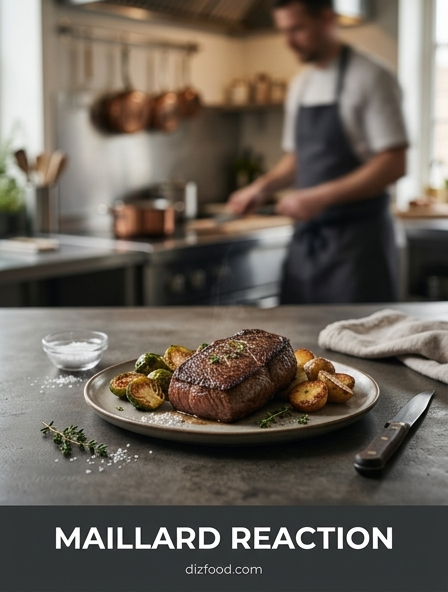
The Chemistry of Maillard Browning
The Maillard reaction is a complex chemical interaction between reducing sugars and amino acids that occurs during the cooking process. Named after the French chemist Louis-Camille Maillard, this non-enzymatic browning typically begins around 140°C (285°F). When heat is applied, the carbonyl group of a sugar reacts with the nucleophilic amino group of an amino acid, forming a diverse range of molecules known as N-substituted glycosylamines. These then undergo Amadori rearrangements to produce various flavor compounds and melanoidins, which are the dark pigments responsible for the brown color of seared meat and toasted bread.
This reaction is responsible for the savory, "umami," and nutty flavors that distinguish cooked foods from raw ingredients. Because the reaction involves hundreds of intermediate steps, the resulting flavor profile is incredibly intricate. Factors influencing the outcome include:
- The specific types of amino acids present in the protein.
- The concentration of reducing sugars like glucose or fructose.
- The duration of exposure to high thermal energy.
- The environmental moisture levels during the heating phase.
The Impact of Surface Moisture
Surface moisture acts as a significant thermodynamic barrier to the Maillard reaction. In culinary physics, water must be evaporated before the surface temperature of the food can rise significantly above 100°C (212°F). This is due to the latent heat of vaporization; as long as water is present on the surface, the energy from the pan or oven is consumed by the phase change of water into steam rather than heating the food to the temperatures required for browning.
To achieve a professional crust, the exterior of the ingredient must be as dry as possible. If moisture is trapped between the food and the heat source, the food effectively steams or boils, resulting in a gray, rubbery texture devoid of complex flavors. To optimize the browning process, chefs utilize several preparatory steps:
- Thoroughly patting the protein dry with absorbent paper towels.
- Salting the surface early to draw out moisture, then wiping it away.
- Using uncovered refrigeration to allow air circulation to dehydrate the skin or surface.
- Utilizing high-heat cooking fats to displace any remaining microscopic water droplets.
Marinade Ingredients for Better Crusts
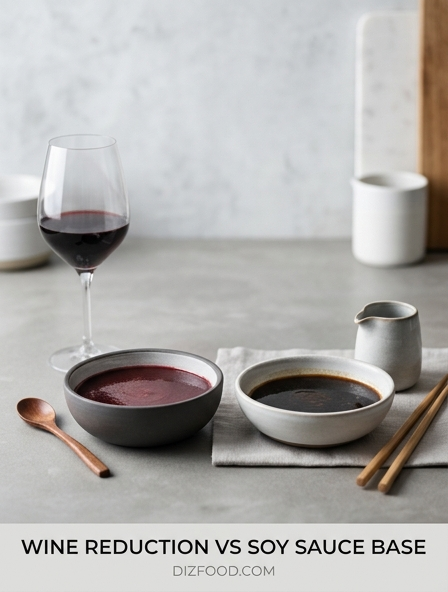
Marinades serve a dual purpose: they tenderize the interior while providing the necessary chemical precursors for an enhanced Maillard reaction on the exterior. By introducing specific sugars and amino acids, a cook can accelerate browning and deepen the flavor profile. Traditional ingredients like soy sauce are particularly effective because they contain both fermented proteins (amino acids) and residual sugars, creating a highly reactive environment once heat is applied.
The selection of marinade components determines the color and depth of the crust. While acids like vinegar can tenderize, they may slow browning if the pH drops too low. Conversely, ingredients rich in reducing sugars will produce a faster color change. The following table illustrates common ingredients and their primary contribution to the crust:
| Ingredient | Primary Contribution | Effect on Crust |
|---|---|---|
| Honey/Maple Syrup | Reducing Sugars | Rapid browning and caramel notes. |
| Soy Sauce | Amino Acids/Salt | Deep savory umami and dark color. |
| Balsamic Vinegar | Sugar and Acid | Glaze-like consistency and tang. |
| Yogurt | Lactose/Proteins | Charred, spotted "leopard" effect. |
Role of Amino Acids and Sugars
The Maillard reaction is not a single reaction but a collection of pathways determined by the specific building blocks available. Different amino acids yield vastly different aromatic compounds. For instance, the amino acid cysteine, common in beef, often results in meaty and sulfurous aromas, while proline, found in flour, contributes to the smell of toasted bread and popcorn. The variety of these "flavor precursors" explains why a seared steak smells fundamentally different from a toasted baguette, despite both undergoing the same chemical process.
Sugars also play a vital role, though they must be "reducing sugars" to participate. Glucose, fructose, and lactose are highly reactive, whereas sucrose (table sugar) must first be broken down by heat or acid into its constituent parts before it can effectively engage with amino acids. The ratio of these components dictates the intensity of the reaction:
- High protein, low sugar environments (like lean meat) require longer cooking or higher heat.
- High sugar, moderate protein environments (like glazed ribs) brown very quickly and risk burning.
- Balanced environments (like bread dough) produce a consistent, golden-brown exterior.
Adjusting pH for Enhanced Browning
The alkalinity or acidity of the food surface significantly influences the rate of the Maillard reaction. In general, an alkaline environment (higher pH) accelerates the reaction because it deprotonates the amino groups, making them more nucleophilic and reactive toward the carbonyl groups of sugars. This is a common technique used in professional kitchens to achieve a dark, crisp crust in a shorter amount of time, which prevents the interior of the food from overcooking.
Conversely, acidic environments (lower pH) inhibit browning. This is why meat marinated in heavy citrus or vinegar often appears pale even after significant cooking time. To manipulate the pH for better results, cooks often employ the following methods:
- Adding a pinch of baking soda to onions to caramelize them in half the usual time.
- Dipping pretzels or bagels in a lye or baking soda bath before baking for a deep brown crust.
- Adding alkaline mineral water to doughs to enhance the Maillard response in the oven.
- Balancing acidic marinades with a small amount of an alkaline component or sugar.
Temperature Management for Professional Searing
Temperature control is the most critical variable when attempting to trigger the Maillard reaction without burning the food. While the reaction begins at lower temperatures, it proceeds slowly. For a professional sear, the pan temperature should ideally be between 150°C and 200°C (300°F to 400°F). If the temperature exceeds 200°C, the food enters the realm of pyrolysis, or carbonization, which produces bitter flavors and potentially carcinogenic compounds.
Managing thermal mass is essential. When a cold piece of meat is placed in a pan, the surface temperature of the pan drops immediately. If the pan is too thin or the heat is too low, the temperature may fall below the Maillard threshold, causing the meat to grey and leak juices. To maintain the ideal temperature range, consider these factors:
- Utilize heavy-bottomed pans like cast iron or stainless steel for better heat retention.
- Avoid overcrowding the pan, which leads to a massive temperature drop and steam production.
- Allow the pan to preheat until the oil shimmers or reaches its smoke point.
- Pat the food dry to ensure energy is used for browning, not boiling off surface water.
Protein Denaturation and Crust Formation
Before the Maillard reaction can fully transform the surface of meat, the proteins must undergo denaturation. This is the process where heat causes the tightly coiled, complex structures of proteins to unfold and lose their secondary and tertiary shapes. As these protein chains uncoil, they begin to bond with one another, a process known as coagulation. This creates the structural foundation of the "crust," turning a soft, wet surface into a firm, desiccated layer ready for browning.
As denaturation progresses, moisture is squeezed out from between the protein fibers. This expelled moisture must be evaporated for the temperature to rise high enough for the Maillard reaction to take over. The relationship between denaturation and browning is symbiotic:
- Denaturation provides the amino acids necessary for the chemical reaction.
- Coagulation creates the physical "crunch" associated with a well-seared surface.
- The tightening of the protein matrix helps to seal in remaining juices, though the "sealing" is more about texture than preventing all moisture loss.
Selecting High Smoke Point Oils
Choosing the right cooking fat is essential for supporting the high temperatures required for the Maillard reaction. The smoke point of an oil is the temperature at which it begins to break down, releasing acrolein and developing an acrid, burnt flavor. Since the Maillard reaction thrives at temperatures above 140°C, using an oil with a low smoke point, such as extra virgin olive oil or unrefined nut oils, will result in a scorched taste before the meat is properly browned.
For high-heat searing, neutral oils with high smoke points are preferred. These allow the cook to reach the necessary thermal threshold without introducing off-flavors. The following table compares common fats used in searing:
| Oil/Fat Type | Smoke Point (Approx.) | Best Use Case |
|---|---|---|
| Avocado Oil | 270°C (520°F) | Extreme high-heat searing and stir-frying. |
| Ghee (Clarified Butter) | 250°C (485°F) | Adding buttery flavor to steaks at high heat. |
| Grapeseed Oil | 215°C (420°F) | General purpose searing with a neutral finish. |
| Refined Coconut Oil | 200°C (400°F) | High-heat sautéing with a slight sweetness. |
Post Marinade Drying Techniques
Applying a marinade is vital for flavor, but the liquid nature of marinades is the primary enemy of the Maillard reaction. If an ingredient goes directly from a bowl of liquid into a hot pan, it will steam rather than sear. Therefore, post-marinade drying is a critical step for any cook seeking a professional crust. This process involves removing excess surface liquid while leaving the absorbed flavors and chemical precursors intact within the surface fibers of the food.
There are several effective techniques to ensure the food is dry enough for a rapid Maillard response. Each method aims to create a "pellicle," which is a thin, dry skin on the surface of the protein:
- Mechanical Drying: Using heavy-duty paper towels to firmly press and blot all sides of the food.
- Air Chilling: Placing the marinated meat on a wire rack in the refrigerator for 2 to 12 hours.
- Salt Desiccation: Applying a light dusting of salt after drying to draw out any remaining microscopic moisture.
- Convection Air: Using a small fan or the airflow of a convection oven to speed up surface evaporation.
The Difference Between Maillard and Caramelization
While often confused, the Maillard reaction and caramelization are distinct chemical processes that occur at different temperatures and involve different reactants. The Maillard reaction requires both amino acids and reducing sugars, whereas caramelization is the pyrolysis of sugar alone. Caramelization occurs when sugars are heated to the point that their molecules break down and reform into complex, dark-colored compounds. This typically happens at higher temperatures than the Maillard reaction, starting at around 160°C (320°F) for sucrose.
The flavor profiles produced by each reaction are also unique. Caramelization produces sweet, nutty, and eventually bitter notes, while the Maillard reaction produces savory, meaty, and toasted flavors. Key differences include:
- Reactants: Maillard needs protein and sugar; Caramelization needs only sugar.
- Temperatures: Maillard starts lower (~140°C); Caramelization starts higher (~160°C).
- Aromas: Maillard creates "savory" smells (steak, toast); Caramelization creates "sweet" smells (toffee, caramel).
- Context: Seared steak is primarily Maillard; a crème brûlée top is primarily caramelization.



Comments