
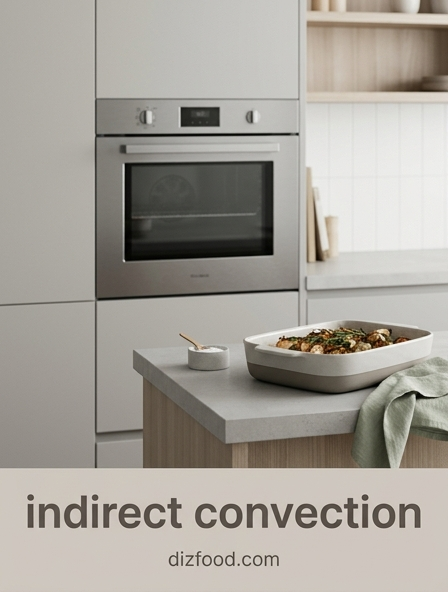
The Science of Indirect Convection Heat
Indirect convection heat is a fundamental principle in modern culinary physics, relying on the movement of heated air molecules rather than direct contact with a heat source. In a kitchen environment, this process typically involves a heating element warming the air, which is then circulated around the food by natural density shifts or mechanical fans. Unlike conduction, which transfers energy through direct molecular collisions, convection utilizes the medium of air to envelop the ingredient, ensuring that thermal energy is applied to every exposed surface simultaneously.
The efficiency of this method is governed by several factors that professional chefs must manage to achieve consistent results:
- Air Velocity: The speed at which air moves determines the rate of heat transfer across the food's boundary layer.
- Thermal Capacity: The ability of the air to hold and transport heat without significant temperature drops.
- Surface Area: The amount of food surface exposed to the moving air, influencing the speed of the cook.
By removing the intense, localized heat found in direct grilling, indirect convection prevents the immediate searing of the exterior while the interior remains cold. This scientific approach allows for a controlled rise in temperature, facilitating complex chemical changes within the food that require time and moderate energy levels to complete successfully.
How Gentle Airflow Liquefies Fat Layers
Liquefying fat layers, a process known as rendering, requires a delicate balance of temperature and airflow. Indirect convection provides a gentle mechanical force that encourages solid fats to transition into a liquid state without reaching the smoke point of the lipids. When warm air moves steadily over the surface of a roast or poultry skin, it creates a constant thermal exchange that penetrates the subcutaneous fat layers. This steady energy transfer softens the crystalline structure of the fat, allowing it to weep through the muscle fibers or drip away from the exterior.
The movement of air is critical because it prevents the accumulation of moisture on the surface, which would otherwise insulate the fat and slow down the liquefaction process. As the fat melts, it bastes the meat naturally, enhancing flavor and texture. This slow transformation is superior to high-heat methods, as it avoids the "flash-frying" effect that can lead to a greasy, unrendered texture. Instead, the gentle airflow ensures that the fat renders out completely, leaving behind a crisp, thin exterior and a succulent, well-lubricated interior that carries the essence of the seasoning throughout the protein.
Balancing Ambient Temperature and Meat Internal Heat
Success in indirect convection cooking hinges on the relationship between the ambient temperature of the cooking chamber and the target internal temperature of the meat. If the ambient temperature is too high, the exterior overcooks before the center reaches safety; if too low, the cooking time extends beyond practical limits, potentially drying out the product. Maintaining a specific thermal gradient allows for a predictable rate of heat penetration, ensuring that the core of the ingredient reaches its peak temperature just as the surface achieves the desired color and texture.
| Meat Type | Ambient Temp (°F) | Target Internal (°F) | Result |
|---|---|---|---|
| Prime Rib | 225 - 250 | 130 - 135 | Edge-to-edge pink |
| Pork Shoulder | 225 - 275 | 195 - 205 | Fully shredded texture |
| Whole Chicken | 325 - 350 | 165 | Crispy skin, moist breast |
This balance is further complicated by carry-over cooking, where the internal temperature continues to rise after the meat is removed from the heat source. In a convection environment, this rise is often more controlled because the temperature gradient between the surface and the core is less extreme than in direct radiant cooking methods.
The Advantage of Convection Over Direct Grilling
Direct grilling relies on infrared radiation and conduction, creating intense heat on the side of the food facing the flame. This often results in a "pulsing" heat effect that can lead to uneven cooking and charred exteriors with raw centers. In contrast, indirect convection offers several distinct advantages for larger or more delicate items:
- Uniformity: The circulating air ensures all sides of the food are cooked at the same rate, eliminating the need for constant flipping.
- Temperature Control: It is easier to maintain a steady, low temperature in a convection system than over an open flame.
- Reduced Flare-ups: Since the food is not directly over the heat source, dripping fats do not ignite, preventing acrid soot from depositing on the meat.
- Versatility: Convection allows for the addition of moisture or wood smoke into the air stream, providing more ways to influence final flavor.
By utilizing the entire volume of the cooking chamber rather than just the surface of the grate, convection transforms the oven or grill into a stable thermal environment. This stability is essential for thick cuts of meat that require deep heat penetration without the risk of burning the surface before the center is done.
Breaking Down Tough Connective Tissues Gradually
Tough cuts of meat are characterized by high concentrations of collagen, a structural protein that holds muscle fibers together. At room temperature, collagen is tough and inedible. However, through the application of low-intensity indirect convection heat, this protein undergoes a miraculous transformation. The gradual increase in temperature allows the collagen fibers to slowly unwind and denature into gelatin, a process that provides the silky mouthfeel associated with high-quality barbecue and slow roasts.
- De-naturation: As the meat reaches 140°F, collagen begins to shrink and squeeze out moisture.
- Hydrolysis: Between 160°F and 180°F, in the presence of internal moisture, the collagen begins to break down into gelatin.
- Softening: Continued exposure to heat allows the gelatin to lubricate individual muscle fibers, making the meat "fork-tender."
This process cannot be rushed; high heat would simply cause the muscle fibers to tighten and toughen before the collagen has a chance to melt. Indirect convection provides the necessary time and steady thermal energy to facilitate this chemical breakdown, turning inexpensive, tough cuts into culinary masterpieces with a soft, yielding texture that is impossible to achieve with fast-cooking methods.
Maximizing the Maillard Reaction in Slow Roasts
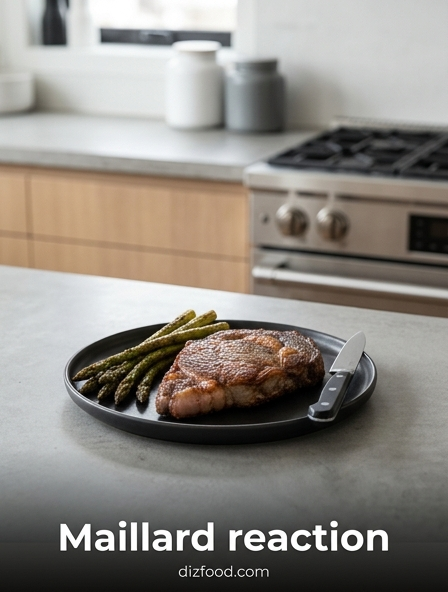
The Maillard reaction is the chemical interaction between amino acids and reducing sugars that gives browned food its distinctive flavor and aroma. While often associated with high-heat searing, this reaction can be successfully maximized in slow-roasting scenarios through indirect convection. Because convection air is often drier than the air in a conventional oven, it facilitates the evaporation of surface moisture more efficiently. This reduction in surface water allows the temperature of the meat's exterior to rise above the boiling point of water, triggering the Maillard reaction even at relatively low ambient temperatures.
As the air circulates, it constantly replaces humid air near the meat's surface with drier air, creating a "dehydration zone" that accelerates browning. Over several hours, this results in a deep, complex crust known as "bark" in the smoking world. This crust is not just a texture; it is a concentrated layer of savory compounds that develop slowly, offering a more nuanced flavor profile than the quick, bitter char produced by a high-heat grill. The result is a roast that is as visually appealing and aromatic as it is tender.
Maintaining Moisture While Rendering Solid Fats
One of the primary challenges in kitchen science is rendering out solid fat without dehydrating the lean muscle tissue. Indirect convection excels at this by utilizing the "stall" effect and controlled evaporation. As the meat cooks, moisture moves from the center toward the surface, where it evaporates. This evaporation cools the meat, a process known as evaporative cooling, which allows the internal temperature to plateau. During this plateau, the solid fats have ample time to liquefy and penetrate the muscle, providing a protective barrier that locks in remaining juices.
To maximize moisture retention, the humidity within the convection chamber can be manipulated. While dry air helps with fat rendering and crust formation, a certain level of ambient moisture prevents the surface from becoming overly leathery. The steady, indirect heat ensures that the muscle fibers do not contract too violently, which would otherwise squeeze out the intracellular fluids. By managing the airflow and temperature, the chef ensures that the rendered fat replaces lost water, resulting in a finished product that feels incredibly moist and rich on the palate, despite a long residence time in the heat.
The Importance of Continuous Air Circulation
Continuous air circulation is the "engine" of convection cooking. Without movement, a layer of cool, stagnant air-known as the boundary layer-forms around the food, acting as an insulator and slowing down the cooking process. In a kitchen setting, a fan or natural draft breaks this boundary layer, ensuring that the food is constantly exposed to the actual ambient temperature of the oven. This leads to significantly faster cooking times compared to static air environments, even at the same temperature setting.
Furthermore, circulation eliminates "cold spots" within the cooking chamber. In a static oven, heat tends to pool at the top, leaving the bottom of the roast undercooked. A continuous flow of air homogenizes the environment, creating a truly three-dimensional cooking experience. This is particularly vital when the oven is crowded, as the air must be forced between items to ensure safety and quality. By maintaining a constant kinetic energy in the air, convection systems provide a level of precision and predictability that is essential for high-volume professional kitchens and dedicated home cooks alike.
Achieving Uniform Tenderness Through Heat Distribution
Uniformity is the hallmark of professional-grade cooking. Indirect convection achieves this by surrounding the ingredient with a consistent thermal envelope, ensuring that the heat enters the food from all directions at an equal rate. This is especially important for large, irregular cuts like a whole turkey or a standing rib roast. When heat is distributed evenly, the outer layers of the meat do not become overcooked and "gray" by the time the center reaches the perfect temperature. This results in a much larger "sweet spot" of perfectly cooked meat.
- Edge-to-Edge Consistency: Minimizes the gradient between the well-done exterior and the rare interior.
- Predictable Timing: Even heat distribution leads to more reliable cooking charts and schedules.
- Structural Integrity: Evenly cooked proteins retain their shape better, making for cleaner slicing and presentation.
By treating the air as a fluid that washes over the food, convection mimics the effects of a water bath (sous-vide) but with the added benefits of surface browning and fat rendering. The result is a superior texture where every bite offers the same level of tenderness and juiciness.
Preserving Flavor Compounds During Long Cook Times
Long cook times often raise concerns about the loss of volatile flavor compounds through evaporation. However, indirect convection can actually help preserve and concentrate these flavors if managed correctly. Because the heat is indirect, there is no localized scorching that can create "off" flavors or carbonize delicate spices. The gentle nature of the airflow allows for a slow concentration of the meat's natural juices, turning them into a rich, savory essence that stays trapped within the muscle fibers or the surface crust.
Moreover, the steady environment of a convection chamber is ideal for the infusion of secondary flavors. Whether it is the subtle aroma of hardwood smoke or the essence of aromatics in a roasting pan, the circulating air acts as a carrier, depositing these flavor molecules onto the surface of the food. Since the temperature is kept relatively low, these delicate compounds are not destroyed by extreme heat. Instead, they bond with the rendering fats and the developing Maillard crust, creating a deep, multi-layered flavor profile that is the signature of slow-roasted culinary traditions.

Comments