
Navigating the world of culinary acidity often boils down to a vibrant showdown between citrus juice and distilled vinegar, two powerhouses that transform dull dishes into bright, balanced masterpieces. While citrus provides a fresh, aromatic complexity and a hit of vitamin C, distilled vinegar offers a sharp, neutral punch that cuts through heavy fats without altering the core flavor profile of your ingredients. Understanding the subtle nuances in their pH levels and chemical compositions is crucial for any home cook looking to master the art of "brightening," as the right choice can either elevate a delicate seafood crudo with floral notes or provide the structural, shelf-stable backbone required for professional-grade pickling and deglazing.
| Feature | Citrus Juice (Lemon/Lime) | Distilled White Vinegar |
|---|---|---|
| Primary Acid | Citric Acid | Acetic Acid (5-8%) |
| pH Level | ~2.0 - 2.6 (Higher potency) | ~2.4 - 3.0 (Consistent sharp) |
| Flavor Profile | Zesty, floral, fruity nuances | Neutral, sharp, pungent bite |
| Shelf Life | 3-7 days (Perishable) | Indefinite (Shelf-stable) |
| Best Application | Garnishing, seafood, vinaigrettes | Pickling, poaching, deglazing |
| Heat Reaction | Aromatics degrade; can turn bitter | Chemically stable; intensifies |
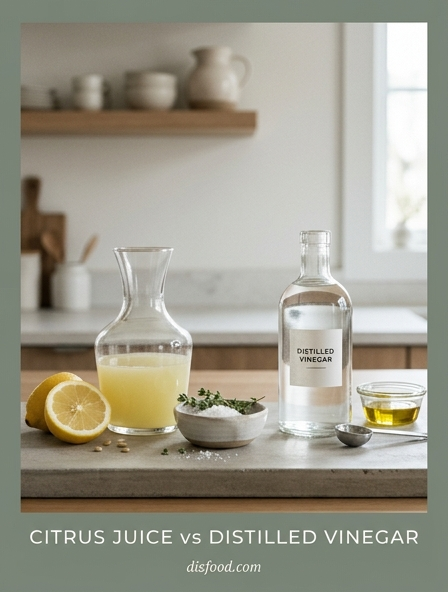
Citrus Juice vs Distilled Vinegar Acidity Comparison
In the culinary and cleaning worlds, acidity is the primary metric for evaluating the utility of citrus juice and distilled white vinegar. While both substances are acidic, they derive their potency from different chemical compounds. Citrus juices, such as lemon and lime, primarily contain citric acid, which typically accounts for about 5% to 8% of the juice's weight. Distilled vinegar, on the other hand, is a dilute solution of acetic acid, usually standardized to a 5% concentration in most commercial kitchen applications. This subtle difference in chemical composition dictates how each reacts with proteins, minerals, and fats.
The pH scale provides a clearer picture of their comparative strength. Most distilled white vinegars maintain a pH level of approximately 2.4, making them moderately acidic. Citrus juices are slightly more variable; lemon juice usually sits between 2.0 and 2.6, while lime juice can be even more acidic. Despite these close numbers, the sensory experience of their acidity differs wildly. Citric acid is often perceived as "bright" or "sharp," whereas acetic acid carries a more "pungent" and "stinging" quality. This table highlights the core differences:
| Feature | Citrus Juice (Lemon) | Distilled Vinegar |
|---|---|---|
| Primary Acid | Citric Acid | Acetic Acid |
| Average pH | 2.0 - 2.6 | 2.4 - 2.5 |
| Concentration | Variable (5-8%) | Standardized (5%) |
When used in a kitchen context, the choice between them often depends on whether the goal is chemical reactivity or flavor enhancement. For tasks like curdling milk or reacting with baking soda, both are effective, but vinegar offers a more consistent and predictable acid concentration than fresh fruit, which can vary based on ripeness and variety.
Flavor Profiles in Culinary Applications
The flavor profiles of citrus juice and distilled vinegar are the most significant factors in recipe selection. Citrus juice is prized for its complexity; it provides not only acidity but also sweetness, bitterness, and aromatic essential oils found in the fruit's zest. Lemon juice offers a sunny, floral note that enhances the natural flavors of seafood, poultry, and green vegetables. Lime juice brings a more tropical, slightly more bitter edge that is essential in Mexican, Thai, and Vietnamese cuisines. These juices act as flavor "brighteners" that can lift a heavy dish without overwhelming the palate.
Distilled white vinegar is the opposite of complex. It is valued for its neutrality and pure, sharp "zip." Because it lacks the sugars and aromatics of fruit juice, it provides acidity without altering the intended flavor profile of a dish. This makes it the ideal choice for pickling brines, where the goal is to preserve and highlight the vegetable itself, or in heavy sauces like barbecue where a clean acid cut is needed to balance sugar and fat. Consider the following applications for each:
- Citrus Juice: Fresh salad dressings (vinaigrettes), ceviche, fruit salads, delicate pan sauces, and cocktails.
- Distilled Vinegar: Quick-pickled onions, sushi rice seasoning, mayonnaise stabilization, and balancing heavy stews or chilis.
While they can occasionally be substituted for one another, using vinegar in a dish designed for lemon can result in a harsh, chemical-like aftertaste. Conversely, using lemon juice in a large-scale pickling project may introduce unwanted organic solids and sugars that could lead to spoilage or an off-flavor over time.
Natural Cleaning Power and Efficacy
In the realm of natural home maintenance, both citrus juice and distilled vinegar serve as potent, non-toxic cleaners, yet they excel in different areas due to their chemical structures. Distilled vinegar is the "workhorse" of green cleaning. Its acetic acid content is exceptionally effective at dissolving mineral deposits, such as limescale and hard water stains on faucets and showerheads. It also acts as a mild disinfectant, capable of killing certain household pathogens and neutralizing alkaline odors like those found in pet urine or stale tobacco.
Citrus juice, specifically lemon juice, contains d-limonene, a natural solvent found in the peel that is highly effective at cutting through grease and wax. This makes citrus the preferred choice for cleaning stovetops, range hoods, and greasy countertops. Furthermore, the high citric acid content in lemon juice makes it a natural bleaching agent. When combined with sunlight, it can help lift organic stains from cutting boards or light-colored fabric. To maximize cleaning efficacy, follow these general guidelines:
- For mineral buildup: Soak the affected area in distilled vinegar for 30 minutes, then scrub.
- For greasy surfaces: Apply fresh lemon juice directly to the grease, let sit for 5 minutes, and wipe with a damp cloth.
- For general glass cleaning: Mix a 1:1 ratio of distilled vinegar and water for a streak-free finish.
- For copper or brass: Use a paste of lemon juice and salt to dissolve tarnish instantly.
While both are effective, vinegar is generally preferred for large-scale tasks because it does not leave behind the sticky sugar residue that fresh fruit juice can. Citrus is best reserved for localized degreasing and tasks where its pleasant, refreshing scent provides an added deodorizing benefit.
Nutritional Value and Health Benefits
When considering health and nutrition, citrus juice is the clear winner in terms of micronutrient density. Freshly squeezed lemon or lime juice is a significant source of Vitamin C (ascorbic acid), which is a vital antioxidant that supports immune function and skin health. It also contains small amounts of potassium, folate, and B vitamins. Drinking warm lemon water in the morning is a popular wellness ritual, primarily because it provides these nutrients alongside hydration and may aid in stimulating digestive enzymes.
Distilled white vinegar is virtually devoid of vitamins and minerals. However, its health benefits are primarily metabolic. Acetic acid has been studied for its ability to improve insulin sensitivity and lower blood sugar responses after high-carb meals. While apple cider vinegar is more commonly cited in health circles for its "mother" (probiotics), distilled vinegar still provides the same acetic acid benefits. It is also calorie-free, whereas citrus juices contain a small amount of natural sugars. The following table compares the basic nutritional profile per 100ml:
| Nutrient | Fresh Lemon Juice | Distilled Vinegar |
|---|---|---|
| Calories | ~22 kcal | 0 kcal | Vitamin C | ~38 mg | 0 mg |
| Sugars | ~2.5 g | 0 g |
| Potassium | ~103 mg | ~2 mg |
Furthermore, citrus juice contains flavonoids that have anti-inflammatory properties. In contrast, the primary health utility of distilled vinegar in the kitchen is as a functional ingredient to reduce the glycemic index of foods like potatoes or bread. In summary, citrus is a food source of nutrients, while vinegar is a functional metabolic aid.
Safety on Household Surfaces
Despite their "natural" status, both citrus juice and distilled vinegar can be surprisingly destructive if used on the wrong surfaces. The high acidity of both substances makes them corrosive to certain materials commonly found in modern kitchens. The most significant risk is to natural stone surfaces. Marble, limestone, and travertine are composed of calcium carbonate, which reacts chemically with acid. Applying vinegar or lemon juice to these surfaces will cause "etching"-a permanent dulling of the stone that looks like a stain but is actually physical damage to the surface.
Wood surfaces also require caution. While vinegar is often used in floor cleaning solutions, a high concentration can strip away the protective wax or oil finish, leaving the wood dull and vulnerable to moisture. Citrus juice is slightly riskier for wood due to the residual sugars, which can create a sticky film that attracts dirt if not thoroughly rinsed. Metals are another concern; while these acids can clean tarnish, prolonged exposure to acetic or citric acid can lead to pitting in aluminum and cast iron. Avoid using these acids on the following:
- Natural Stone: Granite (if unsealed), Marble, Slate, and Travertine.
- Finished Wood: Especially antique furniture or waxed hardwood floors.
- Cast Iron Cookware: Acids will strip the seasoned non-stick layer.
- Electronic Screens: The protective coatings on TVs and phones will dissolve.
Always perform a spot test in an inconspicuous area before applying either acid to a new surface. For stone countertops, it is always safer to use a pH-neutral cleaner specifically designed for masonry rather than relying on kitchen acids.
Eco Friendly Impact and Sustainability
Both citrus juice and distilled vinegar are considered environmentally superior to synthetic chemical cleaners, but their ecological footprints differ in origin and processing. Distilled vinegar is highly sustainable due to its production method. It is typically created through the fermentation of grain alcohol (ethanol). The process is efficient, and the resulting product is biodegradable and non-toxic to aquatic life. Because it can be purchased in highly concentrated forms or large bulk containers, the packaging-to-product ratio is often very favorable, reducing plastic waste.
Citrus juice sustainability is more complex. While the juice itself is biodegradable and "green," the environmental cost includes the agricultural resources required to grow citrus trees-such as water, pesticides, and land use-as well as the carbon footprint of transporting heavy fresh fruit from tropical climates to colder regions. However, using "waste" citrus (the peels and juice from fruit you have already eaten) is an excellent example of a circular economy in the home. Using a lemon half to scrub a sink before composting it maximizes the utility of the fruit.
In terms of biodegradability, both substances break down rapidly without leaving harmful residues in the groundwater. Vinegar is particularly effective for those looking to reduce their "chemical load" at home, as it replaces a wide variety of specialized cleaners (glass cleaner, floor cleaner, fabric softener) with a single, shelf-stable ingredient. Choosing locally grown citrus or buying vinegar in glass bottles can further enhance the eco-friendly profile of these kitchen staples.
Shelf Life and Storage Requirements
The storage requirements for citrus juice and distilled vinegar represent perhaps their greatest practical difference. Distilled vinegar is functionally immortal. Due to its high acidity, it is self-preserving and does not support the growth of bacteria or mold. According to the Vinegar Institute, the shelf life of distilled white vinegar is almost indefinite. While it should be stored in a cool, dark place to maintain its peak quality, it does not require refrigeration and will remain safe to use for years, even after the bottle has been opened.
Fresh citrus juice is highly volatile. Once squeezed, lemon or lime juice begins to oxidize immediately, leading to a loss of Vitamin C and a change in flavor. Within hours, the bright, zesty notes turn dull or even metallic. Freshly squeezed juice should be used within the day or stored in the refrigerator for no more than 2 to 3 days. Even store-bought bottled citrus juices, which contain preservatives, have a limited shelf life once opened and must be refrigerated. The comparison below illustrates the disparity:
| Product | Storage Condition | Typical Shelf Life |
|---|---|---|
| Distilled Vinegar | Pantry (Room Temp) | Indefinite |
| Fresh Citrus Juice | Refrigerator | 24-72 Hours |
| Bottled Lemon Juice | Refrigerator | 6-12 Months |
For those who want the benefits of citrus without the waste, freezing juice in ice cube trays is an effective storage method. However, for a reliable acid source that is always ready in the pantry without maintenance, distilled vinegar is the superior choice.
Cost Effectiveness for Daily Use
When analyzing the cost-per-ounce, distilled white vinegar is one of the most economical substances available to a household. Purchased in gallon jugs, it often costs only a few cents per serving. This extreme affordability makes it the logical choice for high-volume tasks such as mopping floors, descaling coffee makers, or soaking laundry. Because it is a mass-produced commodity with a standardized concentration, there is very little price volatility regardless of the season.
Citrus juice is significantly more expensive, particularly if using fresh fruit. The price of lemons and limes fluctuates based on the season, weather conditions in growing regions, and transportation costs. A single lemon might yield only two tablespoons of juice, making the cost-per-ounce substantially higher than vinegar. Even bottled citrus juice, while cheaper than fresh fruit, cannot compete with the bulk pricing of distilled vinegar. To optimize your budget, consider the following strategy:
- Use Vinegar for: Large-scale cleaning, laundry, weed killing, and bulk food preservation (pickling).
- Use Citrus for: Flavor-sensitive cooking, garnishing, and small-scale deodorizing where the scent is a priority.
- Cost-Saving Tip: Buy vinegar in 5-gallon containers for the lowest price, and buy citrus in bulk bags during the peak of their growing season.
While citrus provides more "value" in terms of flavor and nutrition, vinegar provides more "utility" per dollar spent. For a household focused on budget-friendly green living, vinegar serves as the primary acid, while citrus is treated as a premium ingredient for specific culinary or aromatic needs.
Best Uses for Brightening Laundry
Both distilled vinegar and citrus juice can revolutionize a laundry routine by replacing harsh chemicals and synthetic fragrances. Distilled vinegar is a master fabric softener. The acetic acid helps to break down the alkaline soap residue that builds up on fibers, which is the primary cause of stiff towels and scratchy clothes. Adding half a cup of vinegar to the rinse cycle can also help strip away trapped odors, such as mildew or sweat, without leaving a vinegar scent behind once the clothes are dry.
Citrus juice, specifically lemon juice, is the superior choice for whitening and "brightening" whites. Its citric acid acts as a natural, mild bleach that is safer for fibers than chlorine. It is particularly effective at removing yellow underarm stains caused by the reaction between antiperspirants and body oils. For the best results in laundry, use these methods:
- To whiten whites: Add 1/2 cup of lemon juice to the wash cycle and hang clothes in the sun to dry, as UV rays activate the bleaching properties.
- To soften fabrics: Pour 1/2 cup of distilled vinegar into the fabric softener dispenser.
- To remove salt stains: Use a mixture of water and vinegar to rub out salt stains on shoes or coats during winter.
- To deodorize: Pre-soak smelly workout gear in a sink of warm water and 1 cup of vinegar before washing.
Note that lemon juice should be used with caution on colored fabrics, as it may cause localized fading if applied directly and left in the sun. Vinegar is generally safe for all colorfast fabrics and is an excellent tool for setting dyes in new dark clothing to prevent bleeding.
Choosing the Right Acid for Your Needs
Deciding between citrus juice and distilled vinegar ultimately depends on the specific goal of the task at hand. There is no "universal" winner, as each substance excels in different environments. In the kitchen, the decision is usually driven by the palate. If you require a sharp, clean acidity for a functional purpose-like making buttermilk or pickling-vinegar is the most reliable tool. If you are looking to add layers of flavor, aroma, and a "fresh" sensation to a dish, citrus is irreplaceable. No amount of vinegar can replicate the floral brightness of a fresh lime.
For household maintenance, the choice often comes down to "residue vs. scent." Vinegar is the more effective all-around cleaner because it evaporates completely, leaving no sticky sugars behind. However, some people find the pungent smell of acetic acid off-putting. Citrus offers a much more pleasant sensory experience, making it ideal for tasks where a "clean smell" is desired, such as cleaning the inside of a microwave or garbage disposal. When making your choice, consider these three factors:
- The Goal: Is it for flavor (Citrus), disinfection (Vinegar), or degreasing (Citrus)?
- The Surface: Is the material sensitive to long-term exposure or sugars?
- The Budget: Is this a high-volume task that requires the cost-effectiveness of bulk vinegar?
By keeping both in your pantry, you ensure that you have the full spectrum of acidic utility at your disposal. Use vinegar as your industrial-strength utility player and citrus juice as your high-quality culinary and aromatic specialist.



Comments