
Wooden Bowl Vs Ceramic Bowl: Choosing The Best Material For Your Kitchen Needs
Are you torn between the rustic charm of wood and the sleek elegance of ceramic for your next kitchen upgrade? Selecting the right bowl is about more than just aesthetics; it's a balance of durability, heat retention, and daily maintenance that can elevate your dining experience. Wooden bowls offer a warm, organic feel and are virtually unbreakable, making them the ultimate choice for tossing large salads or serving snacks in a busy household. Conversely, ceramic bowls provide unmatched versatility, handling high temperatures and microwave use with ease while offering a non-reactive surface that's a breeze to sanitize. Whether you prioritize the eco-friendly, artisan vibe of handcrafted timber or the polished, dishwasher-safe convenience of stoneware, understanding how these materials perform under pressure will help you curate a kitchen that is both functional and beautiful.
| Feature | Wooden Bowls | Ceramic Bowls |
|---|---|---|
| Durability | Highly impact-resistant; won't shatter if dropped. | Prone to chipping, cracking, or shattering on impact. |
| Heat Resistance | Poor; cannot be used in microwaves or ovens. | Excellent; typically microwave, oven, and dishwasher safe. |
| Maintenance | Hand-wash only; requires periodic seasoning with oil. | Low maintenance; non-porous and dishwasher friendly. |
| Weight & Feel | Lightweight and warm to the touch; organic texture. | Heavier and cooler; smooth, glazed finish. |
| Food Safety | Naturally antimicrobial but can harbor bacteria if cracked. | Non-reactive and non-porous; highly hygienic surface. |
| Best For | Salads, dry snacks, fruit displays, and rustic decor. | Soups, cereals, pasta, and reheating leftovers. |
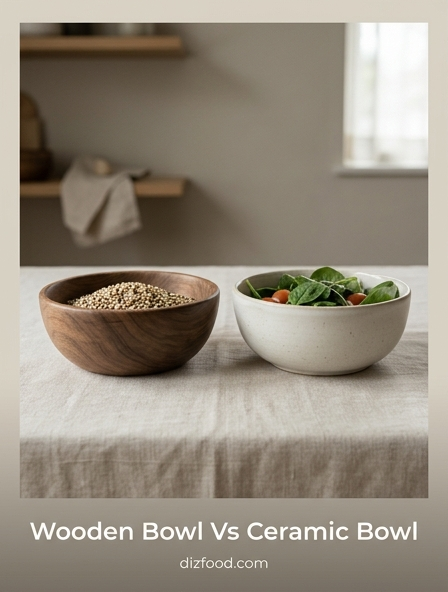
Durability and Material Longevity
When assessing the longevity of kitchenware, the fundamental difference between wood and ceramic lies in their reaction to physical impact. Wooden bowls, typically crafted from hardwoods like acacia, teak, or walnut, are celebrated for their incredible resilience against drops and collisions. Unlike fragile materials, a wooden bowl will not shatter if it falls from a counter; at worst, it may suffer a minor dent or scuff that often adds to its rustic character. This makes wood an ideal choice for high-traffic kitchens or households with young children where accidents are frequent.
- Impact Resistance: Wood absorbs shock, whereas ceramic reflects it, leading to structural failure.
- Surface Hardness: Ceramic is highly resistant to scratches from metal utensils, while wood can develop knife marks over time.
- Environmental Sensitivity: Wood is prone to warping or cracking if exposed to extreme moisture or dryness, requiring a stable environment.
Ceramic bowls, particularly those made of stoneware or porcelain, offer a different kind of durability. They are exceptionally hard and can last for decades if handled with care. The primary threat to ceramic longevity is thermal shock or blunt force. A single drop onto a tile floor usually results in total destruction. However, ceramic does not "age" in the traditional sense; a hundred-year-old ceramic bowl can look identical to a new one, whereas wood will naturally darken and change texture as the fibers interact with the environment and oils.
Heat Retention and Temperature Insulation
Temperature management is a critical factor in the culinary experience, affecting both the flavor of the food and the comfort of the person holding the vessel. Wood is a natural insulator, meaning it does not conduct heat effectively. When you pour hot soup into a wooden bowl, the exterior remains cool to the touch, protecting your hands while the contents stay warm for a moderate duration. This lack of conductivity makes wood an excellent choice for serving room-temperature salads or chilled fruits, as it prevents ambient heat from warming the food too quickly.
Ceramic bowls operate on the principle of thermal mass. While they take longer to heat up than wood, they retain that heat for much longer once the material reaches a certain temperature. This makes ceramic superior for serving hot stews, pasta, or oatmeal. If you pre-warm a ceramic bowl, it will act as a reservoir, keeping your meal hot until the very last bite. However, the downside is that ceramic can become dangerously hot to the touch, often requiring the use of trivets or oven mitts when being moved from a microwave or oven.
In summary, wood provides a consistent, safe barrier against temperature extremes, while ceramic acts as a thermal battery. The choice often depends on whether you value hand comfort or the prolonged warmth of the dish itself. For cold desserts like ice cream, wood is surprisingly effective because it prevents your hand's body heat from melting the contents, whereas unchilled ceramic might accelerate the melting process.
Aesthetics and Kitchen Decor Appeal
The visual impact of a bowl can transform a kitchen from a utilitarian workspace into a curated gallery. Wooden bowls offer an organic, warm aesthetic that fits perfectly with Scandinavian, farmhouse, or rustic interior designs. Every wooden bowl is a unique piece of art, featuring distinct grain patterns, knots, and color variations that cannot be replicated by a machine. This natural "imperfection" brings a sense of life and soul to a dining table, creating a cozy and grounded atmosphere.
- Natural Tones: Wood offers earthy colors ranging from pale maple to deep, chocolatey walnut.
- Artisanal Feel: Often associated with hand-turning and craftsmanship.
- Visual Texture: Provides a matte or satin finish that absorbs light, making a space feel softer.
Ceramic bowls offer a vastly different decorative palette, defined by color, glaze, and precision. Because ceramics can be painted and glazed in infinite ways, they are the go-to choice for homeowners who want to match a specific color scheme or add a "pop" of brightness to their decor. From minimalist white porcelain to intricate Mediterranean patterns or modern matte black glazes, ceramic can be adapted to any style. The reflective quality of glazed ceramic adds a sense of cleanliness and polish to a kitchen, making it feel bright and professional. While wood is about the beauty of nature, ceramic is about the beauty of human design and artistic expression.
Maintenance and Cleaning Requirements
Maintaining the integrity of your kitchenware depends heavily on the material's composition. Ceramic bowls are generally considered the "low-maintenance" option. Most glazed ceramics are non-porous and chemically inert, making them safe for the dishwasher. They can withstand high-pressure water, aggressive detergents, and high-heat drying cycles without losing their finish or structural integrity. This makes them the practical choice for busy households where quick cleanup is a priority.
| Maintenance Task | Wooden Bowls | Ceramic Bowls |
|---|---|---|
| Dishwasher Safe | No (Causes Cracking) | Yes (Most Types) |
| Microwave Safe | No (Fire Hazard) | Yes |
| Periodic Oiling | Yes (Food-Grade Mineral Oil) | No |
| Stain Resistance | Low (Can Absorb Pigments) | High (Glaze Protects Surface) |
Wooden bowls, conversely, require a disciplined maintenance routine to prevent them from drying out and cracking. They must never be soaked in water or placed in a dishwasher, as the wood fibers will swell and eventually split. After hand-washing with mild soap, they should be dried immediately. Furthermore, wooden bowls need to be "seasoned" occasionally with food-safe mineral oil or beeswax to maintain their luster and moisture barrier. This extra care ensures the wood remains supple and prevents the absorption of food odors and stains.
Eco-Friendliness and Sustainability Factors
In the modern kitchen, sustainability is a major consideration for many consumers. Wooden bowls are often seen as the ultimate eco-friendly choice because wood is a renewable, biodegradable, and carbon-sequestering material. If sourced from FSC-certified forests or reclaimed sources, the environmental footprint of a wooden bowl is remarkably low. At the end of its life cycle, a wooden bowl can be composted or will naturally decompose, returning to the earth without leaving behind microplastics or toxic residues. However, it is important to ensure that the finishes used (oils or lacquers) are also non-toxic and eco-safe.
Ceramic bowls have a more complex relationship with the environment. On one hand, they are made from natural clay and minerals, which are abundant. They are incredibly long-lasting, which reduces the need for frequent replacement and thus lowers the overall consumption of goods. However, the production of ceramic is energy-intensive. Kilns must reach extremely high temperatures, often powered by natural gas, to fire the clay and set the glazes. Additionally, while ceramic is natural, it is not biodegradable. A broken ceramic bowl will remain in a landfill for thousands of years as inert shards. To maximize the eco-friendliness of ceramic, one should prioritize high-quality pieces that are intended to last a lifetime, rather than "fast-fashion" kitchenware that is easily broken and discarded.
Food Safety and Surface Porosity
Food safety is perhaps the most significant functional difference between these two materials. Ceramic bowls that are glazed and fired at high temperatures are non-porous. This means that bacteria, mold, and food particles cannot penetrate the surface, making them exceptionally hygienic. As long as the glaze is lead-free and remains unchipped, ceramic provides a glass-like barrier that is easy to sanitize completely.
- Porosity: Wood is naturally porous; ceramic is generally non-porous.
- Bacterial Growth: Certain woods like maple have natural antimicrobial properties, but porous surfaces can still trap moisture.
- Chemical Leaching: Poorly made ceramics may contain lead in glazes; wood may have toxic finishes if not food-grade.
Wood is a biological material and is naturally porous. While some studies suggest that certain hardwoods have tannins that inhibit bacterial growth, the surface can still absorb liquids from foods like raw meat or pungent sauces. If a wooden bowl is not properly sealed or maintained, it can become a breeding ground for bacteria or retain the smell of previous meals (like garlic or onions). For this reason, wooden bowls are best reserved for dry goods, salads, or breads, rather than raw ingredients or liquid-heavy dishes that might seep into the grain. Ensuring your wooden bowl is treated with a food-safe sealant is vital for maintaining a sanitary kitchen environment.
Weight and Ergonomic Handling
The physical weight of a bowl affects how we interact with it daily. Wooden bowls are significantly lighter than their ceramic counterparts of the same size. This lightweight nature makes them far more ergonomic for tasks that involve movement, such as tossing a large family-sized salad or passing a bowl around a large table. For individuals with limited hand strength, arthritis, or for children, wood is the superior choice because it reduces strain on the wrists and is easy to grip without fear of it slipping and breaking.
Ceramic bowls have a "heaviness" that many people associate with quality and stability. A heavy ceramic bowl stays put on the counter while you are mixing ingredients, which can be an advantage during food preparation. However, this weight can become a burden when washing large stacks of dishes or when reaching for bowls on high shelves. The smooth, glazed surface of ceramic can also be quite slippery when wet or soapy, increasing the risk of drops. When choosing between the two, consider who will be using the bowls most often and whether the "heft" of ceramic feels like luxury or a logistical challenge in your specific kitchen setup.
Culinary Versatility for Different Dishes
Versatility is where ceramic often takes the lead in the kitchen. Because ceramic is heat-resistant and non-reactive, it can be used for a wider variety of cooking and serving tasks. Most ceramic bowls are safe for use in the microwave, oven, and freezer, allowing you to prep, cook, and serve all in the same vessel. This versatility makes them indispensable for modern cooking styles that involve reheating leftovers or baking individual portions of pot pies or crumbles.
- Ceramic Uses: Hot soups, microwave reheating, oven-baked pasta, chilled desserts, and acidic vinaigrettes.
- Wood Uses: Large salads, popcorn, bread rolls, fruit displays, and dry snacks.
Wooden bowls are more specialized. They are the gold standard for serving salads because the wood's surface interacts beautifully with oils, and the large sizes available are perfect for tossing greens. Wood is also excellent for serving snacks like popcorn or nuts because it doesn't "clatter" as much as ceramic. However, you cannot put a wooden bowl in the microwave or oven, as it will catch fire or crack. Furthermore, very acidic foods like citrus-heavy dressings can eventually strip the finish of a wooden bowl. Therefore, while wood is the king of the centerpiece and the salad course, ceramic is the workhorse that handles everything from the freezer to the flame.
Cost Comparison and Value Over Time
The price of bowls varies wildly based on craftsmanship and material quality. Generally, basic ceramic bowls are very affordable and can be purchased in sets for a relatively low cost. However, high-end artisanal stoneware or fine bone china can be quite expensive. Because ceramic is prone to breaking, the "value over time" can be lower if you find yourself constantly replacing chipped or shattered pieces. However, for most people, the convenience and low price point of mass-produced ceramic make it a budget-friendly staple.
| Factor | Wooden Bowl (Artisan) | Ceramic Bowl (Standard) |
|---|---|---|
| Initial Cost | Moderate to High | Low to Moderate |
| Replacement Rate | Very Low (Lasts decades) | Moderate (Due to breakage) |
| Resale Value | Often increases if antique | Generally low |
Wooden bowls, especially those hand-turned from single blocks of wood, represent a higher initial investment. It is not uncommon for a high-quality walnut salad bowl to cost significantly more than a set of four ceramic bowls. However, the value over time for wood is exceptional. Since they do not shatter, a well-maintained wooden bowl can be a one-time purchase that lasts for generations, often becoming a family heirloom. If you view your kitchenware as an investment rather than a consumable, wood offers a compelling long-term value proposition despite the higher entry price.
Final Verdict for Your Kitchen Needs
Deciding between a wooden bowl and a ceramic bowl ultimately depends on your lifestyle and how you intend to use the vessel. If you prioritize convenience, hygiene, and versatility, the ceramic bowl is the clear winner. Its ability to go from the microwave to the dishwasher makes it the ideal choice for everyday meals, hot soups, and busy families who need quick solutions. Ceramic's vast array of designs also ensures that you can find a set that matches your personal aesthetic perfectly, regardless of your decor style.
On the other hand, if you value tactile beauty, durability, and sustainability, the wooden bowl is an unmatched addition to the kitchen. It is the perfect choice for those who enjoy the ritual of hand-washing their items and who appreciate the way a natural material ages over time. A wooden bowl is more than just a dish; it is a centerpiece that brings warmth and an organic feel to the home. It is particularly suited for those who host large gatherings where salads and snacks are central, and for those who want a shatterproof option that can survive the rigors of a lively household. Many kitchens benefit from a combination of both: ceramic for the utility of daily hot meals, and wood for the timeless elegance of serving and display.


Comments