
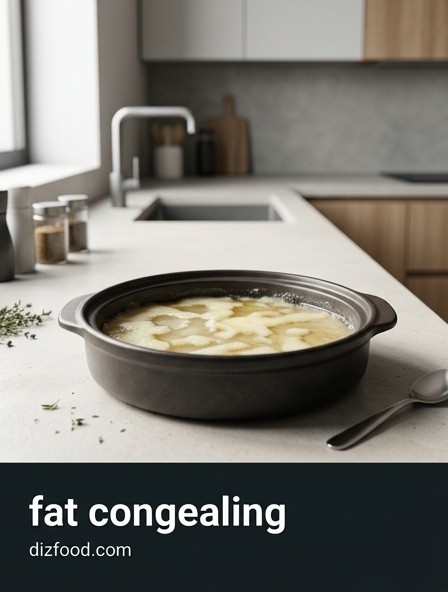
The Science of Lipid Solidification on Cold Plates
At the molecular level, animal fats are primarily composed of triglycerides. When these lipids are heated during the cooking process, the kinetic energy overcomes the intermolecular forces, keeping the fat in a fluid, liquid state. However, as soon as a hot piece of meat is placed on a cold ceramic plate, a rapid heat transfer occurs. This conductive cooling triggers a phase transition known as crystallization. As the temperature drops below the specific melting point of the fat, the fatty acid chains begin to align and pack closely together, forming a rigid crystalline structure.
The rate of this solidification is influenced by the saturation level of the lipids. Saturated fats, which have straight molecular chains, solidify more readily and at higher temperatures than unsaturated fats. This transition can happen within seconds on a chilled surface, fundamentally altering the physical state of the dish before it even reaches the diner. The following table illustrates the approximate temperatures at which common kitchen fats begin to lose their fluidity:
| Fat Type | Approximate Solidification Point |
|---|---|
| Beef Tallow | 35°C - 45°C (95°F - 113°F) |
| Lard (Pork Fat) | 30°C - 40°C (86°F - 104°F) |
| Butterfat | 32°C - 35°C (90°F - 95°F) |
Maintaining Optimal Fat Consistency for Meat Dishes
To ensure that a high-fat protein like a ribeye steak or a pork belly remains appetizing, the fat must stay in a rendered, liquid, or semi-liquid state throughout the meal. If the fat is allowed to cool too quickly, it transforms from a succulent flavor carrier into a dense, unappealing solid. Maintaining this consistency requires a strategic approach to thermal management in the kitchen. By controlling the environment in which the meat is plated, chefs can delay the onset of lipid crystallization.
Consistency is not just about heat; it is about the transition of the fat into the surrounding juices to create a natural jus. When the plate is warm, the fat interacts dynamically with the moisture on the plate, preventing the separation of oil and water. To maintain this optimal state, several factors must be considered:
- Ambient kitchen temperature and its effect on resting meat.
- The thickness of the fat cap and its specific thermal mass.
- The time elapsed between the final sear and the first bite.
- The surface area of the meat in contact with the serving vessel.
How Temperature Affects the Mouthfeel of Animal Fats
Mouthfeel is a critical component of the culinary experience, particularly when dealing with rich, animal-based proteins. When fat is warm, it has a low viscosity, allowing it to coat the palate evenly and dissolve quickly, which facilitates the release of fat-soluble flavor compounds. This creates a sensation of richness and silkiness. However, as the temperature of the fat drops on a cold plate, the texture changes dramatically. The fat becomes "waxy" or "pasty" as it begins to congeal.
This physical change is often perceived as a coating on the tongue and the roof of the mouth that resists being washed away. Instead of melting away cleanly, the solidified lipids linger, creating a heavy, cloying sensation that can mask the nuanced flavors of the seasoning and the meat itself. The transition from a liquid gold consistency to a white, opaque solid is a visual and tactile cue that the dish's quality is degrading. Keeping the fat above the human body temperature ensures that the lipids melt instantly upon contact with the tongue, providing the desired "melt-in-the-mouth" quality that defines high-end butchery and gastronomy.
The Impact of Plate Warming on Sauce Viscosity
Sauces that are high in fat, such as Hollandaise, Beurre Blanc, or traditional pan gravies, are highly sensitive to temperature fluctuations. These sauces are often delicate emulsions where fat droplets are suspended in a water-based liquid. If these sauces are drizzled onto a cold plate, the emulsion can suffer catastrophic failure. The sudden drop in temperature causes the fat phase to solidify or the proteins to contract, leading to "breaking" or "splitting."
Even if the sauce does not break, the viscosity increases significantly as it cools. A sauce intended to be a light, flowing accompaniment can quickly become a thick, gelatinous mass that clings to the plate rather than the food. Warming the plate ensures that the sauce maintains its intended flow characteristics. To achieve the perfect sauce service, chefs often follow these steps:
- Preheat plates to at least 60°C (140°F) in a dedicated warmer.
- Ensure the sauce is held at a stable, safe temperature before plating.
- Apply the sauce at the very last moment before the dish leaves the pass.
- Use a warmed saucier or jug for table-side service to prevent cooling during transport.
Preventing Greasy Residue with Preheated Servingware
One of the most common complaints regarding high-fat entrees is the presence of a greasy film that develops as the meal progresses. This residue is a direct result of fats reaching their congealing point while still on the plate. When a plate is cold, the bottom layer of fat in contact with the ceramic cools almost instantly, creating a "tackiness" that traps other food particles and creates a messy appearance. By using preheated servingware, the energy within the ceramic serves as a heat reservoir, providing a constant source of warmth that keeps the lipids in motion.
Furthermore, preheated plates reduce the surface tension between the fat and the ceramic. This allows the fat to remain as a thin, liquid film that is more easily wiped away or integrated into the dish, rather than a thick, white sludge. From a dishwashing perspective, preventing this congealed layer also makes the post-service cleanup much more efficient, as liquid fats are significantly easier to emulsify with soap and water than solid, hardened grease that has bonded to the plate surface.
Thermodynamics of Sustaining Meat Tenderness and Heat
The perception of tenderness in meat is inextricably linked to the state of its internal fats and connective tissues. During the cooking process, collagen breaks down into gelatin, and intramuscular fat (marbling) melts, providing lubrication between muscle fibers. If the meat is served on a cold plate, the laws of thermodynamics dictate a rapid transfer of heat from the meat to the plate. As the internal temperature of the meat drops, the once-melted fats and gelatin begin to firm up again.
This re-solidification makes the meat feel tougher and more fibrous to the teeth. A warm plate acts as an insulator, slowing the rate of heat loss through conduction. By maintaining the meat at a temperature above the point of lipid solidification, the diner experiences a consistently tender product from the first bite to the last. Thermal equilibrium is the goal; by matching the plate temperature to the resting temperature of the meat, the chef prevents the "thermal shock" that can ruin hours of careful slow-cooking or precise searing, ensuring the protein remains succulent and biologically "warm" for the palate.
Professional Techniques for Managing Serving Temperatures
In a professional kitchen, managing the temperature of the serving environment is just as important as the cooking process itself. Chefs utilize a variety of specialized equipment and logistical workflows to ensure that congealing fat never reaches the customer. The "pass"-the area where food is plated and picked up by servers-is typically equipped with high-intensity infrared heat lamps that provide radiant heat from above, while the plates themselves are pulled from a lowerator or a plate heater.
Consistency in temperature management requires a multi-faceted approach. High-volume environments must balance the speed of service with the necessity of maintaining heat. The following techniques are standard in fine dining establishments to mitigate fat congealing:
- Using heavy-gauge ceramic or stone plates with high thermal mass for better heat retention.
- Implementing "hot-on-hot" plating, where every component, including the plate, is at peak temperature.
- Utilizing cloches or plate covers to create a steam-filled micro-environment during transport.
- Flash-warming plates in a high-heat salamander immediately before the protein is added.
Why Cold Ceramics Ruin the Texture of Prime Cuts
Prime cuts of beef, such as Wagyu or prime rib, are prized for their high degree of marbling. These intramuscular fat deposits have a lower melting point than external gristle, often melting at or just below room temperature. However, cold ceramics act as a heat sink, aggressively drawing warmth out of the steak. When a slice of high-quality beef hits a cold surface, the delicate marbling that took years to develop in the animal solidifies almost instantly. This turns a buttery, decadent piece of meat into something that feels "grainy" or "waxy."
The texture of the meat is effectively ruined because the fat is no longer acting as a lubricant. Instead of the meat fibers sliding apart and releasing juices, they are held together by the cooling tallow. This is particularly problematic for rare or medium-rare preparations, where the internal temperature is already relatively low. For these cuts, the plate should ideally be heated to a temperature that is comfortable to the touch but sufficiently high to keep the specific triglycerides in a liquid state, preserving the integrity of the expensive prime cut.
Preserving Flavor Profiles Through Plate Heat Retention
The flavor of a dish is not just about the taste buds; it is heavily dependent on aroma. Most of the aromatic compounds in cooked meats and fats are volatile, meaning they are released into the air as gases when heated. If a dish is served on a cold plate, the cooling fat traps these volatile organic compounds (VOCs) within its solidifying matrix. This effectively silences the "nose" of the dish, as fewer aromatic molecules are able to reach the diner's olfactory receptors.
By retaining heat through the plate, the chef ensures a continuous release of these scents throughout the meal. The fat remains a liquid medium that allows these flavors to remain "active." To maximize the flavor profile through heat retention, consider the following sequence of events:
- The warm plate keeps the fat liquid, allowing VOCs to escape.
- The rising heat creates a convection current that carries aromas to the diner.
- The liquid fat coats the tongue, creating a lasting "finish" on the palate.
- The warmth prevents the suppression of subtle spices that are fat-soluble.
Improving the Visual Appeal of High-Fat Entrees
Visual presentation is the first impression a diner has of a meal, and the state of the fat plays a major role in this aesthetic. Hot, liquid fat has a glossy, translucent sheen that reflects light and makes food look vibrant and freshly prepared. It suggests succulence and richness. In contrast, congealed fat is opaque, dull, and often turns an unappetizing shade of off-white or grey. This transition can make even the most expertly cooked dish look stale or unappealing if it sits on a cold plate for more than a few minutes.
To improve visual appeal, the surface of the meat and the accompanying sauces must remain above the "cloud point" of the lipids involved. Keeping the plate warm prevents the "rim of grease" from forming around the edges of the food, which can look messy and uncoordinated. A warm plate ensures that the juices and fats remain integrated as a clear, glistening liquid, highlighting the textures and colors of the ingredients. In modern plating, where negative space is often used, maintaining the clarity of any stray droplets or jus is essential for a clean, professional finish.



Comments