
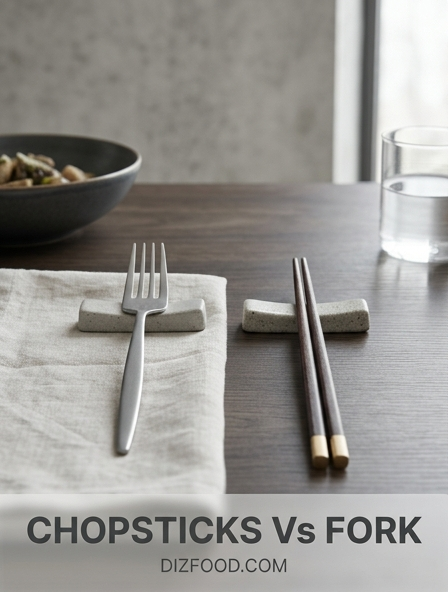
Whether you're deftly plucking a single sesame seed or maneuvering a hefty steak, the debate between the nimble chopstick and the sturdy fork is more than just a matter of tradition-it's a battle for culinary control. While the fork remains the undisputed king of efficiency for stabbing and scooping, chopsticks offer a refined, pincer-like precision that allows diners to interact with their food with surgical accuracy. In our deep dive, "Chopsticks Vs Fork: The One That Delivers Ultimate Precision To Your Plate!", we explore how these tools influence our eating pace, sensory perception, and the ergonomic mechanics that turn every bite into a deliberate choice rather than just a mindless habit.
| Feature | Chopsticks | Western Fork |
|---|---|---|
| Primary Action | Precision pincer / pinching | Piercing, lifting, and scooping |
| Control Level | High; allows for sorting small bits | Medium; designed for bulk volume |
| Food Integrity | Preserves delicate textures/shapes | Breaks surfaces (pierces food) |
| Learning Curve | Steep; requires fine motor skills | Low; intuitive for all ages |
| Dining Pace | Slower; promotes mindful eating | Fast; optimized for high efficiency |
Historical Evolution of Chopsticks and Forks
The history of dining utensils reflects the divergence of culinary philosophies between Eastern and Western civilizations. Chopsticks originated in China during the Shang Dynasty, approximately 1200 BCE. Initially, these slender tools were used primarily for cooking, allowing chefs to reach deep into boiling water or oil. It wasn't until the Han Dynasty that they transitioned into primary eating utensils. This shift was largely influenced by a population boom that necessitated cutting food into smaller, bite-sized pieces to conserve cooking fuel. As food became pre-cut in the kitchen, the need for a table knife vanished, and chopsticks became the elegant solution for a society valuing efficiency and communal sharing.
In contrast, the fork's journey into the Western kitchen was far more contentious. While ancient Greeks used large fork-like instruments for carving meat, the table fork didn't gain traction in Europe until the Middle Ages. Introduced to Italy via the Byzantine Empire, it was initially met with heavy resistance. Clergy members often condemned the fork as an "insult to God," arguing that fingers were the only tools worthy of touching divine sustenance. It took centuries for the fork to migrate from the royal courts of Italy to France and eventually England. By the 18th century, the fork had evolved from a two-tined spear to the curved, four-tined implement we recognize today, coinciding with the rise of individual place settings and a departure from communal bowl dining.
Cultural Symbolism Behind Global Dining Utensils
Beyond their utility, chopsticks and forks serve as profound cultural symbols that dictate social interactions at the dinner table. In many East Asian cultures, chopsticks are viewed as an extension of the fingers, embodying a philosophy of non-violence. This is deeply rooted in Confucianism; Confucius believed that sharp instruments like knives reminded diners of the slaughterhouse and had no place at a table where peace and harmony should prevail. Consequently, the use of chopsticks promotes a gentler approach to consumption, where the food is prepared to be soft and approachable, requiring no further aggression from the diner.
The fork, meanwhile, carries a legacy of individualism and social hierarchy in Western history. As the fork became standardized, it catalyzed a shift in table manners that emphasized personal space and hygiene. Unlike the communal nature often associated with chopstick-led meals-where shared plates are the norm-the fork and knife set-up reinforced the concept of the "individual portion." Today, these utensils act as markers of identity. For many, the ability to use chopsticks is a point of pride and a connection to ancestral heritage, while in the West, the specific arrangement of forks at a formal dinner signifies a person's familiarity with high-society etiquette and professional decorum.
Functional Differences Between Pinching and Piercing
The mechanical principles governing chopsticks and forks are fundamentally different, relying on distinct physics to transport food from the plate to the mouth. Chopsticks operate as a pair of third-class levers. The upper chopstick is the mobile arm, controlled by the thumb, index, and middle fingers, while the lower chopstick remains stationary, anchored by the ring finger and the base of the thumb. This creates a "pinching" or "grasping" motion that allows for extreme precision, enabling a diner to pick up a single grain of rice or a delicate sprout without crushing it.
| Feature | Chopsticks (Pinching) | Fork (Piercing/Scooping) |
|---|---|---|
| Mechanical Action | Leverage and friction | Penetration and gravity |
| Precision | High (selective grabbing) | Moderate (general stabbing) |
| Structural Integrity | Maintains food shape | Often breaks food surface |
| Primary Grip | Fine motor tripod grip | Palmar or fist grip |
The fork, conversely, functions through piercing and scooping. The tines are designed to penetrate the surface of solid foods, using the resistance of the food itself to stay attached to the utensil. While this is highly effective for dense items like steaks or roasted vegetables, it lacks the delicacy required for fragile foods. Additionally, the curved "well" of the fork allows it to act as a miniature shovel for loose items like peas or mashed potatoes, a task that requires significantly more skill when using chopsticks.
Health Advantages of Mindful Eating With Chopsticks
Recent nutritional studies suggest that the choice of utensil can significantly influence metabolic health and weight management. Eating with chopsticks inherently slows down the rate of consumption. Because chopsticks require more coordination and typically hold smaller portions of food than a wide-bowled fork or spoon, the diner must take more frequent pauses. This delay is crucial for the brain to receive satiety signals from the stomach, which usually take about twenty minutes to register. By preventing "shoveling," chopsticks help reduce the risk of overeating and post-meal indigestion.
- Reduced Glycemic Index: Slower eating leads to a more gradual rise in blood sugar levels.
- Improved Digestion: Smaller bites are usually chewed more thoroughly, aiding enzyme breakdown.
- Mindfulness: The focus required to handle chopsticks prevents "distracted eating" in front of screens.
- Portion Control: Naturally limits the amount of food consumed in a single mouthful.
Furthermore, the physical act of using chopsticks engages a different neurological pathway compared to the more forceful use of a fork. The precision required fosters a sense of "mindful eating," where the diner is more aware of the texture, temperature, and flavor of each morsel. This heightened awareness often leads to greater psychological satisfaction from smaller amounts of food, making it a valuable tool for those looking to improve their relationship with eating habits.
Etiquette and Social Norms for Every Table
Mastering the etiquette of dining utensils is essential for navigating social and professional landscapes across the globe. When using chopsticks, the most critical "don'ts" are often related to funeral rites. In many Asian cultures, sticking chopsticks vertically into a bowl of rice is a grave taboo, as it resembles incense sticks offered to the dead. Similarly, passing food directly from one set of chopsticks to another is reserved for handling the bones of the deceased during cremation ceremonies. Diners are encouraged to use the blunt ends of their chopsticks when taking food from a communal platter if serving spoons are not provided, demonstrating a commitment to hygiene and respect for others.
Western fork etiquette is equally nuanced, often categorized into "American" and "European" styles. In the European (Continental) style, the fork remains in the left hand while the knife stays in the right, with the tines facing downward even when bringing food to the mouth. The American style involves a "switch-hitter" approach, where the fork is moved to the right hand after the food is cut. Regardless of the style, clinking metal against teeth or scraping the plate is considered a breach of decorum. Additionally, the placement of the fork and knife at the end of the meal serves as a silent language to the server; placing them parallel at the "four o'clock" position signals that the diner has finished, preventing premature clearing of the table.
Sustainability Comparison of Modern Dining Tools
In the modern kitchen, the environmental footprint of our utensils has become a point of significant concern. The debate between chopsticks and forks often centers on the "disposable versus reusable" dilemma. Billions of pairs of disposable wooden chopsticks are manufactured annually, contributing to significant deforestation in parts of Asia. While bamboo is a more sustainable, fast-growing alternative, the chemical treatments and energy used in shipping these single-use items often negate their organic benefits. However, many households are now pivoting toward high-quality, reusable chopsticks made of stainless steel, ceramics, or treated hardwoods.
Forks are almost exclusively manufactured as multi-use items in the domestic kitchen, typically made from stainless steel, silver, or pewter. The longevity of a single stainless steel fork can span decades, making its per-use environmental cost exceptionally low. However, the initial mining and smelting processes for these metals are carbon-intensive. To choose the most sustainable path, consumers should consider the following:
- Material Origin: Opt for FSC-certified wood or recycled steel.
- Longevity: Invest in high-grade 18/10 stainless steel to prevent rust and bending.
- Maintenance: Hand-washing certain materials can extend their life compared to harsh dishwasher cycles.
- End-of-Life: Metal forks are infinitely recyclable, whereas wooden tools are biodegradable if untreated.
Impact of Utensil Choice on Flavor Perception
The material and shape of a utensil can subtly alter the chemical interaction between food and the palate. Many food enthusiasts argue that metal forks can introduce a faint metallic or "tinny" taste, particularly when consuming acidic foods like citrus-heavy salads or tomato-based pasta. This occurs due to a minor ion exchange between the metal and the acid. For sensitive tasters, this can mask the delicate nuances of high-quality ingredients. Chopsticks, especially those made of lacquered wood, bone, or high-grade plastic, are chemically inert, meaning they do not react with the food, allowing the "pure" flavor profile to reach the tongue.
Furthermore, the physical interaction with the tongue differs. A fork's tines have a high surface area and can feel cold or sharp, which might slightly distract the senses from the texture of the food. Chopsticks, being smooth and often warmer to the touch (especially wooden ones), provide a more neutral delivery system. There is also the "surface area" factor; because chopsticks pick up smaller amounts of food, more of the food's surface area is exposed to the air and saliva as it enters the mouth, which can enhance the volatilization of aromas and intensify the perceived flavor. This is why many connoisseurs insist that sushi or sashimi tastes fundamentally different when eaten with chopsticks versus a fork.
Development of Fine Motor Skills and Dexterity
Using chopsticks is a complex physical task that involves the coordination of over 30 joints and 50 muscles in the fingers, hand, and forearm. For children, learning to use chopsticks serves as a rigorous exercise in fine motor skill development. It requires a high level of proprioception-the body's ability to sense its position in space. Studies have shown that the intricate "tripod" grip required for chopsticks can correlate with better handwriting and manual dexterity in other areas, such as playing musical instruments or performing surgery.
Forks require less precision, generally utilizing a "gross motor" movement where the hand acts as a single unit to drive the utensil downward. While this is easier for toddlers to master early on, it does not provide the same level of neurological stimulation as the independent finger movements required by chopsticks. Occupational therapists often use modified chopsticks as a tool for rehabilitating hand injuries precisely because they force the brain to re-establish connections with individual finger muscles. Engaging in this "utensil workout" daily helps maintain hand health and flexibility into old age, potentially staving off some of the stiffness associated with repetitive strain or arthritis.
Best Foods for Chopsticks vs Fork Efficiency
While personal preference plays a role, certain food architectures are objectively better suited for specific tools. The efficiency of a utensil depends on the density, size, and slipperiness of the ingredients. Chopsticks excel in Asian cuisine because the culinary tradition evolved alongside the tool. Ingredients are typically prepared to be "chopstick-friendly"-sliced into thin strips or small cubes. Conversely, Western cuisine often features large, intact proteins that require the stability of a fork to hold the meat in place while a knife applies pressure.
| Food Category | Optimal Utensil | Reasoning |
|---|---|---|
| Long Noodles / Ramen | Chopsticks | Easier to lift and "fold" than twirling. |
| Steak / Whole Poultry | Fork & Knife | Requires piercing to stabilize for cutting. |
| Dumplings / Dim Sum | Chopsticks | Pinching prevents the delicate skin from tearing. |
| Salad Greens | Fork | Tines can "trap" flat leaves and pierce croutons. |
| Sticky Rice | Chopsticks | Clusters are easily grabbed as solid units. |
| Loose Grains / Peas | Fork (Scoop) | Large surface area catches small, rolling items. |
Navigating the Future of Fusion Dining Cultures
As the world becomes more interconnected, the rigid boundaries between "chopstick cultures" and "fork cultures" are dissolving. Modern kitchens are increasingly equipped with both, and many diners are proficient in both styles. This has led to the rise of "fusion utensils," such as the "Chork"-a hybrid tool that features tines on one end and splits into chopsticks on the other. While some traditionalists view these as gimmicks, they represent a broader trend toward accessibility and the breaking down of cultural barriers. In many metropolitan restaurants, it is now standard practice for servers to ask which utensil a guest prefers, regardless of the cuisine being served.
The future of dining utensils is also being shaped by 3D printing and ergonomic design. Engineers are creating "smart" chopsticks that can detect food safety issues and "weighted" forks designed for individuals with tremors or Parkinson's disease. Ultimately, the choice between a fork and a chopstick is becoming less about where you are in the world and more about the specific experience you want to have with your meal. Whether it is the rapid efficiency of the fork or the slow, deliberate grace of the chopsticks, both tools will continue to coexist, enriching our global culinary landscape through their unique functional and cultural contributions.





Comments