
Essential Elements of Formal Table Settings
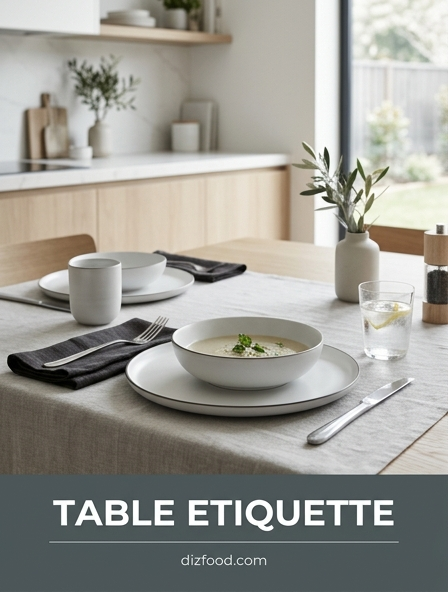
A formal table setting serves as the blueprint for an organized and elegant dining experience. The arrangement is strictly functional, following the order of use from the outside in. At the center of the setting lies the service plate, or charger, which remains until the main course is served. To the left, forks are arranged according to the sequence of courses, while knives and spoons are placed to the right. Glassware is positioned at the top right, typically arranged in a diagonal line starting with the water goblet and followed by wine glasses.
| Item | Placement Location |
|---|---|
| Bread Plate | Top left, above the forks |
| Salad Fork | Outer left side |
| Dinner Knife | Immediate right of the plate |
| Soup Spoon | Outer right side |
Understanding these placements allows a guest to navigate the meal without confusion. The bread knife is placed diagonally across the bread plate, with the handle pointing toward the diner. The dessert spoon and fork are often placed horizontally above the service plate, ensuring they do not interfere with the primary flatware during the initial courses.
Proper Hand Placement for Knife and Fork
Refined dining begins with the physical connection between the diner and their cutlery. The most common error is gripping utensils like a pencil or a mallet. Instead, a graceful grip utilizes the natural anatomy of the hand. For the knife, the index finger should extend along the spine of the handle, stopping just before the blade begins. This provides necessary leverage for cutting without requiring excessive force. The handle should be nestled comfortably within the palm, anchored by the thumb and remaining fingers.
- Index fingers should never touch the blade or the tines directly.
- Grips should be firm yet relaxed to avoid a rigid appearance.
- The handles should remain largely hidden beneath the palm of the hand.
When using the fork, the tines may point downward (European style) or upward (American style) depending on the method. In both cases, the index finger mirrors the position used for the knife, extending down the back of the handle to provide stability. Maintaining this configuration ensures that movements are small, controlled, and quiet, preventing the clanking of metal against porcelain and preserving the calm atmosphere of the dinner table.
Mastering the American and European Cutting Styles
Two primary styles of dining dominate the modern world: the American "zigzag" method and the European "hidden handle" style. Each has its own rhythm and etiquette rules. In the American style, the diner cuts a single bite-size piece of food with the knife in the right hand and the fork in the left. After the cut is made, the knife is placed on the edge of the plate, and the fork is switched to the right hand to bring the food to the mouth. This method is characterized by frequent switching of hands and a slower pace.
The European style, also known as the Continental style, is considered more efficient and is widely used in formal international settings. Here, the fork remains in the left hand and the knife in the right throughout the entire process. The tines of the fork stay pointed downward as the food is conveyed to the mouth. This style avoids the constant switching of utensils, allowing for a continuous and fluid motion. Both styles are correct, though diners should remain consistent with one method throughout a single meal to maintain a cohesive presentation.
The Art of Using Specialized Dining Knives
While the standard dinner knife is versatile, formal dinners often introduce specialized blades designed for specific textures and tasks. Identifying these tools is essential for maintaining the decorum of a multi-course meal. A steak knife, featuring a serrated edge, is provided only when a heavy protein is served. Conversely, a fish knife is distinctively shaped with a notch near the tip and a duller edge, intended for flaking delicate flesh away from bones rather than sawing through it.
- The Butter Knife: Found on the bread plate, used only for spreading, never for cutting.
- The Fish Knife: Notched for separating skin and bones.
- The Fruit Knife: Small and sharp, used for peeling or sectioning raw fruit.
When using these specialized tools, the same rules of hand placement apply. However, the pressure used varies significantly. For instance, the butter knife should never touch the main dinner plate to avoid cross-contamination of flavors. Using the correct knife for the correct task demonstrates a diner's sophistication and respect for the culinary preparation, ensuring that the food is handled in the manner intended by the chef.
Napkin Etiquette Rules Every Guest Should Know
The napkin is more than a tool for cleanliness; it is a silent communicator of a guest's status at the table. Upon sitting, wait for the host to unfold their napkin before doing the same. For formal occasions, the napkin is folded in half and placed across the lap with the crease facing the body. This allows the diner to use the inside of the fold to blot their mouth, keeping any stains hidden from the rest of the table. A napkin should never be used to wipe the face vigorously or to blow one's nose.
If you must temporarily leave the table, the napkin should be placed on the seat of your chair, signaling to the server that you intend to return. Only at the conclusion of the meal is the napkin placed back on the table. It should be gathered loosely-not refolded-and placed to the left of the dinner plate. This indicates to the host and the service staff that you have finished your meal and are ready for the table to be cleared. Avoid placing the napkin on the plate itself, as this is considered unrefined and creates an unpleasant task for the server.
Navigating Multiple Courses with Ease
Facing an array of silver can be intimidating, but the logic of a multi-course meal is designed to guide the diner intuitively. The fundamental rule is to work from the outside in. Each course uses the outermost pair of utensils, which are then removed by the server along with the empty dish. For example, if soup is served first, the spoon on the far right is utilized. If a salad follows, the next set of forks and knives moving inward toward the plate are employed.
Pacing is equally important when navigating multiple courses. A guest should observe the host's speed and attempt to match it. Eating too quickly may make other guests feel rushed, while eating too slowly can delay the service of the next course. Between bites, utensils should be placed in a resting position rather than being held in the air while talking. This ensures that the diner remains engaged with the conversation without using their cutlery as extensions of their gestures. By following the "outside-in" rule and maintaining a steady pace, a diner can move through even the most complex seven-course meal with confidence and grace.
Resting Positions for Silverware During the Meal
During a meal, there are moments when a diner needs to pause for conversation or a sip of wine. To avoid confusion for the service staff, specific resting positions for silverware must be used. In the American style, the knife is placed on the upper right edge of the plate with the blade facing inward, and the fork is placed nearby, tines up. In the European style, the knife and fork are crossed in the center of the plate, with the fork tines pointing downward and the knife blade facing the fork.
These positions act as a "do not disturb" sign for the waiter. If utensils are left leaning against the side of the plate like oars in a boat, they are at risk of slipping or causing a mess. Proper placement ensures the following:
- The waiter knows you are still eating and will not remove your plate.
- Your hands are free to gesture or hold a glass without holding cutlery.
- The table linens remain clean and free from food residue.
Consistency is key; regardless of which style you choose, ensure the blade of the knife always faces the center of the plate to symbolize a non-aggressive posture toward fellow diners.
Communicating with Servers Through Cutlery Placement
The final placement of cutlery serves as a clear signal to the server that a guest has finished a course. This "silent service" language is essential in high-end dining environments where verbal interruptions are minimized. To signal that you are finished, place the knife and fork parallel to each other across the center of the plate. In the United States, the traditional position is the "10:20" position, where the handles point toward the bottom right (as if on a clock face) and the tips point toward the top left.
In many European cultures, the "6:30" position is preferred, with the utensils placed vertically in the center of the plate. Regardless of the specific angle, the key indicators of completion are:
- The knife blade must face inward toward the fork.
- The fork tines may be up or down depending on the cutting style used.
- The utensils should be placed far enough onto the plate that they won't slide off during removal.
This placement allows the server to remove the plate efficiently with one hand, securing the silverware with their thumb to prevent clattering. Once this signal is given, the diner should not move the cutlery again.
The Social Grace of Modern Dining Posture
Posture is the foundation of a polished appearance at the table. A diner should sit straight, with a small space between their back and the chair. This upright position not only projects confidence but also aids in digestion. Elbows should remain off the table at all times when food is present; however, it is increasingly acceptable to rest one's forearms on the edge of the table during lulls in conversation between courses. Feet should remain flat on the floor or crossed at the ankles, never extended into the walking paths of servers.
Modern dining posture also encompasses the placement of technology. Mobile phones, keys, and wallets have no place on a formal table. These items should remain in a pocket or bag to ensure that the focus remains entirely on the companions and the meal. When bringing food to the mouth, the body should remain relatively still; the fork moves to the face rather than the face leaning down to meet the plate. By maintaining a steady, upright frame, the diner contributes to a refined atmosphere and shows respect for the formality of the occasion.
Essential Dos and Donts for Dinner Party Success
Success at a dinner party is often measured by the comfort of the guests and the seamless flow of social interaction. Adhering to fundamental etiquette ensures that no one feels awkward or out of place. The most important rule is to wait for everyone to be served before beginning to eat, unless the host specifically encourages you to start. This demonstrates patience and communal respect.
- Do: Pass both salt and pepper together, even if only one was requested.
- Don't: Season your food before tasting it, as this can be an insult to the cook.
- Do: Break off small, individual pieces of bread before buttering them.
- Don't: Reach across another guest; instead, ask for items to be passed.
Additionally, avoid controversial topics such as intense politics or unpleasant medical details that might dampen the appetite. If a guest spills something, a quick, quiet apology is sufficient; there is no need to make a scene or over-explain. The goal of etiquette is not to be rigid or exclusionary, but to provide a predictable framework that allows everyone to relax and enjoy the culinary experience and conversation.


Comments