
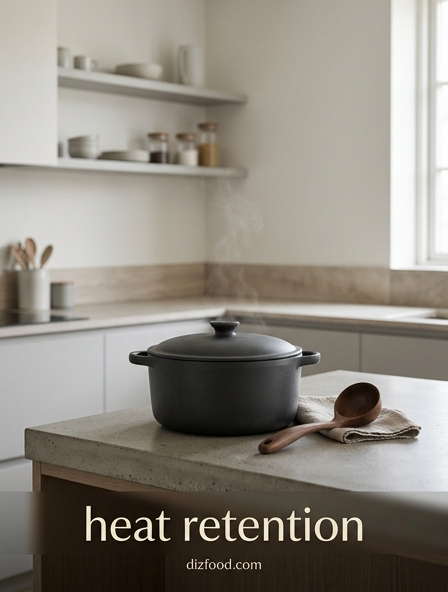
The Science of Thermal Mass in Cookware
Thermal mass refers to the ability of a material to absorb, store, and release heat over time. In a culinary context, this property determines how effectively a pot or pan maintains a steady temperature when cold food is introduced. When a room-temperature steak hits a thin aluminum pan, the surface temperature drops instantly, often leading to steaming rather than searing. Conversely, a vessel with high thermal mass acts as a heat reservoir, resisting these fluctuations to ensure the cooking surface remains hot enough to trigger the Maillard reaction.
This stability is governed by two primary physical properties: density and specific heat capacity. High-density materials can store more thermal energy per unit of volume, meaning thicker walls and heavier bases are essential for managing thermodynamic energy. By understanding the physics of thermal mass, cooks can better predict how their tools will react to different heat sources. This lead to more consistent results, as the cookware provides a buffered environment that smooths out the peaks and valleys of a burner's heat output.
Optimal Materials for Long Lasting Heat
Selecting the right material is the first step in achieving superior heat retention. While aluminum and copper are prized for their thermal conductivity, they lack the density required to hold onto heat once the energy source is removed. For sustained warmth, materials like cast iron, carbon steel, and heavy stoneware are the preferred choices. These materials possess the mass necessary to store significant Joules of energy, releasing it slowly and evenly into the food.
| Material | Retention Level | Common Applications |
|---|---|---|
| Cast Iron | Very High | Searing, deep frying, baking |
| Ceramic/Stone | High | Slow roasting, bread baking | Stainless Steel (Heavy) | Moderate | Sautéing, boiling, reducing |
Cast iron is often considered the gold standard for retention due to its significant weight and thickness. Ceramic and stone are also notable for their insulating properties; they radiate heat evenly over long periods, making them ideal for dishes that require a gentle, consistent temperature transition from the oven to the dining table.
How Heat Retention Preserves Flavor Profiles
Heat retention is more than a matter of temperature; it is a critical component in the chemical transformation of ingredients. Consistent heat allows for steady enzymatic reactions that develop depth in a dish. If a pan loses heat too quickly, the proteins in meat do not sear properly, resulting in a loss of savory umami flavors. Maintaining a high thermal floor prevents the "boiling effect" that occurs when juices leak into a cooling pan, ensuring that flavors remain concentrated rather than diluted by excess moisture.
Furthermore, stable temperatures during the braising process ensure that collagen in tough cuts of meat breaks down into gelatin at a uniform rate. This process releases rich textures and flavors that would otherwise remain trapped in the fibers. In baking, a stone that retains heat well ensures a rapid "oven spring" and a crisp crust, preserving the delicate balance of sugars and starches in the dough. By utilizing tools that hold their heat, a chef can ensure that every chemical reaction proceeds exactly as intended, resulting in a more complex and balanced flavor profile.
Maintaining Perfect Serving Temperatures Longer
The transition from the kitchen to the dining table is a vulnerable time for any dish. Heat-retaining vessels ensure that food stays within the ideal consumption range throughout the duration of a meal. This is particularly important for multi-course dinners or family-style service where guests may take second helpings over an hour or more. Using materials like stoneware or thick-walled porcelain allows the dish to act as its own heat source, buffering it against the cooler ambient air of the dining room.
- Pre-heat serving platters in a low oven to minimize initial heat transfer.
- Use heavy-bottomed bowls for soups and stews to keep liquids simmering.
- Keep lids on serving vessels until the moment of consumption.
- Utilize stone or cast iron trivets that have been slightly warmed.
Beyond the sensory pleasure of eating warm food, there is a safety component; keeping food above 140°F (60°C) prevents it from entering the bacterial "danger zone." High-mass cookware provides the necessary thermal inertia to keep food safe and delicious from the first bite to the last.
The Link Between Heat Retention and Moisture
Heat retention and moisture control are inextricably linked in the kitchen. When a vessel maintains a high, stable temperature, it creates a predictable environment that affects the texture of the food. In high-retention cookware, heat is distributed evenly across the interior surface, which minimizes hot spots that cause localized, aggressive evaporation. This uniform heat encourages a gentle steam cycle within the pot, where moisture evaporates and then condenses back into the food.
If a pot loses heat, this cycle is interrupted. The steam collapses, and the resulting liquid can pool at the bottom, leading to uneven cooking and soggy textures. The thermal stability of heavy materials like ceramic or cast iron ensures that moisture remains in a vapor state longer, which is essential for tenderizing vegetables and meats. This is why Dutch ovens are favored for bread baking; they create a self-sustaining microclimate that protects the moisture content of the dough, leading to a superior crust and an airy interior crumb.
Energy Efficient Cooking Through Heat Stability
Utilizing cookware with high heat retention is a practical way to increase energy efficiency. Once a high-mass pot reaches its target temperature, it requires significantly less energy to maintain that state. This allows cooks to turn the burner down to a lower setting or even turn it off entirely several minutes before the food is finished. This "carryover cooking" utilizes the stored thermal energy within the walls of the vessel to complete the cooking process without further fuel consumption.
- Bring the vessel to temperature on high heat for a short duration.
- Reduce the heat to the lowest possible setting once the thermal mass is saturated.
- Turn off the heat source early and allow the retained energy to finish the dish.
By leveraging these physical properties, home cooks can reduce their carbon footprint and lower utility bills. This method of cooking is not only economical but also produces more consistent results, as it reduces the risk of scorching or burning food through direct contact with an active flame or heating element.
Benefits of Cast Iron and Heavy Ceramics
Cast iron and heavy ceramics are the titans of the kitchen when it comes to thermal performance. Cast iron is prized for its high emissivity, meaning it radiates heat far beyond its surface. This allows it to cook food through radiant energy as much as through direct contact, making it ideal for deep frying and achieving a crusty sear on meats. Heavy ceramics offer excellent insulation and a non-reactive surface, making them perfect for slow-roasting acidic foods like tomato-based stews or fruit compotes.
Both materials share the benefit of extreme longevity; they are often passed down through generations. Their weight provides a stable cooking environment that is less prone to the "cold spots" found in thinner, stamped metal pans. While they take longer to heat up initially, the steady release of energy provides a level of control that is unmatched by modern lightweight alternatives. Whether used for a crispy cornbread or a slow-simmered cassoulet, these materials define the professional standard for heat-centric cooking and long-term durability.
Slow Cooking Advantages for Enhanced Taste
Slow cooking is the art of balancing low temperatures over long periods, a feat made possible by superior heat retention. When a vessel can maintain a consistent 200°F for hours, it facilitates the slow breakdown of connective tissues without toughening the muscle fibers. This transformation is what gives slow-cooked meats their tender, "melt-in-the-mouth" texture. Beyond texture, the extended time allows for a deeper marriage of flavors, where spices and aromatics permeate every part of the dish.
The thermal stability of a heavy pot prevents the aggressive boiling that can cloud stocks or break down delicate vegetables into mush. Instead, a gentle simmer is maintained, preserving the integrity of the ingredients while extracting maximum flavor. This method is especially beneficial for legumes and grains, which require consistent hydration and heat to soften perfectly without losing their structural shape. By allowing the cookware to do the work of regulating temperature, the cook ensures a cohesive and sophisticated taste profile that quick-cooking methods simply cannot replicate.
The Role of Lids in Trapping Heat
A lid is a critical tool for managing the thermodynamics of a cooking vessel. Without a lid, a significant portion of thermal energy is lost through evaporative cooling. As steam escapes, it carries away heat, forcing the energy source to work harder to maintain the internal temperature. A tight-fitting lid traps this steam, creating a convection effect where hot air and moisture circulate around the food. This ensures that the heat is applied from all directions, rather than just from the bottom contact point.
In high-retention cookware, the lid often matches the weight and material of the base, further increasing the total thermal mass of the system. This creates a "mini-oven" environment on the stovetop. Some lids are designed with self-basting spikes on the interior, which collect condensed steam and drip it evenly back over the food. This specialized design maximizes the efficiency of the heat-moisture relationship, ensuring that the food remains hydrated and the internal temperature remains perfectly steady throughout the entire cooking process.
From Oven to Table Serving Solutions
Modern culinary presentation often emphasizes the "oven to table" approach, which relies heavily on the heat retention of the serving vessel. This method eliminates the need for transferring food to cold platters, which causes immediate heat loss and can ruin the texture of delicate sauces. High-quality stoneware, cast iron skillets, and enameled Dutch ovens are designed with aesthetics in mind, allowing them to serve as both the primary cooking tool and the visual centerpiece of the meal.
This approach is practical for both busy households and professional settings. It reduces cleanup time by minimizing the number of dishes used and ensures that the food remains at its peak quality during the entirety of the service. When a dish is brought to the table still sizzling or bubbling, it enhances the sensory experience for the diners. The residual heat stored in the thick walls of the vessel acts as a buffer against the cooler air of the dining room, preserving the chef's hard work until the final bite is taken, making every meal feel like a special occasion.

Comments