
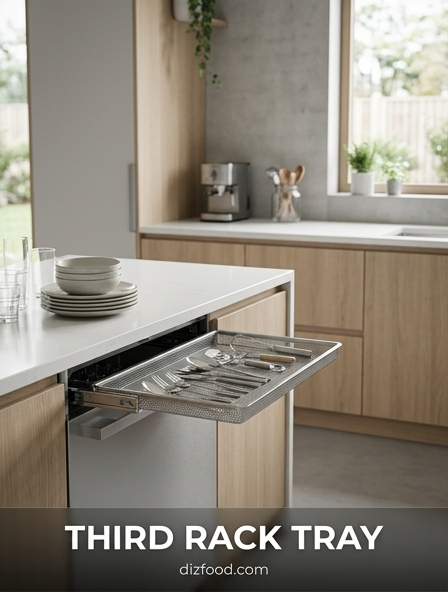
Ever feel like you're playing a high-stakes game of Tetris just to fit a single dinner's worth of dishes into your machine? You can easily maximize your dishwasher tub capacity and organization by utilizing a dedicated third rack tray. This clever design reclaims previously wasted space at the very top of the tub, providing a specialized zone for long utensils, oversized ladles, and flat lids. By shifting these awkward items upward, you free up valuable real estate on the lower racks for bulky pots and plates, making every wash cycle significantly more efficient. Before upgrading, it is worth comparing the convenience of third rack silverware trays versus lower silverware baskets to see which configuration best suits your kitchen workflow.
Benefits of Integrating a Third Rack
The introduction of a third rack tray has revolutionized the modern kitchen by fundamentally altering how we perceive dishwasher efficiency. Positioned at the very top of the appliance, this slim tier provides a dedicated zone for items that previously struggled to find a secure spot. By integrating this specialized level, homeowners experience a significant increase in total loadable surface area without increasing the external footprint of the machine. This design innovation ensures that every cubic inch of the wash tub is utilized effectively, catering to the needs of busy households that produce a high volume of soiled utensils daily.
- Enhanced organization for flatware and long cooking tools.
- Dedicated spray zones that target hard-to-reach crevices.
- Reduced nesting of spoons and forks for more hygienic results.
- Increased safety by keeping sharp knives separated and secure.
Beyond simple space management, the third rack promotes better water circulation. Since flat items are laid out horizontally rather than bunched together in a vertical basket, the dishwasher's spray arms can reach every surface with consistent pressure. This leads to a more reliable clean, reducing the need for re-washing items that were previously shielded by larger plates or bowls in the lower sections.
Strategic Loading for Maximum Cutlery Capacity
To truly unlock the potential of a third rack tray, one must master the art of strategic loading. Unlike traditional baskets where silverware is often thrown in haphazardly, the third rack features precision-engineered tines and grooves designed to hold each piece of cutlery individually. This deliberate placement prevents the common issue of "nesting," where spoons rest against one another, blocking the flow of water and detergent. By lining up forks, spoons, and knives in a systematic fashion, users can fit up to 30% more cutlery than they could in a standard bottom-rack basket.
- Sort items by type before loading to make the process faster.
- Place spoons with the concave side facing down to prevent water pooling.
- Alternate the direction of fork tines to ensure maximum water exposure.
- Utilize the specialized slots for steak knives to keep edges sharp and fingers safe.
This organized approach not only maximizes capacity but also streamlines the entire dishwashing cycle. When each piece has its own designated slot, the structural integrity of the load is maintained even during high-pressure wash cycles. This prevents items from rattling or shifting, which can lead to chips or scratches on delicate silver or stainless steel finishes.
Freeing Up Lower Rack Space for Large Items
One of the most immediate advantages of utilizing a third rack tray is the liberation of the lower rack. In traditional dishwasher configurations, the bulky silverware basket occupies a significant portion of the bottom level, often blocking space where large pots, pans, or mixing bowls could otherwise fit. By migrating all small utensils and flatware to the uppermost tray, you can remove the silverware basket entirely. This creates a wide-open landscape on the bottom rack, allowing for more creative and efficient loading of oversized cookware that would normally require a second cycle.
- Accommodation of extra-large stockpots and Dutch ovens.
- Space for wide baking sheets and roasting pans.
- Clearance for tall blender jars and storage containers.
- Improved water spray reach for heavy-duty items.
This shift in loading dynamics means that the dishwasher can handle a full dinner party's worth of dishes in a single run. Instead of hand-washing large items because they won't fit alongside the cutlery basket, you can simply slide them into the newfound space. This not only saves time but also reduces water and energy consumption by minimizing the total number of loads required to clear the kitchen counters after a large meal.
Organizing Small Kitchen Gadgets and Lids
Small kitchen gadgets and plastic lids are notorious for falling through the gaps of standard dishwasher racks, often landing on the heating element and melting. The third rack tray serves as the perfect sanctuary for these problematic items. Its shallow depth and fine mesh or narrow tines provide a stable platform for everything from measuring spoons to espresso cups. By designating this top area for "small-format" kitchenware, you eliminate the frustration of hunting for missing pieces at the bottom of the tub after a cycle finishes.
| Gadget Category | Placement Strategy |
|---|---|
| Plastic Lids | Lay flat across the center tines. |
| Measuring Spoons | Hook over side rails or lay in cutlery slots. |
| Whisks/Spatulas | Place horizontally along the outer edges. |
| Reusable Straws | Align within the dedicated narrow grooves. |
Furthermore, the third rack is an ideal spot for delicate items like ramekins or silicone muffin liners. These lightweight objects are often tossed around by high-pressure water jets in the lower racks. In the third rack, however, they are gently held in place by the low-clearance ceiling of the dishwasher tub, ensuring they remain upright and emerge perfectly clean and dry without being flipped over and filled with dirty wash water.
Adjusting Third Rack Heights for Versatility
Modern dishwasher engineering has moved beyond static trays to incorporate highly adjustable third rack systems. Many high-end models feature a "V-shaped" or "EasyLift" design that allows the user to lower or raise sections of the tray to accommodate different types of loads. This versatility is crucial when you need to wash deeper items like soup ladles or small cereal bowls that are too tall for a standard flat tray but too small to justify taking up space in the middle rack. By clicking the tray into a lower position, you gain the depth needed for these medium-sized tools.
- Lowering one side for deep serving spoons and whisks.
- Raising the tray to provide extra clearance for tall wine glasses below.
- Expanding the center section for bulky chef's knives.
- Using fold-down tines to create a flat surface for wide lids.
This adaptability ensures that the third rack is not just a "cutlery tray" but a truly multifunctional component. If you have tall stemware in the middle rack, you can raise the third rack to ensure the glasses have enough vertical clearance to avoid breakage. Conversely, if the middle rack is filled with low-profile saucers, you can drop the third rack to its lowest setting to maximize its own storage volume, demonstrating a level of customization that older dishwasher models simply cannot match.
Improving Cleaning Performance with Dedicated Trays
Cleaning performance is significantly enhanced when items are spread out across a dedicated third rack tray. In traditional setups, the sheer density of silverware in a basket often leads to "shielding," where the items in the center of the basket receive less water and detergent than those on the perimeter. The horizontal layout of the third rack ensures that every single fork tine and spoon bowl is exposed directly to the wash arms. Many manufacturers even include a dedicated spray nozzle or a rotating arm specifically for the third rack to ensure maximum scrubbing power at the highest level.
- Water is distributed evenly across the flat surface.
- Detergent reaches every item without being blocked by bulky plates.
- Gravity helps rinse water slide off flat surfaces more effectively.
- Reduced mechanical vibration keeps items from touching during the wash.
Moreover, because the third rack is located at the top of the machine, it is further away from the heavy food soil that typically settles at the bottom. This means that delicate or lightly soiled items placed here are washed in relatively cleaner water during the initial stages of the cycle. The result is a spot-free finish on silverware and small gadgets, reducing the need for hand-polishing after the drying cycle is complete.
Eliminating the Need for Silverware Baskets
The transition to a third rack tray often marks the end of the traditional silverware basket's reign in the kitchen. For many users, the basket is a source of clutter and inefficiency; it requires bending down to load and often takes up space that could be used for larger dishes. By moving all flatware to the top tray, the basket becomes redundant and can be removed entirely from the dishwasher. This not only increases the capacity of the bottom rack but also improves the overall ergonomics of the loading process, as you can stand upright while placing most of your small items.
- Gain roughly 15-20% more space in the lower rack.
- Better airflow through the bottom rack for faster drying.
- Reduced risk of items falling through the basket mesh.
- A cleaner, more streamlined interior appearance.
Removing the basket also facilitates better water circulation for the remaining large items. Without the solid plastic walls of a basket obstructing the path, the lower spray arm can oscillate more freely, reaching the corners of the tub with greater force. This is particularly beneficial for cleaning heavily soiled items like lasagne pans or greasy baking sheets, which require the full intensity of the dishwasher's cleaning cycles to achieve a perfect result.
Protecting Delicate Utensils from Damage
Kitchen tools made of delicate materials require special care that standard dishwasher racks often fail to provide. A third rack tray acts as a protective zone for items like high-end steak knives, silver-plated forks, and silicone-tipped spatulas. In a traditional basket, these items might clatter against one another, leading to dulled blades, scratched finishes, or torn silicone. The dedicated tines of a third rack hold each piece firmly in place, ensuring that they do not move even during the most vigorous wash cycles, thereby extending the lifespan of your expensive kitchen investments.
- Prevents knife blades from coming into contact with other metal.
- Reduces the risk of silver-plated items tarnishing from contact.
- Protects wooden-handled tools from excessive agitation.
- Keeps long, thin items from slipping through and blocking spray arms.
The gentle nature of the third rack is also beneficial for heat-sensitive plastics. Because the top rack is generally further from the heating element than the bottom rack, it provides a slightly cooler environment during the drying phase. This makes it a safer spot for thin plastic lids or children's medicine dispensers that might otherwise warp or melt if placed closer to the bottom of the dishwasher tub.
Streamlining Post Cycle Unloading Efficiency
The benefits of a third rack tray extend well beyond the washing process, significantly improving the speed of unloading. When you load the tray strategically-grouping all forks together, all spoons together, and all knives together-you create a pre-sorted arrangement that makes putting them away a breeze. Instead of digging through a mixed basket of cutlery, you can simply grab a handful of identical items and place them directly into their designated spots in the kitchen drawer. This can shave minutes off your post-meal cleanup routine every single day.
- Gather all spoons in one motion for instant drawer placement.
- Identify and remove small gadgets without searching the whole tub.
- Avoid the "poking" hazard of upright knives in a basket.
- Easily see if any item requires additional drying before storage.
Furthermore, because items in the third rack are spread out horizontally, they tend to dry more uniformly. There are fewer "water traps" compared to items standing vertically in a basket. This means you are less likely to encounter damp spoons or wet knife handles when unloading. The efficiency gained from this organized system transforms a tedious chore into a quick, seamless task, allowing you to spend more time enjoying your kitchen rather than cleaning it.
Enhancing Overall Dishwasher Tub Volume Usage
Ultimately, the third rack tray represents the pinnacle of dishwasher tub volume optimization. By utilizing the vertical space that was previously wasted at the very top of the machine, manufacturers have increased the usable "real estate" of the appliance without changing its exterior dimensions. This is particularly valuable in smaller kitchens where a standard 24-inch dishwasher must perform at maximum capacity. The addition of this third layer allows for a higher "place setting" count, often moving a machine from a 12-place setting capacity to 14 or even 16.
| Feature | Standard 2-Rack | Modern 3-Rack |
|---|---|---|
| Cutlery Capacity | Limited by basket size | Full-width tray capacity |
| Large Pot Space | Restricted by basket | Open and flexible |
| Small Item Safety | Poor (items fall through) | Excellent (secure tines) |
| Loading Ergonomics | Requires bending | Stand-up loading for cutlery |
This enhanced volume usage translates directly into utility savings. When you can fit more dishes into a single load, you run the dishwasher less frequently throughout the week. This leads to a measurable reduction in water consumption and electricity usage. For the environmentally conscious homeowner, the third rack tray is not just a convenience; it is a tool for sustainable living that maximizes the efficiency of every gallon of water used in the home.





Comments