
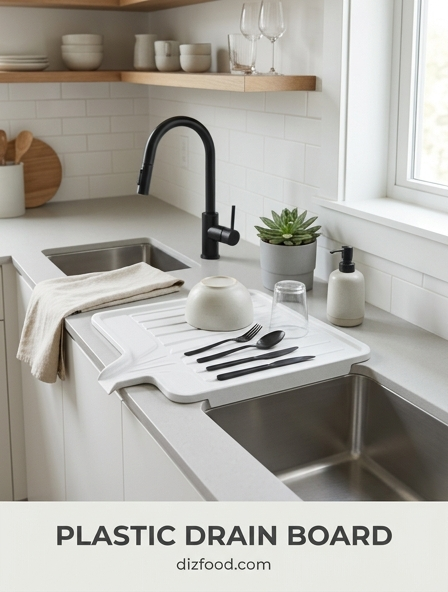
Maximizing Kitchen Workflow with Sloped Drain Boards
In a high-traffic kitchen, efficiency is determined by how quickly one can transition from cleaning to organizing. A sloped plastic drain board is a fundamental tool for optimizing this workflow. By utilizing a precise angle of inclination, these boards ensure that excess water does not pool around freshly washed items but instead flows directly into the sink basin. This eliminates the secondary task of manually drying the countertop or the underside of the dish rack. When the drainage process is automated by gravity, the cook can focus on food preparation rather than moisture management.
- Reduces total cleanup time by facilitating rapid air-drying.
- Minimizes the need for dish towels, lowering laundry volume.
- Creates a dedicated zone for wet items, keeping the rest of the counter dry.
- Prevents the accumulation of standing water which can slow down the pace of a busy kitchen.
The integration of a sloped board allows for a seamless "wash-and-set" routine. As dishes are placed onto the rack, the immediate runoff prevents the base of the glasses from sitting in a puddle, which often leads to spotting. This streamlined approach ensures that the kitchen remains a functional workspace even during the most demanding cleanup sessions.
Benefits of Durable Plastic for Heavy Loads
While metal or silicone options exist, high-density plastic remains the superior choice for handling heavy kitchen loads. Modern polymers are engineered to withstand the significant weight of ceramic plates, glass platters, and heavy cookware without warping or cracking. This structural resilience is essential for maintaining a level surface that still directs water effectively. Unlike metal, plastic is naturally rust-proof, ensuring that the structural integrity does not degrade over years of exposure to moisture and detergent.
| Feature | Benefit |
|---|---|
| Impact Resistance | Protects delicate glassware from chipping on hard surfaces. |
| Corrosion Proof | Will not rust or oxidize regardless of water quality. |
| Flexural Strength | Supports heavy cast iron pots without permanent deformation. |
| Lightweight Nature | Easy to maneuver for cleaning or storage purposes. |
The inherent flexibility of plastic also acts as a cushion. When a heavy pot is placed down quickly, the material absorbs the impact, protecting both the item and the countertop beneath. This balance of rigidity and shock absorption makes it the ideal material for a long-lasting kitchen accessory that faces daily rigors.
Optimizing Gravity-Fed Water Drainage Systems
The physics behind a plastic drain board revolves around the effective use of gravity. A well-designed board features a series of calculated ridges and channels that guide water toward a central exit point. These channels are often tapered, becoming deeper as they approach the lip that overhangs the sink. This design ensures that surface tension is broken, preventing small droplets from clinging to the plastic surface. When water is channeled efficiently, the drying environment remains humid-free, which significantly accelerates the evaporation process for the dishes above.
Engineers focus on the "run-off" coefficient of the plastic surface; a smoother finish reduces friction, allowing water to slide away with minimal resistance. If the board is perfectly flat, water remains stagnant, leading to mineral deposits and slime. However, with a consistent slope, the board remains relatively dry even during heavy use. This gravity-fed system requires no mechanical parts or power, making it a sustainable and foolproof solution for moisture control. By ensuring the board is positioned with a slight overlap into the sink, users can guarantee that every drop of reclaimed water is disposed of instantly and hygienically.
Strategic Dish Placement for Faster Drying
To achieve the fastest drying times, the arrangement of items on the plastic drain board is critical. Strategic placement allows for maximum airflow around each piece of cutlery and crockery. By utilizing the built-in ridges of the board, users can prop up plates at an angle, exposing both the front and back surfaces to the air. Proper spacing prevents the "nesting" effect, where water becomes trapped between stacked bowls or containers, leading to a musty smell and incomplete drying.
- Place large plates at the rear to allow smaller items visibility and airflow.
- Position glasses upside down on the highest points of the ridges.
- Ensure bowls are tilted rather than placed flat to allow internal drainage.
- Group heavy cookware together to balance the weight across the board's surface.
- Leave a small gap between each item to facilitate cross-ventilation.
When items are placed thoughtfully, the plastic surface remains clear of unnecessary puddles. The air can circulate underneath the items, which is just as important as the air above them. This methodical approach not only speeds up the drying process but also ensures that dishes are ready to be put away sooner, maintaining a tidy kitchen environment.
Preventing Countertop Moisture and Water Damage
One of the primary functions of a plastic drain board is the preservation of the kitchen's structural elements. Countertops made of laminate, wood, or even certain natural stones are susceptible to damage from prolonged exposure to moisture. Water can seep into seams, causing wood to swell or laminate to delaminate over time. A plastic board acts as an impermeable barrier, catching every stray drop and diverting it safely away from vulnerable surfaces. The raised edges of the board ensure that even if a large amount of water is spilled, it is contained within the plastic perimeter.
Furthermore, the underside of many plastic drain boards features non-slip feet or a raised profile. This creates a small air gap between the board and the counter, preventing "sweating" where condensation forms underneath the plastic. By keeping the countertop bone-dry, the board prevents the growth of mold and mildew in hidden crevices. This protection extends the lifespan of expensive kitchen cabinetry and surfaces, making the drain board a low-cost insurance policy against water-related home repairs. It is an essential component for maintaining a pristine and structurally sound kitchen workspace.
Structural Integrity for Bulky Pots and Pans
A high-quality plastic drain board must possess the structural integrity to support the heaviest items in a cook's arsenal. Stockpots, cast iron skillets, and large Dutch ovens can exert significant pressure on a drainage surface. Manufacturers achieve this strength through reinforced ribbing on the underside of the board. This internal skeleton prevents the plastic from sagging under the weight of several liters of water trapped in a soaking pot. When the board maintains its shape, the drainage slope remains consistent, ensuring that even when fully loaded, water continues to exit into the sink.
The thickness of the plastic is also a factor in its durability. Thicker gauge polypropylene provides a rigid base that does not flex or bounce when items are added. This stability is crucial for preventing glass items from tipping over when heavier items are placed nearby. Users can confidently stack their most cumbersome cooking vessels knowing the board is designed for industrial-level durability. This reliability ensures that the board does not become a point of failure in the kitchen, providing a steady and dependable platform for the most intense cleaning tasks after a large meal or holiday gathering.
Enhancing Hygiene with Self-Draining Surfaces
Hygiene is paramount in any food preparation area, and the self-draining nature of plastic boards contributes significantly to a sterile environment. Unlike porous materials or cloth mats that trap moisture and organic particles, plastic is non-porous and easy to sanitize. Because the board is designed to shed water immediately, it denies bacteria the damp environment they need to colonize. Many modern plastic boards are also treated with antimicrobial agents that further inhibit the growth of germs on the surface.
- Non-porous material prevents deep-seated staining and odors.
- Smooth surfaces allow for easy wiping with disinfectant.
- Self-draining design prevents the formation of "biofilm" or slime.
- Dishwasher-safe properties allow for high-heat sterilization.
The absence of stagnant water means that there is less opportunity for mineral buildup, which can harbor pathogens. By ensuring that the surface dries quickly after use, the risk of cross-contamination is greatly reduced. Regular cleaning of the board is simple, requiring only a quick rinse or a scrub with soapy water to keep it looking and performing like new. This focus on hygiene makes plastic the preferred choice for health-conscious households.
Space-Saving Solutions for Large Dishwashing Tasks
In smaller kitchens, counter space is a premium commodity. Plastic drain boards are designed to maximize this limited area by providing a high-capacity drying station that can be easily moved or stored. Many models feature a slim profile that can be tucked away in a cupboard or hung on a hook when not in use. Despite their compact footprint, their engineered surfaces can hold a surprising volume of dishes. By utilizing vertical space through the use of an accompanying rack, the board serves as the foundation for a multi-tiered drying system.
Some plastic boards are designed with a reversible or "expandable" feature, allowing them to adapt to the size of the task at hand. For daily use, a small section may suffice, but after a dinner party, the board can be extended or paired with a secondary mat. The lightweight nature of plastic makes this modularity possible. It allows the user to transform their sink area into a high-volume processing zone and then quickly revert it to a clean, open space. This adaptability is key for maintaining a functional kitchen that does not feel overwhelmed by cleaning equipment, providing a perfect balance between utility and minimalism.
Maintenance Tips for Long-Lasting Plastic Boards
While plastic is highly durable, proper maintenance will extend its functional life and keep it looking aesthetically pleasing. Over time, hard water can leave calcium deposits on the surface, which can impede water flow and look unsightly. Periodic deep cleaning is recommended to remove these minerals and any soap scum that has accumulated in the drainage channels. Plastic boards are generally very low-maintenance, but following a few simple steps will ensure they remain an asset in the kitchen for many years.
- Rinse the board with hot water after every use to remove food debris.
- Use a soft brush and mild detergent to clean the ridges and grooves once a week.
- Remove hard water spots with a solution of white vinegar and water.
- Avoid using abrasive scouring pads that can scratch the plastic and trap bacteria.
- Ensure the board is completely dry before storing it in a closed cabinet.
By following these routines, the plastic remains smooth, ensuring the "gravity-fed" drainage remains optimal. Most boards are also heat-resistant to a certain degree, but it is best to avoid placing extremely hot pans directly from the stove onto the plastic to prevent warping. With minimal care, a plastic drain board remains a reliable, clean, and effective tool.
Achieving a Clutter-Free After-Dinner Cleanup
The final stage of any meal is the cleanup, and a plastic drain board is essential for achieving a sense of order. There is a psychological benefit to seeing a clear, dry countertop once the chores are finished. A dedicated drain board provides a specific "landing zone" for dishes, preventing them from sprawling across the entire kitchen. This containment is the first step toward a clutter-free environment. Once the dishes are dry and put away, the board itself can be wiped down and stored, leaving the kitchen looking pristine and ready for its next use.
Organization is further enhanced by the board's ability to categorize items. By grouping cutlery, glassware, and plates into their respective areas on the board, the process of putting them back into cupboards becomes faster and more methodical. The visual clarity of a well-organized drying area reduces the stress often associated with large piles of dishes. Ultimately, the plastic drain board is more than just a drainage tool; it is a system for managing the transition from a messy, active kitchen to a calm, clean sanctuary. It ensures that the end of the day is met with a tidy workspace rather than a damp and disorganized counter.



Comments