
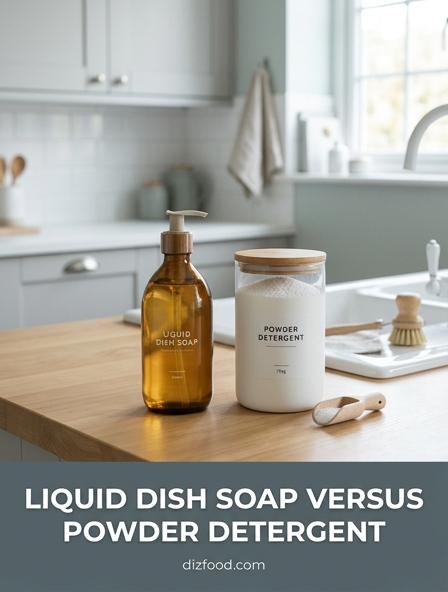
When you're staring down a sink full of oily lasagna pans, the choice between liquid dish soap and powder detergent becomes a battle of chemistry rather than just a kitchen preference. Liquid dish soaps are engineered with a high concentration of surfactants that instantly emulsify stubborn lipids, allowing grease to lift off surfaces even in lukewarm water. In contrast, while powder detergents offer impressive scrubbing power for baked-on starches, they often struggle to dissolve quickly enough to tackle heavy oil slickness effectively. For those seeking the ultimate grease-cutting champion, understanding the molecular agility of liquid formulas versus the abrasive strength of powders is the secret to a faster, streak-free cleanup.
| Feature | Liquid Dish Soap | Powder Detergent |
|---|---|---|
| Grease Solubility | High; contains specialized lipid-binding surfactants. | Moderate; relies more on mechanical scrubbing. |
| Dissolution Speed | Instantaneous in all water temperatures. | Slow; requires hot water to prevent clumping. |
| Abrasiveness | Non-abrasive; safe for delicate non-stick coatings. | High; excellent for scouring burnt-on food. |
| Pre-treating | Direct application works instantly on stains. | Requires water to form a paste before use. |
| Residue Profile | Rinses clean with minimal water volume. | High risk of chalky, white film if not rinsed. |
| Best Use Case | Daily greasy dishes, glassware, and plastics. | Heavy-duty pots, cast iron, and deep stains. |
Cleaning Efficiency Differences
The cleaning efficiency of liquid dish soap and powder detergent is primarily dictated by their chemical delivery systems and the specific environment of the kitchen sink or dishwasher. Liquid soaps are engineered for immediate solubility, making them highly efficient for manual tasks where instant suds are required to lift surface debris. Because they are already in a fluid state, they mix homogenously with water of varying temperatures, ensuring that the active surfactants are distributed evenly across the surface of the dishware the moment scrubbing begins.
Powder detergents, in contrast, often contain complex enzymatic builders that require a specific activation window, usually involving heat and time. These enzymes, such as amylase and protease, are highly effective at breaking down molecular bonds in food starches and proteins, a task where standard liquid soaps may struggle during a long soak. However, the efficiency of powder is contingent upon its ability to dissolve completely; in quick rinse cycles or cold water, powder may remain granular, leading to a significant drop in cleaning performance compared to its liquid counterpart.
- Liquid Efficiency: Superior for short-duration manual washing and cold water applications.
- Powder Efficiency: Highly effective for long-cycle machine washing and breaking down organic proteins.
- Agitation Requirements: Liquid relies on manual friction, while powder relies on chemical breakdown and high-pressure sprays.
Ultimately, the choice between the two depends on whether the user prioritizes the instant gratification of foam and surface cleaning or the deep-acting chemical reactions necessary for heavily soiled cookware. While liquid soap excels at general maintenance, powder's structural complexity often provides a more thorough "deep clean" when used in the appropriate mechanical setting.
Grease Cutting Power
Grease cutting is perhaps the most critical metric for any kitchen cleaning agent, as lipid-based residues are notoriously difficult to remove from plastics and metals. Liquid dish soaps are specifically formulated with high concentrations of surfactants like Sodium Lauryl Sulfate (SLS). These molecules possess a dual nature: a hydrophilic head that bonds with water and a lipophilic tail that attaches to grease. This allows the soap to encapsulate oil droplets into micelles, which are then easily washed away by the flow of water. This process is nearly instantaneous, making liquid soap the preferred choice for heavy oils and frying pans.
Powder detergents approach grease through a different mechanism, often utilizing alkaline builders such as sodium carbonate or sodium silicate. These chemicals increase the pH level of the wash water, which helps to saponify certain types of fats, essentially turning them into a water-soluble soap-like substance. While this is effective in high-temperature environments like a dishwasher, it lacks the immediate "emulsification" feel that users experience with liquid soap. Without the high heat of a machine, powder can struggle to penetrate thick layers of solidified grease, often requiring significantly more mechanical force from the user to achieve the same result as a small drop of concentrated liquid.
- Emulsification: Liquid soaps surround fat molecules to lift them instantly.
- Saponification: Powder detergents use alkalinity to break fats down chemically.
- Temperature Sensitivity: Liquid soap maintains grease-cutting power in lukewarm water, whereas powder requires heat to maximize its alkaline reaction.
In a direct comparison of grease removal on a standard kitchen sponge, liquid soap is vastly more effective for the direct application needed to clean oily residue from a skillet or a plastic storage container.
Stain Removal Performance
Stain removal in the kitchen often involves dealing with oxidized pigments from coffee, tea, wine, or tomato-based sauces. Powder detergents frequently have a distinct advantage in this category because their dry, stable form allows for the inclusion of bleaching agents, such as sodium percarbonate (oxygen bleach). These agents are highly effective at breaking down the chromophores responsible for deep stains on ceramic and porcelain. When the powder dissolves in hot water, it releases active oxygen that lifts the pigment out of the microscopic pores of the dishware, a feat that standard liquid soaps generally cannot replicate.
Liquid dish soaps are typically pH-neutral or only slightly basic to protect the user's hands, which limits their ability to include aggressive bleaching components. Their stain-removing power is largely mechanical and surfactant-based, meaning they are excellent at removing surface-level discoloration but may fail against "set-in" stains on older plates or stained plastic. While a liquid soap might clean a coffee mug, a powder detergent is more likely to restore the original whiteness of the ceramic after several uses. For items like cutting boards that have absorbed juice from berries or beets, the abrasive nature of undissolved powder can also act as a physical scouring agent, further aiding in the removal of stubborn surface discoloration.
Furthermore, the enzymatic action in high-quality powders targets the protein "glues" that hold stains to surfaces. By dissolving the biological bond between the food residue and the plate, the stain is released more effectively during the rinse cycle. For those dealing with persistent discoloration on heirloom china or frequently used mugs, the chemical profile of powder provides a superior restorative effect compared to the gentle maintenance offered by liquid detergents.
Cost Effectiveness Comparison
When analyzing the cost effectiveness of kitchen cleaning agents, it is essential to look beyond the shelf price and consider the cost per wash cycle. Powder detergents are almost universally more economical when purchased in bulk. Because they do not contain the high water content found in liquid soaps, they are lighter and more compact to ship, which translates to a lower price point for the consumer. Additionally, the concentrated nature of powder means that a small volume goes a long way, especially in automatic dishwashers where over-sudsing from liquid alternatives could actually damage the machine.
Liquid dish soaps, however, offer a different kind of value through precision. The use of a pump or a squeeze bottle allows the user to apply exactly the amount needed for a single item, whereas powder can be difficult to dose for small, manual tasks. However, consumers often tend to over-use liquid soap, pouring out more than necessary due to the satisfying visual of the foam. This leads to faster depletion of the product. The following table highlights the general economic breakdown between the two formats based on typical kitchen usage patterns.
| Feature | Liquid Dish Soap | Powder Detergent |
|---|---|---|
| Unit Price | Moderate to High | Low to Moderate |
| Concentration | High Water Content | High Active Solids |
| Waste Potential | High (Over-pouring) | Low (Measured Scops) |
| Shelf Life | Stable | Very Long (if kept dry) |
| Bulk Savings | Moderate | Significant |
In the long term, a household that relies heavily on a dishwasher will find powder to be the significantly more budget-friendly option. For manual washing, liquid soap remains the standard, but its cost-effectiveness is highly dependent on the user's self-discipline in dispensing the product sparingly.
Environmental Sustainability Factors
The environmental impact of kitchen detergents is a multifaceted issue involving packaging, transportation, and chemical runoff. Powder detergents are generally considered the more sustainable choice for several reasons. First, their packaging is usually cardboard, which is more easily recycled or composted than the thick high-density polyethylene (HDPE) plastics used for liquid soap bottles. Because powder is concentrated and lacks water weight, the carbon footprint associated with its transportation is significantly lower; more "washes" can be transported in a single truckload of powder than in a load of liquid soap.
Liquid soaps also frequently contain preservatives and stabilizers to prevent the formula from separating or growing bacteria in its watery environment. These additives can sometimes be harmful to aquatic life once they enter the wastewater stream. Furthermore, the prevalence of microplastics in some liquid formulations, though increasingly regulated, remains a concern. On the other hand, powders can be formulated with fewer preservatives because their dry state naturally inhibits microbial growth. However, it is important to note that some older powder formulations may contain phosphates, which contribute to algal blooms in waterways, though most modern brands have phased these out.
Another factor is the "water footprint." Liquid soap requires significant amounts of purified water during the manufacturing process. By purchasing powder, the consumer is essentially providing the water themselves from their tap, reducing the industrial water demand. For the eco-conscious consumer, the combination of biodegradable cardboard packaging and reduced shipping weight makes powder a compelling choice for reducing a household's overall environmental legacy in the kitchen.
Residue and Buildup Issues
One of the primary complaints regarding powder detergent is the potential for white, chalky residue left on glasses and cutlery. This occurs when the powder does not fully dissolve, either due to low water temperatures, an overloaded dishwasher, or using too much product. This residue is not only aesthetically unpleasing but can also harbor bacteria if food particles become trapped within the undissolved minerals. Over time, this buildup can also occur within the internal components of the dishwasher itself, potentially clogging spray arms or filters and necessitating frequent maintenance or vinegar rinses.
Liquid soaps are virtually immune to the problem of undissolved grains, as they are already in a liquid state. They rinse away cleanly even in cool water, leaving a streak-free shine that is highly valued for glassware. However, liquid soaps are not without their own buildup issues. In manual sinks, "soap scum" can form when the surfactants in the liquid soap react with calcium and magnesium in the water. This creates a tacky film on the sink basin and inside the drainpipes. Furthermore, if used in a dishwasher, the excessive sudsing of manual liquid soap can cause the machine to leak or trigger error codes, leading to a "sudslock" situation that is difficult to clear.
- Powder Residue: Granular spotting, chalky film, and internal machine clogs.
- Liquid Residue: Soap scum in sinks and potential over-sudsing in machines.
- Prevention: Use rinse aids with powders and avoid over-dispensing liquids to mitigate these issues.
Proper dosing is the most effective way to prevent residue regardless of the medium. However, for those who frequently use quick cycles or cold water, the solubility of liquid provides a distinct advantage in avoiding the dreaded white film.
Ease of Application
The user experience of applying detergent can greatly affect the efficiency of kitchen chores. Liquid dish soap is designed for convenience; the use of ergonomic squeeze bottles or pump dispensers allows for one-handed operation, which is ideal when the other hand is holding a greasy pan. The viscosity of the liquid allows it to stay on the sponge or brush, providing a localized concentration of cleaning power exactly where it is needed. This "point-and-shoot" application makes it the unrivaled king of manual dishwashing and spot-cleaning kitchen surfaces.
Powder detergent application is generally more cumbersome. It typically requires a scoop or a measuring cup, and the box can be heavy or awkward to handle. There is also the risk of "clumping" if the box is stored under a damp sink; once the powder absorbs moisture, it forms hard blocks that are difficult to measure and dissolve. Furthermore, pouring powder can release fine dust into the air, which may be an irritant to those with respiratory sensitivities or allergies. While "pods" have attempted to solve the ease-of-use issue for powders, they remove the ability to customize the dose for smaller loads.
In terms of versatility, liquid soap can also be easily diluted in a spray bottle for wiping down countertops or pre-treating floor spills, a task that is much harder to accomplish with powder. The physical properties of liquid-its flow, its ability to be pumped, and its instant integration into sponges-make it the more user-friendly option for the dynamic and often messy environment of a busy kitchen.
Hard Water Effectiveness
Hard water, characterized by high concentrations of dissolved calcium and magnesium, presents a significant challenge for all detergents. These minerals interfere with the ability of surfactants to create foam and lift dirt. Liquid dish soaps are often more sensitive to hard water. In such environments, the soap molecules bond with the minerals rather than the grease, resulting in poor sudsing and the formation of a dull film on dishes. Users in hard water areas often find they have to use significantly more liquid soap to achieve a satisfactory clean, which increases both cost and chemical runoff.
Powder detergents are traditionally formulated with more robust "builders" specifically designed to combat hard water. These builders, such as sodium tripolyphosphate (in professional settings) or zeolite and citrate (in consumer settings), act as chelating agents. They "sequester" or grab onto the calcium and magnesium ions, effectively softening the water locally so that the cleaning agents can do their job. Because of this, powders often outperform liquids in regions with high mineral content, maintaining their cleaning power without requiring an excessive increase in the amount of product used.
- Chelation: Powders contain builders that neutralize minerals.
- Surfactant Interference: Hard water minerals deactivate liquid soap surfactants more easily.
- Scaling: Powders help prevent the buildup of limescale on the heating elements of dishwashers.
For a kitchen operating in a hard water zone, using a powder-based detergent in the dishwasher is usually a technical necessity to prevent permanent mineral etching on glassware and to ensure that the mechanical parts of the appliance remain functional over the years.
Chemical Composition and Safety
Understanding the chemical makeup of these cleaners is vital for both household safety and personal health. Liquid dish soaps are generally formulated to be "skin-safe." They often include emollients like aloe vera or vitamin E to prevent the surfactants from stripping the natural oils from the user's hands. The pH of liquid soap is typically kept near 7 (neutral), making it relatively benign if it comes into brief contact with skin or eyes. However, many liquids contain synthetic fragrances and dyes which can be allergens for sensitive individuals.
Powder detergents are significantly more aggressive. They are highly alkaline, often reaching a pH of 10 or 11. This alkalinity is what allows them to strip away tough proteins and fats, but it also makes them caustic. If powder comes into contact with wet skin, it can cause irritation or chemical burns over time. Furthermore, the "dust" from powder detergents can be harmful if inhaled and is dangerous if accidentally ingested. Powders also often contain oxygen-based bleaches and enzymes that are effective for cleaning but require careful handling and storage, especially in households with small children or pets.
- Liquid Safety: Generally non-toxic and skin-friendly; low risk of inhalation.
- Powder Safety: Higher alkalinity; respiratory irritant in dust form; requires secure storage.
- Additives: Liquids favor skin conditioners; powders favor chemical builders and bleaching agents.
From a safety perspective, liquid soap is the clear winner for open-air manual use. Powder should be reserved for the closed environment of a dishwasher where its aggressive chemical profile can be contained and eventually neutralized during the rinse cycle.
Final Recommendations and Choice
The decision between liquid dish soap and powder detergent should not be an "either-or" choice, but rather a "where and when" strategy. Each format excels in specific kitchen scenarios. For manual cleaning, immediate degreasing, and versatility across various surfaces, liquid dish soap is the indispensable tool. Its safety for skin and ease of application make it the standard for the kitchen sink. Conversely, for the heavy-duty demands of an automatic dishwasher-particularly when dealing with stained ceramics, hard water, or cost-efficiency-powder detergent remains the superior technical choice.
To maximize kitchen efficiency and minimize environmental impact, consumers should consider a hybrid approach. Using a bulk-purchased, eco-friendly powder for the dishwasher will save money and reduce plastic waste, while a high-quality, concentrated liquid can be used sparingly for hand-washing delicate items or heavy grease. The following summary provides a quick guide for making the best choice based on specific needs:
- Use Liquid If: You primarily wash by hand, have sensitive skin, or live in a soft-water area.
- Use Powder If: You use a dishwasher daily, have hard water, or are focused on reducing plastic waste.
- For Stains: Choose powder for its oxygen-bleaching capabilities.
- For Grease: Choose liquid for its superior emulsification and ease of direct application.
By matching the detergent format to the specific cleaning task, homeowners can achieve a cleaner kitchen, prolong the life of their appliances, and manage their household budget more effectively.



Comments