
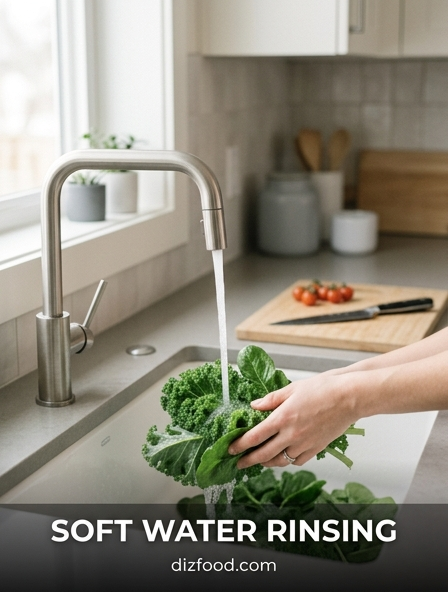
Think twice before you turn on the tap to rinse those dinner plates! Manual pre-rinsing is a common kitchen habit that actually wastes thousands of gallons of water annually and significantly reduces your dishwasher's efficiency. Modern appliances are equipped with advanced soil sensors that adjust the wash cycle based on how "dirty" the water is; by pre-rinsing, you trick the machine into running a shorter, less effective cycle. Furthermore, modern detergents require food particles to activate their cleaning power properly. To get the best results and protect the environment, learn more about the critical differences between Manual Pre-Rinsing Versus Enzyme-Based Cleaning.

The Myth of Pre-Rinsing Dishes
For decades, homeowners have been conditioned to believe that dishes must be nearly spotless before they enter the dishwasher. This habit stems from an era when early residential machines lacked the mechanical power and advanced filtration systems found in modern appliances. Today, however, pre-rinsing is largely a redundant activity that can actually hinder the appliance's ability to perform its primary function. Many people fear that leaving food particles on plates will clog the drain or lead to a "re-deposit" of soil on clean glassware. This misconception ignores the reality that modern units are designed specifically to handle organic debris.
- Old habits were born from low-pressure pumps and basic filtration.
- Pre-rinsing leads to the false assumption that dishes are clean.
- Modern detergents are formulated to react with food particles, not clean surfaces.
- Excessive rinsing wastes an average of 6,000 gallons of water per household annually.
By clinging to these outdated practices, users inadvertently make their dishwashers less effective. Transitioning away from the sink and toward the machine requires a shift in mindset, acknowledging that technology has evolved far beyond the capabilities of 20th-century kitchen hardware.
How Turbidity Sensors Detect Soil
The intelligence of a modern dishwasher lies within its turbidity sensor. This optical device is located within the sump area and functions by projecting a beam of light through the wash water. As the cycle progresses, the sensor measures how much light reaches the receiver on the opposite side. If the water is murky with suspended food particles, the light is blocked or scattered, indicating a high level of soil. The machine's internal computer then adjusts the cycle length, water temperature, and the number of required rinses to ensure every item is sanitized.
When you pre-rinse your dishes until they are visually clean, you are effectively "tricking" the sensor. Because the water remains clear from the start, the sensor communicates to the control board that the load is light. Consequently, the machine may run a shorter, cooler cycle that is insufficient to remove invisible bacteria or tough proteins. This results in a less hygienic outcome than if the machine had been allowed to detect the full extent of the mess and respond with its most intensive cleaning parameters.
Why Detergent Enzymes Need Food
Modern dishwasher detergents have evolved into highly complex chemical formulas that rely heavily on bio-enzymes. Unlike simple soaps of the past, these products contain specific biological catalysts designed to break down organic matter at the molecular level. If there is no food present for these enzymes to latch onto, they simply circulate through the machine and are rinsed away without performing their intended task. This can lead to a phenomenon where the detergent begins to attack the finish of the dishes themselves, potentially causing cloudiness or etching over time.
| Enzyme Type | Target Food Soil | Chemical Action |
|---|---|---|
| Protease | Proteins (Meat, Eggs, Milk) | Breaks peptide bonds in proteins. |
| Amylase | Starches (Pasta, Rice, Potato) | Dissolves complex carbohydrates. |
| Lipase | Fats and Greases | Emulsifies lipids for easy removal. |
To ensure your detergent provides maximum value, it is essential to leave some soil on the plates. Without a "target" for the protease and amylase, the cleaning power of expensive pods and gels is essentially wasted on clean water.
Hidden Water Waste in Every Sink
The environmental impact of manual pre-rinsing is often underestimated by the average consumer. Most kitchen faucets flow at a rate of roughly 1.5 to 2.2 gallons per minute. When a user stands at the sink rinsing a full load of dishes before placing them in the dishwasher, they can easily consume 20 gallons of water or more. In stark contrast, an Energy Star-certified dishwasher uses as little as 3 to 5 gallons of water to clean an entire load of 60 to 80 items. This represents a massive disparity in resource consumption.
- Faucets lack the pressure-focusing nozzles found in dishwasher spray arms.
- Running the tap for five minutes uses more water than a full high-efficiency cycle.
- Hot water rinsing at the sink consumes extra energy for the water heater.
- Water wasted at the sink cannot be recycled within the machine's filtration loop.
By eliminating the pre-rinse, households can significantly reduce their daily water footprint. The machine is designed to be a closed-loop system that maximizes the utility of every drop, whereas the sink is an open system where treated water literally disappears down the drain.
Modern Dishwasher Technology Explained
Understanding the internal mechanics of a dishwasher reveals why manual labor is no longer required. Today's units utilize multi-stage filtration systems that act like mini-sewage treatment plants. As water circulates, it passes through a series of fine meshes that trap food particles. Large debris is caught in a removable basket, while smaller particles are pulverized or flushed out during specific drain phases. This ensures that the water being sprayed back onto the dishes remains clean and free of grit.
- The Wash Pump: Creates high-pressure streams to physically dislodge soil.
- The Heating Element: Raises water temperature to 140°F+, melting fats that cold rinsing misses.
- The Filtration Assembly: Continuously removes particulates from the circulating fluid.
- The Spray Arms: Rotate at varying speeds to reach every angle and crevice of the load.
Additionally, specialized spray zones and "satellite" arms provide targeted cleaning for heavily soiled pots and pans. These technological advancements mean that the machine is far more capable of handling stuck-on food than a standard kitchen sponge or a gentle stream of tap water ever could be.
Scraping Versus Rinsing Best Practices
While the dishwasher is a powerful tool, it is not a garbage disposal. The key to a successful, rinse-free experience is mastering the art of the "scrape." Instead of turning on the faucet, users should use a fork, spatula, or a dedicated silicone scraper to remove solid remnants from plates and cookware. This includes items like large vegetable chunks, bones, fruit pits, and excessive amounts of thick sauce. Removing these solids prevents the filtration system from becoming prematurely overwhelmed and ensures that the drain pump operates without obstruction.
Once the large solids are cleared, the remaining grease, oils, and small particles should stay on the dish. This residue provides the necessary "fuel" for the detergent enzymes and the turbidity sensors mentioned previously. Many users find it helpful to keep a small compost bin or trash receptacle near the loading area to make scraping a seamless part of the kitchen workflow. This simple change in routine preserves the health of the appliance while eliminating the need for any water usage at the sink prior to the wash cycle.
Impact on Machine Cycle Efficiency
A dishwasher's efficiency is measured by its ability to deliver sanitized results using the least amount of energy and water possible. When dishes are pre-rinsed, the machine's internal logic is disrupted. Modern control boards are programmed with complex algorithms that calculate the "workload" based on the initial soil levels detected. If a user loads pre-rinsed dishes, the machine may skip essential heating phases or reduce the duration of the main wash, assuming the load is already clean.
However, if the dishes have thin films of grease or proteins that the user didn't see, these light cycles may not reach the temperatures required to properly emulsify those specific contaminants. Consequently, the dishes may come out feeling "tacky" or looking dull. By loading soiled dishes, you allow the machine to run its full intended cycle, reaching the peak thermal levels necessary for sanitization. This paradoxically results in cleaner dishes and a more predictable performance from the appliance, as it is operating within the parameters it was engineered to handle.
Environmental Benefits of Skipping Rinsing
The collective environmental impact of millions of households skipping the pre-rinse is staggering. Reducing water consumption is only one part of the equation; there is also a significant energy component. Heating water is one of the most energy-intensive tasks in a typical home. When you rinse at the sink, you are often using water that has been heated by your home's central water heater, which is far less efficient than the localized heating element inside a dishwasher. By skipping the rinse, you reduce the carbon emissions associated with utility-scale water treatment and domestic water heating.
- Conserves local reservoirs and protects aquatic ecosystems from over-extraction.
- Lowers the volume of wastewater that must be treated at municipal plants.
- Reduces the demand for chemical detergents by allowing them to work correctly.
- Extends the lifespan of the appliance by preventing "dry" cycles that can damage seals.
Sustainability in the kitchen is often about doing less, not more. By simply loading the machine directly after scraping, you contribute to a more circular economy and a lighter environmental footprint for your household.
Reducing Your Monthly Utility Bills
Financial savings are a direct result of changing your dishwashing habits. The cost of water, sewage, and electricity adds up over hundreds of cycles per year. Research suggests that households that stop pre-rinsing can save significantly on their monthly utility bills. This is because the dishwasher is a precision instrument designed for resource efficiency. Every gallon saved at the sink is money that stays in your pocket, and the reduction in electricity used for heating that wasted water provides additional financial relief.
| Utility Component | Manual Rinsing Cost | Dishwasher Only Cost |
|---|---|---|
| Water Usage | High (20+ Gallons) | Low (3-5 Gallons) |
| Energy (Heating) | Variable/Inefficient | Optimized/Internal |
| Detergent Efficiency | Wasted on clean water | Fully Utilized |
Over the course of a year, these small per-cycle savings can accumulate into hundreds of dollars. Investing in a high-quality detergent and trusting the machine to do its job is not just a time-saver; it is a savvy financial decision that maximizes the return on your appliance investment.
Optimized Loading for Better Cleaning
To successfully skip the pre-rinse, one must understand the physics of dishwasher loading. The machine relies on a "sightline" for water; if a spray arm cannot physically see a surface, it cannot clean it. Therefore, proper placement is more important than pre-cleaning. Dishes should be angled downward and toward the center of the machine where the spray arms rotate. It is crucial to avoid "nesting," where bowls or spoons fit into one another, creating a shield that prevents water and detergent from reaching the interior surfaces.
- Plates: Load in the bottom rack, facing the center spray tower.
- Glassware: Place between tines on the top rack to avoid chipping and maximize exposure.
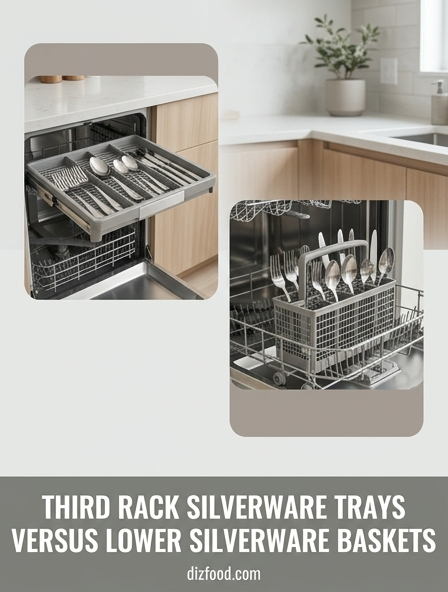
- Cutlery: Mix spoons, forks, and knives in the basket to prevent them from interlocking.
- Platters: Place on the outer edges of the bottom rack so they don't block the detergent dispenser.
By following these loading protocols, you ensure that the high-pressure water jets can reach every bit of food soil. When combined with modern detergent and a scrape-only approach, optimized loading guarantees sparkling results without the need for manual pre-rinsing.



Comments