
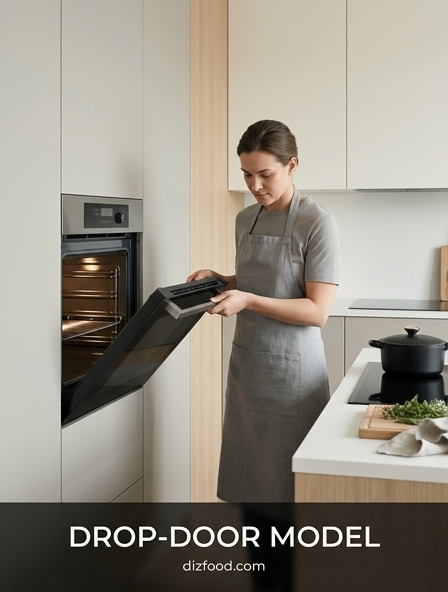
Maximized Loading Efficiency for High Volume
Drop-door models are specifically engineered to accommodate the rigorous demands of high-volume environments where time is the most critical resource. These units allow operators to slide heavy racks directly onto the door surface, utilizing it as a temporary staging platform before pushing the load into the internal chamber. This physical configuration eliminates the need for lifting heavy trays over high ledges, which significantly accelerates the loading process. In a fast-paced setting, the ability to rapidly swap out finished loads for new ones ensures that the machine remains in constant operation. By maximizing the internal cavity space through precision rack alignment, these models can handle a diverse array of inventory, from standard plates to oversized pots and pans. The flat-surface transition provided by the drop-down door minimizes the risk of spills or dropped items, keeping the surrounding floor clean and safe. This structural advantage directly translates to more cycles per shift, allowing the kitchen to maintain a steady supply of clean equipment without the bottlenecks associated with more restrictive side-opening designs.
Ergonomic Design and Ease of Access
The ergonomic superiority of drop-door models lies in their intuitive physical interface, which is designed to reduce the physical strain on kitchen staff. In a commercial environment where employees perform repetitive motions for hours, the height and movement of a drop-door are optimized for human kinetics. Most models feature counterbalanced door mechanisms, which allow the heavy industrial door to be lowered with minimal effort, often using just one hand. This ease of movement prevents shoulder and back fatigue that often plagues workers using side-hinged or top-loading alternatives. When the door is in its fully open position, it creates a stable, horizontal workspace at a height that aligns with standard kitchen counters. This alignment allows for a seamless transition of materials, reducing the need for deep bending or awkward stretching. Furthermore, the front-facing access ensures that all internal components are within easy reach, allowing for quick checks or adjustments without the operator having to move around the machine. By prioritizing the user's physical well-being, these designs improve overall morale and reduce the likelihood of workplace injuries.
Durability of Industrial Drop-Door Mechanics
Industrial drop-door mechanics are built to withstand the punishing conditions of a commercial kitchen, where equipment is often cycled hundreds of times daily. The core of this durability lies in the heavy-duty hinges and tension springs that manage the door's weight and movement. Unlike residential models, industrial versions use reinforced stainless steel and high-tensile alloys to ensure that the door remains perfectly aligned even after years of use. This robust construction prevents door sagging, which can lead to heat loss or water leakage.
| Component | Material/Feature | Benefit |
|---|---|---|
| Hinge Pins | Hardened Stainless Steel | Prevents warping under heavy loads |
| Tension Springs | High-Grade Chrome Silicon | Ensures smooth, balanced operation |
| Door Gaskets | Heat-Resistant Silicone | Maintains airtight and watertight seals |
| Handle Rails | Reinforced Tubular Steel | Provides secure grip and impact resistance |
Streamlined Workflow in Commercial Kitchens
In the ecosystem of a commercial kitchen, the flow of movement determines the speed of service. Drop-door models facilitate a linear workflow that is essential for high-output environments. Because the door opens downward, it creates a predictable and unobstructed path for the operator. Staff can approach the unit from either side without being blocked by a swinging side door, which is particularly beneficial in narrow galley kitchens. This "open-and-drop" functionality allows for a rhythmic loading sequence: pull out the rack, slide in the new one, and close. This motion becomes second nature to experienced staff, allowing them to focus on other tasks while the machine executes its cycle. The predictability of the door's footprint means that other kitchen equipment can be placed closer to the unit, maximizing every square inch of the workspace. By reducing the number of steps and the complexity of movements required to operate the machinery, the drop-door model acts as a catalyst for efficiency, ensuring that the transition between dirty and clean equipment happens with surgical precision.
Superior Sanitization for Large Batches
Sanitization is the cornerstone of food safety, and drop-door models are designed to meet the most stringent health department requirements for large batches. The enclosed nature of these units, combined with high-pressure internal spray systems, ensures that every surface of every item is thoroughly cleaned. During the cycle, high-temperature water or steam is distributed evenly across the chamber, reaching corners that might be missed in less robust models. The drop-door design provides a tight seal that maintains internal temperatures, ensuring that the thermal sanitization threshold is met consistently throughout the day.
- Consistent high-temperature cycles for pathogen elimination
- Optimized spray arm rotation for 360-degree coverage
- Automated chemical dispensing for precise detergent concentration
- Removable filtration systems to prevent cross-contamination
- Digital monitoring for real-time temperature verification
Space-Saving Benefits for Compact Layouts
One of the primary advantages of the drop-door configuration is its ability to fit into compact kitchen layouts without sacrificing performance. In many urban restaurants, floor space is at a premium, and every piece of equipment must justify its footprint. Because the door drops down rather than swinging out to the side, the clearance required to operate the machine is minimized. This allows the unit to be installed in tight rows of cabinetry or under standard-height counters, effectively utilizing "dead space" that would otherwise be wasted. The horizontal surface of the open door acts as an extension of the counter, providing a temporary landing zone for trays without needing additional table space. This dual-purpose design is a game-changer for small-scale operations that need to process high volumes of dishes or food. Furthermore, the front-loading nature of these machines means they can be tucked into corners where side-access models would be impossible to use. By optimizing vertical and horizontal spatial requirements, drop-door models allow for a more densified and productive kitchen environment.
Cost-Effective Solutions for Heavy Use
Investing in a drop-door model is a strategic financial decision for businesses that prioritize long-term value over initial purchase price. These machines are engineered for heavy use, meaning they require fewer repairs and have a longer operational lifespan than their less durable counterparts. The efficiency of the design also extends to utility consumption. Many modern drop-door units are built with energy-saving features that reduce water and electricity usage per cycle. When calculated over the course of a year, the savings on utility bills can be substantial, often offsetting the initial investment.
- Reduced water consumption through advanced filtration and recycling.
- Lower energy bills due to superior heat retention and insulation.
- Decreased labor costs resulting from faster loading times.
- Minimized chemical waste with precision-controlled dosing systems.
- High resale value due to the durability of mechanical components.
Optimizing Throughput in Busy Periods
During peak hours, such as a lunch rush or a dinner service, the ability to maintain high throughput is the difference between a successful shift and a chaotic one. Drop-door models are designed for these "crunch" periods, offering rapid cycle times and effortless transitions between loads. The simplicity of the loading mechanism means that even during the busiest moments, staff can swap racks in seconds. This speed ensures that clean plates or cooked items are always available, preventing the "bottleneck effect" that can slow down the entire service line. Many of these units also feature a "boost" mode or a quick-cycle setting specifically for peak times, allowing for faster turnover when speed is more critical than heavy-duty scrubbing. The reliability of the drop-door mechanism means there is a lower risk of mechanical failure when the machine is being pushed to its limits. By providing a consistent and fast processing solution, these models allow the kitchen to handle higher customer volumes without necessarily increasing the number of staff members on the floor.
Long-Term Reliability of Classic Engineering
The long-term reliability of drop-door models is a testament to the classic engineering principles used in their construction. Unlike more complex automated systems that rely heavily on sensitive electronics, the drop-door mechanism is primarily mechanical. This simplicity is its greatest strength; there are fewer digital components to fail and fewer sensors that can be tripped by the heat and moisture of a kitchen. The gravity-assisted door movement, supported by heavy-duty springs, is a proven design that has remained largely unchanged for decades because it works. This "classic engineering" approach ensures that the machine can withstand the vibrations and daily wear of a commercial environment without losing its structural integrity. Maintenance is straightforward, as the mechanical parts are easy to inspect and replace if necessary. For a business owner, this reliability means peace of mind, knowing that the equipment will perform consistently year after year. The predictable performance of these machines makes them a staple in the industry, favored by those who value functionality and longevity over flashy, unproven technological gimmicks.
Maintenance Advantages of Front-Loading Models
Maintenance is often an afterthought during the purchasing process, but it is a critical factor in the total cost of ownership. Drop-door models offer significant maintenance advantages due to their front-loading design, which provides direct access to the machine's internal components. Most units are designed with a removable bottom panel or a wide-opening door that allows technicians to reach heating elements, pumps, and spray arms without having to move the entire unit. This "on-site" serviceability reduces downtime, as many common issues can be fixed quickly.
- Easy access to filtration systems for daily cleaning and debris removal.
- Direct visibility of spray arms for checking and clearing blockages.
- Simple hinge adjustment to maintain a perfect seal over time.
- Quick-release components that require no specialized tools for replacement.
- Simplified electrical panels located behind easy-to-remove front plates.



Comments