
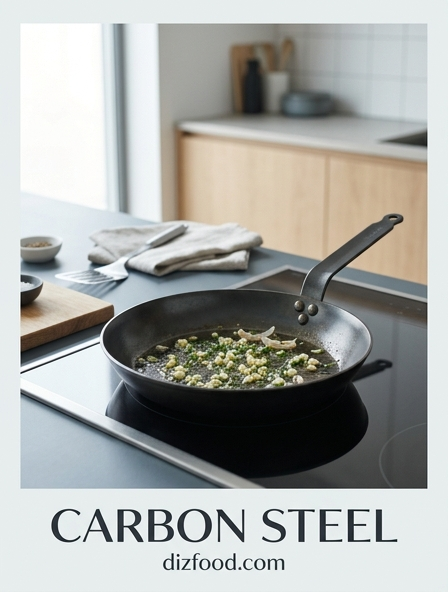
The Superior Edge of High Carbon Steel
High carbon steel represents the pinnacle of metallurgical excellence in the culinary world, offering a level of sharpness that stainless steel rarely matches. The primary advantage lies in the molecular structure of the alloy, which allows for a significantly more acute edge angle. Because the steel is harder and contains fewer large chromium carbides than its stainless counterparts, it can be ground to a razor-thin profile without becoming brittle or prone to immediate chipping. This inherent hardness translates to a "bite" that grips the surface of smooth-skinned vegetables like tomatoes or peppers with effortless ease.
| Feature | High Carbon Steel | Standard Stainless |
|---|---|---|
| Edge Geometry | Ultra-fine (10-15 degrees) | Moderate (20+ degrees) |
| Grain Structure | Fine and tight | Coarse and large |
| Initial Sharpness | Exceptional | Moderate |
The feedback provided by high carbon steel is unparalleled, allowing the cook to feel the resistance of the food through the handle. This sensory connection ensures that every slice is intentional and controlled, providing a superior cutting experience that transforms routine meal preparation into a precise craft.
Mastering the Art of Surgical Dicing
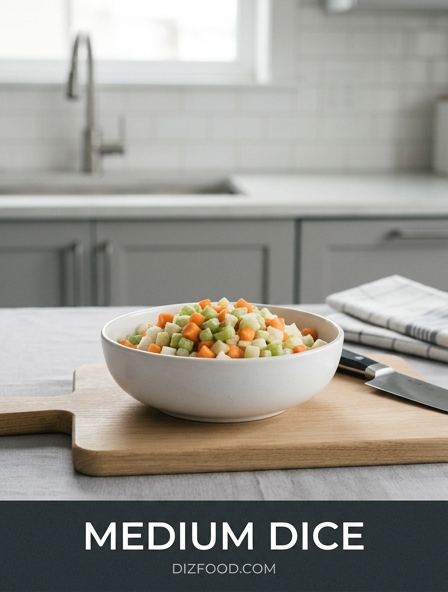
Achieving a true surgical dice requires more than just a steady hand; it demands a tool that responds to the slightest pressure. Carbon steel knives are favored for this task due to their exceptional thinness at the behind-the-edge grind. This allows the blade to pass through dense root vegetables like carrots or shallots without wedging or cracking the product. The result is a clean, flat surface on every cube, which is essential for even cooking and professional presentation.
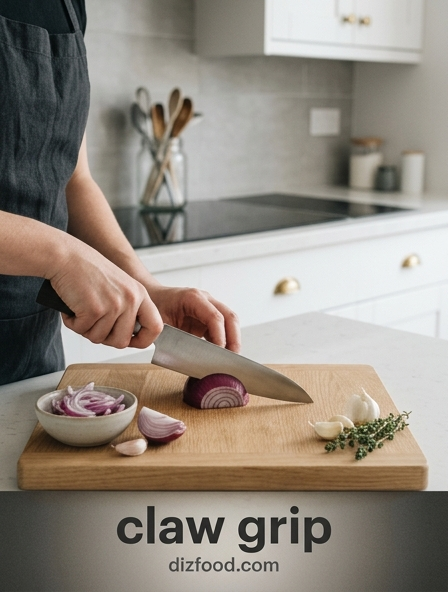
- Maintain a consistent claw grip to guide the blade safely.
- Utilize the heel of the knife for initial vertical cuts.
- Keep the tip of the blade in contact with the board for maximum stability.
- Apply minimal downward pressure, letting the weight of the steel do the work.
When dicing with such precision, the integrity of the ingredient's cells remains intact, which prevents the release of excess moisture. This keeps your cutting board dry and ensures that aromatics like onions do not release the enzymes that cause eye irritation. Mastering this art transforms the kitchen workflow, resulting in consistent textures that elevate the final dish to restaurant-quality standards.
Why Professional Chefs Choose Carbon Steel
In high-volume professional kitchens, efficiency and reliability are the most critical factors. Professional chefs gravitate toward carbon steel because of its ease of sharpening and its distinct patina. Unlike stainless steel, which can be stubborn on a whetstone, carbon steel responds quickly to abrasive surfaces, allowing a chef to restore a screamingly sharp edge in a matter of seconds. Furthermore, the development of a patina acts as a protective layer and a badge of honor, signifying a well-used and well-cared-for tool.
- Rapid sharpening turnaround during busy shifts.
- Enhanced tactile feedback when performing delicate tasks.
- Superior balance and weight distribution for long hours of use.
- Longevity of the blade profile through years of thinning.
The emotional connection between a chef and their carbon steel knife is profound. As the blade reacts to acidic foods, it changes color, reflecting the history of the meals prepared. This reactive nature requires a disciplined maintenance routine, which many professionals find rewarding as it reinforces a respect for the tools of their trade. Ultimately, the performance gains in speed and precision make it the undisputed choice for those who cook for a living.
Achieving Micro Precision in Every Cut
Micro precision is the ability to produce cuts so thin they are translucent, a feat that is only consistently achievable with high-grade carbon steel. The fine grain structure of the steel allows the apex of the edge to be polished to a mirror finish, reducing friction to near-zero levels. This is particularly vital when working with delicate proteins or herbs, where a duller blade would bruise or tear the fibers. With carbon steel, the blade parts the material rather than crushing it.
- Chiffonade of basil without bruising the edges.
- Paper-thin radish slices for garnishing.
- Transparent cuts of raw fish for sashimi.
- Perfectly uniform matchsticks of ginger.
This level of precision is not just about aesthetics; it also influences the flavor profile of the food. By cleanly severing the cells, you preserve the volatile oils and juices within the ingredient. When every cut is uniform at a microscopic level, the surface area exposed to heat is consistent, leading to a dish that is harmoniously seasoned and perfectly textured throughout.
The Science of Carbon Steel Edge Retention
The science of edge retention in carbon steel is a balance of hardness, toughness, and carbide distribution. High carbon alloys, typically containing 0.8% to 1.2% carbon, can be heat-treated to a high Rockwell hardness (HRC 60-65). At this level, the steel is rigid enough to resist "rolling," which is when the very tip of the edge folds over during contact with a cutting board. While stainless steel relies on chromium for durability, carbon steel relies on the sheer strength of its iron-carbon matrix.
| Factor | Impact on Retention | Carbon Steel Behavior |
|---|---|---|
| Hardness (HRC) | Prevents edge deformation | High (60-64) |
| Carbide Size | Determines edge "tooth" | Small and uniform |
| Abrasion Resistance | Slows down dulling | Optimized for board contact |
Despite being harder, carbon steel is surprisingly easy to maintain. Because the carbides are smaller and more evenly distributed than in high-chromium stainless steels, the edge wears down uniformly. This means that even as the knife loses its initial "laser" sharpness, it maintains a functional "toothy" edge that continues to perform well on fibrous materials long after a stainless blade would require a full sharpening session.
Essential Techniques for Uniform Dicing
Uniformity in dicing is the hallmark of a disciplined cook, and carbon steel provides the mechanical advantage necessary to achieve it. The key technique involves the "horizontal cut," where the blade is passed through the ingredient parallel to the board. Because carbon steel blades are often ground thinner, they can perform these horizontal passes with significantly less resistance, reducing the risk of the blade slipping or the ingredient shifting during the process.
- Square off the ingredient to create a stable base.
- Slice the ingredient into uniform planks of the desired thickness.
- Stack the planks and cut them into even strips or "batonettes."
- Turn the strips and cut crosswise to complete the dice.
Using a carbon steel knife allows for a rhythmic "push-cut" motion rather than a sawing motion. This ensures that every cube is identical in geometry. Consistency in size is paramount for dishes like mirepoix or brunoise, where the goal is to have every piece of vegetable soften at the exact same rate, ensuring that no piece is mushy while another remains crunchy.
Maintaining Your Carbon Steel Performance
Owning a carbon steel knife is a commitment to a specific maintenance ritual that preserves its elite performance. Unlike stainless steel, these blades are reactive and will rust if left wet or dirty. The most important rule is to "wipe as you go." Keeping a clean, dry towel nearby to occasionally dry the blade during prep prevents the formation of red rust. Over time, the steel will develop a grey or blue patina, which actually helps protect the metal from deeper corrosion.
- Hand wash only with mild soap and warm water immediately after use.
- Dry the blade thoroughly with a soft cloth; never air dry.
- Apply a food-safe mineral oil if the knife will be stored for more than a day.
- Use a ceramic honing rod to keep the edge aligned between sessions.
Proper storage is equally vital. Carbon steel should never be stored in a crowded utensil drawer where it can clank against other metals. A magnetic wood strip or a dedicated knife roll protects the brittle edge from chipping. While this level of care may seem daunting, the reward is a lifetime of service from a tool that only gets better with age and use.
The Difference Between Sharp and Surgical
There is a distinct functional difference between a "sharp" knife and a "surgical" one. A sharp knife can cut through paper or skin, but a surgical edge-typical of high-end carbon steel-operates at the cellular level. Surgical sharpness is achieved through high-grit polishing on whetstones, often up to 8,000 or 10,000 grit. At this stage, the scratches on the edge are so small they are invisible to the naked eye, resulting in a blade that moves through protein as if there were no resistance at all.
| Attribute | Standard Sharp | Surgical Precision |
|---|---|---|
| Edge Finish | Toothy / Micro-serrated | Mirror Polished |
| Resistance | Noticeable "tug" | Effortless glide |
| Cellular Impact | Tears cell walls | Splits cell walls |
This surgical quality is especially noticeable when cutting fatty meats or oily fish. A standard sharp blade may smear the fat across the muscle fibers, dulling the appearance and flavor. A surgical carbon steel edge cleanly shears through the fat, leaving a glossy, pristine surface. This distinction is what separates a home-cooked meal from a culinary masterpiece where every ingredient is treated with absolute technical respect.
Elevating Your Kitchen Knife Skills
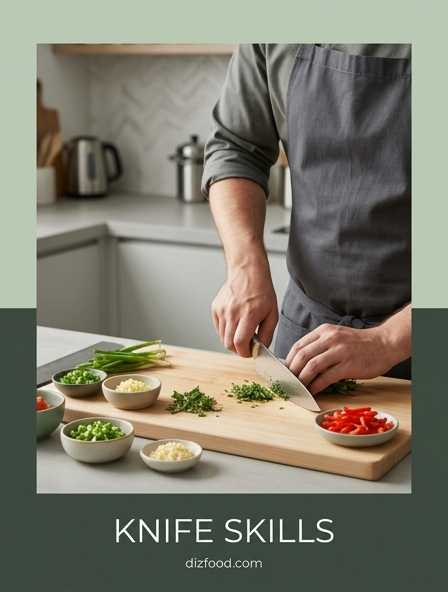
Transitioning to carbon steel is one of the fastest ways to elevate your overall knife skills. The sensitivity of the material forces the user to become more aware of their technique. Because the edge is so sharp, you quickly learn that you don't need to use force; instead, you focus on the geometry of the stroke and the placement of your fingers. This shift from "chopping" to "slicing" reduces hand fatigue and increases the speed of prep work significantly.
- Practice the "draw-cut" to utilize the full length of the blade.
- Focus on the sound of the knife; carbon steel has a distinct "ring" on the board.
- Master the pinch grip for better balance and control of the tip.
- Learn to read the patina to see where the blade is most active.
As your comfort with the tool grows, so does your confidence. Tasks that once felt tedious, like mincing a pile of parsley or julienning peppers, become meditative and fluid. The knife becomes an extension of the arm, allowing for a level of dexterity that makes complex recipes more accessible. High carbon steel doesn't just cut better; it teaches you to be a better, more mindful cook.
Enhancing Culinary Efficiency with Carbon Steel
Efficiency in the kitchen is often measured by the time spent on prep versus the quality of the output. Carbon steel optimizes this ratio by maintaining its peak performance longer during a session and requiring less physical effort to move through food. When a blade is surgically sharp, the cook experiences less "board stick," where the knife suction-cups to the food, slowing down the rhythm. The result is a faster, more aerodynamic workflow that keeps the kitchen moving smoothly.
- Reduced fatigue during heavy prep sessions.
- Faster processing of large quantities of produce.
- Lower risk of accidents due to the blade not slipping.
- Better retention of food juices, leading to faster searing and cooking.
Furthermore, the ease with which carbon steel can be touched up means you never have to work with a dull tool. A few passes on a strop or a high-grit stone every few days keeps the knife in "out of the box" condition. This constant state of readiness ensures that your culinary momentum is never interrupted by a failing edge. By investing in carbon steel, you are investing in a more streamlined, professional, and enjoyable cooking environment.

Comments