
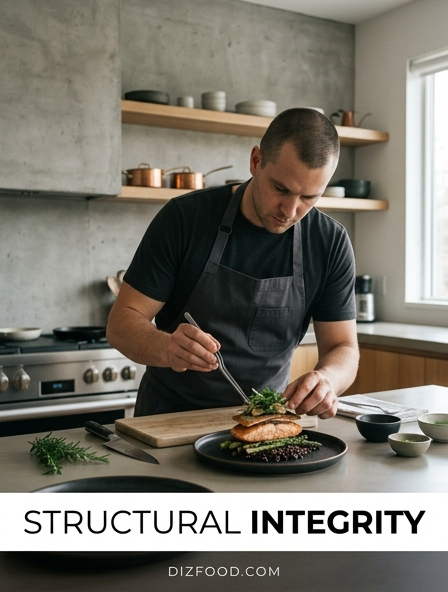
Cellular Anatomy of Fresh Produce
The structural integrity of fruits and vegetables is primarily defined by their complex cellular architecture. At the microscopic level, plant cells are encased in a rigid cell wall composed of cellulose, hemicellulose, and pectin. This wall acts as a biological exoskeleton, providing the necessary support to maintain the shape of the produce against gravity and internal osmotic pressure. The internal pressure, known as turgor, is generated by the vacuole-a large central organelle filled with water and nutrients that pushes against the cell wall.
Understanding these components is vital for culinary precision. When the cellular lattice is organized and intact, the produce exhibits a crisp, firm texture. However, the arrangement of these cells varies significantly between different types of produce, influencing how they respond to mechanical stress. The following components are essential to cellular stability:
- Cellulose Microfibrils: Provide tensile strength to the cell walls.
- Middle Lamella: A pectin-rich layer that cements adjacent cells together.
- Cytoplasm: The fluid environment where metabolic processes occur.
- Plasmodesmata: Channels that allow for communication and transport between cells.
The Role of Blade Sharpness
The sharpness of a culinary blade is a critical factor in maintaining the structural integrity of food. A sharp edge functions by concentrating force onto a microscopic surface area, allowing the metal to shear through cellular structures with minimal resistance. In contrast, a dull blade relies on compression and friction, which crushes cells rather than slicing them. This crushing action ruptures the delicate cell walls and internal vacuoles, leading to the expulsion of intracellular fluids and a subsequent loss of texture.
The mechanical difference between a clean cut and a forced tear can be quantified by the amount of cellular damage observed at the incision site. When cells are crushed, they release enzymes that would otherwise remain sequestered, accelerating the degradation of the ingredient. The following table compares the physical impacts of blade conditions:
| Feature | Sharp Blade | Dull Blade |
|---|---|---|
| Mechanical Action | Shearing/Slicing | Compression/Crushing |
| Cellular Impact | Minimal Rupture | Extensive Damage |
| Moisture Loss | Low Retention | High Exudate |
Minimizing Oxidation Through Precision
Oxidation is a chemical process that occurs when the internal components of a plant are exposed to oxygen. In the kitchen, this is most visible when the flesh of an apple or avocado turns brown. This reaction is catalyzed by enzymes such as polyphenol oxidase, which are released when cell walls are breached. The precision of a cut directly determines the extent of this exposure; a jagged or rough cut increases the surface area available for oxygen interaction and multiplies the number of damaged cells releasing enzymes.
By employing precise cutting techniques, a chef can significantly slow the rate of oxidative browning. A clean, swift stroke ensures that the surface remains relatively sealed, preserving the natural color and nutrient density of the produce. This structural preservation is not merely aesthetic; it also maintains the flavor profile, as oxidation often leads to the development of off-flavors and a breakdown of aromatic compounds. High-precision tools and steady hand movements are the primary defenses against this rapid chemical degradation.
Impact of Fiber Alignment on Texture
The orientation of fibers within an ingredient, whether plant-based or animal-derived, dictates its mechanical resistance and final mouthfeel. In meats, muscle fibers are bundled into fascicles; cutting parallel to these fibers results in long, stringy strands that are difficult to masticate. Conversely, cutting perpendicular to the grain shortens the fibers, significantly reducing the force required to break them down during consumption. This principle of structural alignment is equally applicable to fibrous vegetables like celery or leeks.
Identifying the "grain" or fiber direction is a foundational skill in maintaining structural integrity. When the fibers are aligned correctly relative to the blade, the resulting pieces maintain their shape while offering a tender texture. The following list highlights how fiber alignment affects different culinary applications:
- Meat Slicing: Cutting against the grain maximizes tenderness.
- Root Vegetables: Longitudinal cuts maintain more rigidity during boiling.
- Leafy Greens: Chiffonade cuts across veins preserve leaf structure.
- Allium Preparation: Slicing pole-to-pole versus across the equator alters the release of sulfur compounds.
Uniformity and Moisture Retention
Uniformity in dicing and slicing is more than a visual requirement; it is a structural necessity for consistent moisture retention. When food items are cut into irregular sizes, they cook at different rates. Smaller pieces reach high internal temperatures quickly, causing their cell walls to collapse and release moisture, while larger pieces remain undercooked and structurally firm. This disparity leads to a dish with a compromised texture, featuring both mushy and tough elements.
Consistent geometry ensures that the osmotic pressure and evaporation rates remain balanced across all pieces. This allows the chef to control the transition from raw to cooked without sacrificing the internal hydration of the ingredient. By maintaining a uniform surface-area-to-volume ratio, the rate of water loss is predictable and manageable. This structural equilibrium is essential for techniques like sautéing or roasting, where the goal is to achieve a Maillard reaction on the surface while keeping the interior succulent and structurally sound.
Preserving Turgor Pressure in Vegetables
Turgor pressure is the force exerted by the water-filled vacuole against the cell wall, and it is the primary factor responsible for the "crunch" of raw vegetables. Maintaining this pressure is a matter of managing the water balance within the plant tissue. Once a vegetable is harvested, it begins to lose water through transpiration, leading to flaccidity. In the kitchen, structural integrity can be preserved or even restored by understanding the principles of osmosis. Submerging wilted produce in cold water allows cells to rehydrate, increasing turgor pressure.
However, the way a vegetable is cut can also compromise this pressure. Excessive bruising or the use of blunt instruments causes internal leaking, which permanently reduces the ability of the cells to hold water. To maintain peak turgor, it is essential to minimize the time between cutting and serving, or to store cut vegetables in high-humidity environments. This prevents the evaporation of the precious cellular fluids that provide the characteristic snap of high-quality produce.
Reducing Enzymatic Browning via Technique
Enzymatic browning is a significant challenge when dealing with light-colored produce like potatoes, pears, and eggplants. The reaction occurs when phenolic compounds are oxidized by enzymes in the presence of air. The key to reducing this effect through technique lies in the speed and cleanliness of the cut. A fast, decisive slice minimizes the duration of exposure and limits the mechanical stress on the surrounding tissue. When a blade slides through the material without dragging, it leaves a smooth surface that is less susceptible to rapid chemical change.
Beyond blade speed, the angle of the cut also plays a role. A perpendicular cut minimizes the exposed surface area compared to a biased or diagonal cut. While diagonal cuts are often preferred for presentation or faster cooking, they increase the vulnerability of the ingredient to browning. Combining sharp tools with immediate post-cut treatments-such as immersion in acidified water-is the most effective way to protect the structural and aesthetic integrity of the food from enzymatic degradation.
The Physics of Clean Cuts
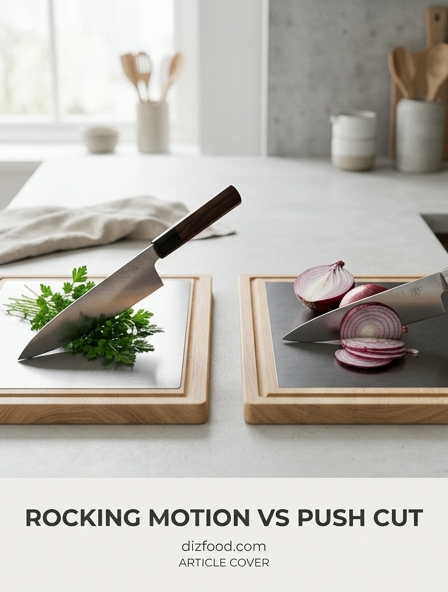
The physics of a clean cut involves the interplay between the applied force, the friction of the blade, and the tensile strength of the food material. To achieve a cut that does not distort the internal structure, the blade must overcome the material's resistance with minimal lateral displacement. This is why a "slicing" motion (drawing the blade across the food) is often more effective than a "chopping" motion (pressing the blade straight down). Slicing utilizes the micro-serrations of the edge to saw through fibers, requiring less downward pressure.
When the pressure is too high, the internal layers of the food are forced to slide against each other, a phenomenon known as shear strain. This can lead to internal bruising and a loss of structural layers, particularly in delicate items like citrus or tomatoes. The following table outlines the physical forces at play during various cutting methods:
| Force Type | Effect on Structure | Preferred Technique |
|---|---|---|
| Compression | Crushes cells and flattens layers | Vertical Chopping |
| Tension | Pulls fibers apart | Dull Blade Usage |
| Shear | Cleaves molecular bonds | Slicing/Drawing |
Structural Stability During Cooking
As food is heated, its structural integrity undergoes a series of transformations. In vegetables, heat breaks down the pectin that holds cells together, leading to a softer texture. In meats, heat denatures proteins, causing fibers to contract and expel moisture. The initial cut determines how well the food maintains its shape during these transformations. For instance, a "turned" vegetable (tourné) is shaped specifically to have no sharp corners, which prevents the edges from overcooking and disintegrating in a braising liquid.
Maintaining stability requires a balance between the size of the cut and the cooking method. Larger cuts have more internal mass to support their weight as the outer layers soften, making them ideal for long-duration cooking. Smaller cuts, like a brunoise, rely on the speed of the cooking process to finish before the entire structure collapses. Understanding the heat-induced degradation of cellulose and collagen allows a chef to choose a geometry that survives the thermal environment while achieving the desired final consistency.
Heat Transfer and Dicing Geometry
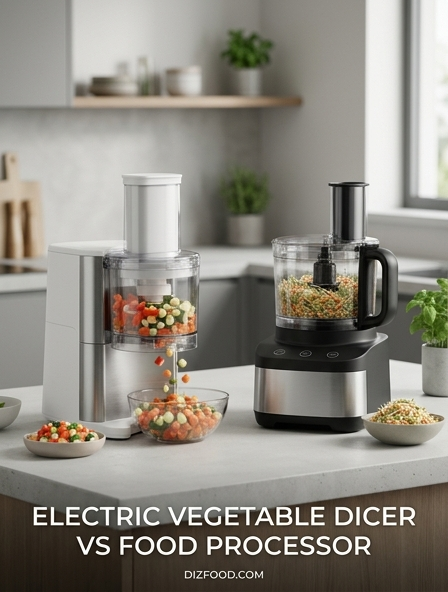
The geometry of a dice significantly influences the rate and uniformity of heat transfer. Heat moves from the surface to the center of an object at a rate determined by its thermal conductivity and its surface-area-to-volume ratio. A cube is the standard for dicing because its symmetrical dimensions allow for even heat penetration from all six sides. If a piece is cut into a long rectangle (batonnet), the center of the long axis will cook much faster than the ends, potentially leading to structural failure at the midsection.
Geometric precision is essential for achieving the perfect balance between a seared exterior and a tender interior. The following points summarize the impact of geometry on thermal dynamics:
- Increased Surface Area: Promotes faster browning and evaporation.
- Symmetrical Thickness: Ensures the thermal core reaches the target temperature uniformly.
- Sharp Corners: These are points of high heat concentration and are the first to soften.
- Volume Consistency: Prevents smaller pieces from becoming structurally mushy while larger ones remain raw.

Comments