
Mastering culinary precision is the ultimate secret to unlocking gourmet potential right in your home kitchen. By developing advanced cutting skills, you learn to create delicate layers that ensure even cooking and a more refined flavor profile in every bite. This technical approach isn't just about speed; it's about understanding how specific cuts influence the release of essential aromatics and the overall mouthfeel of a dish. Elevating your knife work allows you to treat ingredients with the respect they deserve, resulting in professional-grade textures and presentation. To see these principles in action, explore the subtle technical differences between Onion Dicing Vs Shallot Dicing.
Mastering the Brunoise Technique
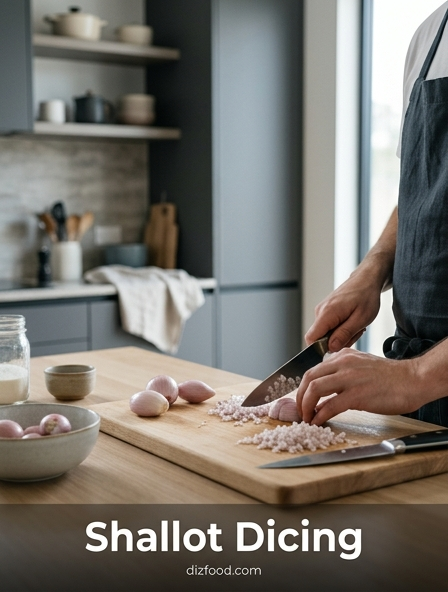
The brunoise technique is arguably the most essential skill when handling shallots in a professional kitchen. This precise method involves creating tiny, uniform cubes measuring approximately 1.5 to 2 millimeters on each side. Because shallots possess a more delicate structure and a tighter grain than standard onions, achieving a true brunoise requires exceptional focus and a razor-sharp utility knife. The process begins by halving the shallot through the root, peeling back the papery skin, and placing the flat side down on the cutting board. To achieve perfection, one must execute a series of vertical incisions followed by horizontal cuts, ensuring the root remains intact to hold the layers together.
- Maintain the integrity of the root base to prevent the layers from sliding.
- Use the tip of a paring or petty knife for the initial vertical scoring.
- Execute high-frequency cross-cuts to produce consistent geometric cubes.
- Avoid "rocking" the knife, as this can bruise the delicate cell walls.
Mastering this technique ensures that the shallot pieces are so fine they nearly dissolve when translucent, providing a foundational flavor without disrupting the smooth texture of high-end sauces like a classic beurre blanc or a refined velouté.
The Art of Paper Thin Slicing
Slicing shallots into paper-thin rings or half-moons is a testament to a chef's blade control and rhythmic precision. These translucent slivers are highly sought after for both raw and cooked applications, offering a sharp yet fleeting bite that regular dicing cannot replicate. To achieve this, the shallot must be trimmed at the ends and sliced crosswise with a continuous, fluid motion. The goal is to produce pieces so thin they are almost transparent, allowing light to pass through the concentric rings. This technique is particularly vital for making crispy fried shallots, as uniform thickness ensures that every piece dehydrates and browns at the exact same rate in hot oil.
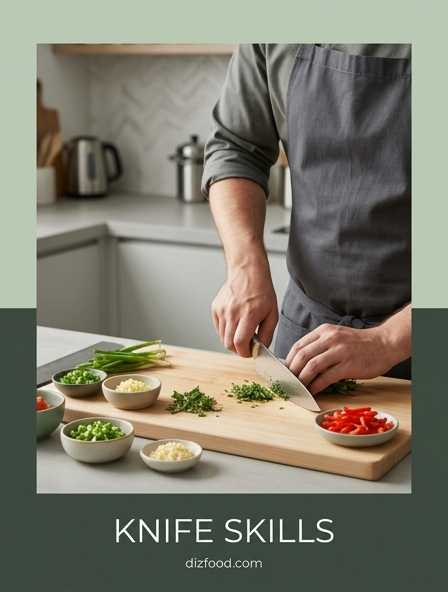
In raw applications, such as a traditional mignonette or a bright citrus salad, these thin slices provide a sophisticated aesthetic and a controlled release of aromatics. If the slices are too thick, the pungent flavor can overwhelm the palate; however, when executed with precision, they offer a delicate crunch and a sweet, garlicky finish. Utilizing the "claw" grip with the non-cutting hand is essential to guide the blade safely while maintaining the micro-millimeter spacing required for true paper-thin results.
Precision Mincing for Enhanced Aromatics
Mincing shallots is often confused with dicing, but the primary objective of a precision mince is to maximize surface area to release essential oils and sulfuric compounds. This is critical for vinaigrettes, marinades, and cold emulsions where the shallot needs to be distributed evenly throughout the liquid. Unlike a rough chop, a precision mince involves systematic cuts that result in fragments smaller than a brunoise, yet without turning the vegetable into a paste. The process requires a methodical approach to ensure that the aromatics are volatile and ready to bond with fats or acids.
- Start with a clean longitudinal halve and remove the stem.
- Create a dense grid of vertical and horizontal incisions.
- Perform rapid, short strokes with the heel of the knife.
- Gather the fragments and perform a final pass to ensure total uniformity.
When properly minced, shallots contribute a complex depth of flavor that is both savory and sweet. Because the pieces are so small, they integrate seamlessly into dressings, providing a consistent flavor profile in every spoonful without the need for intense heat to soften the fibers.
Micro Dicing for Complex Flavor Profiles
Micro dicing takes the standard brunoise to an even more granular level, often used in molecular gastronomy or ultra-refined appetizers like steak tartare. This level of precision requires the chef to work with the individual lobes of the shallot, treating each small section as a standalone unit. The micro dice is particularly effective when the shallot is intended to be a silent partner in a complex flavor profile, adding acidity and sharpness without being physically prominent. Because shallots are composed of tight, concentric layers, the micro dice naturally results in geometric flakes that cling to other ingredients.
Working at this scale requires a high degree of patience and a knife that has been honed on a fine-grit whetstone. Any dullness in the blade will result in tearing rather than cutting, which leads to the loss of moisture and a bitter aftertaste. By achieving a uniform micro dice, the chef ensures that the shallot's natural sugars caramelize rapidly upon contact with heat, providing a concentrated burst of umami. This technique is the hallmark of a disciplined kitchen, where even the smallest components are treated with the utmost respect for their structural integrity and chemical potential.
Achieving Uniformity in Delicate Layers
The internal anatomy of a shallot is significantly more complex than that of a yellow onion, often containing multiple cloves within a single bulb. Achieving uniformity across these delicate layers requires a strategic approach to knife work. Each layer must be respected for its curvature and thickness to ensure that the final dice is consistent across the entire batch. Uniformity is not merely a visual requirement; it is a functional necessity in the culinary arts. When pieces are of varying sizes, the smaller fragments will overcook and turn bitter before the larger pieces have softened, resulting in an unbalanced dish.
| Cut Category | Dimension Target | Primary Use Case |
|---|---|---|
| Fine Brunoise | 1mm x 1mm | Consommés & Aspics |
| Standard Dice | 3mm x 3mm | Sautéed Bases |
| Thin Slices | < 0.5mm | Garnishes & Frying |
To maintain this level of consistency, chefs must monitor the angle of the knife constantly. As the blade moves through the curved outer layers toward the denser core, the spacing of the cuts must be adjusted to compensate for the changing volume of each layer.
Advanced Julienne for Textural Balance
Julienning a shallot involves cutting it into long, thin strips, a technique that highlights the vegetable's vertical fiber structure. This cut is particularly useful for stir-frys or as a base for braised dishes where the shallot needs to maintain some structural presence after cooking. To perform an advanced julienne, the shallot is cut pole-to-pole, and the root is removed entirely. The knife then follows the natural radial lines of the shallot, resulting in elegant, slightly curved needles. This method ensures that the shallot wilts evenly, providing a silky texture that contrasts beautifully with firmer ingredients.
Textural balance is achieved when the julienne strips are thin enough to soften quickly but thick enough to retain their identity in a sauce. This is a favorite technique for Southeast Asian cuisines, where shallots are often quickly tossed in hot woks. The long surface area allows for immediate heat penetration, which rounds out the raw bite of the shallot and transforms it into a sweet, aromatic component. Precision in the width of the julienne is the key to preventing the strips from tangling or clumping together during the cooking process, ensuring a clean presentation and a balanced mouthfeel.
Knife Sharpness and Cellular Integrity
The science of dicing shallots revolves heavily around the concept of cellular integrity. Shallots contain vacuoles filled with enzymes and amino acid sulfoxides. When a knife blade is dull, it crushes these cells rather than slicing through them, causing the enzymes to mix and create propanethial-S-oxide. This gas is what causes the stinging sensation in the eyes and, more importantly, creates a harsh, acrid flavor profile in the food. A razor-sharp blade is therefore not just a safety tool, but a flavor-preservation tool. By cleanly severing the cells, the chef ensures that the volatile compounds remain inside the vegetable until they are released by heat.
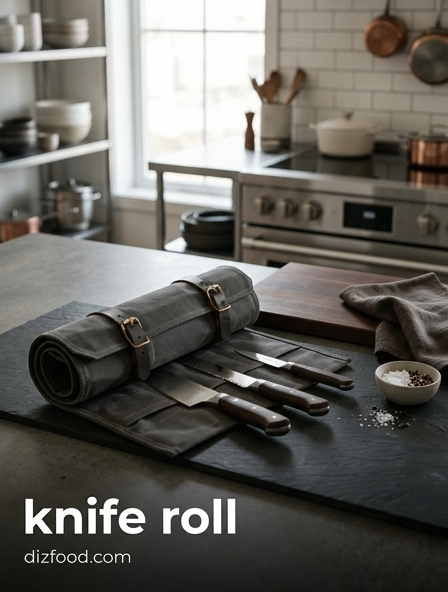
- Sharpen knives daily to ensure a clean, gliding cut through the shallot skin.
- Avoid using serrated blades, which tear the delicate internal membranes.
- Wipe the blade frequently to remove sticky sugars that cause friction.
- Use a pulling motion rather than a downward chop to minimize cell damage.
Preserving cellular integrity results in a shallot that tastes sweet and nuanced. High-quality knife work prevents the "bleeding" of juices onto the cutting board, keeping the moisture and flavor within the dice where it belongs for the final dish.
The Role of Precision in Heat Distribution
In professional cooking, precision in dicing is the primary variable controlling heat distribution. Shallots have a high sugar content compared to onions, which makes them prone to burning if they are not cut uniformly. When a chef tosses a handful of diced shallots into a pan with hot butter, every piece must react to the thermal energy at the same rate. If the dice is inconsistent, the smaller fragments will undergo the Maillard reaction too quickly, reaching a state of carbonization that introduces bitterness. Meanwhile, the larger pieces may remain raw and pungent, creating an uneven flavor profile that can ruin a delicate reduction.
By ensuring that every cube is mathematically similar, the chef can manage the caramelization process with total control. This is especially important in the preparation of a "sweated" shallot base, where the goal is to soften the vegetable and release its sweetness without developing any brown color. Precision dicing allows the shallots to reach a uniform state of translucency simultaneously. This synchronization is the difference between a sauce that tastes muddy and one that tastes vibrant and professionally executed. Consistent surface area exposure to the fat ensures an even extraction of fat-soluble flavor compounds.
Sophisticated Knife Skills for Visual Appeal
Culinary excellence is as much about visual presentation as it is about taste. In fine dining, the visual uniformity of a diced shallot serves as a silent indicator of the kitchen's standards. When shallots are used as a raw garnish or suspended in a clear broth, their geometric perfection contributes to a sense of order and sophistication. Achieving this level of visual appeal requires more than just speed; it requires an eye for symmetry and a commitment to discarding any pieces that do not meet the specified dimensions. This level of discipline ensures that the final plate looks intentional and meticulously crafted.
Sophisticated knife skills allow the chef to play with the shallot's natural aesthetics. For instance, slicing shallots on a steep bias can create elongated, elegant shapes that add height and movement to a dish. Alternatively, a perfect fine dice scattered over a finished protein adds a mosaic-like quality that enhances the overall color palette. The aesthetic value of a well-cut shallot reflects the chef's mastery over their tools and their respect for the ingredients. Ultimately, the visual consistency of the prep work translates into a more luxurious dining experience, where the diner perceives the care taken in every micro-component of the meal.
Mastering the Fine Dice for Refined Palates
The fine dice is the bridge between the standard dice and the micro dice, serving as the workhorse for most refined culinary preparations. To master the fine dice for a refined palate, the chef must focus on the rhythm and the "draw" of the knife. This cut is essential for items like duxelles or fine stuffing, where the shallot must provide structure without being obtrusive. The refined palate demands a balance where the shallot's presence is felt through its sweetness and aroma, rather than a chunky or fibrous texture. Achieving this requires a deep understanding of the shallot's moisture content and how it reacts to the blade.
- Split the shallot and place the largest flat surface on the board.
- Make horizontal cuts parallel to the board, stopping just short of the root.
- Space vertical cuts precisely 3mm apart.
- Dice across the grain to create perfect 3mm cubes.
When these steps are executed with high-level proficiency, the resulting dice is perfectly suited for emulsions and light sautés. This level of mastery ensures that the shallot enhances the dish's complexity, providing a sophisticated flavor bridge that connects the primary protein with the supporting elements of the sauce.


Comments