
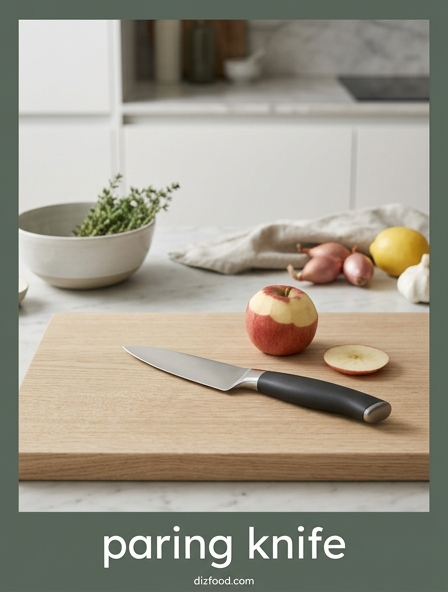
Mastering the Paring Knife Grip
The foundation of any intricate kitchen task begins with the way a chef holds the paring knife. Unlike larger chef's knives that require a full-palm grip for power, the paring knife demands a delicate touch that emphasizes the fingers. The most common and effective grip involves "choking up" on the blade. In this position, the handle is cradled by the last three fingers, while the thumb and the side of the index finger pinch the base of the blade, just above the bolster. This provides a pivot point that allows for extreme accuracy during fine tasks.
- The Pinch Grip: Enhances stability by bringing the hand closer to the cutting edge.
- The Thumb Anchor: Using the thumb to guide the ingredient against the blade.
- The Dagger Grip: Primarily used for downward piercing or peeling away from the body.
- Relaxed Tension: Maintaining a light hold to prevent hand fatigue during repetitive tasks.
Proper grip reduces the risk of the knife slipping when working with slippery or small ingredients. By mastering these holds, a cook can transition seamlessly between cutting on a board and performing tasks in mid-air, which is where the paring knife truly excels.
Essential Techniques for Blade Control
Blade control is the differentiator between a jagged cut and a professional finish. Because the paring knife features a short blade, usually between two and four inches, the user has a mechanical advantage over the tip. To maximize this, one must learn to use the wrist as a steadying force rather than a primary mover. Small, controlled movements are far more effective than broad strokes. When working on a cutting board, the tip of the knife often remains in contact with the surface to act as a fulcrum.
- Align the blade with the forearm to ensure a straight line of force.
- Use the non-dominant hand to rotate the ingredient rather than moving the knife excessively.
- Apply consistent pressure through the center of the blade to avoid uneven depth.
- Practice the "draw cut" by pulling the blade toward you for clean, fiber-free slices.
Control also involves understanding the resistance of different textures. A sharp paring knife should glide through a tomato skin as easily as it shears through a clove of garlic. Constant practice of these micro-movements builds the muscle memory required for high-speed preparation without sacrificing the integrity of the produce.
Achieving Uniform Dices with Small Blades
Uniformity is not reserved for large knives; the paring knife is the superior tool for dicing small aromatics like shallots, garlic, and ginger. The short blade allows for precise horizontal and vertical incisions that larger knives might over-penetrate. When dicing, the goal is to create a grid pattern that results in perfectly square pieces, ensuring even cooking and a refined aesthetic in the final dish. The process requires a steady hand and a keen eye for spacing.
| Ingredient | Technique | Target Size |
|---|---|---|
| Garlic | Micro-incisions | 1mm Bruniose |
| Shallots | Radial slicing | 2mm Dice |
| Chilies | Longitudinal strips | 3mm Mince |
By using the tip of the knife to create a series of parallel vertical cuts while keeping the root end intact, you provide a stable base. Subsequent horizontal cuts, followed by a final cross-cut, release the uniform dice. This level of precision is essential for sauces and vinaigrettes where large chunks would be overwhelming.
The Art of Precision Peeling and Trimming
While mechanical peelers are common, the paring knife offers a level of control that allows a chef to follow the natural contours of irregular produce. This technique is vital for minimizing waste and preserving the most flavorful parts of the fruit or vegetable, which are often located just beneath the skin. Precision peeling involves a "paring" motion, where the knife is pulled toward the thumb, which acts as a guide and a stop for the blade.
- Contour Following: Tilting the blade to match the curves of citrus or apples.
- Fat Trimming: Removing silverskin from small proteins with surgical accuracy.
- Zesting: Removing only the colored exocarp while leaving the bitter pith behind.
- Root Cleaning: Scraping and trimming the ends of radishes or baby carrots.
Trimming also extends to the removal of blemishes or "eyes" in potatoes. The pointed tip of the paring knife is designed to gouge out small imperfections without removing large sections of the usable flesh. This surgical approach ensures that the finished product looks pristine and remains structurally sound for cooking.
Intricate Coring and Seed Removal
Coring is a task that highlights the paring knife's agility. Whether removing the hull of a strawberry, the core of a tomato, or the seeds of a jalapeño, the knife must maneuver within tight, curved spaces. The technique usually involves inserting the tip of the blade at an angle and rotating the ingredient against the edge. This creates a conical cavity that removes the unwanted internal structure while leaving the exterior intact.
- Insert the tip approximately half an inch into the top of the fruit.
- Rotate the fruit 360 degrees while maintaining a steady blade angle.
- Pop the core out using the flat of the blade as a lever.
- Scrape away any remaining seeds or membranes with the tip.
This method is particularly useful for preparing peppers for stuffing or removing the bitter ribs from bell peppers. Because the user has such high tactile feedback through the short handle, it is easy to feel the difference between the soft flesh and the tougher core, allowing for a clean separation every time.
Safety Practices for High-Precision Cutting
The small size of a paring knife can lead to a false sense of security, yet its sharpness and the proximity of the blade to the fingers necessitate strict safety protocols. Because many paring tasks are performed "in-hand" (off the cutting board), the direction of the blade is paramount. Safety in high-precision cutting is about managing the path of the knife so that any slip results in the blade hitting air rather than skin.
- Thumb Guarding: Positioning the thumb below the cutting line when paring toward the hand.
- Dry Hands: Ensuring both the handle and the grip are free of moisture to prevent slipping.
- Focus on the Exit: Always knowing where the blade will end up once it clears the ingredient.
- Board Stability: Using a damp paper towel under the cutting board for on-surface tasks.
Additionally, one should never use excessive force. If the knife requires a hard push, it is likely dull, which is the leading cause of kitchen accidents. A sharp paring knife should require only a light touch, allowing the user to maintain complete control over the blade's trajectory at all times.
Enhancing Dexterity for Delicate Ingredients
Working with delicate ingredients like fresh herbs, edible flowers, or soft berries requires a level of dexterity that can only be achieved with a paring knife. The goal is to manipulate the ingredient without bruising or crushing the cells. This requires a light hand and an understanding of how to use the very tip of the blade for "scoring" or "vandyking" (cutting decorative V-shapes). Dexterity is improved by practicing movements that involve the fingers moving independently of the wrist.
| Ingredient | Goal | Knife Area Used |
|---|---|---|
| Chives | Ultra-thin rings | Heel to mid-blade |
| Grapes | Halving for salads | Center of blade |
| Mushrooms | Decorative fluting | Tip only |
By developing a "light touch," the chef can perform tasks like removing the thin skin from a blanched almond or segmenting a kumquat. The paring knife becomes an extension of the fingertips, providing tactile information about the texture and ripeness of the produce through the steel itself.
Versatile Applications for Hand-Held Tasks
The paring knife is the king of the "off-board" task, where the ingredient is held in the air rather than resting on a flat surface. This versatility allows for faster preparation in busy environments. For example, when segmenting citrus (supreming), the knife follows the curve of the fruit held in the palm. This provides a 3D perspective that is impossible to achieve on a board. Similarly, deveining shrimp is best done by holding the seafood in one hand and using the knife to unzip the back.
- Hold the ingredient securely but without squeezing.
- Use the thumb of the knife hand to steady the produce.
- Move the ingredient toward the blade for curved cuts.
- Utilize the tip for "nicking" skins to start a peel.
These applications extend to opening packages, checking the tenderness of a boiling potato, or even scoring a loaf of bread before baking. Its portability and ease of cleaning make it the most frequently grabbed tool in a professional kitchen for quick, miscellaneous duties.
Maintaining Sharpness for Maximum Control
A dull paring knife is not only dangerous but also ineffective for the high-precision work it is intended for. Because the blade is small, it can lose its edge quickly if used on hard surfaces or against abrasive materials. Maintenance involves two primary steps: regular honing and periodic sharpening. Honing with a ceramic rod realigns the microscopic "teeth" of the edge, while sharpening on a whetstone removes metal to create a new, secondary bevel.
- Angle Consistency: Maintaining a 15 to 20-degree angle during sharpening.
- Stropping: Using a leather strap to achieve a razor-sharp finish for delicate tasks.
- Storage: Using a blade guard or magnetic strip to prevent edge nicks in drawers.
- Cleaning: Hand-washing only; dishwashers can chip the delicate edge.
The sharpness of a paring knife should be checked frequently using the "paper test" or by slicing through a soft tomato with zero downward pressure. If the blade tears rather than cuts, it requires immediate attention. A truly sharp paring knife provides the "bite" necessary for the most intricate garnishes and decorative work.
Advanced Dicing Methods for Small Produce
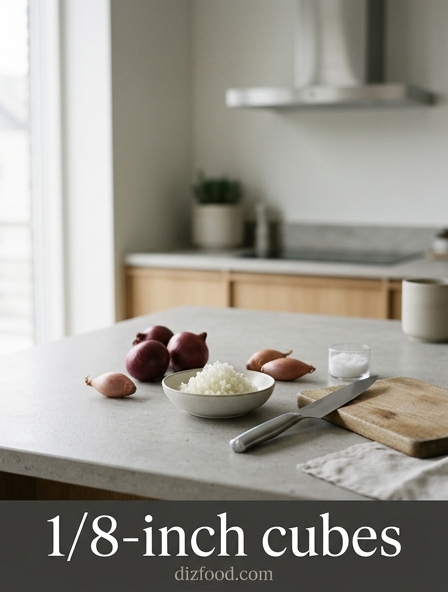
Advanced dicing, such as the brunoise (1-2mm cubes), is the hallmark of a disciplined cook. This technique is often applied to garnishes where the visual impact is as important as the flavor. When using a paring knife for advanced dicing, the focus shifts to the symmetry of the initial planks and batons. If the first cuts are uneven, the final dice will never be uniform. The paring knife's short length helps prevent the "fanning" effect that sometimes occurs with longer blades.
| Cut Name | Dimensions | Common Use |
|---|---|---|
| Fine Brunoise | 1.5mm x 1.5mm | Consommé garnish |
| Brunoise | 3mm x 3mm | Aromatic bases |
| Small Dice | 6mm x 6mm | Vegetable fillings |
To achieve these results, one must use a high-quality paring knife with a thin spine. A thick blade will wedge and crack small pieces of produce like carrots or radishes. By applying a consistent, vertical downward motion and keeping the knuckles of the guiding hand tucked, a chef can produce thousands of identical cubes with meditative precision.


Comments