
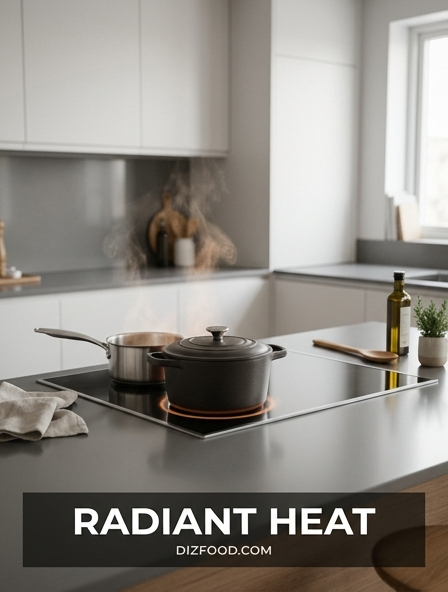
Ever wonder why your favorite cookies achieve that perfect golden crunch while remaining soft and chewy inside? It is all about radiant heat, the invisible energy waves that travel directly from your oven's heating elements to your bakeware. Unlike circulating air, this direct heat source is responsible for creating a beautiful crust and encouraging the deep browning essential for artisan loaves and flaky pastries. By vibrating the molecules in your pans, radiant heat ensures the outer edges set firmly, locking in moisture for a tender crumb. Understanding these thermal dynamics helps you master the specific nuances of Convection vs Conventional Baking.
Defining Radiant Heat in Modern Baking
Radiant heat, specifically within the context of culinary science, refers to the transfer of energy through electromagnetic waves, primarily in the infrared spectrum. In a modern kitchen, this process occurs when high-temperature heating elements or oven walls emit thermal energy that travels through the air without requiring a medium for transport. Unlike conduction, which necessitates direct physical contact between the heat source and the food, or convection, which relies on the movement of heated fluids or gases, radiant heat delivers energy in a straight line from the source to the object. This direct method of energy transfer is highly efficient for increasing the surface temperature of baked goods rapidly.
- Infrared Emission: The primary driver of surface heating in electric and gas ovens.
- Line-of-Sight Heating: Energy travels directly to the food surface exposed to the element.
- Thermal Equilibrium: The process where oven walls absorb and re-emit heat to stabilize the environment.
- Electromagnetic Spectrum: Utilizes wavelengths longer than visible light to agitate food molecules.
In professional baking environments, understanding how radiant energy behaves allows chefs to manipulate the speed of crust formation. Because radiant heat does not require air circulation to function, it provides a stable and intense heat source that is less prone to the drying effects often associated with high-velocity convection fans.
Thermal Radiation and Surface Browning
The aesthetic and flavorful transformation of dough into a finished product is heavily dependent on thermal radiation. As radiant energy strikes the surface of the food, it triggers the Maillard reaction and caramelization, two chemical processes responsible for complex flavors and the characteristic brown color of baked goods. Because radiant heat is intense and direct, it can raise surface temperatures to the necessary threshold for these reactions much faster than ambient air alone. This is why the top of a loaf of bread or a tray of cookies browns significantly when placed directly under an active heating element.
- Radiation absorption occurs at the surface level, causing rapid evaporation of surface moisture.
- As the surface dries, the temperature rises above 285°F (140°C), initiating the Maillard reaction.
- Sugars break down through caramelization, contributing to the mahogany hues of the crust.
- The intensity of the radiation determines the depth and speed of the color development.
Managing this radiation is a delicate balance; excessive exposure can lead to carbonization and bitterness, while insufficient radiant heat results in a pale, soft exterior that lacks the structural integrity and flavor profile expected in high-quality artisanal baking.
The Science of Infrared Energy
Infrared energy is a form of non-ionizing radiation that operates between the visible light spectrum and microwaves. In a kitchen setting, this energy is produced by the agitation of atoms in heating elements, which then release photons that penetrate the food. The depth of penetration for infrared energy is relatively shallow, typically only affecting the first few millimeters of the food's surface. This makes it an ideal tool for crust-oriented tasks where the goal is to apply high energy to the exterior while allowing the interior to cook more slowly via thermal conduction.
| Feature | Impact on Food | Scientific Role |
|---|---|---|
| Wavelength | Surface Heating | Excites molecules at the boundary layer. |
| Intensity | Browning Speed | Determined by the temperature of the source. |
| Emissivity | Heat Retention | The ability of oven materials to radiate energy. |
The efficiency of infrared energy is also influenced by the color and texture of the food. Darker surfaces and rougher textures tend to absorb radiant energy more effectively than light, reflective surfaces. This principle explains why darker pans or highly pigmented doughs brown more aggressively in a radiant-heavy environment.
Achieving the Perfect Golden Crust
A perfect golden crust is the hallmark of technical proficiency in baking, and it is almost entirely a product of controlled radiant heat. When a baker seeks a specific "shatter" or "crunch" in a baguette or pastry, they are manipulating the rate at which radiant energy removes moisture from the skin of the dough. The intensity of the radiation must be high enough to set the structure before the dough collapses, but regulated enough to prevent the crust from becoming overly thick and tough. Achieving this requires a deep understanding of the oven's "hot spots" where radiant energy is most concentrated.
- Crust Thickness: Controlled by the duration and intensity of infrared exposure.
- Surface Tension: Radiant heat sets the exterior, allowing internal gases to expand against a firm boundary.
- Reflective Shielding: Using foil can block radiant waves to prevent over-browning.
- Preheating: Ensures that oven walls are saturated with energy to provide 360-degree radiation.
In many commercial deck ovens, the stone hearth provides conductive heat from below, while the heavy ceramic walls provide intense radiant heat from above. This dual-source heating environment ensures that the crust is evenly developed across all surfaces, resulting in the desired golden-brown finish and a complex, toasted aroma.
Bakeware Material and Heat Absorption
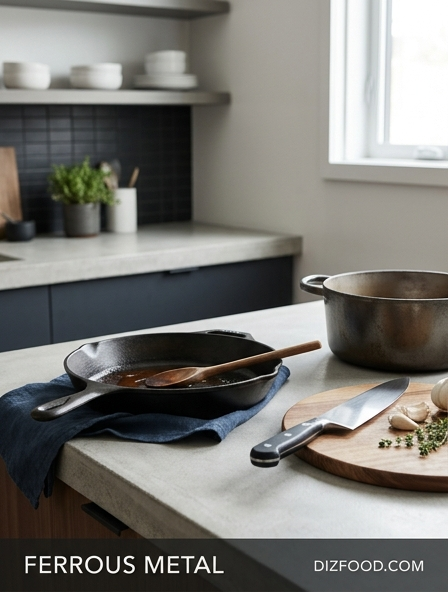
The choice of bakeware significantly alters how radiant heat interacts with food. Materials possess different emissivity ratings, which dictate how much radiant energy they absorb, reflect, or emit. For instance, a dark, matte cast-iron skillet has high emissivity and will absorb nearly all the radiant energy hitting it, transferring that heat rapidly to the food. Conversely, a shiny, polished aluminum sheet will reflect a large portion of radiant waves, leading to a much slower browning process on the bottom and sides of the baked item.
| Material | Heat Response | Ideal Usage |
|---|---|---|
| Cast Iron | High Absorption | Searing and thick crusts. |
| Anodized Aluminum | Moderate Absorption | General baking and even browning. |
| Reflective Steel | Low Absorption | Delicate pastries requiring light color. |
| Ceramic/Stone | High Emissivity | Artisan breads and pizza. |
Understanding these material properties allows bakers to select the right tool for the specific outcome. If a recipe calls for a pale, soft cookie, a reflective pan is preferable. For a crusty sourdough, a heavy ceramic Dutch oven or a baking stone is necessary to maximize the radiant and conductive energy transferred to the loaf.
Impact of Radiant Heat on Crumb Structure
While radiant heat is primarily a surface phenomenon, its impact on the internal crumb structure is profound. This is due to the "oven spring" effect. When dough is first placed in a hot oven, radiant energy quickly heats the surface, but if the heat is too intense too early, it sets the crust before the internal gases have fully expanded. This can lead to a dense, tight crumb. Conversely, if the radiant heat is properly managed, it allows the interior temperature to rise, turning moisture into steam and causing the dough to inflate rapidly before the radiant energy eventually hardens the exterior.
- Initial Radiant Blast: Provides the energy needed for rapid yeast activity and steam expansion.
- Elasticity Window: The period before radiant heat solidifies the gluten structure.
- Heat Transfer Gradient: The speed at which energy moves from the irradiated surface to the core.
- Starch Gelatinization: Occurs as the internal temperature reaches approximately 180°F.
Professional bakers often use steam during the first few minutes of baking to protect the dough from the immediate intensity of radiant heat. This moisture creates a barrier that keeps the surface flexible, allowing for maximum expansion and a lighter, more open crumb structure before the radiant heat takes over to finish the crust.
Balancing Interior Moisture and Exterior Crunch
The central challenge of baking with radiant heat is achieving a crisp exterior while maintaining a moist, tender interior. This balance is governed by the laws of thermodynamics; the surface is constantly losing moisture to the dry oven air while being bombarded by infrared waves. If the radiant heat is too low, the baking time must be extended, which can lead to the interior drying out completely. If the radiant heat is too high, the outside will char before the middle is safe to eat. Success lies in the "thermal gradient," which is the temperature difference between the crust and the crumb.
To master this balance, bakers often utilize multi-stage baking temperatures. Starting at a high temperature maximizes radiant energy for a quick set and color, while lowering the temperature for the remainder of the bake allows the center to reach the target temperature without further darkening the crust. This technique is especially vital for thick items like sourdough loaves or large cakes, where the distance from the surface to the center is significant. By manipulating the radiant environment, one can ensure the crumb remains hydrated and soft, encased in a perfectly protective, crunchy shell.
Radiant Heat versus Convection Airflow
In the kitchen, radiant heat and convection airflow represent two different philosophies of thermal transfer. Convection relies on moving air to strip away the "cold " boundary layer surrounding food, leading to very even and rapid cooking. However, this movement of air can be detrimental to delicate items, as it tends to dry out the surface prematurely. Radiant heat, being stationary and direct, does not have this drying effect. It provides a more localized and intense heat that is better for achieving specific textures, such as the bottom crisp of a pizza or the top browning of a casserole.
- Heat Source: Radiant comes from surfaces/elements; Convection comes from heated air.
- Consistency: Convection is more uniform; Radiant creates "hot spots" and shadows.
- Surface Effect: Radiant is superior for browning; Convection is superior for dehydration.
- Baking Applications: Use radiant for crusty breads; use convection for multiple racks of cookies.
Many high-end ovens now offer "True Radiant" or "Static" modes alongside convection settings. This allows the user to choose the method that best suits their needs. For artisan baking where "oven spring" and a thick, flavorful crust are the priorities, radiant heat is the preferred mechanism over the constant agitation of convection fans.
Oven Positioning for Optimal Texture
Because radiant heat travels in straight lines and is strongest near the source, the vertical and horizontal positioning of food within the oven is critical. Most ovens have heating elements at the top and bottom. Placing a tray on the top rack subjects it to intense radiant heat from the upper element, making it the ideal position for broiling or finishing the browning on a pie. The middle rack is generally considered the most neutral, as it balances the radiant energy from both elements while allowing for adequate air circulation.
- Upper Rack: Maximum radiant heat for browning and gratins.
- Middle Rack: Balanced environment for cakes and standard baking.
- Lower Rack: Intense bottom heat for pies, pizzas, and breads requiring a strong base.
- Shadowing: Avoid placing large pans directly above or below each other to prevent blocking radiant waves.
Chefs must also be aware of the "radiative shadow" created by the food itself or by other cookware. If a large sheet pan is placed on a lower rack, it can block the radiant energy from reaching the items on the rack above, leading to uneven cooking. Strategic rotation and placement ensure that every item receives the necessary infrared exposure to develop its intended texture and color.
Temperature Control for Consistent Results
Precision in radiant heat baking requires more than just setting a dial; it requires managing the thermal mass of the oven. The thermostat in most ovens measures the air temperature, not the radiant energy stored in the walls. For consistent results, it is essential to allow the oven to preheat long after the air has reached the target temperature. This ensures that the interior surfaces are fully saturated with heat and can emit a steady stream of radiant energy. Without this saturation, the radiant output will fluctuate as the heating elements cycle on and off, leading to inconsistent browning across different batches.
- Preheating Duration: Allow 30-45 minutes for oven walls to reach thermal equilibrium.
- Baking Stones: Increase thermal mass to provide more stable radiant and conductive heat.
- Recovery Time: Minimize the time the oven door is open to prevent the loss of radiant energy.
- Oven Thermometers: Use an independent gauge to verify the accuracy of the internal thermostat.
By controlling these variables, the baker can ensure that each loaf of bread or tray of pastries is subjected to the same intensity of infrared energy. This consistency is what allows for the repeatable production of high-quality goods in both home and professional kitchens, turning the volatile nature of radiant heat into a predictable and powerful tool.


Comments