
Essential Anatomy of the Offset Spatula
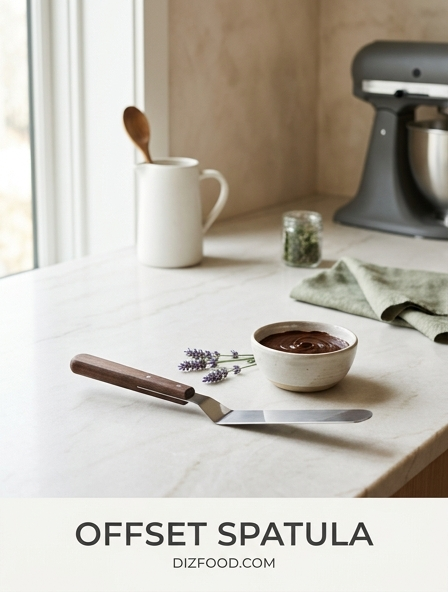
The offset spatula is a specialized kitchen tool distinguished by its unique "cranked" neck, which sets it apart from traditional straight spatulas. This intentional bend in the metal allows the blade to sit lower than the handle, providing the user with better clearance for their hand while working on flat surfaces. The blade is typically constructed from high-carbon stainless steel, offering a balance of rigidity and flexibility. This flexibility is crucial for maneuvering around delicate cake corners without tearing the crumb. The handle, often made of ergonomic plastic or finished hardwood, is designed for a secure grip during intricate tasks.
| Component | Primary Material | Functional Purpose |
|---|---|---|
| The Blade | Stainless Steel | Provides a smooth, non-reactive surface for spreading and leveling. |
| The Offset | Angled Metal | Keeps knuckles clear of frosting and ensures a parallel working angle. |
| The Handle | Polymer or Wood | Offers ergonomic control and stabilizes the tool during rotation. |
Understanding these components is vital for any pastry chef. The length of the blade varies, typically ranging from four to twelve inches, each serving a specific purpose in the kitchen. A well-constructed offset spatula should feel balanced in the hand, with a blade that snaps back to its original shape after being flexed, ensuring long-term durability and precision during high-volume production.
Proper Grip for Maximum Decorating Control
Mastering the offset spatula begins with a correct grip, which serves as the foundation for all advanced decorating techniques. Unlike a hammer or a knife, the spatula requires a light, dexterous touch. To achieve maximum control, place your thumb on the side of the handle near the bolster, while your index finger rests flat along the spine of the blade. This "pointer" finger acts as a guide, allowing you to feel the pressure being applied to the frosting. The remaining fingers should wrap loosely around the handle, providing stability without stiffness.
- The Thumb: Provides lateral stability and controls the angle of the blade edge.
- The Index Finger: Dictates the downward pressure and sensitivity of the stroke.
- The Wrist: Should remain flexible to allow for smooth, sweeping arcs.
- The Elbow: Kept close to the body to minimize unintended shaking.
By adopting this grip, decorators can switch between heavy spreading and delicate smoothing without repositioning their hands. This posture also reduces fatigue during long decorating sessions. When your hand is positioned correctly, the offset bend of the tool naturally keeps your knuckles from dipping into the cake, allowing you to maintain a perfectly parallel orientation to the surface you are finishing.
Leveling Cake Batter for Even Baking
Before a cake even reaches the oven, the offset spatula plays a critical role in ensuring a professional result. Unevenly distributed batter leads to domed centers or sloping edges, which complicates the decorating process later. The offset design is perfect for reaching into the deep corners of square or rectangular pans, where batter often clumps. By using the long edge of the spatula, you can push the batter from the center toward the perimeter with minimal effort, ensuring every inch of the pan is filled to a consistent depth.
- Pour the batter into the center of the prepared baking pan.
- Use the tip of the offset spatula to nudge batter into the corners and edges.
- Place the blade flat against the surface and rotate the pan while drawing the tool toward you.
- Smooth the top by lightly dragging the blade in a zig-zag motion to pop large air bubbles.
A level start is the secret to a level finish. Using the spatula to create a slight "well" in the center of the batter can also help counteract the natural rise of the cake, resulting in a flatter top once baked. This preventative step saves time during the leveling phase, as there will be less excess cake to trim away before frosting begins.
Mastering the Foundation Crumb Coat
The crumb coat is the thin, initial layer of frosting that acts as a primer, sealing in loose crumbs and preventing them from marring the final decorative layer. The offset spatula is the ideal tool for this task because its flexibility allows you to apply thin, even pressure. Start by placing a large dollop of frosting on the top of the cake and spreading it outward toward the edges. Use the offset neck to keep your hand above the cake surface, preventing your fingers from accidentally touching the exposed sponge.
Once the top is covered, work on the sides by holding the spatula vertically. The goal is not a perfect aesthetic, but a functional seal. You should be able to see the cake through this translucent layer. After the entire surface is covered, use the long edge of the spatula to scrape away any excess, creating a smooth, tight finish. This layer must be chilled until firm before the final frosting is applied. Without a proper crumb coat applied via offset spatula, achieving a clean professional look is nearly impossible, as the blade would otherwise drag crumbs into the outer finish.
Techniques for a Perfectly Smooth Finish
Achieving a glass-like finish on a cake requires a combination of a steady hand and a clean offset spatula. Once the crumb coat is set, apply a generous amount of frosting to the top and sides. The key to smoothness is the angle of the blade; it should be held at a shallow fifteen-degree angle relative to the cake. As you rotate the turntable, the spatula should remain stationary, allowing the movement of the cake to do the work. This creates a consistent thickness across the entire circumference.
- Wipe Regularly: Always clean your blade on a scrap bowl after every few strokes.
- Heat the Blade: Dipping the spatula in hot water and drying it can help melt the fats in the frosting for a mirror finish.
- Consistent Pressure: Avoid pushing too hard, which can reveal the cake underneath.
- The Final Pass: Use one continuous motion around the cake for a seamless look.
To finish the top edges, hold the spatula horizontally and pull the excess frosting from the outer rim toward the center. This technique, known as "feathering," creates sharp, clean corners. The precision offered by the offset spatula allows for these minute adjustments that differentiate a home-baked good from a professional pastry-shop creation.
Creating Decorative Textures and Artistic Swirls
Beyond creating smooth surfaces, the offset spatula is an versatile artistic instrument used to add visual interest through texture. Instead of aiming for perfection, you can use the tip and the flat of the blade to create rustic or modern designs. For a classic "swoosh" look, press the tip of the spatula into the frosting and lift upward in a spiral motion. This creates soft peaks and valleys that catch the light and give the dessert a handcrafted feel. The offset handle ensures you can reach the center of the cake without disturbing the outer edges.
Alternatively, you can create a "stucco" effect by using short, overlapping strokes in various directions. This technique is particularly forgiving for beginners and hides imperfections in the cake's structure. For a more structured look, hold the spatula vertically against the side of the cake and move it up and down in a wave pattern while slowly spinning the turntable. Because the blade is flexible, it responds to the slightest change in hand pressure, allowing for a wide range of artistic expressions from deep ridges to delicate, lace-like ripples in the buttercream.
Precision Handling for Delicate Small Pastries
While large spatulas are used for cakes, the small offset spatula-often called a "mini offset"-is indispensable for precision work. When dealing with petit fours, macarons, or small tarts, a standard tool is too cumbersome. The four-inch blade of a mini offset provides the dexterity needed to spread ganache or jam on tiny surfaces without overflowing. It also allows for the placement of delicate garnishes, such as gold leaf or individual berries, with more control than fingers or tongs might provide.
| Pastry Type | Spatula Task | Benefit of Small Offset |
|---|---|---|
| Cupcakes | Swirl Topping | Fits perfectly within the diameter of the cake. |
| Macarons | Filling Spread | Ensures even distribution to the very edge. |
| Chocolate Bark | Thinning Layer | Provides the light touch needed for thin tempering. |
The narrow tip is also perfect for "cleaning" the plates of plated desserts, removing small smudges or creating precise decorative smears of sauce. In the world of high-end pastry, where millimeters matter, the mini offset spatula is the primary tool for refined presentation and intricate detail work.
Large Spatulas for Sheet Cakes and Trays
When working with high-volume tray bakes or large-format sheet cakes, a standard-sized spatula is inefficient. Professionals reach for 10-inch or 12-inch offset spatulas to cover these expansive surface areas quickly. The longer blade allows for fewer passes, which reduces the likelihood of overworking the frosting and creating air bubbles. On a sheet pan, the offset handle is particularly vital, as the high sides of the pan would otherwise prevent a straight blade from reaching the surface at a flat angle.
- Place large mounds of frosting at equal intervals across the sheet cake.
- Use the long blade to bridge the gaps, connecting the mounds into a single layer.
- Sweep the spatula across the entire width of the tray in one long, continuous motion.
- Use the tip to define the corners and ensure the frosting meets the pan's edge.
These larger tools are also excellent for savory applications, such as spreading condiments on large batches of sandwiches or smoothing out thick batters for vegetable terrines. The added surface area of the blade provides the leverage needed to move heavier materials, making it a workhorse in catering environments and commercial bakeries.
Lifting and Transferring Fragile Baked Goods
The utility of the offset spatula extends beyond spreading; it is an essential tool for the safe transport of delicate items. Because the blade is so thin and flexible, it can slide under cookies, tartlets, or cake layers without damaging their structure. The offset handle provides the necessary leverage to lift the item while keeping your hand at a comfortable angle. This is especially important when moving a decorated cake from a turntable to a final serving stand, as it minimizes the risk of touching the fresh frosting.
When transferring cookies from a hot baking sheet to a cooling rack, the offset spatula's thin edge prevents the bottom of the cookie from being crushed or bent. For multi-tiered cakes, a large offset spatula can be used to gently lift and position smaller layers onto their support dowels. To ensure a clean release, many chefs lightly dust the blade with powdered sugar or coat it with a thin layer of neutral oil. This ensures that the spatula slides out from under the baked good once it has reached its final destination, leaving the presentation flawlessly intact.
Cleaning and Maintaining Your Professional Tools
To ensure the longevity and performance of an offset spatula, proper maintenance is required. Most professional spatulas are made of stainless steel, which is resistant to rust but can still be damaged by harsh chemicals or prolonged moisture. It is highly recommended to hand wash these tools rather than placing them in a dishwasher. The high heat and abrasive detergents found in dishwashers can weaken the bond between the blade and the handle, and may cause wooden handles to crack or warp over time.
- Immediate Drying: Always dry the blade immediately after washing to prevent water spots and pitting.
- Handle Care: For wooden handles, occasionally rub with food-grade mineral oil to maintain the finish.
- Storage: Store spatulas in a knife roll or on a magnetic strip to prevent the blades from being bent.
- Residue Removal: Use warm, soapy water to remove stubborn fats or dried sugar syrups.
Regularly check the "spring" of the blade. If the spatula becomes permanently bent or loses its flexibility, it should be replaced, as it will no longer provide the even pressure required for smooth frosting. By treating these tools with respect, a high-quality offset spatula can serve a baker for decades, remaining a reliable staple in their culinary arsenal.

Comments