
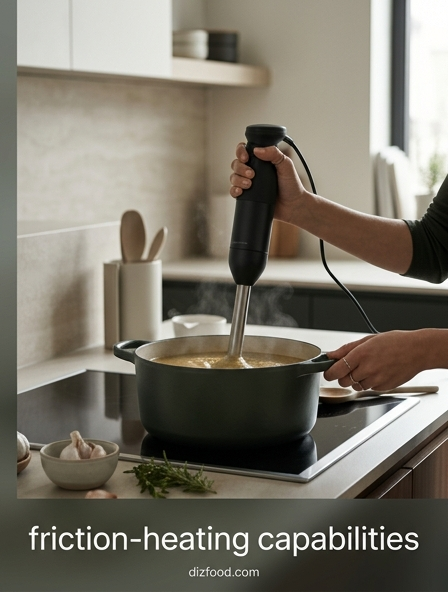
The Science Behind Kinetic Friction Heating
The phenomenon of friction heating in a culinary environment is a direct application of the First Law of Thermodynamics. When high-speed blender blades spin at velocities exceeding 20,000 rotations per minute, they transfer kinetic energy to the liquid and solid molecules within the pitcher. This rapid mechanical movement causes the molecules to collide with extreme frequency and force, generating significant thermal energy. Unlike traditional stovetop heating which relies on conduction or convection from an external source, kinetic friction generates heat from within the substance itself.
- Molecular Excitation: Rapid blade movement accelerates particle vibration, increasing the internal temperature of the fluid.
- Mechanical Shear: The physical interaction between the stainless steel and the ingredients creates resistance, which is dissipated as heat.
- Viscous Dissipation: In thicker mixtures, the internal resistance to flow contributes to a more rapid temperature climb.
As the blending cycle continues, the cumulative effect of these trillions of microscopic collisions results in a steady rise in temperature. This process is efficient enough to bring a room-temperature liquid to a steaming boil in roughly six to eight minutes of continuous operation, effectively turning a mechanical tool into a heating element.
Achieving Silky Textures via High Speeds
High-speed blending does more than just heat food; it fundamentally alters the physical structure of ingredients through micro-pulverization. By operating at peak velocities, the blender blades strike food particles with enough force to rupture cell walls and break down tough fibers. This level of mechanical breakdown is impossible to achieve with standard kitchen appliances or manual straining techniques. The result is a texture that feels remarkably smooth and "silky" on the palate, as the particles are reduced to a size smaller than the human tongue can individually perceive.
| Ingredient Type | Standard Blending Result | High-Speed Friction Result |
|---|---|---|
| Fibrous Greens | Gritty or stringy flecks | Completely liquified green juice |
| Soaked Cashews | Grainy nut paste | Ultra-smooth vegan cream |
| Root Vegetables | Chunky or textured mash | Aerated, velvet-like purée |
This structural transformation is particularly beneficial for creating high-end sauces and bisques. By combining friction-generated heat with this intense pulverization, the ingredients are simultaneously cooked and refined, ensuring that every spoonful is consistent, homogeneous, and free of any unwanted fibrous residue.
Rapid Soup Preparation with Blade Friction
The ability to prepare a hot soup in under ten minutes using only a blender represents a significant shift in kitchen workflow. This method bypasses the need for pots, pans, and the long wait associated with stovetop simmering. The process is remarkably straightforward, relying on the sheer power of the motor to cook the ingredients while blending them into a fine consistency. This rapid preparation is ideal for modern lifestyles where time is at a premium, yet the desire for fresh, homemade meals remains high.
- Preparation: Rough-cut vegetables and aromatics are added to the pitcher with a liquid base like stock or water.
- Activation: The blender is started on a low speed and quickly increased to the highest setting to maximize friction.
- Duration: The unit runs for approximately six to seven minutes, during which time steam will begin to vent from the lid.
- Finishing: Seasonings and fresh herbs are added in the final thirty seconds to preserve their bright flavors.
By the time the timer expires, the soup is not only fully blended but has reached a serving temperature of approximately 170°F (77°C). This speed makes it possible to go from raw garden vegetables to a steaming bowl of nourishment in a single, streamlined step.
Nutrient Retention in Friction Heated Soups
Friction heating offers a unique advantage regarding the nutritional profile of cooked foods. Traditional boiling often involves submerging vegetables in large volumes of water for extended periods, which can lead to the leaching of water-soluble vitamins like B and C. In contrast, friction heating occurs within a sealed environment and typically involves shorter exposure to high temperatures. Because the ingredients are blended into the liquid they are cooked in, any nutrients that are released remain contained within the final dish rather than being drained away.
- Reduced Oxidation: Shorter cooking times mean less exposure to oxygen, which can degrade certain antioxidants.
- Cellular Bioavailability: The intense mechanical breakdown of cell walls makes nutrients like lycopene and beta-carotene easier for the body to absorb.
- Controlled Heat: The temperature rise is gradual, allowing the user to stop the process before delicate enzymes are completely destroyed.
By leveraging friction, the cook maintains better control over the thermal impact on the food. This results in a meal that retains a more vibrant color and a higher concentration of the original vitamins and minerals found in the raw produce, bridging the gap between raw and cooked nutrition.
The Convenience of One Pitcher Cooking
The primary appeal of friction-heating technology is the extreme simplification of the cooking process. In a traditional soup-making scenario, a cook might use a cutting board, a knife, a sauté pan for aromatics, and a large stockpot for simmering. Each of these items requires cleaning and takes up space. Friction heating consolidates these various stages into a single vessel, creating a "one pitcher" workflow that minimizes clutter and drastically reduces the time spent on post-meal cleanup.
- Zero Transfer: There is no need to transfer hot liquids from a pot to a blender, which reduces the risk of accidental burns or spills.
- Integrated Cleanup: Most high-speed blenders can self-clean by blending a drop of soap and warm water for sixty seconds.
- Compact Footprint: The entire cooking "station" is limited to the square footage of the blender base.
This convenience encourages healthier eating habits by lowering the barrier to entry for making fresh meals. When the entire process-from raw ingredients to a hot meal and a clean kitchen-takes less than fifteen minutes, the reliance on processed, pre-packaged alternatives naturally decreases, making the kitchen a more efficient and health-focused space.
How Blade Velocity Generates Instant Heat
The correlation between blade velocity and heat generation is a matter of physics. High-performance kitchen appliances utilize motors that generate significant horsepower, allowing the blade tips to travel at speeds exceeding 150 miles per hour. At these speeds, the air and liquid inside the container offer substantial resistance. This resistance, or "drag," converts the mechanical energy of the motor into thermal energy. The faster the blades spin, the more collisions occur per second, and the more heat is generated within the mixture.
| Blade Speed (RPM) | Temperature Rise Rate | Ideal Application |
|---|---|---|
| 5,000 - 10,000 | Negligible | Chunky salsas and cold chopping |
| 15,000 - 20,000 | Moderate | Emulsifying dressings and warming sauces |
| 25,000 - 30,000+ | Rapid | Steaming soups and hot purées |
This is not an "instant" heat in the way a microwave functions, but rather a progressive buildup. However, because the heat is generated at the molecular level throughout the entire volume of the liquid, it feels much faster than waiting for a stove element to heat a heavy pot and then transfer that heat to the contents. The blade essentially becomes a high-speed immersion heater.
Maximizing Flavor Profiles in Blended Soups
Friction heating does more than just change temperature; it acts as a catalyst for flavor extraction. The high-speed blades effectively "bruise" and break down the cellular structure of herbs, spices, and aromatics, releasing essential oils and volatile compounds that might remain trapped during standard simmering. This results in a more intense and integrated flavor profile. Because the ingredients are pulverized so finely, the surface area exposed to the heat is maximized, allowing for a deep and rapid infusion of flavors throughout the entire base.
- Layering: Starting with a small amount of fat and aromatics helps to coat the particles, carrying flavor more effectively.
- Extraction: The mechanical force draws out the sweetness of carrots and the pungency of garlic without needing long cook times.
- Homogenization: Spices are distributed at a microscopic level, ensuring that every sip has a perfectly balanced taste.
Furthermore, because the cooking time is relatively short, the "bright" notes of fresh vegetables are preserved. Traditional long-simmered soups can sometimes taste "flat" or overcooked; friction-heated soups maintain a garden-fresh vibrance that is difficult to replicate with traditional methods, providing a unique culinary experience that emphasizes the purity of the ingredients.
Superior Emulsification for Seamless Results
One of the most technically challenging aspects of cooking is creating a stable emulsion-the perfect marriage of oil and water-based liquids. Friction heating provides the ideal conditions for this process. The high shear force generated by the blades breaks oil droplets down into microscopic sizes, while the concurrent rise in temperature helps to decrease the viscosity of the fats, allowing them to disperse more evenly. This dual-action approach results in sauces and soups that are incredibly stable and have a rich, creamy mouthfeel without the need for excessive heavy cream or thickeners.
- Suspension: The speed prevents the fats from recoalescing, keeping the mixture unified even as it cools.
- Starch Activation: If ingredients like potatoes or cashews are present, the friction heat reaches the exact point needed to gelatinize starches, providing natural body.
- Aeration: The high-speed movement incorporates a tiny amount of air, contributing to a light, mousseline-like quality.
In professional kitchens, this technique is often used to create "instant" hollandaise or butter-based sauces that are notoriously temperamental. In the home kitchen, it ensures that a tomato bisque remains perfectly creamy and a vinaigrette stays integrated long after it has been poured over a salad.
Energy Efficiency of Friction Heat Technology
When comparing energy usage in the kitchen, friction heating is surprisingly efficient for specific tasks. While a high-speed blender pulls a significant amount of wattage (often 1,200 to 1,500 watts), it only operates for a very short duration. A traditional electric stovetop burner might use similar wattage but must run for thirty minutes or more to achieve the same result as a six-minute blender cycle. Additionally, because the heat is generated directly within the food, there is no "waste heat" escaping into the kitchen environment, which can be a significant factor in smaller spaces or during hot summer months.
| Heating Method | Primary Energy Loss | Relative Efficiency |
|---|---|---|
| Stovetop (Electric) | Ambient air and pot surface | Low to Medium |
| Microwave | Conversion loss in magnetron | High |
| Friction (Blender) | Motor heat and sound | Medium to High |
This targeted application of energy makes friction heating an environmentally conscious choice for small-batch cooking. By minimizing the time the appliance is active and ensuring that almost all the energy produced is directed into the thermal transformation of the food, the user can prepare hot meals with a smaller total energy footprint than traditional multi-step cooking processes.
Transforming Raw Ingredients into Hot Meals
The ability to transform raw, cold ingredients into a steaming, fully-cooked meal in one step is the pinnacle of kitchen friction technology. This process supports a "whole food" philosophy, as it requires minimal processing before the cooking begins. A handful of raw kale, a few florets of broccoli, a slice of ginger, and some vegetable stock can be turned into a sophisticated, nutritious soup with virtually no effort. This workflow encourages the use of fresh produce over canned or frozen alternatives, as the mechanical power of the blender handles the difficult work of breakdown and texture refinement.
- Ingredient Load: Place all raw components into the blender pitcher, starting with liquids to ensure a proper vortex.
- Speed Ramp: Gradually move from the lowest to the highest setting to allow the blades to catch the larger pieces.
- Thermal Build: Observe the steam rising; this indicates the friction has pushed the temperature past 150°F.
- Service: Pour directly from the pitcher into bowls for immediate consumption.
This "raw-to-hot" transformation is not just a novelty; it is a fundamental shift in how we approach meal preparation. It bridges the gap between the speed of fast food and the health benefits of home-cooked meals, utilizing the physics of friction to make high-quality nutrition accessible to everyone, regardless of their culinary skill level.


Comments