
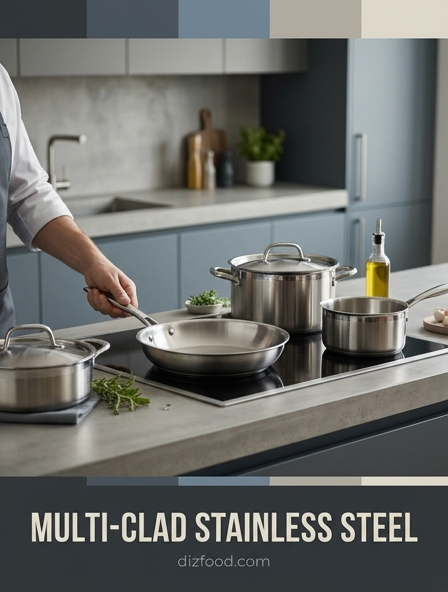
Multi-clad stainless steel has earned its reputation as the ultimate workhorse for modern high-performance kitchens, offering an ideal balance of rugged durability and professional precision. By bonding layers of highly conductive aluminum or copper between resilient stainless steel, this cookware ensures rapid, even heat distribution while remaining tough enough to withstand metal utensils and intense daily use. Unlike more delicate materials, multi-clad pieces are non-reactive and warp-resistant, making them a reliable investment for anyone serious about mastering high-heat techniques. To ensure you choose the best tools for your culinary goals, it is helpful to explore the functional differences between Copper vs Clad Stainless Steel.
Superior Heat Distribution Through Core Metals
The primary advantage of multi-clad stainless steel cookware lies in its sophisticated internal architecture. While stainless steel is prized for its durability and non-reactive properties, it is a relatively poor conductor of heat. To overcome this limitation, multi-clad vessels incorporate a thick core of highly conductive aluminum or copper. This core is not merely restricted to the base of the pan but extends fully from the bottom up through the sidewalls. This design ensures that thermal energy is transferred rapidly and evenly across the entire cooking surface, eliminating the "hot spots" that often plague cheaper, disc-bottomed cookware.
- Aluminum Cores: Offer lightweight, rapid thermal response and even heating.
- Copper Cores: Provide the highest level of thermal precision and immediate temperature adjustments.
- Edge-to-Edge Bonding: Ensures the sidewalls cook food just as efficiently as the base.
By utilizing these conductive metals, chefs can achieve consistent browning and precise simmering, which are essential for technical recipes such as delicate reductions or complex protein sears. The result is a predictable cooking environment where the pan responds instantly to adjustments in the flame or heating element.
Engineered Durability for Professional Demands
Multi-clad stainless steel is engineered to withstand the rigorous environment of a high-volume professional kitchen. Unlike non-stick pans that have a finite lifespan due to coating degradation, multi-clad pieces are constructed as a singular, bonded unit that is virtually indestructible. The exterior layers are typically made of high-grade 400-series or 300-series stainless steel, which protects the inner conductive core from physical damage and oxidation. This heavy-duty construction allows the cookware to endure metal utensils, high-impact cleaning, and the constant movement inherent in professional cooking.
Furthermore, the structural integrity of these pans is reinforced by heavy-gauge rivets that secure the handles permanently to the body. This prevents the wobbling or detachment issues often seen in screwed-on alternatives. Because there are no coatings to flake off, the pans maintain their performance levels for decades. This resilience makes multi-clad cookware the standard choice for chefs who require tools that can transition from a heavy morning prep session to a high-heat dinner service without losing their shape or functional efficiency.
Non-Reactive Surface Integrity for Flavor Purity
One of the most critical aspects of culinary excellence is the preservation of the ingredient's natural flavor profile. Multi-clad cookware typically utilizes 18/10 stainless steel for the interior cooking surface. This material is "non-reactive," meaning it does not chemically interact with alkaline or highly acidic foods. When cooking with ingredients like tomatoes, citrus juices, or wine-based deglazes, reactive metals like untreated aluminum or cast iron can leach a metallic aftertaste into the dish and cause discoloration. Stainless steel ensures that the flavor remains pure and untainted.
- 18/10 Composition: Contains 18% chromium for rust resistance and 10% nickel for a high-luster finish.
- Acid Resistance: Ideal for long-simmering marinara sauces and wine-heavy reductions.
- Hygienic Surface: The non-porous nature of the steel prevents the absorption of odors or bacteria.
This neutrality allows the cook to deglaze the pan with confidence, lifting the "fond" (the caramelized bits at the bottom) to create pristine sauces. The lack of chemical leaching also provides peace of mind regarding the health and safety of the prepared meals, ensuring that only the intended flavors reach the plate.
Exceptional Warp Resistance in High-Heat Environments
Standard single-layer pans often suffer from "warping" or "bowing" when subjected to rapid temperature changes or extreme heat. This occurs because different parts of the metal expand and contract at uneven rates. Multi-clad technology solves this issue through a process of high-pressure bonding. By sandwiching multiple layers of metal together, the pan gains a structural rigidity that resists thermal shock. Even when transitioning from a hot stovetop to a cool countertop, the bonded layers work in unison to maintain a perfectly flat cooking surface.
A flat base is crucial for modern cooking, especially on glass-top or induction ranges where surface contact determines heating efficiency. If a pan warps, it loses contact with the heat source, leading to uneven cooking and wasted energy. The thickness and density of multi-clad construction ensure that the vessel retains its original geometry even after years of searing steaks at high temperatures or deglazing with cold liquids. This mechanical stability is a hallmark of premium kitchenware, providing a reliable foundation for every culinary task.
The Science of Multi-Ply Layering Technology
Multi-ply layering refers to the number of distinct sheets of metal bonded together to form the cookware's body. The specific combination of these layers determines the pan's weight, heat retention, and thermal responsiveness. Manufacturers often use varying "ply" counts to cater to different cooking styles and price points.
| Ply Count | Construction Layers | Primary Benefit |
|---|---|---|
| 3-Ply | Steel - Aluminum - Steel | Lightweight and fast heating. |
| 5-Ply | Steel - Alum - Alum - Alum - Steel | Enhanced heat retention and stability. |
| 7-Ply | Steel - Various Alloys - Steel | Ultimate durability and thermal mass. |
While 3-ply is the standard for high-quality home cooking, 5-ply and 7-ply options offer additional layers of aluminum or specialized alloys to further refine heat distribution. These extra layers act as a thermal buffer, preventing temperature fluctuations when cold ingredients, such as a large roast, are added to the pan. The science of bonding these dissimilar metals requires intense heat and pressure to ensure they never delaminate over time.
Seamless Versatility from Stovetop to Oven
Modern recipes often require a "sear-and-roast" technique, where food is started on the stovetop to develop a crust and finished in the oven to cook through. Multi-clad stainless steel is uniquely suited for this workflow because of its all-metal construction. Unlike pans with plastic or silicone handles, multi-clad vessels can typically withstand oven temperatures up to 500°F or higher, depending on the specific manufacturer's rating. This versatility eliminates the need to transfer food between different dishes, which preserves juices and reduces cleanup.
- Searing: High-heat tolerance allows for the perfect Maillard reaction on proteins.
- Braising: Even heat distribution makes it ideal for slow-cooking in the oven.
- Deglazing: The pan can move back to the stove to create a pan sauce from oven drippings.
The ergonomic handles are designed to stay cooler on the stovetop via "stay-cool" V-shaped attachments, yet they remain structurally sound under the intense dry heat of an oven or broiler. This seamless transition capability makes multi-clad pans the workhorses of the kitchen, capable of handling everything from a delicate omelet to a heavy braised brisket.
Induction Compatibility and Energy Efficiency
As the culinary world shifts toward induction cooking, the material composition of cookware has become more important than ever. Induction cooktops work via electromagnetism, requiring a "ferrous" or magnetic base to generate heat. Multi-clad cookware manufacturers address this by using a magnetic 400-series stainless steel for the outermost layer. This allows the pan to work perfectly on induction ranges while still providing the superior cooking properties of the internal aluminum or copper layers.
Beyond compatibility, the efficiency of multi-clad construction helps reduce energy consumption. Because the heat is distributed so effectively across the entire body of the pan, the cooktop does not need to be set to maximum power to achieve high cooking temperatures. The dense core metals also provide excellent heat retention, meaning the pan stays hot even when the heat source is turned down or when ingredients are added. This thermal inertia translates to shorter cooking times and lower utility costs, making it a sustainable choice for environmentally conscious households.
Low Maintenance Resilience for Busy Kitchens
Despite its professional-grade performance, multi-clad stainless steel is remarkably easy to maintain. Unlike seasoned cast iron or carbon steel, it does not require a complex ritual of oiling and drying to prevent rust. Most multi-clad pieces are dishwasher safe, though hand washing is often recommended to maintain the exterior luster. For stubborn, burnt-on food, the non-porous surface allows for aggressive scrubbing with sponges or specialized stainless steel cleaners without damaging the pan.
- Cleaning: Hot soapy water is usually sufficient for daily maintenance.
- Polishing: Occasional use of an oxalic acid-based cleaner restores the original shine.
- Storage: The durable surface allows for stacking, though liners are recommended to prevent scratches.
Because there are no delicate coatings to protect, users do not have to worry about the pan losing its "non-stick" properties over time. If a pan becomes discolored with "rainbow" heat tints or calcium deposits from water, it can be easily restored to a brand-new appearance with a simple vinegar rinse. This low-maintenance profile ensures that the cookware remains a functional asset rather than a chore.
Long-Term Value and Structural Longevity
While the initial investment in a set of multi-clad stainless steel cookware is higher than that of aluminum or non-stick alternatives, the long-term value is significantly greater. Most premium multi-clad brands offer lifetime warranties because the products are designed to last for generations. When calculated over a lifespan of 30 to 50 years, the "cost per use" of a multi-clad pan is remarkably low compared to non-stick pans that must be replaced every two to three years due to coating failure.
This structural longevity also has a positive environmental impact, as it reduces the volume of discarded cookware in landfills. The materials used-stainless steel, aluminum, and copper-are also highly recyclable at the end of their extremely long lives. For the serious home cook or professional, purchasing multi-clad steel is a one-time investment that provides consistent results and remains a reliable heirloom. The physical robustness ensures that the pan will not crack, chip, or melt, regardless of how often it is used or the intensity of the heat applied to it.
Modern Aesthetic Combined with Industrial Strength
Multi-clad stainless steel represents a perfect marriage between form and function. Its sleek, polished, or brushed silver exterior complements any kitchen decor, from traditional to ultra-modern. The industrial strength of the bonded metals is hidden beneath a sophisticated finish that maintains its aesthetic appeal even after years of heavy use. Many designs feature flared rims, which are not only visually pleasing but also serve a functional purpose by allowing for drip-free pouring of liquids and sauces.
- Finishes: Available in mirror-polished or satin-brushed textures.
- Design: Flared rims for precision pouring and "clean" kitchen counters.
- Ergonomics: Cast stainless steel handles designed for comfort and balance.
The weight of the pan provides a sense of quality and balance in the hand, signaling its professional pedigree. In modern "open-concept" kitchens where cookware is often displayed on hanging racks or open shelving, the bright, clean look of multi-clad steel serves as a design element. It reflects a commitment to quality and a passion for the culinary arts, offering a tool that looks as good as it performs.

Comments