
Keeping your kitchen's hardest-working appliance pristine often feels like a toss-up between a high-tech shortcut and traditional elbow grease. While the self-cleaning oven cycle offers a hands-off approach by using extreme pyrolytic heat to incinerate food residue into ash, manual scrubbing provides a targeted, chemical-based, or eco-friendly alternative that bypasses the stress high temperatures can place on your oven's heating elements and thermostat. Choosing the best method for your home involves balancing the convenience of automation against the potential risks of fumes and hardware wear, ensuring your oven remains efficient and your indoor air quality stays clear.
| Feature | Self-Cleaning Cycle | Manual Scrubbing |
|---|---|---|
| Active Effort | Minimal; requires only ash wiping. | High; involves kneeling and scouring. |
| Time Required | 2-4 hours (locked/inactive). | 30-90 minutes (active labor). |
| Safety Risks | High heat, carbon monoxide, smoke. | Chemical fumes or skin irritation. |
| Appliance Wear | Can damage fuses/control boards. | Safe; no thermal stress on parts. |
| Cleaning Power | Excellent for burnt-on carbonized spills. | Variable; relies on chemical strength. |
| Cost Factor | Higher electricity/utility usage. | Cost of degreasers and sponges. |
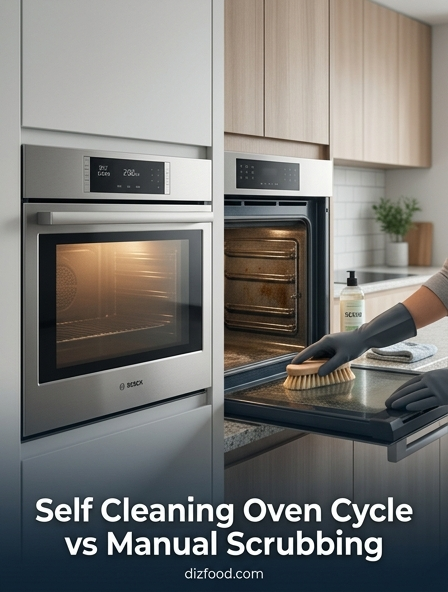
Self Cleaning Oven Cycle vs Manual Scrubbing Comparison
Maintaining a clean oven is essential for both food quality and kitchen safety, but the method chosen often depends on a trade-off between convenience and control. The self-cleaning cycle, technically known as a pyrolytic wash, uses extreme temperatures-often exceeding 900 degrees Fahrenheit-to incinerate food residue into a fine ash. In contrast, manual scrubbing involves the application of cleaning agents and physical labor to remove grease and carbonized spills. While the self-clean button offers a "set it and forget it" appeal, manual cleaning allows for targeted treatment of heavy buildup without subjecting the appliance to thermal stress.
| Feature | Self-Cleaning Cycle | Manual Scrubbing |
|---|---|---|
| Effort Level | Minimal physical labor | High physical exertion |
| Time Required | 3 to 5 hours | 1 to 2 hours |
| Cleaning Agent | High heat (Pyrolysis) | Chemical or natural degreasers |
| Potential Risks | Component failure, fumes | Skin irritation, muscle fatigue |
The choice between these two methods frequently hinges on the oven's age and the amount of grease present. Modern ovens are designed to handle the heat, but many technicians warn that the intensity of the cycle can shorten the lifespan of sensitive electronic control boards. Manual cleaning remains the safest choice for older units or those with significant sugar-based spills that might ignite under high heat.
The Safety Risks of High Heat Self Cleaning Cycles
While the convenience of a self-cleaning oven is undeniable, the safety risks associated with the high-heat process are significant. During a pyrolytic cycle, the oven reaches temperatures that are significantly higher than standard baking or roasting levels. This extreme heat can cause the glass door to shatter if there are microscopic cracks or defects. Furthermore, the buildup of grease and fat at the bottom of the oven creates a legitimate fire hazard; if the residue is thick enough, it can ignite, leading to a grease fire that is contained within the locked appliance but potentially damaging to the kitchen surroundings.
Beyond fire risks, the thermal expansion can damage the oven's internal components. The intense heat often outpaces the cooling capacity of the internal fans, which can lead to the following issues:
- Blown thermal fuses that prevent the oven from turning back on.
- Melted wiring insulation leading to electrical shorts.
- Short-circuited electronic control boards (Oven Control Boards).
- Warped oven racks if they are not removed prior to the cycle.
Because of these risks, many appliance repair technicians recommend avoiding the self-clean cycle entirely, or at the very least, remaining home and awake throughout the entire duration of the process. Never leave a self-cleaning cycle running while you are sleeping or away from the house, as the potential for smoke inhalation or localized fire is too high to ignore.
Efficiency Battle Time Saved vs Energy Consumed
When evaluating efficiency, one must consider both the clock and the utility bill. A standard self-cleaning cycle lasts anywhere from three to five hours, plus an additional hour for the unit to cool down sufficiently for the door lock to disengage. During this window, the oven is drawing a massive amount of electricity to maintain its extreme temperatures. Estimates suggest a single self-clean cycle can consume as much energy as several weeks of normal cooking. This makes the "set it and forget it" method surprisingly expensive when viewed through the lens of annual energy consumption.
Manual scrubbing, while demanding more "human energy," is significantly more efficient in terms of time and resource management. A focused manual cleaning session usually takes about 90 minutes of active work. Furthermore, there is no cooling-down period required, meaning the oven is available for cooking immediately after the cleaning agents are rinsed away. For households that cook frequently, losing the use of the oven for six hours during a self-clean cycle can be a major logistical hurdle. Additionally, the manual method requires zero electricity, relying instead on the chemical energy of degreasers and the mechanical energy of a scrub brush. When the goal is to get the job done quickly and cheaply, manual intervention often wins the efficiency battle despite the physical effort involved.
Best Degreasers for Manual Oven Scrubbing Success
Achieving a professional-grade clean during a manual scrub requires the right chemical or natural assistance. The market is divided between heavy-duty alkaline cleaners and eco-friendly natural alternatives. Heavy-duty degreasers, such as those containing sodium hydroxide (lye), are incredibly effective at dissolving carbonized food and stubborn grease. However, they require careful handling, including the use of gloves and proper ventilation. On the other hand, natural degreasers utilize the power of acidity and abrasion to lift stains without the risk of caustic burns.
Depending on the level of grime, the following degreasers are considered the most effective for manual cleaning:
- Commercial Oven Cleaners: Fast-acting formulas that dissolve grease in as little as 30 minutes, though they carry strong odors.
- Baking Soda Paste: A mixture of baking soda and water that, when left overnight, breaks down grease through a mild alkaline reaction.
- Distilled White Vinegar: Best used as a finishing spray to neutralize baking soda residue and add a streak-free shine to glass doors.
- Citrus-Based Degreasers: Utilize d-limonene to cut through oily films while leaving a pleasant scent.
- Dish Soap and Hot Water: Surprisingly effective for light maintenance and cleaning oven racks in a bathtub.
The success of these degreasers often depends on "dwell time." Unlike the self-clean cycle which uses heat to destroy waste, manual cleaners need time to penetrate the molecular bonds of the grease. Applying the cleaner and allowing it to sit for several hours is the secret to reducing the physical scrubbing required.
How Self Cleaning Cycles Impact Oven Longevity
The longevity of a kitchen appliance is often inversely proportional to the amount of extreme stress it undergoes. The self-cleaning cycle is arguably the most stressful event an oven can experience. By design, ovens are built to withstand temperatures up to 500 or 550 degrees Fahrenheit. Pushing the internal cavity to 900 degrees pushes every component to its physical limit. Over time, these cycles can lead to "planned obsolescence" by accelerating the wear and tear on parts that would otherwise last for decades.
One of the most common victims of the self-clean cycle is the heating element. Whether hidden beneath the oven floor or exposed, the element undergoes extreme expansion and contraction, which eventually leads to brittleness and failure. Similarly, the door seals, made of fiberglass or silicone, can harden and lose their flexibility after repeated exposure to pyrolytic temperatures, leading to heat leaks during normal baking. The porcelain enamel coating of the oven interior can also develop "crazing"-a network of fine cracks-due to the rapid temperature changes. While the self-cleaning feature is marketed as a luxury convenience, its frequent use often results in a shorter path to the appliance graveyard or, at the very least, a series of expensive service calls for blown fuses and fried sensors.
Chemical Fumes vs Natural Manual Cleaning Methods
Indoor air quality is a major concern when cleaning large appliances. The self-cleaning cycle is notorious for releasing a variety of fumes into the home. As food particles burn off, they release carbon monoxide and smoke. More concerningly, if the oven has certain non-stick coatings or if plastic-handled pans were accidentally left inside, the high heat can release toxic fluorocarbon gases. These fumes are particularly dangerous for birds and individuals with respiratory issues like asthma. Even in a well-ventilated kitchen, the "burned" smell of a self-clean cycle can linger for days.
Manual cleaning offers a choice between chemical intensity and natural safety. While commercial cleaners provide rapid results, they often contain volatile organic compounds (VOCs) that can irritate the eyes, throat, and lungs. Many homeowners are switching to natural methods to avoid these risks. The most popular natural combination involves:
- Applying a thick paste of baking soda and water to all interior surfaces.
- Allowing the paste to sit for 12 hours to lift the grease.
- Wiping away the paste with a damp cloth.
- Spraying a vinegar solution to react with any remaining soda, creating a foaming action that lifts the last bits of grime.
Natural methods are not only safer for the occupants of the home but are also environmentally friendly, preventing harsh chemicals from entering the water system. Choosing natural manual cleaning ensures that the air in your kitchen remains breathable and free of toxic byproducts.
When to Avoid Using the Self Clean Function
Despite being a standard feature on most modern ranges, there are specific scenarios where using the self-clean function is ill-advised. Understanding these "red flags" can save you from a broken appliance or a dangerous kitchen fire. First and foremost, you should never use the self-clean cycle in the weeks leading up to a major holiday like Thanksgiving or Christmas. Because the cycle puts so much stress on the control board and thermal fuses, this is the most common time for ovens to fail, leaving you without a way to cook your holiday meal and facing a long wait for a technician.
Other specific times to avoid the cycle include:
- Excessive Grease Buildup: If there is a pool of oil or a thick layer of fat, the risk of a fire is too high. These should be wiped out manually first.
- Older Appliances: Ovens over 10 years old have more fragile wiring and are less likely to survive the thermal shock.
- Presence of Pets: Small animals, especially birds, are highly sensitive to the fumes produced during pyrolysis.
- Clogged Ventilation: If your kitchen lacks a powerful range hood or windows that open, the smoke and carbon monoxide levels can become hazardous.
In these cases, a manual scrub is the only responsible option. It is better to spend an afternoon scrubbing than to spend hundreds of dollars on a last-minute emergency repair or a new oven entirely.
A Step by Step Guide to Manual Oven Deep Cleaning
Manual cleaning doesn't have to be an exhausting chore if you follow a systematic approach. The key to success is preparation and patience. By allowing the cleaning agents to do the heavy lifting, you can minimize the amount of physical force required to restore your oven's shine. Before you begin, ensure you have a pair of heavy-duty gloves, a non-abrasive scrub pad, a plastic scraper, and your preferred cleaning solution.
- Clear the Oven: Remove all racks, thermometers, and pizza stones. Soak the racks in a bathtub of hot water and dish soap.
- Scrape Loose Debris: Use a plastic scraper to gently remove any large, burnt-on food chunks from the bottom of the oven.
- Apply the Cleaner: Coat the entire interior with your degreaser or baking soda paste. Avoid the heating elements and the door seal.
- Wait: Let the solution sit. For natural cleaners, 12 hours is best. For chemical cleaners, follow the label (usually 30-60 minutes).
- Scrub and Wipe: Use a damp cloth or scrub pad to wipe away the loosened grime. Use the plastic scraper for any stubborn spots.
- Neutralize: If using baking soda, spray the interior with vinegar and wipe one last time to remove the white residue.
- Clean the Glass: Use a dedicated glass cleaner or a mixture of lemon juice and water to remove grease streaks from the window.
By following these steps, you achieve a level of cleanliness that the self-clean cycle often misses, particularly in the corners and around the door frame where ash tends to accumulate.
The Hidden Costs of Pyrolytic Oven Cleaning
The "free" cleaning cycle provided by your oven is rarely actually free. When homeowners calculate the cost of oven maintenance, they often overlook the indirect expenses associated with high-heat cycles. The most obvious cost is the surge in electricity or gas usage, but the most significant financial impact comes from premature hardware failure. A replacement oven control board can cost anywhere from $200 to $600, plus the cost of labor for a professional installation. When you consider that a self-clean cycle is the leading cause of these failures, the "convenience" of the button becomes a potential multi-hundred-dollar gamble.
Furthermore, there is the cost of replacement parts that wear out faster due to heat exposure. Door gaskets, which ensure energy efficiency during normal cooking, can dry out and crack, requiring replacement every few years if the self-clean cycle is used frequently. Even the oven racks, if left inside, will lose their chrome finish and become difficult to slide, requiring the purchase of food-grade lubricants or new racks entirely. In contrast, manual cleaning costs only a few dollars for supplies and your time. Over the 10-to-15-year lifespan of an oven, manual cleaning can save a homeowner over a thousand dollars in energy bills and avoided repairs.
Choosing the Right Method for Your Kitchen Lifestyle
Ultimately, the decision between self-cleaning and manual scrubbing should be based on your specific kitchen habits and priorities. If you are a professional baker or someone who uses the oven daily, grease buildup happens quickly. In this case, a regular maintenance schedule of light manual wiping is often better than waiting for a disaster that requires a heavy-duty self-clean cycle. For those who rarely cook and only face minor dust or light splatters, the self-clean cycle might be a viable option used once a year, provided the oven is modern and in good repair.
Consider the following lifestyle factors when making your choice:
- Health Sensitivity: If anyone in your household has respiratory issues, stick to natural manual cleaning.
- Budget: If you want to avoid repair bills and high utility costs, manual cleaning is the winner.
- Physical Ability: If you have back issues or mobility constraints that make scrubbing difficult, the self-clean cycle provides a necessary accessibility feature.
- Time Availability: If you are a busy professional who cannot dedicate two hours to scrubbing, the self-clean cycle offers unmatched convenience.
No matter which method you choose, the goal remains the same: a clean environment for preparing food. By understanding the risks and benefits of each, you can maintain your kitchen in a way that suits your time, your health, and your wallet.

Comments