
Tackling baked-on grease or stubborn hard water rings in your kitchen often leads to a standoff between the heavy-duty pumice stone and the versatile scouring pad. While a pumice stone offers unmatched abrasive power for restoring porcelain sinks and cast-iron grates, a standard scouring pad provides the flexible, multi-surface touch needed for everyday cookware and stainless steel. Choosing the right tool is a balance between aggressive cleaning and surface preservation; using the wrong one can mean the difference between a sparkling finish and permanent scratches. This comparison explores which cleaning powerhouse reigns supreme for your specific deep-cleaning challenges.
| Feature | Pumice Stone | Scouring Pad |
|---|---|---|
| Composition | Porous volcanic rock (natural) | Synthetic fibers, nylon, or steel wool |
| Abrasiveness | Extremely high; aggressive scale removal | Variable (Light to heavy-duty) |
| Best For | Hard water rings, oven racks, porcelain | Non-stick pans, countertops, daily dishes |
| Surface Safety | Safe for hard ceramics; scratches glass/metal | Safe for most metals, plastics, and glass |
| Durability | Erodes and shapes to surface over time | Retains shape but traps bacteria/frays |
| Usage Style | Must be used wet to prevent damage | Can be used wet, dry, or with detergent |
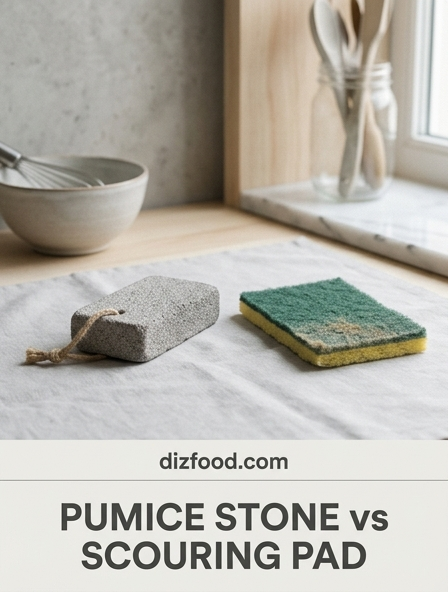
Pumice Stone vs Scouring Pad Key Differences for Deep Cleaning
The primary distinction between a pumice stone and a scouring pad lies in their material composition and aggressive potential. A pumice stone is a naturally occurring volcanic rock characterized by its high porosity and extreme abrasiveness. In the kitchen, it is treated as a heavy-duty tool reserved for mineral deposits and carbonized buildup. Conversely, a scouring pad is typically a synthetic mesh made from polyester, nylon, or stainless steel wires. These pads range from soft non-scratch versions to heavy-duty metallic coils, offering a spectrum of friction that a solid stone cannot replicate.
- Material Density: Pumice is a rigid solid that wears down into a fine paste, whereas scouring pads are flexible and conform to the shape of the object being cleaned.
- Abrasive Action: Pumice stones "sand" away the surface layer of a stain; scouring pads "scrape" or "lift" debris from the surface.
- Moisture Requirement: A pumice stone must always be used wet to prevent catastrophic scratching, while many scouring pads can be used dry for light dusting or debris removal.
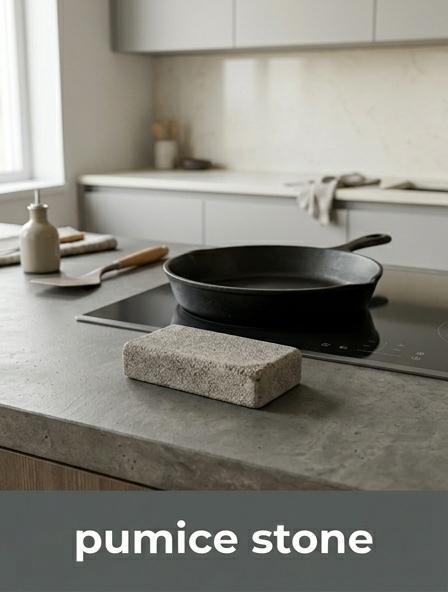
When approaching deep cleaning, the choice depends on the thickness of the grime. If you are facing decades of baked-on carbon on a cast iron grate, the pumice stone provides the necessary torque. For general grease film or stuck-on proteins on a glass stovetop, the controlled friction of a synthetic scouring pad is safer and more efficient.
Choosing Between Pumice Stones and Scouring Pads for Tough Stains
Selecting the right tool for tough kitchen stains requires an assessment of the stain's chemical makeup and the substrate it occupies. Tough stains generally fall into two categories: mineral-based (hard water, lime) and organic-based (grease, burnt sugar, protein). Pumice stones are the undisputed masters of mineral-based stains because the abrasive particles in the rock are harder than the mineral deposits themselves, allowing them to grind the stain into a slurry without damaging high-fired porcelain.
| Stain Type | Recommended Tool | Reasoning |
|---|---|---|
| Baked-on Oven Grease | Scouring Pad (Steel Wool) | Flexible fibers reach into corners and crevices. |
| Hard Water Rings on Sinks | Pumice Stone | Grinds down calcium deposits that pads often slide over. |
| Carbonized Grill Grates | Pumice Stone | Heavy abrasive power removes thick carbon layers quickly. |
| Dried Food on Glassware | Non-Scratch Scouring Pad | Gentle enough to preserve surface clarity. |
For organic stains, such as scorched milk or grease, scouring pads are usually superior. The fibers of the pad act like tiny hooks that grab the sticky molecules and pull them away from the surface. A pumice stone may simply become clogged with grease, rendering its abrasive surface ineffective and difficult to clean.
Surface Safety Guide for Pumice Stones and Abrasive Scouring Pads
Surface integrity is the most critical factor when choosing an abrasive cleaning tool. Using a pumice stone on the wrong surface can lead to permanent etching, while using a weak scouring pad on a tough surface results in wasted effort. As a rule of thumb, pumice should never be used on any surface that is softer than the stone itself, including plastics, stainless steel, and polished stone like marble or granite.
To maintain your kitchen surfaces, follow these safety guidelines:
- Porcelain and Ceramic: Pumice is generally safe for high-fired porcelain (like sinks), provided it is kept wet. However, avoid using it on colored ceramic coatings which may fade.
- Stainless Steel: Never use a pumice stone. Stick to nylon scouring pads or fine-grade steel wool, always rubbing in the direction of the metal grain.
- Non-Stick Cookware: Avoid both pumice and heavy-duty scouring pads. Only use pads labeled "non-scratch" to protect the PTFE or ceramic coating.
- Glass Cooktops: Only use specialized glass-safe scouring pads. A pumice stone will instantly leave opaque scratches on the glass.
Always perform a "spot test" in an inconspicuous area. If you hear a high-pitched grinding sound or see the surface dulling, stop immediately and switch to a less abrasive medium.
The Effectiveness of Pumice Stones on Hard Water and Lime Scale
Hard water stains and lime scale are common nuisances in kitchen environments, particularly around faucets, sprayers, and porcelain sinks. These deposits are essentially crystallized minerals-calcium and magnesium-that bond tightly to surfaces. Because these crystals are quite hard, synthetic scouring pads often fail to remove them, simply gliding over the bumps without breaking the bond. This is where the pumice stone excels.
The effectiveness of a pumice stone comes from its ability to self-sacrifice. As you scrub a wet pumice stone against a lime scale deposit, the stone wears away, creating a fine abrasive paste. This paste gets into the microscopic grooves of the mineral buildup, breaking it down mechanically. Unlike chemical descalers, which require dwell time to dissolve the minerals, a pumice stone provides immediate physical removal. This is particularly useful for the "ring" that forms around kitchen drains where standing water evaporates. By maintaining a wet interface, the stone creates a lubricant that protects the underlying porcelain while the abrasive action targets the raised mineral deposit. This makes it an essential tool for restoring the luster of old, neglected kitchen basins that have been clouded by years of hard water exposure.
Why Scouring Pads Are the Best Choice for Everyday Kitchen Use
While specialty tools have their place, the scouring pad remains the workhorse of the modern kitchen due to its versatility and ease of use. Most daily kitchen messes involve fats, oils, and lightly dried food particles. These require a balance of absorbency and friction that a pumice stone cannot provide. Scouring pads, especially dual-sided sponges with a soft foam side and an abrasive scrubbing side, allow the user to transition between wiping up spills and tackling stuck-on bits without changing tools.
- Ergonomics: Pads are flexible, allowing them to wrap around cutlery, reach into the bottoms of mugs, and conform to the curves of bowls.
- Chemical Compatibility: Scouring pads work harmoniously with dish soaps. They help agitate the soap into a thick foam, which aids in emulsifying grease.
- Rinsability: Unlike pumice, which sheds particles and can leave a gritty residue, synthetic pads can be rinsed clean and reused multiple times throughout the day.
- Speed: For 90% of kitchen tasks, the level of abrasion provided by a nylon pad is sufficient. Using a more aggressive tool like a pumice stone would be overkill and increase the risk of accidental damage to delicate finishes.
Because they are inexpensive and available in various grit levels, scouring pads provide a customized cleaning experience that caters to everything from fine china to stainless steel pots.
Comparing the Durability of Natural Pumice vs Synthetic Scouring Pads
The durability of these two tools is measured differently. A pumice stone is a consumable abrasive; it is designed to wear down and eventually disappear through use. A scouring pad is a structural abrasive; it is designed to withstand repeated friction until its fibers break or its abrasive coating wears off. In terms of longevity per single unit, a high-quality synthetic scouring pad often outlasts a small pumice stick if used for general cleaning.
Pumice stones erode quickly when used on very hard, rough surfaces like cast iron or textured stone. A single deep-cleaning session for an oven rack might consume half of a pumice bar. However, the pumice stone does not "clog" in the traditional sense; as it wears down, it constantly reveals a fresh, sharp abrasive surface. In contrast, scouring pads frequently suffer from "loading," where grease and food particles get trapped in the mesh. While you can wash a scouring pad, the structural integrity of the plastic or metal fibers eventually weakens, leading to fraying. Steel wool pads are the least durable, often rusting or disintegrating after just one or two uses if left damp. Synthetic nylon pads offer the best middle ground, maintaining their shape and abrasive properties for several weeks of regular kitchen duty before requiring replacement.
How to Prevent Surface Scratches with Abrasive Cleaning Tools
The secret to scratch-free cleaning with abrasive tools is the management of pressure and lubrication. Scratches occur when the abrasive particles are harder than the surface being cleaned or when a piece of hard debris (like a grain of sand) gets trapped between the tool and the surface. When using a pumice stone, the most critical rule is to keep both the stone and the surface soaking wet. The water acts as a lubricant and helps create a slurry that buffers the intensity of the rock's sharp edges.
To minimize risk, follow these steps:
- Test the Hardness: Use the Mohs scale as a mental guide. Porcelain is hard (approx. 7), while pumice is softer (approx. 6). This is why pumice is safe for porcelain but will destroy plastic (approx. 2-3).
- Light Pressure: Let the tool do the work. If a stain doesn't budge with moderate pressure, switching to a harder tool is better than pressing harder with the current one.
- Check for Debris: Rinse your scouring pad frequently. A pad filled with burnt carbon bits can act like sandpaper on a smooth surface.
- Directional Scrubbing: On metals, always scrub with the grain. This ensures that any microscopic scratches are hidden within the natural texture of the material.
By treating abrasives with caution and ensuring constant lubrication, you can remove even the most stubborn kitchen grime without leaving a trace of damage.
Environmental Impact of Natural Pumice Stones versus Plastic Scouring Pads
As consumers become more environmentally conscious, the material source and end-of-life disposal of cleaning tools have become significant factors. Pumice stones are a natural, earth-mined product. They are essentially solidified lava and contain no synthetic chemicals, plastics, or dyes. When a pumice stone wears down, the dust is biodegradable and inert, posing no threat to waterways or soil. From a sustainability standpoint, pumice is an excellent choice, though it is a non-renewable resource that must be quarried.
In contrast, the majority of scouring pads are made from petroleum-based plastics like polyester or nylon. As these pads are used, they shed microplastics-tiny fibers that are too small for wastewater treatment plants to filter out. These microplastics eventually find their way into the ocean and the food chain. Furthermore, most synthetic pads are not recyclable and end up in landfills where they take hundreds of years to decompose. Even metal scouring pads, while potentially recyclable, are often discarded because they are contaminated with food waste. For the eco-conscious kitchen, the hierarchy of sustainability usually places natural pumice at the top, followed by copper or stainless steel pads, with plastic-based scouring pads being the least environmentally friendly option due to their contribution to plastic pollution.
Best Use Cases for Pumice Stones in Bathroom Maintenance
Although primarily used for kitchen tasks, the pumice stone is a legendary tool for bathroom maintenance, specifically for porcelain fixtures. The bathroom environment often suffers from "rust" stains caused by iron in the water and the dreaded "toilet bowl ring" caused by standing hard water. These stains are often resistant to even the strongest liquid acids. A wet pumice stone can erase a rust ring from a porcelain tub or toilet in seconds, a task that would take a scouring pad significantly more time and effort.
Other ideal bathroom applications include:
- Shower Floor Tiles: Removing soap scum buildup that has calcified on ceramic floor tiles.
- Grout Lines: Gently grinding away surface stains on grout (though care must be taken not to remove too much material).
- Sink Overflows: Cleaning the narrow, hard-to-reach porcelain areas where mold and minerals accumulate.
It is vital to distinguish between porcelain and fiberglass in the bathroom. Many modern tubs and showers are made of acrylic or fiberglass. Using a pumice stone on these materials will result in immediate, permanent scratching and a loss of the glossy finish. Only use pumice on genuine vitreous china or high-fired ceramic surfaces.
The Ultimate Verdict on Pumice Stones versus Scouring Pads
The ultimate verdict in the debate of pumice stones versus scouring pads is that they are not competitors, but rather complementary tools in a complete kitchen cleaning kit. Neither can fully replace the other. The scouring pad is the essential daily driver, designed for 95% of tasks including washing dishes, wiping down stovetops, and cleaning stainless steel. Its flexibility and mild abrasiveness make it safe for the varied materials found in a modern kitchen. Every household should have a variety of scouring pads, ranging from non-scratch to heavy-duty mesh.
The pumice stone, however, is the "specialist" required for the remaining 5% of tasks-the heavy-duty restorations that a pad simply cannot handle. When mineral scale has turned a porcelain sink dull or when an oven rack is coated in a layer of carbon that mocks a standard sponge, the pumice stone is the only tool that can restore the surface to its original state. For the most efficient kitchen maintenance, use scouring pads for preventative care and daily hygiene, and reserve the pumice stone for periodic deep cleaning of hard, durable surfaces. By understanding the strengths and limitations of both, you can maintain a pristine kitchen without risking damage to your expensive appliances and fixtures.

Comments