
Switching from a traditional plastic scrubber to a sustainable bamboo dish brush is one of the easiest ways to upgrade your kitchen's efficiency while cutting back on hidden waste. While plastic brushes are often seen as the standard, they quickly become a breeding ground for bacteria and shed harmful microplastics down your drain with every scrub. In contrast, bamboo dish brushes leverage naturally antimicrobial properties and high-density plant fibers, like sisal or union, to provide a deeper clean on everything from cast iron to delicate glassware. If you're ready to ditch the "forever-waste" of synthetic bristles, choosing bamboo offers a durable, high-performance alternative that keeps your plates sparkling without leaving a permanent footprint on the planet.
| Feature | Bamboo Dish Brush | Plastic Bristle Brush |
|---|---|---|
| Primary Materials | FSC Bamboo & Sisal/Palmyra fibers | Petroleum-based Nylon & Polypropylene |
| Scrubbing Power | High; stiff natural fibers resist heat warping | Moderate; bristles soften and fray over time |
| Hygiene Factor | Naturally antimicrobial; quick-drying wood | Porous plastic prone to biofilm buildup |
| Environmental Impact | 100% Biodegradable & Carbon-neutral | Contributes to microplastic pollution |
| Average Lifespan | 4-6 months (with replaceable heads) | 1-3 months (discarded entirely) |
| End-of-Life | Home compostable or yard waste | Landfill (takes 400+ years to decompose) |
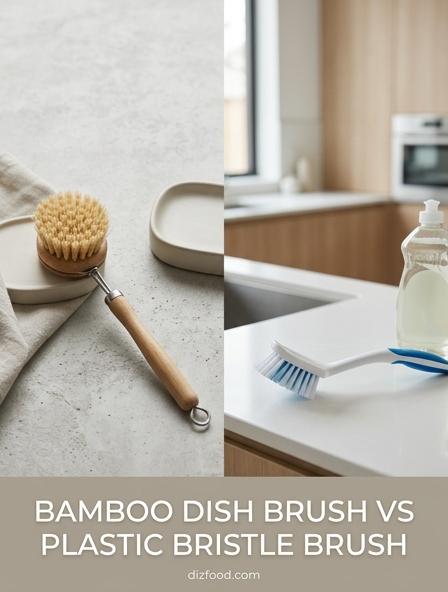
Bamboo vs Plastic Dish Brushes Comparison
When selecting a primary tool for dishwashing, the choice often falls between the traditional plastic bristle brush and the increasingly popular bamboo alternative. Plastic brushes are typically manufactured from petroleum-based materials, including polypropylene handles and nylon bristles. They are mass-produced, making them widely available in almost every grocery store. In contrast, bamboo dish brushes utilize a fast-growing, renewable grass for the handle and often feature natural plant fibers like sisal or union fiber for the bristles. This fundamental difference in raw materials sets the stage for how these tools perform and interact with the environment.
| Feature | Bamboo Dish Brush | Plastic Dish Brush |
|---|---|---|
| Handle Material | Solid Bamboo (Renewable) | Polypropylene (Petroleum) |
| Bristle Type | Sisal, Palmyra, or Union Fiber | Nylon or Polyester |
| Heat Resistance | High (Won't melt) | Low (Can deform in hot pans) |
| Biodegradability | Fully Compostable (usually) | Non-biodegradable |
The ergonomic feel also differs significantly. Bamboo handles provide a sturdy, organic grip that many users find more comfortable for long cleaning sessions. Plastic handles are often lighter and may include rubberized grips, but they lack the structural rigidity of solid wood. While plastic brushes are often molded into a single piece, many bamboo brushes feature replaceable heads, allowing the user to keep the handle and only swap out the worn bristles, which reduces overall waste in the kitchen.
Environmental Impact of Kitchen Scrubbing Tools
The environmental footprint of a kitchen brush begins long before it reaches the sink. Plastic brushes are products of the oil industry, requiring significant energy to extract, refine, and chemically process petroleum into durable polymers. The manufacturing process releases volatile organic compounds and greenhouse gases, contributing to a larger carbon footprint. Furthermore, because plastic is intended to be permanent, these tools persist in the environment for centuries after their utility has ended, often ending up in landfills or oceans where they break down into smaller pieces but never truly disappear.
Bamboo brushes present a starkly different ecological narrative. As one of the fastest-growing plants on Earth, bamboo can be harvested without killing the plant, as it regrows from its own root system. This makes it a highly renewable resource that sequesters carbon dioxide during its growth phase. When paired with natural fibers like sisal (from the agave plant), the entire tool becomes a carbon-neutral or even carbon-negative product. Key environmental benefits include:
- Reduction in fossil fuel dependency for household goods.
- Lower energy consumption during the manufacturing and assembly phase.
- Prevention of long-term landfill accumulation due to natural decomposition.
- Minimized chemical leaching into water systems during use and disposal.
By opting for bamboo, consumers support an industry focused on regenerative agriculture rather than extractive manufacturing. This shift is essential for reducing the cumulative impact of "disposable" household items that are traditionally discarded every few months.
Durability and Lifespan of Natural Bristles
There is a common misconception that natural materials are less durable than their synthetic counterparts. However, in the context of dishwashing, natural fibers like sisal and union fiber (a blend of palmyra and coco fiber) offer remarkable resilience. These plant-based bristles are naturally stiff and retain their shape well, even when exposed to boiling water or heavy pressure. Unlike nylon bristles, which tend to "splay" or flatten out after a few weeks of vigorous scrubbing, natural fibers maintain their structural integrity for a longer period, providing consistent abrasive power.
The longevity of a bamboo brush handle is also noteworthy. When treated with basic care, a solid bamboo handle can last for years. The primary factor affecting the lifespan of a natural brush is moisture management. Because bamboo is a porous material, it can be susceptible to cracking or mold if left submerged in water for extended periods. To maximize the lifespan of these tools, users should follow these maintenance steps:
- Rinse the bristles thoroughly after every use to remove food particles.
- Shake out excess water to prevent moisture from sitting in the wood grain.
- Store the brush with the bristles facing down or hanging to allow air circulation.
- Periodically rub the handle with a food-safe oil (like linseed or mineral oil) to maintain its water resistance.
In contrast, plastic brushes require no maintenance but degrade through mechanical wear. Once the nylon bristles are deformed, the entire tool usually becomes ineffective and is discarded, whereas the modular design of many bamboo brushes allows for the simple replacement of the head.
Plastic Microplastics vs Biodegradable Bamboo
One of the most insidious issues with plastic kitchen tools is the shedding of microplastics. Every time a plastic brush is used to scrub a textured pan or a sharp blade, tiny fragments of nylon or polyester are abraded from the bristles. These microscopic plastic particles are washed down the drain, where they bypass most municipal filtration systems due to their size. Once they enter the water cycle, they accumulate in aquatic ecosystems, where they are ingested by fish and other wildlife, eventually entering the human food chain.
Natural bamboo brushes eliminate this specific pollution concern. When natural fibers like agave or coconut husk wear down, the particles shed are simply organic matter. These biodegradable fibers break down naturally in the water system or in a composting environment without leaving behind toxic residues or permanent synthetic fragments. This distinction is critical for households aiming for a "Zero Waste" or "Low Impact" lifestyle.
The contrast in decomposition timelines is staggering. A plastic brush head might take 400 to 500 years to break into smaller fragments, never fully returning to the earth. A bamboo handle and sisal bristles, however, can be composted in a backyard bin or industrial facility, returning nutrients to the soil within a matter of months. This cycle of "earth to earth" ensures that the cleaning process does not contribute to the global plastic crisis that currently sees millions of tons of waste entering our oceans annually.
Scrubbing Performance on Tough Cookware
Performance is the ultimate test for any kitchen tool, and natural fibers often outperform synthetics when dealing with stubborn, burnt-on food. Most bamboo brushes utilize union fibers or stiff sisal, which possess a natural grit that nylon simply cannot replicate. These plant fibers are tough enough to scrub cast iron skillets and stainless steel pots without the need for harsh chemical cleaners. Because the fibers are naturally stiff, they provide better leverage when removing carbonized bits from the bottom of a Dutch oven.
Plastic bristles, while versatile, have a lower melting point. If used on a pan that hasn't completely cooled, nylon bristles can melt or warp, ruining the brush and potentially leaving plastic residue on the cookware. Bamboo brushes are heat-resistant and can be used in boiling water without any loss of function. This makes them ideal for deglazing pans or cleaning hot surfaces. However, it is important to match the bristle type to the surface:
- Soft Sisal: Best for glassware, ceramics, and lightly soiled plates.
- Stiff Union Fiber: Ideal for heavy-duty scrubbing, root vegetables, and cast iron.
- Tampico: Excellent for holding liquids and soaps while providing medium abrasion.
One advantage plastic brushes hold is their ability to be extremely soft, which some prefer for delicate non-stick coatings. However, many modern eco-friendly brushes now offer soft-bristle variants made from recycled materials or softer plant fibers to bridge this gap, ensuring that even the most sensitive surfaces can be cleaned safely without scratching.
Bacterial Resistance and Hygiene Differences
Hygiene is a primary concern in the kitchen, and both materials have different profiles regarding bacterial growth. Plastic is non-porous, which theoretically makes it harder for bacteria to penetrate the surface of the handle. However, the density of nylon bristles can create a "trap" for food particles and moisture at the base of the brush, leading to odors and bacterial colonies if not sanitized regularly. Plastic brushes are often dishwasher safe, allowing for high-heat sterilization, which is a significant convenience for many users.
Bamboo is naturally antimicrobial to a degree, containing a bio-agent called "bamboo kun" that helps the plant resist pests and fungi in the wild. When converted into a kitchen tool, this property helps the handle resist rot, provided it is allowed to dry. The main hygiene challenge for bamboo is its porosity; if the wood remains damp, it can develop mold or mildew. However, because natural bristles are often more spaced out and breathable than synthetic clusters, they tend to air-dry faster when stored upright. To maintain hygiene in a bamboo brush, users can:
- Dip the bristles in a vinegar and water solution once a week to disinfect.
- Avoid leaving the wooden handle sitting in a puddle of water on the counter.
- Use a brush with a replaceable head to ensure the scrubbing surface is fresh.
Ultimately, the hygiene of either brush depends on user behavior. A plastic brush that is never cleaned in the dishwasher will eventually become just as unsanitary as a neglected bamboo brush. Proper drying is the most effective way to prevent microbial growth on either material.
The Cost of Sustainable Kitchen Cleaning
When analyzing the cost of kitchen brushes, it is important to look beyond the initial shelf price. Plastic brushes are undeniably cheaper at the point of purchase, often costing between $1 and $5. They are treated as disposable commodities. However, because they are usually made as a single unit, once the bristles fail, the entire tool must be replaced. Over the course of a year, a household might go through four or five plastic brushes, leading to a recurring cost and a steady stream of waste.
Bamboo brushes typically have a higher upfront cost, often ranging from $8 to $15. However, many designs feature a permanent bamboo handle with a detachable head. Replacement heads are usually sold in packs and are significantly cheaper than buying a whole new brush. This "razor and blade" model makes bamboo brushes more economical over a long-term horizon. Consider the following cost breakdown over two years:
| Item | Initial Cost | Maintenance/Replacements | 2-Year Total |
|---|---|---|---|
| Plastic Brush | $3.00 | 8 replacements ($24.00) | $27.00 |
| Bamboo (Modular) | $12.00 | 4 heads ($10.00) | $22.00 |
Beyond the direct financial cost, there is the "environmental cost" to consider. Consumers are increasingly willing to pay a small premium for products that do not contribute to plastic pollution. When the durability and the ability to replace only the worn components are factored in, the bamboo brush often emerges as the more financially and ethically sound investment for the modern home.
Aesthetics and Design in Modern Kitchens
In recent years, the kitchen has shifted from a purely functional workspace to a design-focused center of the home. The visual appeal of cleaning tools has become a factor in consumer choice. Plastic brushes are frequently manufactured in bright, neon colors or clinical whites and grays. While functional, they can clash with modern kitchen aesthetics, particularly those featuring natural stone countertops, wooden cabinetry, or minimalist "Scandi" decor. They are often items people prefer to hide under the sink.
Bamboo dish brushes, conversely, are often designed with aesthetics in mind. The natural wood grain and neutral tones of the plant fibers complement a wide range of interior styles. Their organic look allows them to be displayed openly on the counter or in a ceramic dish, contributing to a warm, "farmhouse" or "modern eco" vibe. This shift in design philosophy suggests that cleaning tools don't have to be eyesores. Design features often found in bamboo brushes include:
- Smooth, ergonomically carved handles that fit the palm.
- Integrated loops or strings for hanging on hooks.
- Sleek, circular heads that provide a symmetrical appearance.
- Completely plastic-free packaging, often using recycled cardboard.
The choice of a bamboo brush often reflects a broader lifestyle commitment to intentionality. It is a small change that signals a preference for natural textures over synthetic ones, turning a mundane chore into a more tactile and visually pleasing experience. For many, the aesthetic upgrade is just as important as the environmental benefits.
Proper Disposal and Composting Best Practices
The "end-of-life" phase is where the difference between bamboo and plastic is most significant. A plastic brush is destined for the landfill. Even if a plastic brush is marked with a recycling symbol, the combination of nylon bristles fused into a plastic head makes it virtually impossible for standard recycling facilities to process. Consequently, these tools contribute to the global waste crisis, where they will remain intact for hundreds of years, eventually breaking down into microplastics but never decomposing.
Disposing of a bamboo brush requires a bit more effort but is far more rewarding for the eco-conscious consumer. Because the materials are organic, they can be returned to the earth. However, users must ensure they follow proper disposal steps to ensure the materials break down efficiently. Best practices for composting a bamboo brush include:
- Remove Metal Parts: Some bamboo brushes use a small metal wire to hold the bristles in place. Use pliers to remove this before composting.
- Break it Down: If possible, snap the bamboo handle into smaller pieces to increase the surface area for microbes to work on.
- Bristle Check: Ensure the bristles are truly natural (sisal/tampico) and not a "vegan" nylon blend. If they are natural, they can go straight into the compost bin.
- Compost Bin: Place the wooden and fiber parts in a backyard compost pile or a municipal green waste bin.
By following these steps, the brush is diverted from the waste stream and transformed into nutrient-rich soil. This closed-loop system is the hallmark of sustainable consumption, ensuring that the products we use to clean our homes do not end up polluting the planet for future generations.
Choosing the Best Eco Friendly Dish Brush
Making the switch to an eco-friendly dish brush is a simple yet impactful way to reduce household plastic. When shopping for a bamboo brush, it is important to look for specific quality indicators to ensure you are getting a truly sustainable product. Not all "wooden" brushes are created equal; some may use unsustainable wood sources or hidden plastic components. To choose the best option for your kitchen, consider the following criteria:
- FSC Certification: Look for the Forest Stewardship Council logo to ensure the bamboo was harvested responsibly.
- Replaceable Heads: Choose a model where the head can be detached, as this drastically reduces waste over time.
- Bristle Material: Verify that the bristles are made from 100% plant fibers like sisal, union fiber, or palmyra. Avoid "plastic-natural blends" which cannot be composted.
- Finish: Opt for brushes with a raw or wax-coated finish rather than a heavy plastic lacquer, which can interfere with composting.
Beyond the technical specs, consider your specific cleaning needs. A long-handled brush is excellent for reaching the bottom of deep pots and bottles, while a round "pot scrubber" style provides better leverage for heavy-duty tasks. Many sustainable brands now offer "starter kits" that include a variety of heads for different purposes. By making an informed choice, you not only get a superior cleaning tool but also join a global movement toward a more circular economy. The transition from plastic to bamboo is a small step in the kitchen that leads to a significant reduction in your personal plastic footprint over time.


Comments