
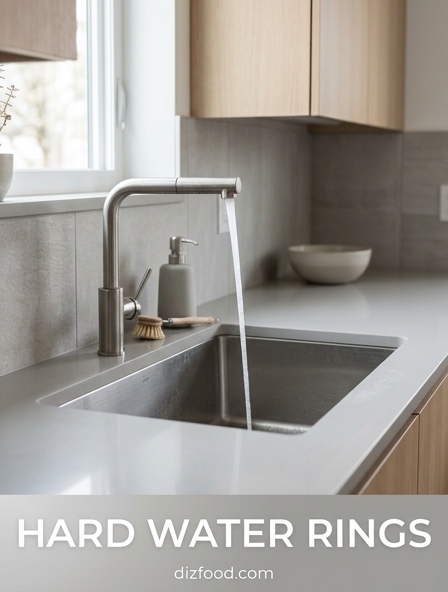
Understanding Hard Water Buildup
Hard water buildup is a pervasive issue in many kitchens, resulting from high concentrations of dissolved minerals, primarily calcium and magnesium. When water evaporates from surfaces like sinks, faucets, and countertops, these minerals stay behind, gradually forming a hard, white, or yellowish crust known as limescale or calcium carbonate. This process is accelerated in areas where hot water is frequently used, as heat promotes the precipitation of these minerals out of the water solution.
Beyond being an aesthetic nuisance, hard water deposits can lead to functional problems. Over time, the accumulation can restrict water flow in pipes, cause valves to stick, and reduce the efficiency of heating elements in various kitchen appliances. Identifying the type of buildup is essential for selecting the correct removal method. Standard indicators include:
- Chalky white rings around the base of the kitchen faucet.
- Stiff, crusty textures on the aerator or pull-down sprayer.
- Rough, sandpaper-like patches on stainless steel or granite surfaces.
- A persistent "fog" on glassware that does not disappear after hand washing.
Natural Acid Solutions for Limescale
Nature provides some of the most effective tools for dissolving alkaline mineral deposits. Because limescale is chemically basic, acidic substances like white vinegar and lemon juice work to neutralize and break down the calcium bonds. Citric acid, found in citrus fruits or sold in powdered form, is particularly potent for heavy accumulation without the pungent odor of vinegar. These natural acids are food-safe, making them ideal for surfaces that come into direct contact with ingredients.
When using these solutions, the duration of contact is often more important than the concentration. For vertical surfaces, soaking a cloth in the acidic solution and wrapping it around the affected area ensures the liquid stays in contact with the minerals long enough to dissolve them. The following table compares common natural acids used in the kitchen:
| Acid Type | Main Ingredient | Best For |
|---|---|---|
| White Vinegar | Acetic Acid | Sinks and Countertops |
| Lemon Juice | Citric Acid | Chrome Faucets and Shine |
| Citric Powder | Concentrated Citric | Appliance Descaling |
Deep Cleaning Faucets and Fixtures
Faucets are the most visible victims of hard water, often sporting unsightly white rings at the base and crusty buildup on the spout. To restore these fixtures, a targeted approach is necessary to reach internal components like the aerator, which can become clogged and cause uneven water pressure. Deep cleaning requires patience, as the minerals must be softened before they can be wiped away safely without scratching the finish.
To effectively deep clean your kitchen fixtures, follow this structured process to ensure all mineral traces are eliminated:
- Unscrew the faucet aerator and soak it in a small bowl of warm vinegar for thirty minutes.
- Saturate a microfiber cloth with lemon juice or vinegar and wrap it tightly around the faucet body.
- Secure the cloth with a rubber band to ensure maximum contact with the metal.
- Leave the wrap in place for at least one hour, or overnight for severe cases.
- Remove the cloth and use a soft-bristled toothbrush to gently scrub away the loosened minerals.
- Rinse thoroughly with fresh water and dry with a clean towel to prevent new spots.
Descaling Coffee Makers and Kettles
Kitchen appliances that heat water are particularly susceptible to internal mineral buildup. As water boils or simmers, calcium deposits adhere to heating elements and internal tubing, which can lead to longer brewing times, noisy operation, and even mechanical failure. Regular descaling ensures that your coffee tastes fresh and your kettle operates at peak efficiency, preventing the bitter aftertaste often associated with mineral-heavy water lines.
The descaling process should be performed every one to three months depending on the local water hardness. Follow these steps to maintain your appliances:
- Fill the reservoir with a mixture of equal parts water and white vinegar, or a citric acid solution.
- Run a full brew or boil cycle without any coffee grounds or tea leaves.
- Turn off the appliance halfway through the cycle to let the solution sit in the internal lines for twenty minutes.
- Finish the cycle and discard the solution.
- Run two to three additional cycles with plain, cold water to flush out any remaining acid or loosened scale.
Removing Mineral Stains from Sinks
Sinks are the focal point of kitchen hard water issues, frequently developing dull patches and rings around the drain. On stainless steel, these deposits appear as cloudy streaks that ruin the metallic luster, while on porcelain or composite sinks, they can turn brown or orange if there is iron present in the water. Cleaning these surfaces requires a balance between chemical dissolution and gentle mechanical action to avoid damaging the sink's finish.
To tackle these stains effectively, consider the following methods tailored for different sink materials:
- Stainless Steel: Apply a paste of baking soda and vinegar to the rings. Scrub in the direction of the metal grain to lift the mineral film.
- Porcelain: Use a spray of lemon juice and let it sit for ten minutes before rinsing to brighten the surface.
- Composite/Granite: Use a pH-neutral descaler specifically designed for stone to avoid etching the surface.
- Drain Areas: Use a small brush dipped in vinegar to reach the crevices where the sink meets the drain flange.
Revitalizing Cloudy Glassware and Dishes
Hard water is the primary culprit behind "cloudy" glassware, which often looks dirty even after a full dishwasher cycle. This milkiness is caused by mineral salts that precipitate onto the glass during the drying phase. While it may look like the glass is permanently etched, it is often just a layer of scale that can be stripped away to reveal the clear surface beneath. Distinguishing between etching (permanent scratches) and hard water (removable film) is the first step in restoration.
To bring the clarity back to your glasses and ceramic plates, try these restorative techniques:
- Soak the affected items in a sink filled with warm water and two cups of white vinegar for fifteen minutes.
- Add a tablespoon of citric acid powder to your dishwasher's detergent cup for a "stripping" cycle.
- Use a soft sponge to wipe away the loosened film after the soak; avoid abrasive pads that can cause scratches.
- Dry glassware immediately with a lint-free cloth to prevent new mineral spots from forming as water evaporates.
Heavy Duty Commercial Descaling Agents
When natural solutions like vinegar or lemon juice prove insufficient for thick, "petrified" limescale, commercial descaling agents offer a more aggressive chemical approach. These products typically contain stronger acids, such as phosphoric, sulfamic, or lactic acid, designed to dissolve stubborn mineral bonds quickly. While highly effective, these chemicals require careful handling and strict adherence to safety protocols to prevent damage to kitchen surfaces or personal injury.
Before applying a heavy-duty cleaner, always check the compatibility with your fixture's material, as some acids can strip the finish off oil-rubbed bronze or matte black faucets. Below is a guide to common active ingredients found in commercial descalers:
| Chemical | Potency | Recommended Use |
|---|---|---|
| Phosphoric Acid | High | External hardware and heavy crust |
| Lactic Acid | Medium | Dishwashers and coffee machines | High | Industrial-grade buildup and boilers |
Restoring Clogged Dishwasher Spray Arms
The efficiency of a dishwasher is heavily dependent on the free flow of water through the tiny nozzles on the spray arms. Hard water minerals can settle inside these nozzles, partially or completely blocking the flow, which results in poorly cleaned dishes. Because these components are often hidden under racks, the buildup can go unnoticed until the machine's performance significantly degrades. Manually cleaning these arms is a critical maintenance task for hard water households.
Follow these steps to restore the water pressure in your dishwasher:
- Remove the lower and upper spray arms according to the manufacturer's instructions.
- Inspect the nozzles for visible white crust or debris.
- Use a toothpick or a small needle to gently poke through each hole and break up mineral deposits.
- Rinse the spray arms under a faucet, shaking them to clear any loose particles from the interior.
- Submerge the entire arm in a vinegar bath if the interior buildup is severe.
- Reinstall the arms and run an empty cycle with a dishwasher descaling tablet to clear the remaining lines.
Safe Scrubbing Techniques for Surfaces
Removing hard water rings often requires a physical element to fully dislodge the minerals. However, using the wrong abrasive can permanently damage kitchen surfaces, leaving behind unsightly scratches that harbor bacteria and trap even more minerals in the future. The goal is to use the "least aggressive" method that still achieves the desired result, starting with soft materials and only increasing abrasiveness if the minerals remain bonded.
To protect your kitchen investments, adhere to these safe scrubbing guidelines:
- Plastic Mesh Scrubber: Excellent for non-stick surfaces and delicate porcelain.
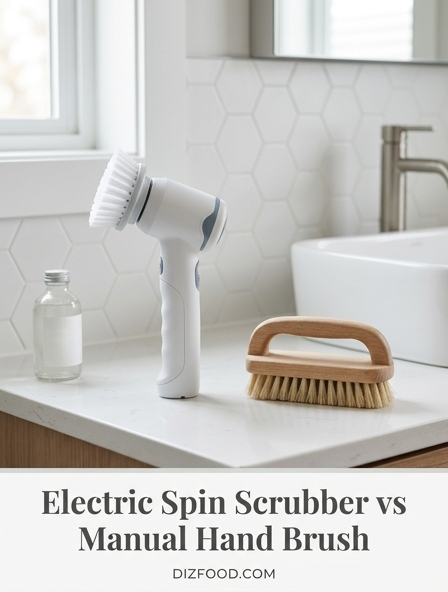
- Old Toothbrush: The perfect tool for reaching into the tight corners of faucet bases and drain rims.
- Non-Abrasive Sponges: Use the "blue" scrub side rather than the "green" side, which is often too harsh for polished metal.
- Microfiber Cloths: Ideal for the final polishing stage to remove residual film and moisture.
- Avoid Steel Wool: Never use steel wool on stainless steel or plated fixtures, as it can cause rust and deep scratches.
Preventative Maintenance for Hard Water
The most effective way to manage hard water rings in the kitchen is to prevent them from forming in the first place. Consistency is key; by implementing a few daily habits, you can significantly reduce the frequency of deep cleaning sessions and extend the life of your appliances. Prevention focuses on two main strategies: removing the water before it evaporates and treating the water at the source to reduce its mineral load.
Consider integrating the following preventative measures into your kitchen routine:
- Wipe Down Surfaces: Keep a dry microfiber cloth near the sink to wipe away splashes on the faucet and countertops immediately after use.
- Use a Rinse Aid: Always fill the rinse aid dispenser in your dishwasher to help water sheet off dishes rather than bead and dry.
- Magnetic Water Conditioners: Though less effective than softeners, these can help prevent minerals from sticking to pipe walls.
- Whole-House Softener: For severe hard water, installing an ion-exchange softener is the ultimate solution to eliminate scale entirely.
- Regular Spritzing: Spray your sink with a diluted vinegar solution once a week to dissolve micro-layers of buildup.



Comments