
Essential Kitchen Woodwork Protection Basics
Maintaining wooden kitchen implements requires an understanding of the organic nature of timber. Wood is a porous material that naturally breathes, absorbing and releasing moisture based on the surrounding environment. In a kitchen, where humidity fluctuates and contact with liquids is constant, unprotected wood is susceptible to warping, cracking, and the harboring of bacteria. Establishing a baseline of protection involves sealing these pores to prevent the infiltration of food particles and water.
- Hydration: Keeping wood fibers supple to prevent brittle fractures.
- Sanitation: Closing off pores where pathogens can multiply.
- Structural Integrity: Reducing the expansion and contraction caused by moisture.
- Aesthetic Preservation: Maintaining the rich color and grain of the wood.
Standard kitchen woodwork, ranging from cutting boards to rolling pins, lacks a permanent factory seal. Therefore, the responsibility of creating a food-safe barrier falls on the user. Using the correct materials ensures that the wood remains a functional and safe tool for food preparation over many years of heavy daily use.
Benefits of Food Grade Mineral Oil for Surfaces
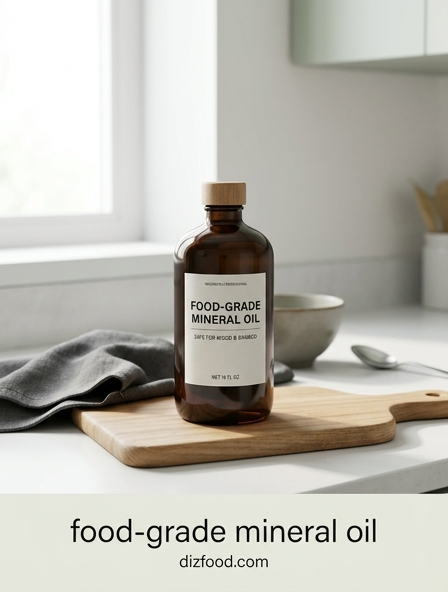
Food-grade mineral oil, often labeled as liquid paraffin or butcher block oil, is the gold standard for wooden kitchenware because it is inert, tasteless, and odorless. Unlike organic oils such as olive or vegetable oil, mineral oil is highly refined and will not oxidize or go rancid over time. This stability is crucial for items that come into direct contact with food, as rancid oils can impart foul flavors and harbor unhealthy compounds. Its low viscosity allows it to penetrate deep into the grain, saturating the fibers completely.
The primary function of this oil is to displace air and moisture within the wood's cellular structure. By saturating the wood, the oil prevents the absorption of other liquids, such as juices from raw meat or moisture from washed vegetables. This deep-level hydration keeps the wood flexible, significantly reducing the likelihood of splitting or splintering. Furthermore, because it is a non-drying oil, it remains "active" within the wood, providing a consistent level of protection that can be easily topped up whenever the surface begins to feel dry or looks parched.
Creating a Hydrophobic Barrier with Beeswax
While mineral oil provides deep internal protection, beeswax offers a robust surface-level defense. Beeswax is naturally hydrophobic, meaning it actively repels water. When applied to wooden kitchen surfaces, it creates a physical film that prevents liquids from making immediate contact with the wood fibers. This is particularly beneficial for high-traffic items like butcher blocks that are frequently wiped down with damp cloths. The wax fills in the microscopic gaps on the surface, creating a smoother finish that is less hospitable to liquid pooling.
- Water Repellency: Liquids bead up on the surface rather than soaking in.
- Knife Mark Healing: The soft wax can migrate slightly to fill shallow scratches.
- Enhanced Grip: Provides a subtle tackiness that keeps boards stable.
- Luster: Adds a satin-like sheen that enhances the wood's natural beauty.
Integrating beeswax into a maintenance routine creates a multi-layered defense system. While the oil works from the inside out, the wax works from the outside in, ensuring that the wood is protected against both deep saturation and surface-level moisture damage.
Step by Step Application for Wood Conditioning
To achieve the best results when conditioning kitchen wood, one must follow a methodical process that ensures maximum absorption and a smooth finish. Proper application begins with a clean, bone-dry surface, as any residual moisture trapped inside the wood can lead to rot once sealed.
- Thoroughly clean the wood with a mild soap and allow it to air dry for at least 24 hours.
- Apply a generous amount of food-grade mineral oil using a lint-free cloth or paper towel.
- Spread the oil evenly, ensuring the wood is "wet" with oil, and let it sit for several hours.
- Wipe away any excess oil that has not been absorbed by the grain.
- Apply a wax-based conditioner or "board butter" to the surface in a circular motion.
- Buff the surface with a clean cloth to remove tackiness and achieve a soft glow.
Following these steps ensures that the oil reaches the core of the timber while the wax provides a durable external shield. Repeating this process monthly, or whenever the wood appears dull, will significantly extend the lifespan of your kitchen tools.
Why Your Cutting Boards Need a Wax Seal
Cutting boards are the workhorses of the kitchen, subjected to constant mechanical stress from sharp knives and chemical stress from acidic foods. Every time a knife strikes the wood, it creates a microscopic fissure. Without a proper wax seal, these fissures become entry points for moisture and bacteria. A wax finish acts as a sacrificial layer; the knife blade cuts into the wax rather than deep into the wood fibers, which helps preserve the structural integrity of the board over time.
Beyond protection, a wax seal makes the cleaning process far more efficient. Because the wax prevents liquids from soaking into the wood, food residues remain on the surface where they can be easily wiped away. This prevents the "staining" effect often seen with berries or beets. A well-waxed board also resists the absorption of strong odors from onions and garlic. By maintaining a consistent wax barrier, you create a more hygienic environment for food preparation, ensuring that your cutting board remains as safe as it is aesthetically pleasing.
Natural Sealing Methods for Butcher Block Counters
Butcher block countertops represent a significant investment and require a more robust sealing approach than smaller hand-held tools. Because these surfaces are fixed, they are often exposed to spills and standing water near sinks. Utilizing a blend of mineral oil and beeswax is the most effective natural method for large-scale sealing. This combination, often referred to as "board butter," provides a thicker consistency that stays in place on vertical edges and corners better than liquid oil alone.
| Method | Longevity | Primary Benefit |
|---|---|---|
| Pure Mineral Oil | Short-term | Deep fiber hydration |
| Beeswax Paste | Medium-term | Surface water resistance |
| Oil & Wax Blend | Long-term | Comprehensive protection |
When sealing large counters, it is vital to treat the underside and edges as well as the top. This prevents uneven moisture absorption, which is the leading cause of counter warping and cracking near joints. Natural seals are preferred over polyurethanes in the kitchen because they are easily repairable; if a section becomes worn, you can simply re-apply the oil and wax without sanding the entire surface.
Restoring Luster to Wooden Kitchen Utensils
Wooden spoons, spatulas, and salad bowls often become "fuzzy" or gray after repeated cycles through the wash. This occurs when the water raises the wood grain and strips away the natural oils. Restoring these items is a simple task that breathes new life into tired tools. The process involves lightly smoothing the raised grain and then reintroducing the lost lipids to the wood cells.
- Light Sanding: Use high-grit sandpaper to smooth out fuzzy textures.
- Oil Immersion: Let spoons soak in a shallow tray of mineral oil overnight.
- Wax Buffing: Apply a thin layer of beeswax to handles for a comfortable grip.
- Heat Treatment: Occasionally warming the oil helps it penetrate older, drier wood.
By periodically treating your utensils, you prevent them from becoming brittle and snapping during use. A well-oiled spoon feels better in the hand, resists staining from sauces, and provides a much more pleasant sensory experience during cooking. Regular maintenance ensures that these heirloom-quality tools can be passed down through generations.
The Science of Beeswax and Mineral Oil Blends
The combination of beeswax and mineral oil is more than just a traditional remedy; it is a synergistic blend backed by material science. Mineral oil is composed of long-chain alkanes that do not dry or polymerize, meaning they stay liquid and mobile within the wood. Beeswax, on the other hand, consists of various fatty acid esters and long-chain alcohols that are solid at room temperature. When these two are melted together, the oil acts as a carrier for the wax, allowing the wax to penetrate deeper into the wood than it could on its own.
As the mixture cools within the wood pores, the wax hardens, essentially "locking" the oil inside. This prevents the oil from leaching out too quickly during washing. This blend creates a semi-solid matrix that provides both the internal suppleness of an oil-treated wood and the external durability of a waxed surface. The ratio of the blend can be adjusted for different needs-a higher oil content for deep restoration and a higher wax content for creating a heavy-duty moisture barrier on high-use surfaces like butcher blocks.
Long Term Maintenance for Durable Wood Finishes
Long-term maintenance of kitchen wood is not about a one-time application but rather a consistent rhythm of care. The frequency of maintenance depends on usage and the local climate. In dry winter months, wood may require more frequent oiling as the ambient humidity drops. Conversely, in humid summers, the wood may hold its finish longer. Knowing when to re-treat your wood is a skill developed through observation.
- The Water Test: Drop a teaspoon of water on the board; if it soaks in, it needs oil.
- Visual Cues: Re-treat if the wood looks "blonde" or ashy in color.
- Tactile Cues: If the surface feels rough or "grabby" rather than smooth.
- Scent Check: If the board begins to hold onto food odors.
A proactive approach is always better than a reactive one. Waiting until a crack appears often means it is too late for simple oiling. By establishing a monthly "board day" to inspect and condition all wooden kitchen items, you ensure they remain in peak condition, providing a safe and beautiful foundation for your culinary endeavors.
Preventing Water Damage with a Protective Wax Layer
Water is the primary enemy of wooden kitchenware. When water enters wood fibers, it causes them to swell. As the wood dries, it shrinks. This constant cycle of expansion and contraction eventually leads to "checking" or small cracks that can grow into large splits. A protective wax layer acts as a sealant that interrupts this cycle. By creating a high-tension surface where water cannot easily penetrate, the wax keeps the moisture content of the wood stable regardless of the external environment.
This protection is especially critical for end-grain cutting boards, where the wood fibers are oriented vertically like a bundle of straws. These fibers are designed by nature to transport water, making them highly absorbent. Without a thick wax seal, an end-grain board can act like a sponge, drawing in moisture and bacteria deep into its core. Applying a mineral oil and beeswax finish ensures that these "straws" are plugged at the ends. This not only prevents warping but also stops the internal rot that can occur when moisture is trapped deep inside the timber for extended periods.


Comments