
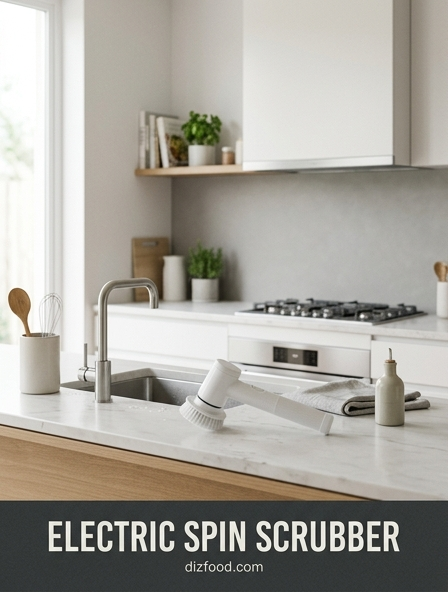
The Evolution of Kitchen Cleaning Technology
The journey of kitchen maintenance has transitioned from primitive abrasive stones to sophisticated automated devices. Historically, homeowners relied on significant manual labor, using rags, sponges, and steel wool to combat the inevitable accumulation of food residue and grease. This traditional approach was not only time-consuming but also physically demanding, often requiring hours of intense scrubbing to maintain basic sanitary standards. As technology advanced, chemical cleaners provided some relief, yet the mechanical aspect of cleaning remained rooted in human effort.
The introduction of the electric spin scrubber represents a pivotal shift in this evolution. By integrating high-torque motors with interchangeable brush heads, these devices have effectively externalized the physical exertion required for deep cleaning. This leap in technology mirrors the transition from hand-washing dishes to using a dishwasher. Modern kitchen scrubbers utilize rechargeable lithium-ion batteries and waterproof casings, allowing them to operate safely near sinks and stovetops. This progression highlights a broader trend in home management: the prioritization of efficiency and the reduction of repetitive manual tasks through purposeful engineering.
Effortless Grease Removal on Stovetops
Stovetops are notorious for harboring baked-on grease and carbonized food particles that defy standard wiping. When oils are heated and cooled repeatedly, they form a polymer-like bond with the surface, creating a stubborn film that usually requires harsh chemicals and vigorous scraping. An electric spin scrubber bypasses this difficulty by using rapid rotational force to break these molecular bonds. The mechanical action of the spinning bristles, often exceeding 300 RPM, agitates the grease more effectively than any human hand could achieve.
Using a spin scrubber on a glass or ceramic cooktop ensures an even application of pressure, which minimizes the risk of localized scratches often caused by uneven manual scrubbing. To optimize the cleaning process, users often target specific zones:
- Burner rings where boiled-over liquids crystallize.
- Control knobs that accumulate sticky residue from frequent handling.
- The backsplash area where aerosolized grease settles during frying.
- The textured edges of the stovetop frame where crumbs get trapped.
By combining a mild degreaser with the consistent torque of a spin scrubber, the stovetop can be restored to its original luster without the need for abrasive scouring pads that might damage the finish.
Saving Your Back with Ergonomic Design
One of the most significant advantages of modern electric spin scrubbers is their focus on ergonomic health. Traditional kitchen cleaning often requires awkward posturing, such as leaning deep over counters or kneeling on hard floors to reach baseboards and under-cabinet kicks. These positions place undue stress on the lumbar spine and neck, leading to fatigue or chronic pain over time. Electric scrubbers address this issue through adjustable extension rods and pivoting heads that allow the user to maintain an upright, neutral posture.
The ergonomic design ensures that the tool does the work while the user simply guides it. Telescoping handles can reach the high corners of a tiled wall or the very back of a deep corner cabinet without the need for a step stool or excessive stretching. Furthermore, the lightweight construction of these devices prevents wrist strain. By reducing the need for forceful downward pressure, the spin scrubber protects the joints of the hand and arm, making it an essential tool for individuals with mobility issues or those who simply wish to avoid the physical toll of a "deep clean" day.
Tackling Stubborn Tile Grout with Ease
Kitchen tile grout is a porous material that acts as a magnet for spilled liquids, dropped food, and general kitchen soot. Once stains penetrate the grout lines, they become nearly impossible to remove with a standard mop or cloth. The electric spin scrubber is uniquely suited for this task because of its specialized pointed or "cone" brush attachments. These heads are designed to fit perfectly within the recessed channels of grout lines, focusing the motor's power directly into the crevices where dirt resides.
The high-speed rotation lifts debris out of the pores of the grout, neutralizing discoloration without the need for bleach-heavy solutions. This method is far more efficient than using a manual grout brush, which requires repetitive, high-pressure strokes that can eventually erode the grout itself. With a spin scrubber, the bristles vibrate and rotate to shake loose the embedded particles, allowing them to be easily wiped away. This targeted approach ensures that the kitchen floor and backsplash look professionally cleaned, maintaining the structural integrity and aesthetic of the tiling for years to come.
The Speed Advantage Over Manual Scrubbing
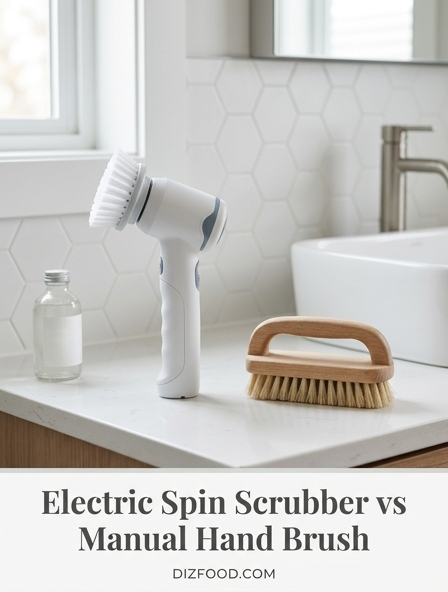
Time is the most valuable resource in any household, and the electric spin scrubber is designed specifically to reclaim it. When comparing the frequency of strokes, a human hand can provide approximately 30 to 60 scrubbing motions per minute, depending on the intensity. In contrast, an electric scrubber maintains a consistent rate of several hundred rotations per minute. This discrepancy results in a massive reduction in the time required to clean a single surface.
| Feature | Manual Scrubbing | Electric Spin Scrubber |
|---|---|---|
| Speed (RPM) | ~40 RPM | 300 - 450 RPM |
| Effort Level | High Physical Strain | Minimal / Guiding Only |
| Consistency | Decreases as user tires | Constant until finished |
| Coverage | Limited by reach | Extended via attachments |
This speed advantage is particularly noticeable during seasonal cleaning. A task that once took an entire afternoon, such as cleaning the interior of a pantry or all the cabinet faces, can be completed in under an hour. The efficiency allows for more frequent "touch-up" cleans, preventing the build-up of grime and ensuring the kitchen remains in a constant state of readiness.
Versatile Attachments for Every Kitchen Surface
A primary reason for the electric spin scrubber's success in the kitchen is its modularity. Unlike a sponge, which is a one-size-fits-all solution, scrubbers come with various heads tailored to specific textures and shapes. This versatility prevents cross-contamination and ensures that the right level of abrasiveness is used on different materials. For instance, a soft sponge head is ideal for polishing delicate glassware or stainless steel, while a stiff nylon brush is better suited for cast iron or floor tiles.
Common attachments found in a kitchen cleaning kit include:
- Large Flat Brush: Perfect for expansive surfaces like countertops and island tops.
- Small Flat Brush: Ideal for precision work around stove burners or small appliances.
- Dome Brush: Contoured for cleaning the curved interiors of sinks and large pots.
- Microfiber Pad: Best for buffing out streaks on granite or marble finishes.
This adaptability makes the tool a comprehensive solution. Instead of owning a dozen different brushes and pads, a single motorized handle with a set of attachments can manage every cleaning requirement from the floor to the ceiling vents.
Deep Cleaning Sinks and Faucets Faster
The kitchen sink is often the most bacteria-laden area of the home, frequently exposed to raw food particles and stagnant water. Limescale and hard water stains also accumulate around the faucet base, creating a dull, crusty appearance that is difficult to remove. The electric spin scrubber excels in this environment by providing the constant friction necessary to dissolve mineral deposits. When used with a mild acidic cleaner or vinegar, the spinning action quickly breaks down calcium buildup around the aerator and handles.
Furthermore, the rounded dome brushes are perfectly shaped to scrub the basin's corners and the drain flange, areas where slime often builds up. The power of the scrubber ensures that even the microscopic scratches in a stainless steel sink are cleaned out, removing the biofilm that causes odors. Because the device is waterproof, it can be used while the water is running to rinse away the loosened debris simultaneously. This dual action results in a sanitized, sparkling sink area in a fraction of the time it would take to scrub by hand with a traditional scouring pad.
Consistency in Power and Performance
Human effort is naturally inconsistent; as we tire, the pressure we apply during cleaning diminishes. This often leads to "patchy" cleaning, where the first area cleaned looks better than the last. An electric spin scrubber eliminates this variable by providing constant torque from the beginning of the task to the end. Whether you are starting on the first cabinet or finishing the last floor tile, the motor provides the same RPM, ensuring a uniform level of cleanliness across all surfaces.
Modern devices are equipped with sophisticated battery management systems that prevent the motor from slowing down as the charge depletes. This means the performance remains "peak" until the battery requires a recharge. Additionally, many models feature dual-speed settings, allowing the user to toggle between a gentle mode for light dusting and a high-power mode for heavy-duty degreasing. This reliable performance allows for a predictable cleaning schedule, as users can accurately estimate how long each task will take without worrying about their own energy levels fluctuating during the process.
Reducing Physical Strain During Deep Cleans
Deep cleaning the kitchen is often a dreaded task because of the physical exhaustion that follows. The repetitive motion of scrubbing can aggravate conditions like carpal tunnel syndrome, arthritis, and tendonitis. By switching to an electric spin scrubber, the user shifts the burden of movement from their joints to the machine's motor. The device only requires a steady hand to guide it across the surface, rather than the forceful "elbow grease" typically associated with scrubbing away stains.
This reduction in strain makes deep cleaning accessible to a wider demographic, including the elderly or those recovering from injuries. It also changes the psychological approach to cleaning; when the task is no longer physically painful, it is less likely to be procrastinated. The vibrational feedback from the motor is often minimal, and many high-end models are designed with shock-absorbing grips to further protect the user's hands. Ultimately, the spin scrubber promotes a healthier lifestyle by maintaining a sanitary environment while simultaneously protecting the user's physical well-being.
Achieving a Professional Shine in Minutes
The difference between a clean kitchen and a "showroom" kitchen often lies in the final polish. Achieving a streak-free shine on granite, quartz, or stainless steel requires a level of buffing that is difficult to maintain manually. Electric spin scrubbers often include soft polishing pads or microfiber covers that rotate at high speeds to buff out water spots and cleaning residue. This high-speed polishing creates a luster that reflects light evenly, giving the kitchen a professional, high-end finish.
This final step is particularly effective on large appliances like refrigerators and dishwashers. After cleaning the surface, a quick pass with a dry polishing head removes any remaining fingerprints or smudges. The result is a level of detail that usually requires professional cleaning services. Because the tool makes this process so rapid, it can be done as a final touch every time the kitchen is tidied, rather than just on special occasions. Using an electric scrubber ensures that every surface-from the stovetop to the sink-gleams with a consistency that defines a truly well-maintained home.




Comments