
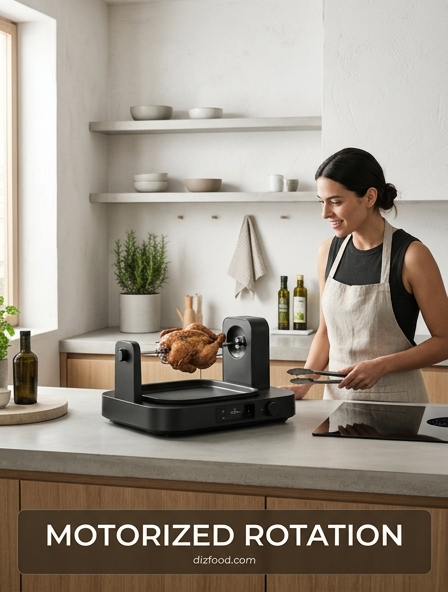
Tackling deep-seated grime and stained grout often feels like an uphill battle, but motorized rotation technology changes the game by doing the heavy lifting for you. These high-torque devices harness consistent centrifugal force to break down stubborn buildup that standard scrubbing simply can't reach. By maintaining a steady RPM, the motorized bristles penetrate porous surfaces and tight corners, lifting away dirt with precision and ease. This advanced engineering ensures a professional-grade finish across your home, significantly reducing cleaning time and physical strain. When deciding on the best tool for your home, it's essential to weigh the performance of an Electric Spin Scrubber vs Manual Hand Brush.
The Science Behind Motorized Scrubbing Power
Motorized scrubbing in the kitchen relies on the conversion of electrical energy into mechanical kinetic force. Unlike manual effort, which is inconsistent and dependent on physical stamina, a motorized scrubber maintains a constant velocity and pressure. This mechanical consistency ensures that the bristles interact with the surface at a frequency that disrupts molecular bonds between dirt and the substrate. The physics of friction play a crucial role here; as the brush head rotates, it generates localized thermal energy that helps soften hardened food residues.
The efficiency of these devices is often measured by their ability to maintain torque under load. When a user applies pressure to a stubborn stain, the motor must compensate to prevent stalling. This ensures that the abrasive action remains continuous, leading to a more uniform clean across large surfaces like countertops and backsplashes. Key components of this scientific approach include:
- Centrifugal force that flings loosened debris away from the cleaning path.
- Consistent bristle deformation for deep pore penetration.
- Thermal agitation of chemical cleaning agents for improved reactivity.
- Constant velocity to prevent surface overheating or uneven wear.
Breaking Down Stubborn Kitchen Grease Deposits
Kitchen grease is a complex mixture of lipids, proteins, and carbonized organic matter that creates a resilient, tacky film on surfaces. Manual wiping often merely smears this layer, redistributing the oils rather than removing them. Motorized rotation addresses this by utilizing high-frequency agitation to emulsify the grease. The rapid rotation of the brush head breaks the lipid chains into smaller droplets, which can then be easily suspended in a cleaning solution and wiped away without leaving a streaky residue.
The effectiveness of motorized tools against different types of kitchen buildup can be categorized by the intensity of the rotation required. Heavy carbonization on stovetops requires more aggressive mechanical intervention compared to simple oil splashes on a range hood. The following table illustrates the typical grease types encountered in the kitchen environment:
| Grease Type | Consistency | Removal Difficulty |
|---|---|---|
| Fresh Cooking Oil | Liquid/Viscous | Low |
| Polymerized Fat | Sticky/Hard | Medium |
| Carbonized Food | Brittle/Burnt | High |
How High Torque Rotation Deep Cleans Grout
Grout is a highly porous material that acts as a magnet for liquid spills, mold, and fine dust particles. Because it sits lower than the surface of the tiles, standard flat mops often bypass the recessed channels, leaving them dark and unhygienic. Motorized scrubbers equipped with high-torque motors are designed to drive bristles deep into these crevices. The torque provides the necessary "bite" to dislodge deeply embedded contaminants that have calcified over time within the cementitious structure of the grout.
To achieve an optimal clean in grout lines, the process follows a specific mechanical sequence enabled by motorized precision:
- Initial penetration where bristles reach the bottom of the grout valley.
- High-torque agitation to break the bond of mineral deposits and mildew.
- Vertical lift where the rotating motion pulls dirt upward to the surface.
- Final polishing of the surrounding tile edges to ensure a seamless finish.
By using controlled rotation, the integrity of the grout is preserved while the aesthetic and hygienic qualities are fully restored, preventing the need for aggressive chemical bleaching.
Manual Scrubbing Versus Motorized Precision Technology
The transition from manual scrubbing to motorized technology represents a significant leap in domestic maintenance efficiency. Manual cleaning is limited by human ergonomics; the wrist and shoulder can only sustain a specific number of oscillations per minute before fatigue sets in. Furthermore, the pressure applied during manual scrubbing is often uneven, leading to "clean spots" and neglected areas. In contrast, motorized tools provide thousands of rotations per minute with a localized focus that the human hand cannot replicate.
Precision technology allows for the targeting of specific grime without damaging the surrounding substrate. This is particularly important for delicate kitchen finishes such as brushed stainless steel or hand-painted ceramic tiles. The comparative advantages are clearly visible when analyzing the output metrics of both methods:
| Feature | Manual Scrubbing | Motorized Precision |
|---|---|---|
| Oscillations per Minute | 60 - 100 | 300 - 2000+ |
| Pressure Consistency | Variable/Inconsistent | Regulated/Constant |
| Physical Strain | High (Joint Stress) | Minimal (Ergonomic) |
| Time Efficiency | Low | High |
Achieving Professional Results on Tile Surfaces
Tile surfaces in the kitchen, ranging from porcelain to natural stone, require a specific balance of abrasion and polishing to maintain their luster. Professional-grade results are often difficult to achieve with standard sponges because they lack the power to remove the "haze" caused by soap scum and hard water minerals. Motorized rotation solves this by providing a consistent buffing action. This action doesn't just clean the surface; it hones it by removing microscopic imperfections that trap light and make the floor look dull.
When using motorized tools on tiles, the results are comparable to industrial floor buffers used in commercial kitchens. To ensure the best outcome, users should focus on the following technical aspects:
- Selection of the correct brush stiffness for the specific tile hardness.
- Maintaining a steady movement to prevent "swirl marks" on polished surfaces.
- Utilizing the edge-cleaning capabilities of specialized brush attachments.
- Ensuring the motor speed is adjusted to prevent splashing of cleaning fluids.
The Role of RPM in Surface Restoration
Revolutions Per Minute (RPM) is the primary metric that determines the aggressiveness and speed of a motorized cleaning tool. In the context of kitchen restoration, different surfaces demand different RPM settings. Low RPM is typically used for delicate tasks, such as cleaning wooden cabinetry or light dusting of appliance exteriors, where high speed might strip the finish. Conversely, high RPM settings are essential for restoring neglected surfaces where grime has baked onto the substrate over several years.
Understanding the relationship between RPM and surface safety is critical for any deep-cleaning project. The kinetic energy increases with the square of the speed, meaning a small increase in RPM can lead to a significant boost in cleaning power. The following guidelines help categorize RPM usage:
- 200-400 RPM: Ideal for heavy-duty scrubbing of ovens and grills.
- 400-800 RPM: Suitable for standard tile and grout maintenance.
- 1000+ RPM: Used for high-speed polishing and removing stubborn mineral scales.
By selecting the appropriate RPM, the user ensures that the restoration process is both effective and safe for the material being treated.
Eliminating Grime with Oscillating Brush Heads
While continuous rotation is excellent for large flat areas, oscillating brush heads offer a different mechanical advantage. Oscillation involves a rapid back-and-forth movement that mimics manual scrubbing but at a much higher frequency. This motion is particularly effective at "shaking" dirt loose from tight corners and complex geometries, such as around faucet bases or the tracks of sliding kitchen drawers. The vibratory nature of oscillation breaks the surface tension of liquid spills, allowing the bristles to sweep the debris away more effectively.
The movement pattern of an oscillating head creates a multi-directional cleaning effect. This is beneficial for surfaces with textured finishes where dirt can be trapped in various orientations. The typical workflow for using an oscillating head includes:
- Applying a concentrated cleaning agent to the targeted zone.
- Engaging the oscillation to agitate the solution into the texture.
- Moving the head in a slow, sweeping motion to cover the entire area.
- Rinsing the loosened grime to reveal the restored surface.
Ergonomic Efficiency in Deep Kitchen Cleaning
Deep cleaning a kitchen is traditionally a physically taxing endeavor, often requiring kneeling, stretching, and repetitive arm movements. Motorized rotation technology shifts the burden of work from the human muscular system to the mechanical drive of the tool. Ergonomically designed handles and adjustable extension poles allow users to reach high cabinets or low floor corners without straining their backs or joints. This accessibility ensures that deep cleaning can be performed more frequently, preventing the accumulation of hazardous grime.
The efficiency gained through ergonomics also extends to the time saved during the cleaning process. Because the motor does the heavy lifting, the user can focus on steering the device rather than applying downward force. Key ergonomic benefits include:
- Reduced risk of repetitive strain injuries in the wrists and elbows.
- Improved posture during floor and baseboard cleaning.
- Lighter tool weights due to advanced lithium-ion battery technology.
- Soft-grip handles that dampen the vibrations from the motor.
Restoring Grout Integrity Through Controlled Rotation
Grout restoration is not just about aesthetics; it is about maintaining the structural integrity of the tiled surface. If grout is allowed to crumble or become overly saturated with grease, it can lead to water infiltration and damage to the subfloor. Controlled motorized rotation allows for the removal of the soiled top layer of grout without excavating the material underneath. This precision is vital for long-term maintenance, as it avoids the thinning of grout lines that occurs with aggressive manual wire brushing.
Using a motorized tool with variable speed control allows the operator to match the intensity to the condition of the grout. A comparison of restoration methods highlights why controlled rotation is preferred:
| Method | Material Removal | Surface Control |
|---|---|---|
| Manual Wire Brush | High (Aggressive) | Poor |
| Chemical Stripping | None (Surface Only) | Moderate |
| Controlled Rotation | Targeted/Minimal | Excellent |
Advanced Engineering for Superior Kitchen Hygiene
Modern motorized cleaning tools represent the pinnacle of kitchen hygiene engineering. Beyond simple rotation, these devices often incorporate waterproof seals (IPX7 ratings), allowing them to be used in sinks or even submerged for cleaning drains. The materials used in the brush heads are often antimicrobial, preventing the growth of bacteria on the tool itself between uses. This is a critical advancement in kitchen environments where cross-contamination is a primary concern for food safety.
Advanced engineering also focuses on the longevity and sustainability of the device. High-efficiency brushless motors provide more power with less heat generation, extending the life of the tool and the battery. For a truly hygienic kitchen, the integration of these features is essential:
- Interchangeable heads for specific hygiene zones (e.g., sink vs. floor).
- High-torque density for removing bio-films in hidden areas.
- Rapid-charge capabilities for consistent readiness.
- Fully sealed housings to allow for easy sanitization of the tool itself.


Comments