
Struggling with a sluggish sink or a funky smell wafting from your kitchen? Choosing between a garbage disposal cleaner and a drain snake is the difference between a quick refresh and a deep-fix solution. While garbage disposal cleaners use foaming agents or enzymes to strip away odor-causing slime and food residue, they won't do much for a total backup. On the other hand, a drain snake is a mechanical powerhouse designed to physically pierce through and pull out stubborn clogs like grease plugs or accidental debris. To keep your kitchen running smoothly, use a cleaner for routine hygiene and preventative maintenance, but reach for the snake when the water stops moving and the plunger fails.
| Feature | Garbage Disposal Cleaner | Drain Snake (Auger) |
|---|---|---|
| Primary Goal | Deodorizing & degreasing slime. | Clearing structural blockages. |
| Mechanism | Chemical/Enzymatic foaming action. | Mechanical tension & extraction. |
| Best For | Foul odors and "slow" drains. | Total clogs and standing water. |
| Ease of Use | High (Drop-in & run disposal). | Moderate (Requires manual feeding). |
| Odor Control | Excellent; eliminates bacteria. | Minimal; removes the source only. |
| Frequency | Weekly/Monthly maintenance. | Emergency/As-needed only. |
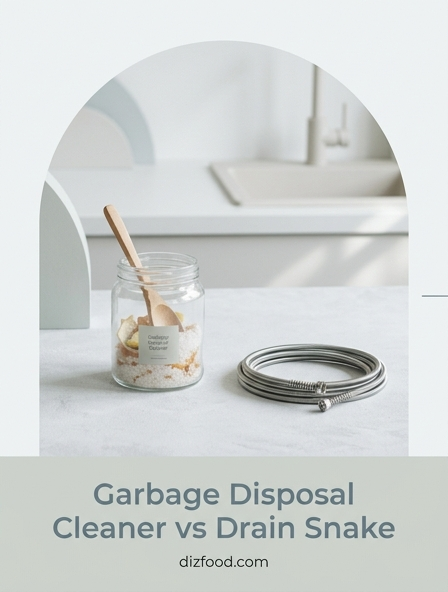
Garbage Disposal Cleaner vs Drain Snake Key Differences
In the realm of kitchen maintenance, understanding the distinction between a garbage disposal cleaner and a drain snake is essential for effective plumbing care. A garbage disposal cleaner is typically a chemical or enzymatic solution designed to dissolve organic buildup, fats, and oils that accumulate on the grinding components and the internal housing of the unit. These cleaners often come in the form of tablets, powders, or liquids that foam up to reach the underside of the splash guard and the rim of the disposal chamber. Their primary function is hygiene and odor control rather than the removal of physical obstructions that stop water flow entirely.
Conversely, a drain snake-also known as a plumber's auger-is a mechanical tool consisting of a flexible metal cable. It is manually or electrically fed into the plumbing lines to physically break apart or retrieve solid clogs such as tangled fibers, grease caps, or foreign objects. While a cleaner works on a molecular level to break down residues, the snake relies on physical force and torque to clear a path through the pipes. The choice between the two often depends on whether you are dealing with a foul smell and slow drainage or a complete structural blockage deep within the pipework.
| Feature | Garbage Disposal Cleaner | Drain Snake |
|---|---|---|
| Mechanism | Chemical or Enzymatic Reaction | Mechanical Force and Torque |
| Primary Goal | Sanitization and Sludge Removal | Clog Penetration and Extraction |
| Reach | Limited to Disposal and P-Trap | Deep Pipe Penetration (15-50+ ft) |
| User Effort | Low (Pour and Rinse) | Moderate to High (Manual Feed) |
When to Use a Foaming Cleaner for Odor Removal
Kitchen sinks are prone to developing a distinct, unpleasant aroma over time, often caused by the decomposition of food particles trapped in the garbage disposal's "blind spots." These areas include the underside of the black rubber splash guard and the upper rim of the grinding chamber where water does not always circulate forcefully. When these odors begin to permeate the kitchen, a foaming cleaner is the most effective solution. Unlike liquid pour-through cleaners, foaming variants expand to fill the entire volume of the disposal, ensuring that every surface is coated in a sanitizing agent that neutralizes bacteria and mold.
You should consider using a foaming cleaner when you notice a "rotten egg" smell or a general musty odor despite the sink appearing visually clean. This process is most effective when performed as part of a weekly or bi-weekly cleaning routine. The foam acts by scrubbing the blades and walls through a chemical fizzing action that lifts biofilm-the thin, slimy layer of bacteria that adheres to surfaces. It is important to note that while these cleaners are excellent for refreshing the air, they are not intended to fix a sink that is backing up with standing water. Common scenarios for foaming cleaner use include:
- Post-meal cleanup after processing high-protein foods like meat scraps.
- Eliminating the persistent scent of rotting vegetable peels.
- Routine maintenance to prevent the accumulation of "fatbergs" in the internal housing.
Clearing Tough Kitchen Blockages with a Drain Snake
When a kitchen sink is completely backed up and water fails to recede, chemical cleaners are rarely effective because they cannot reach the point of the clog through the standing water. This is the moment when a drain snake becomes the indispensable tool of choice. A drain snake is specifically designed to navigate the bends of the P-trap and reach several feet into the wall pipes where heavy obstructions typically form. Kitchen clogs are often composed of hardened fats, coffee grounds, and fibrous materials like onion skins or celery stalks that have woven together into a dense plug.
Using a snake requires a tactical approach to ensure the obstruction is cleared without damaging the pipes. The process involves feeding the cable into the drain opening or the cleanout plug until resistance is met. By rotating the handle, the corkscrew tip of the snake either bores through the clog to break it into flushable pieces or hooks onto the mass so it can be pulled back out. This mechanical intervention is the only reliable way to deal with "soft" clogs that have solidified over years of kitchen use. To use a drain snake effectively, follow these general steps:
- Remove the sink strainer or the P-trap assembly to gain direct access to the waste pipe.
- Slowly feed the snake into the pipe until you feel the cable hit an obstruction.
- Rotate the crank handle clockwise while maintaining steady forward pressure.
- Retract the cable periodically to clear any debris caught on the auger head.
- Flush the line with hot water once the snake passes through the blockage freely.
Comparing Chemical Deodorizers and Mechanical Plumbing Tools
The debate between chemical deodorizers and mechanical plumbing tools is essentially a choice between maintenance and repair. Chemical deodorizers, including enzymatic cleaners and scented disposal beads, are preventative in nature. They are designed to manage the biological environment of the drain, breaking down the proteins and starches that lead to sludge buildup. These products are generally safe for modern plumbing and septic systems, as they rely on "good" bacteria or citrus extracts to digest organic matter. However, their ability to move a physical mass is non-existent; they cannot "eat" through a plastic bottle cap or a thick knot of hair and grease.
Mechanical tools, such as the handheld drum snake or the flat tape snake, are reactive solutions. They do not care about odors or bacteria; their sole purpose is to restore the diameter of the pipe to its original capacity. While mechanical tools are highly effective at restoring flow, they can be abrasive. If used improperly, a metal snake can scrape the interior of PVC pipes or catch on the joints of older galvanized steel lines. Therefore, the strategy for a healthy kitchen involves using chemical deodorizers regularly to keep the pipes smooth and odor-free, while reserving mechanical tools for the inevitable structural clogs that chemicals cannot touch. Understanding that these two categories serve completely different stages of pipe health allows a homeowner to avoid the mistake of pouring expensive chemicals down a fully blocked drain.
How to Safely Unclog a Garbage Disposal Without Damage
Unclogging a garbage disposal requires a different set of safety protocols compared to a standard sink drain because of the motor and internal grinding components. Before reaching for a snake or a chemical cleaner, it is vital to determine if the "clog" is actually a jammed grinding plate. If the disposal hums but does not spin, a physical object is likely wedged between the impellers and the grind ring. In this scenario, pouring caustic chemicals into the unit can be dangerous, as it creates a splash hazard when you eventually try to clear the jam manually.
To safely clear a disposal jam, one should use the manual override feature found at the bottom of the unit. Most disposals have a small hexagonal hole underneath the motor housing. By inserting a 1/4-inch Allen wrench and cranking it back and forth, you can manually rotate the internal plates to dislodge the trapped item. Only after the plates move freely should you attempt to flush the system or use a mild cleaner to remove any residual waste. Safety should always be the priority when dealing with powered kitchen appliances. Consider the following safety checklist:
- Always disconnect the power cord or turn off the circuit breaker before inspecting the unit.
- Never put your hand inside the disposal; use tongs or pliers to retrieve dislodged objects.
- Avoid using harsh lye-based cleaners, as they can corrode the metal components and seals.
- Check the reset button on the bottom of the unit if the motor has overheated and shut off.
Preventive Maintenance vs Emergency Drain Repair Solutions
The key to a functional kitchen is the balance between preventive maintenance and emergency intervention. Preventive maintenance involves the frequent use of garbage disposal cleaners, ice cubes, and cold water flushes. Using ice cubes is a popular mechanical maintenance trick; as the blades crush the ice, the shards help scour the grind ring and knock off hardened debris. Following this with a dedicated disposal cleaner ensures that the microscopic layer of grease is stripped away. This proactive approach significantly reduces the likelihood of a total system failure or a backup that requires professional plumbing services.
Emergency solutions, such as the use of a heavy-duty drain snake or a hydro-jetting service, are necessitated when preventive measures fail or are ignored. An emergency usually presents as a double-sink backup where water from the disposal side flows into the non-disposal side. At this point, the blockage is typically located past the P-trap and within the sanitary tee in the wall. While a snake can solve this immediate crisis, it is a messy and time-consuming process. Homeowners who prioritize the 5-minute weekly cleaning of their disposal often find they can go years without ever needing to use a drain snake. Emergency repairs are not only more expensive but also put more stress on the physical integrity of the plumbing joints due to the vibration and pressure of the snaking process.
The Effectiveness of Garbage Disposal Cleaners on Sludge
One of the most common issues in kitchen drains is the accumulation of "sludge"-a thick, viscous combination of grease, soap scum, and fine food particles. This sludge acts like a magnet, catching every small bit of debris that passes through the drain. Interestingly, a drain snake is often ineffective against this specific type of buildup because the narrow cable simply passes through the soft sludge without actually clearing it from the pipe walls. This is where specialized garbage disposal cleaners and biological enzymatic treatments excel.
Modern cleaners utilize surfactants and enzymes that are specifically formulated to emulsify fats and oils. When these cleaners are introduced into the disposal, they create a high-volume foam that clings to the vertical surfaces of the pipes. Over several minutes, the chemical action breaks the bond between the sludge and the pipe wall, allowing it to be flushed away by a high-volume water rinse. For the best results, these cleaners should be used at night or during periods when the sink will not be used for several hours, giving the enzymes time to digest the organic material. This method ensures that the full diameter of the pipe is restored, which prevents the "slow drain" syndrome that often precedes a total blockage.
Using a Drain Snake to Reach Deep Pipe Obstructions
While garbage disposal cleaners are effective for the unit itself, they lose their potency as they travel further down the plumbing line. If a clog is located ten to fifteen feet deep-perhaps where the kitchen waste line joins the main stack-only a drain snake can provide the necessary reach. Deep obstructions are often caused by a "bellied" pipe where the line has sagged, allowing sediment to settle and harden over time. A cleaner will simply wash over the top of such a mass, but a snake can be pushed into the heart of it.
Using a snake for deep obstructions often requires accessing the plumbing through a cleanout plug located outside the house or in the basement. This allows the user to bypass the tight turns of the kitchen sink's under-cabinet plumbing, providing a straighter path for the cable. When snaking deep lines, it is important to use a cable of sufficient thickness; a thin 1/4-inch snake may kink if it hits a hard obstruction at a great distance. A 3/8-inch or 1/2-inch cable provides the rigidity needed to transfer torque over long distances. Successfully reaching a deep clog often results in a "whoosh" sound as the vacuum is broken and the standing water finally drains, a result that no amount of surface cleaning can achieve.
Kitchen Sink Hygiene vs Structural Clog Removal Methods
The distinction between hygiene and structural clearing is the most important factor in choosing the right tool. Kitchen sink hygiene is about the "health" of the air and the surfaces near food preparation areas. Garbage disposal cleaners are hygiene tools; they eliminate pathogens like Salmonella and E. coli that can thrive in the damp, nutrient-rich environment of a dirty disposal. They are essential for food safety but have a limited impact on the mechanical performance of the plumbing. A clean-smelling sink can still be on the verge of a total backup if the structural integrity of the flow path is compromised by debris.
Structural clog removal, on the other hand, is about the physics of fluid dynamics. A drain snake is a structural tool. It addresses the physical geometry of the pipe's interior. When a pipe's diameter is narrowed by a hard obstruction, the hygiene of the pipe is irrelevant until the flow is restored. Homeowners often mistake a hygiene problem for a structural one, or vice versa. For example, pouring bleach down a clogged drain is an attempt to use a hygiene product to solve a structural problem, which is usually unsuccessful and can damage the disposal's seals. A comprehensive maintenance plan must include both hygiene-focused cleaners to keep the environment safe and mechanical tools to ensure the infrastructure remains clear and functional.
Choosing the Right Tool for Your Sink Drainage Problem
Selecting the appropriate tool begins with a simple diagnostic assessment of the sink's behavior. If the problem is purely sensory-such as a bad smell or a "gurgling" sound after the disposal is turned off-a garbage disposal cleaner is the correct starting point. These symptoms suggest that while water is moving, it is being agitated by organic buildup or the disposal is coated in decaying matter. If the sink drains slowly but consistently, an enzymatic cleaner used over several days may be enough to clear the peripheral sludge on the pipe walls without the need for mechanical intervention.
However, if the symptoms include standing water that does not move, or if water backs up into one basin when the other is drained, the problem is structural and requires a drain snake. The presence of water "burping" back up the drain is a clear sign of a trapped air pocket caused by a solid blockage further down the line. In such cases, cleaners are a waste of resources. The following guide can help in the decision-making process:
- Odors and Biofilm: Use a foaming or enzymatic garbage disposal cleaner.
- Slow Drainage: Start with a cleaner; if no improvement, move to a handheld snake.
- Total Blockage: Skip the chemicals and use a plumber's snake or auger immediately.
- Mechanical Jam: Use an Allen wrench on the bottom of the disposal motor, not a snake.
- Regular Maintenance: Use ice, citrus peels, and mild cleaners monthly.


Comments