
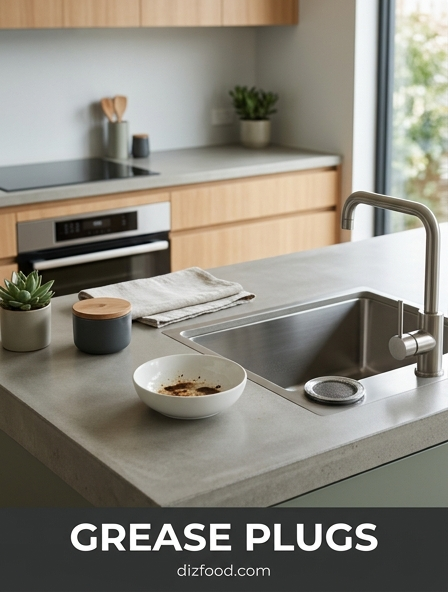
Identifying Kitchen Grease Clog Symptoms
Recognizing the early stages of a grease plug is essential for preventing a complete plumbing failure. Grease does not typically block a pipe instantly; it accumulates over time, cooling and hardening against the interior walls. The most common symptom is a noticeable decrease in drainage speed. If water lingers in the sink basin long after the faucet is turned off, a buildup is likely restricting the flow. Another frequent indicator is a persistent, foul odor emanating from the drain, caused by decaying organic matter trapped within the solidified lipids. You may also notice the following signs:
- Gurgling noises coming from the pipes or floor drains during sink usage.
- Visible grease residue or a "filmy" coating on the underside of the sink stopper.
- Water backing up into one side of a double sink when the other side is drained.
- Slow drainage that noticeably worsens when cold water is used compared to hot.
Ignoring these symptoms allows the grease to transition from a soft sludge to a waxy, cement-like consistency. Early intervention helps maintain the integrity of the piping system and avoids the need for heavy-duty professional hydro-jetting services later.
Selecting the Right Mechanical Drain Tool
Choosing the correct mechanical tool depends on the location and severity of the grease plug. Smaller hand-operated devices are suitable for clogs near the sink trap, while larger, motorized equipment is necessary for obstructions deep within the main stack. Grease behaves differently than hair or solid debris; it requires tools that can either pierce the waxy core or scrape the circumference of the pipe to restore full diameter capacity.
| Tool Type | Primary Use Case | Effectiveness |
|---|---|---|
| Manual Auger | Local P-trap blockages | Moderate |
| Electric Snake | Heavy grease in main lines | High |
| Hydraulic Bladder | Flushing soft sludge | High |
| Sewer Rods | Deep, hardened obstructions | Very High |
The material of the pipe also influences tool selection. For example, older cast iron pipes can withstand aggressive mechanical scraping, whereas thinner PVC pipes require more flexible, less abrasive cables to prevent cracking. Assessing the depth and hardness of the grease is the first step toward successful clearance.
Step by Step Guide to Manual Augers
Manual augers, often referred to as drain snakes, are the first line of defense for kitchen grease clogs located close to the fixture. These tools consist of a flexible steel cable with a corkscrew-like head designed to penetrate and snag debris. Unlike liquid cleaners, an auger provides the physical force necessary to break through the center of a solidified grease mass, creating a path for water to begin flowing again.
- Remove the sink strainer or P-trap to gain direct access to the drain line.
- Feed the cable slowly into the pipe until you feel resistance from the grease plug.
- Tighten the locking screw and rotate the handle clockwise to bore into the obstruction.
- Gently push and pull the cable while rotating to break up the grease mass.
- Withdraw the cable slowly, cleaning the grease from the coil as it emerges from the pipe.
Repeating this process several times ensures that the central blockage is cleared. Once the cable moves freely through the section, flush the system with hot water to rinse away any remaining loosened grease particles.
Restoring Flow with Electric Drain Snakes
Electric drain snakes provide the necessary torque to penetrate thick, chilled grease that manual tools cannot bypass. These machines utilize a motorized drum to rotate a heavy-gauge cable at high speeds, which allows the cutting head to chew through hardened lipids. The consistent power of an electric motor is particularly effective when the clog is located several feet into the wall, where manual leverage is difficult to maintain.
- Equip the cable with a grease-cutting blade or a "C" shaped head for better wall contact.
- Feed the cable into the line until the motor begins to strain, indicating contact with grease.
- Apply steady pressure, letting the rotation of the cable do the work rather than forcing it.
- Retract the cable frequently to clear the head of accumulated sludge and debris.
Electric snakes are highly efficient but require careful handling to avoid damaging pipe joints. Because grease can re-seal behind the snake head, it is often necessary to perform multiple passes, gradually increasing the size of the cutting head to ensure the entire pipe diameter is restored.
Breaking Through Grease with Hydraulic Bladders
Hydraulic expansion bladders offer a unique way to clear grease plugs using water pressure rather than physical scraping. These rubber devices are attached to a standard garden hose and inserted into the drain line. When the water is turned on, the bladder expands to create a tight seal against the pipe walls, then releases a high-pressure jet of water forward into the obstruction.
- Insert the uninflated bladder into the drain past any vent openings.
- Turn on the water supply to allow the bladder to expand and lock into place.
- The concentrated water pressure forces the grease plug to move toward larger diameter pipes.
- Maintain pressure for several minutes to ensure the sludge is completely displaced.
- Turn off the water, allow the bladder to deflate, and carefully remove it.
This method is exceptionally effective for soft, gelatinous grease clogs that might otherwise "self-heal" after a snake passes through. It is a cleaner alternative to cables, as it washes the grease away rather than pulling it back into the kitchen area.
Deep Cleaning Pipes with Mechanical Scrapers
Mechanical scrapers and descaling tools are used when grease has coats the interior of a pipe in thick, concentric layers. While a standard snake might just poke a hole through the center of a clog, a scraper reaches the pipe walls to restore the original flow capacity. These tools often feature chain knockers or expanding blades that spin rapidly, chipping away at the hardened "fatberg" formations that restrict drainage.
- Chain knockers use centrifugal force to contact the entire inner circumference of the pipe.
- Carbide-tipped scrapers are used for the most stubborn, mineralized grease deposits.
- Self-centering guides ensure the scraping heads do not damage the pipe floor.
- Water-assisted scraping helps to simultaneously flush the loosened solids down the line.
This deep-cleaning process is often the final step in professional pipe restoration. By removing every trace of grease, the pipe walls become smooth again, which prevents new grease from finding a textured surface to latch onto. This significantly extends the time between required maintenance and reduces the likelihood of emergency backups.
Hand Cranked Tools for Minor Grease Plugs
For minor grease plugs located within the immediate reach of the sink cabinet, hand-cranked tools offer a portable and cost-effective solution. These tools are typically smaller and more flexible than industrial augers, making them ideal for navigating the tight bends of a kitchen's under-sink plumbing. They are designed for quick deployment when a sink first begins to show signs of sluggishness, preventing the need for larger machinery.
- Direct the flexible spring-head into the drain opening or the cleanout plug.
- Use the hand grip to guide the cable while turning the integrated crank handle.
- Feel for the "soft" resistance characteristic of grease and rotate the tool steadily.
- Pull the cable back once it feels free, and wipe the grease off with a disposable rag.
- Flush the drain with a mixture of dish soap and boiling water to clear remnants.
These tools are perfect for homeowners who want to perform routine maintenance. Because they are operated by hand, there is a very low risk of puncturing older pipes or damaging delicate seals, providing a safe way to manage kitchen grease issues.
Clearing Stubborn Obstructions with Sewer Rods
Sewer rods are used when grease plugs are exceptionally dense or located in straight, horizontal runs where cables might lack the necessary stiffness. Unlike flexible snakes, sewer rods are rigid sections of polypropylene or steel that are screwed together to reach great distances. They allow the operator to apply significant forward thrust, which is often required to punch through grease that has solidified into a solid mass over several feet.
- Select a spear-head or a heavy-duty plunger attachment for the lead rod.
- Add rod sections one at a time as the tool progresses deeper into the sewer line.
- Use a twisting motion to help the rod head "drill" into the grease obstruction.
- Monitor the resistance to ensure the rod is not buckling within a larger pipe section.
The primary advantage of rodding is the sheer force it can transmit to the clog. In kitchen environments where heavy grease discharge is common, such as in commercial settings, sewer rods can break up blockages that would simply deflect a standard flexible cable. This method is highly effective for long-distance obstructions.
Mechanical Methods for Long Distance Blockages
When a kitchen grease plug moves beyond the local plumbing and into the main lateral line, long-distance mechanical methods become necessary. These situations often involve hundreds of feet of pipe where the grease can cool and settle. Specialized drum machines and sectional cables are the primary tools used for these extended reaches, providing the length and power to clear the line all the way to the municipal tap.
| Method | Max Reach | Best Environment |
|---|---|---|
| Sectional Cable | 200+ Feet | Commercial Kitchens |
| Large Drum Machine | 100-150 Feet | Residential Main Lines |
| Continuous Rodding | 300+ Feet | External Sewer Laterals |
Operating at these distances requires a high degree of skill to prevent cable kinking. The mechanical energy must be managed carefully to ensure it reaches the grease plug effectively. Often, a "tapered" approach is used, starting with a small bit to establish flow and finishing with a full-sized cutter to scrape the pipe walls clean across the entire distance.
Maintaining Pipe Health After Clearing Grease
Clearing a grease plug is only the first step; maintaining the pipe health is necessary to prevent a recurrence. Once the mechanical tools have restored flow, the pipe walls often remain sticky, attracting new debris almost immediately. Establishing a post-clearance maintenance routine ensures that the kitchen drainage system remains functional and reduces the buildup of new lipids. Consistency is the key to avoiding future mechanical intervention.
- Flush the drain weekly with a gallon of near-boiling water to melt surface films.
- Use enzyme-based cleaners that "eat" organic grease without damaging the pipes.
- Install fine-mesh strainers to catch food particles that grease can bind to.
- Never pour liquid oils or fats directly down the drain, regardless of water temperature.
- Periodically use a baking soda and vinegar flush to help deodorize and loosen light films.
By following these preventative steps, you create an environment where grease is less likely to solidify. Modern plumbing is not designed to process large quantities of fat, so mechanical clearing should always be paired with a change in kitchen habits to ensure long-term pipe health and performance.


Comments