
The Science of Oil Emulsification
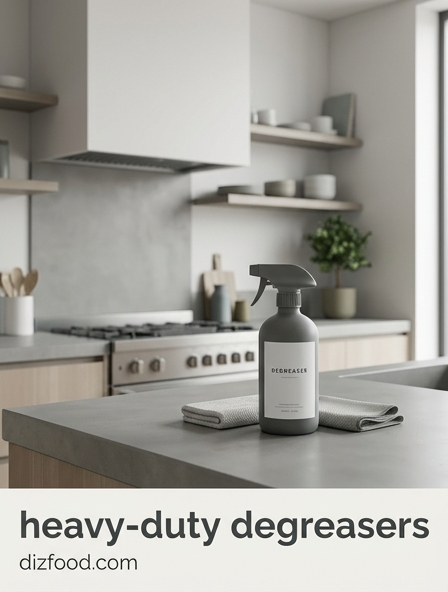
Oil emulsification is the fundamental process that allows heavy-duty degreasers to bridge the gap between water-insoluble fats and water-based cleaning solutions. In a professional kitchen, grease consists of hydrophobic molecules that naturally repel water, making simple rinsing ineffective. Emulsification occurs when the degreaser introduces agents that possess both polar and non-polar properties. These agents surround the oil droplets, orienting their hydrophobic tails toward the grease and their hydrophilic heads toward the water.
This interaction results in the formation of micelles, which are tiny clusters of oil trapped within a water-soluble shell. Once the grease is emulsified, it no longer adheres to kitchen surfaces like stainless steel or tile. Instead, it remains suspended in the cleaning solution, allowing it to be easily wiped or rinsed away without leaving a slippery residue. The efficiency of this process depends on the concentration of the emulsifying agents and the mechanical action applied during cleaning. Without effective emulsification, kitchen staff would spend excessive time scrubbing surfaces, leading to increased labor costs and potential equipment damage.
Breaking Down Tough Polymerized Grease
Polymerized grease is one of the most difficult challenges in a commercial kitchen environment. This substance forms when cooking oils are repeatedly exposed to high heat and oxygen, causing a chemical reaction that links individual fat molecules into long, plastic-like chains. This varnish-like coating is highly resistant to standard soaps and requires specialized heavy-duty degreasers designed to break these complex molecular bonds.
- High Heat Exposure: Constant temperature fluctuations accelerate the hardening of oil residues.
- Oxygen Interaction: Oxidation turns liquid fats into solid, sticky resins.
- Time Accumulation: The longer grease remains on a surface, the more cross-linked the polymers become.
- Chemical Resistance: Standard detergents lack the solvent power to penetrate the polymerized layer.
To tackle this, industrial degreasers utilize high-alkaline formulations that chemically "cut" through the polymer chains. These cleaners penetrate the dense layer, softening the structure so it can be detached from the substrate. Understanding the transition from liquid oil to polymerized solid is essential for selecting the correct chemical strength for deep-cleaning tasks on fryers and oven ranges.
Industrial Degreasers vs Stubborn Kitchen Grime
The difference between standard household cleaners and industrial-grade degreasers lies in their chemical potency and intent. Industrial formulas are engineered to handle the high-volume fat accumulation found in fast-paced culinary environments. These products typically feature a higher pH level, often utilizing potassium hydroxide or sodium hydroxide to achieve rapid results on carbonized surfaces.
| Feature | Standard Cleaner | Industrial Degreaser |
|---|---|---|
| pH Level | Neutral to Mildly Alkaline | Highly Alkaline (pH 12-14) |
| Active Ingredients | Mild Surfactants | Solvents and Caustics |
| Application Time | Longer Scrubbing Required | Rapid Contact Action |
| Target Soil | Light Dust and Fresh Spills | Carbonized Oil and Polymers |
Industrial degreasers are specifically designed to minimize the physical effort required to maintain hygiene standards. While a consumer product might fail to lift baked-on proteins and fats, the concentrated chemical profile of an industrial agent ensures that even the most stubborn kitchen grime is liquidated upon contact, protecting the longevity of expensive kitchen hardware.
How Surfactants Dissolve Baked On Residue
Surfactants, or surface-active agents, are the "workhorses" inside heavy-duty degreasers. Their primary role is to reduce the surface tension of water, allowing the cleaning solution to spread more evenly and penetrate into the microscopic pores of kitchen surfaces. When dealing with baked-on residue, the surfactant molecules act as chemical wedges, inserting themselves between the hardened food particles and the surface of the cooking equipment.
This process is highly dynamic. The "tail" of the surfactant molecule attaches to the organic soil, while the "head" remains attracted to the water. As more surfactant molecules crowd around the residue, they create a lifting force that pulls the baked-on material away from the metal or ceramic substrate. This mechanical action at a molecular level reduces the need for abrasive scrubbing, which can often scratch and damage professional kitchen equipment. By selecting degreasers with high-performance surfactant blends, kitchen managers can ensure that even the most neglected corners of a grill or convection oven can be restored to a sanitary state with minimal manual intervention.
Restoring Commercial Kitchen Surfaces Fast
Efficiency in a commercial kitchen is measured by the speed of the turnover, and cleaning is no exception. Restoring surfaces to their original condition requires a systematic approach combined with powerful degreasing agents. The goal is to achieve a "bare metal" clean that meets health department standards without delaying the next shift's preparations. Using a heavy-duty degreaser allows for a streamlined workflow.
- Preparation: Remove loose debris and apply the degreaser to the affected area.
- Dwell Time: Allow the chemical to sit for 5-10 minutes to penetrate the grease layers.
- Agitation: Use a non-abrasive pad for stubborn spots to assist the chemical action.
- Rinsing: Use hot water to flush away the emulsified slurry and neutralize the surface.
By following this protocol, staff can quickly clear hoods, vents, and backsplashes of yellowing grease. Fast restoration not only improves the aesthetic of the kitchen but also significantly reduces fire hazards associated with grease buildup in exhaust systems. Proper chemical selection ensures that the restoration process is both rapid and thorough.
The Chemistry Behind Rapid Grease Removal
The rapid removal of grease is achieved through a chemical process known as saponification. Many heavy-duty degreasers are formulated with strong bases, such as sodium hydroxide. When these alkaline substances come into contact with animal fats and vegetable oils, a chemical reaction occurs that converts the fats into a type of soap. This newly formed soap is naturally water-soluble, meaning the very grease that was once a problem becomes the medium through which it is washed away.
In addition to alkalinity, many rapid-acting degreasers contain glycol ethers or other powerful solvents. These solvents act by dissolving the non-polar bonds that hold the grease together, effectively thinning the viscosity of the oil almost instantly. This dual-action approach-saponification combined with solvent dissolution-allows the degreaser to work through multiple layers of buildup in a fraction of the time required by weaker alternatives. This chemical synergy is what allows professional cleaners to maintain high-pressure environments where cleanliness and speed are equally prioritized, ensuring that surfaces are sanitized and ready for food contact within minutes.
Tackling Carbonized Oils in Professional Kitchens
Carbonization occurs when oils are heated past their smoke point and left to burn onto a surface, resulting in a black, crusty layer that is essentially pure carbon and burnt organic matter. This is frequently seen on charbroilers, griddles, and inside pizza ovens. Tackling carbonized oil requires more than just a standard degreaser; it necessitates a "carbon remover" with specific caustic properties designed to break down the carbon matrix.
These specialized heavy-duty agents work by penetrating the porous carbon layer and breaking the bond between the carbon and the metal surface. Because carbonized oil is extremely dense, these degreasers often require a longer dwell time or the application of heat to increase the reaction rate. In a professional kitchen, maintaining these surfaces is critical for food flavor and heat transfer efficiency. If carbon is allowed to build up, it creates an insulating layer that forces the equipment to use more energy to reach cooking temperatures. Regular application of high-strength degreasers prevents this accumulation, ensuring that equipment performs at peak efficiency while maintaining the highest levels of food safety and quality.
Efficiency of Heavy Duty Degreasing Agents
The efficiency of a heavy-duty degreasing agent is often evaluated by its dilution ratio and its ability to work across various water hardness levels. In a commercial setting, cost-effectiveness is as important as cleaning power. High-concentration degreasers allow kitchens to use less product for maximum results, often being diluted at ratios of 1:10 or even 1:40 depending on the severity of the mess. This versatility makes them an essential tool for all-around maintenance.
- Cost Savings: Concentrated formulas reduce shipping costs and plastic waste.
- Versatility: One product can often be used on floors, walls, and equipment.
- Water Compatibility: Modern chelating agents ensure the degreaser works in hard water.
- Surface Safety: Efficient degreasers remove oil without pitting or corroding metal.
An efficient degreaser also minimizes the "re-wash" rate. If a cleaner requires multiple applications to remove a single layer of grease, it wastes both time and chemical resources. A truly efficient heavy-duty agent is designed to provide "one-pass" cleaning, where the grease is completely emulsified and removed in a single application, allowing the staff to focus on food production rather than sanitation hurdles.
Eliminating Persistent Industrial Kitchen Messes
Persistent messes in industrial kitchens often hide in areas that are not immediately visible, such as floor drains, behind heavy equipment, and within ventilation baffles. These areas accumulate "dead grease," which is a mixture of old oil, dust, and moisture. This mixture becomes a breeding ground for bacteria and pests if not eliminated by a powerful degreasing agent. Eliminating these persistent messes requires a degreaser with high "cling" properties, often delivered through foaming applicators.
Foaming degreasers are particularly effective for vertical surfaces and hard-to-reach areas because the foam extends the contact time of the chemical with the grease. Instead of the cleaner simply running down the wall and into the drain, the foam stays in place, actively dissolving the soil. This is essential for deep-cleaning cycles that occur weekly or monthly. By utilizing high-clinging degreasers, kitchen managers can ensure that even hidden residues are neutralized, resulting in a safer work environment and significantly lower risks of cross-contamination or mechanical failure in the kitchen's infrastructure.
Advanced Solutions for Polymerized Oil Buildup
As kitchen technology evolves, so does the chemistry used to clean it. Advanced solutions for polymerized oil buildup now include enzyme-based boosters and "green" solvents that offer high performance without the harsh fumes associated with traditional caustics. These modern degreasers focus on breaking down the specific molecular structures of various fats, including stubborn unsaturated vegetable oils that are prone to rapid polymerization. This targeted approach is both more effective and safer for the operator.
Furthermore, many advanced degreasers are formulated to be "rinse-free" or to leave behind a microscopic protective layer that inhibits the re-attachment of grease. This proactive approach helps in reducing the frequency of deep-cleaning sessions. By integrating these advanced chemical solutions, commercial kitchens can maintain a higher baseline of cleanliness. The transition toward these sophisticated formulas reflects an industry-wide move toward sustainability and employee safety, proving that heavy-duty cleaning power does not have to come at the expense of environmental responsibility or user comfort. These agents ensure that even the most heavily used kitchens remain pristine and compliant with modern standards.



Comments