
Revitalizing your favorite metal pieces requires more than just elbow grease; it demands the right chemical formula to safely lift oxidation without scarring the surface. While both copper polish and silver cream are designed to restore a mirror-like finish, they function quite differently depending on the metal's vulnerability and the type of tarnish present. Copper polishes are typically more robust, utilizing acidic agents to cut through stubborn heat discoloration and green verdigris found on cookware, whereas silver creams employ a gentler, non-abrasive paste enriched with anti-tarnish protectors to safeguard delicate jewelry and fine cutlery. Choosing the correct specialized formula ensures you not only achieve the ultimate shine but also provide a long-lasting barrier against the environmental sulfur and oxygen that cause future dullness.
| Feature | Copper Polish | Silver Cream |
|---|---|---|
| Primary Purpose | Heavy oxidation & heat stains | Fine tarnish & luster restoration |
| Chemical Base | Acidic (often Citric/Sulfamic) | Mild Alkaline/Soap-based |
| Abrasive Level | Moderate (to scrub hard surfaces) | Very Low (preventing scratches) |
| Action Type | Chemical reaction + physical scrub | Gentle lifting + polishing |
| Protective Layer | Standard shine enhancement | High-tarnish preventative film |
| Ideal Items | Pots, pans, kettles, and brass | Jewelry, silverware, and heirlooms |
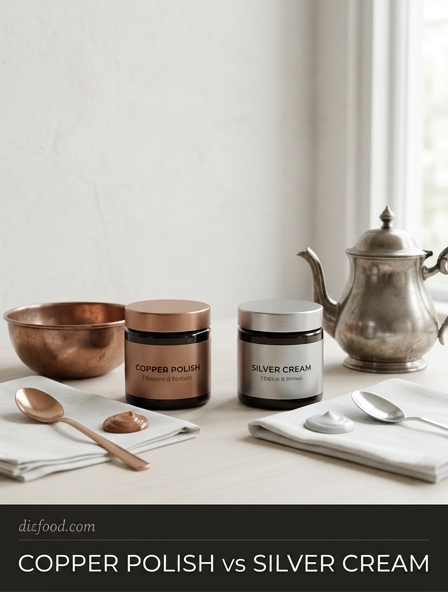
Copper Polish vs Silver Cream Key Differences
In the culinary world, maintaining the aesthetic and functional integrity of metalware requires a nuanced understanding of cleaning agents. While both copper polish and silver cream serve the primary purpose of removing oxidation, they are formulated to interact with different metallurgical properties. Copper, a base metal, tends to develop a thick, brownish-green patina known as copper carbonate. To combat this, copper polishes are generally more aggressive, often utilizing mild acids to dissolve heavy buildup. Conversely, silver is a precious metal that reacts primarily with sulfur in the air to form silver sulfide, a black tarnish. Silver creams are engineered to be significantly gentler, focusing on chemical conversion and light polishing rather than heavy abrasion.
| Feature | Copper Polish | Silver Cream |
|---|---|---|
| Primary Action | Acidic dissolution and abrasive scrubbing | Chemical tarnish reversal and mild polishing |
| Typical Consistency | Viscous liquid or gritty paste | Smooth, lightweight cream or foam |
| Target Oxidation | Copper oxide and carbonates (green/brown) | Silver sulfide (black/grey) |
| Main Ingredient | Citric or sulfamic acid | Thiourea or mild surfactants |
Understanding these differences is crucial for kitchen maintenance. Using an aggressive copper polish on delicate silver plating can lead to the permanent removal of the silver layer, exposing the base metal beneath. Meanwhile, using a gentle silver cream on a heavily tarnished copper pot may prove ineffective, requiring excessive physical labor to achieve a shine. Therefore, the choice between these two products is not merely a matter of brand preference but a technical requirement based on the specific alloy being treated.
Understanding Chemical Formulas and Reactive Agents
The efficacy of kitchen metal cleaners lies in their specific chemical compositions. Copper polish frequently incorporates acidic components such as citric acid, oxalic acid, or sulfamic acid. These agents are essential because copper oxides are alkaline in nature; the acid-base reaction effectively breaks the bond between the tarnish and the metal surface. Furthermore, many copper cleaners include surfactants that help lift grease and oils common in kitchen environments, ensuring the acid can reach the metal surface unimpeded.
Silver creams operate on a different chemical trajectory. Because silver is highly susceptible to sulfur, many creams contain thiourea or acidified thiourea, which acts as a complexing agent to dissolve silver sulfide without stripping away the healthy metal underneath. Additionally, silver creams often include "tarnish inhibitors" which leave a molecular layer on the surface to prevent immediate re-oxidation. Common reactive agents found in these products include:
- Chelating Agents: These bind to metal ions to prevent them from redepositing on the surface during the cleaning process.
- Reducing Agents: These help convert metal oxides back into their metallic state.
- pH Buffers: These ensure the product remains stable and safe for skin contact during application.
- Solvents: These assist in breaking down accumulated kitchen grime and old wax residues.
By balancing these reactive agents, manufacturers create formulas that are powerful enough to restore a mirror-like finish while remaining safe for the specific molecular structure of the metal. Misunderstanding these formulas can lead to "over-cleaning," where the chemical agents begin to pit the metal surface rather than simply cleaning it.
Abrasive Levels and Surface Scratch Prevention
Abrasives are the physical components of polishes that mechanically remove tarnish and smooth out minor surface imperfections. The Mohs scale of mineral hardness plays a significant role here. Copper has a Mohs hardness of approximately 3.0, while silver is softer, ranging between 2.5 and 3.0. Because silver is more prone to scratching, silver creams utilize ultra-fine abrasives like diatomaceous earth or jeweler's rouge (iron oxide), which have very small particle sizes measured in microns.
Copper polishes, intended for heavy-duty cookware, often contain coarser abrasives to handle the stubborn "heat tint" and carbonized food particles found on the bottom of pans. While these abrasives are effective for copper, they can be devastating to silver-plated items. When selecting a product, it is vital to consider the following factors regarding abrasives:
- Particle Size: Finer particles produce a higher gloss but take longer to remove deep tarnish.
- Particle Shape: Spherical particles roll across the surface to polish, while irregular particles cut into the surface to remove material.
- Concentration: A high ratio of abrasive to liquid means a faster clean but a higher risk of thinning the metal over time.
For high-end kitchenware, especially heirloom silver or decorative copper molds, the goal is to use the least abrasive method possible. Using a microfiber cloth with a low-abrasive cream is the standard for scratch prevention. If a copper polish feels "gritty" between your fingers, it is likely too harsh for polished silver surfaces and should be reserved for industrial-grade copper pots and pans.
Tarnish Removal Efficiency for Various Metals
Tarnish removal efficiency is a measurement of how quickly and thoroughly a product restores a metal's original luster. Copper polish is designed for speed and power. In a kitchen setting, copper pans often suffer from "fire scale" or intense oxidation due to high heat. A dedicated copper polish can strip these layers in seconds, using a combination of chemical etching and mechanical scrubbing. This high efficiency is necessary for professionals who need to maintain large sets of copper cookware daily.
Silver cream, however, prioritizes precision over speed. While it might take longer to remove heavy black tarnish from a silver serving tray, the cream ensures that the delicate details of the engraving are not worn away. The efficiency of silver cream is also enhanced by its ability to work into crevices and filigree, often turning black as it reacts with the sulfide, providing a visual cue that the cleaning is working. Comparison of efficiency across metals includes:
- Stainless Steel: Neither product is ideal, as stainless requires specific cleaners to maintain its chromium oxide layer.
- Brass: Copper polish is highly efficient on brass (a copper-zinc alloy) but may require a lacquer finish afterward.
- Pewter: Silver cream is generally safer for pewter due to its low abrasive content.
- Aluminum: Acidic copper polishes can cause pitting or darkening on aluminum; silver cream is too weak to be effective.
Ultimately, the efficiency of these products is highly metal-specific. A product that is efficient on one metal may be destructive or completely ineffective on another, making it essential to match the cleaner to the specific alloy present in your kitchen inventory.
Long Term Protection and Oxidation Barriers
The cleaning process is only half the battle; preventing the return of tarnish is equally important in a humid kitchen environment. Silver creams are superior in this regard, as they often contain specialized anti-tarnish agents such as benzotriazole (BTA). These agents form an invisible, waterproof barrier at the molecular level that prevents oxygen and sulfur from reaching the metal surface. This allows silver items to remain bright for months, even when stored in the open air.
Copper polishes vary more widely in their protective capabilities. Traditional liquid polishes provide a brilliant immediate shine but often leave the metal "naked" and highly reactive. Without a protective coating, a freshly polished copper pot can begin to dull within days due to moisture and cooking fumes. Many modern copper pastes have addressed this by incorporating carnauba wax or synthetic silicones. These additives provide a temporary barrier against oxidation. To ensure long-term protection, users should look for these features:
- Hydrophobic Properties: The ability of the finish to repel water droplets, preventing water spots.
- UV Inhibitors: Protection against light-induced oxidation, which is relevant for display copper.
- Wax-Based Sealants: These fill in microscopic pores in the metal to create a smooth, air-tight surface.
For kitchen items used for actual cooking, these barriers must be food-safe. While a display-only silver platter can handle heavy tarnish inhibitors, a copper skillet requires a protective layer that will not smoke or release chemicals when placed over a gas flame. Always check if the oxidation barrier is heat-stable before applying it to functional cookware.
Application Methods for Paste vs Cream
The physical form of the cleaner-be it a dense paste or a light cream-dictates the application technique and the tools required. Copper polish often comes in a paste or a thick liquid. To apply, one typically uses a damp sponge or a coarse cloth, working the product into the metal with firm, circular motions. The paste's viscosity allows it to cling to the sides of large pots, giving the acids time to work. Rinsing is a mandatory step for copper pastes to remove acidic residues that could otherwise cause spotting.
Silver cream application is a more delicate process. It is usually applied with a soft, fine-textured sponge (often included in the jar) or a cotton ball. The cream is spread thinly over the surface, allowed to sit for a minute to let the chemical reaction occur, and then buffed away. Unlike copper polish, some silver creams are designed to be buffed off with a dry cloth rather than rinsed, though rinsing is still recommended for items that will touch food. The following steps highlight the procedural differences:
- Preparation: Copper requires degreasing first; silver usually only requires dusting.
- Agitation: Copper requires vigorous scrubbing; silver requires gentle wiping.
- Dwell Time: Copper polish works quickly; silver cream may need a "resting period" to dissolve deep sulfide layers.
- Finishing: Silver requires a final buff with a high-shine microfiber cloth to achieve its signature luster.
Using the wrong tool, such as a green scouring pad with silver cream, will negate the benefits of the gentle formula by introducing physical scratches. Conversely, using a soft cotton ball with copper polish on a burnt pan will result in an ineffective cleaning experience.
Safety Guidelines and Environmental Impact Factors
Safety is a primary concern when handling chemical cleaners in a space where food is prepared. Copper polishes, due to their acidic nature, can be irritating to the skin and eyes. Prolonged exposure without gloves can lead to mild chemical burns or dermatitis. Furthermore, the fumes from certain copper cleaners-especially those containing ammonia-can be pungent and should only be used in well-ventilated kitchens. It is essential to ensure that any acidic residue is completely neutralized with soap and water before the cookware is used for food preparation.
Silver creams generally have a lower toxicity profile, but they are not without risks. Some traditional formulas contain thiourea, which has been scrutinized for its environmental impact and potential health risks. However, many modern manufacturers have moved toward "green" formulas that are biodegradable and phosphate-free. When evaluating the safety and environmental impact, consider the following:
| Factor | Copper Polish Concerns | Silver Cream Concerns |
|---|---|---|
| Skin Safety | High acidity; gloves recommended | Generally mild; may cause dryness |
| Inhalation | Strong odors (ammonia/acid) | Minimal odor in most formulas |
| Water Runoff | May contain phosphates or heavy metals | Thiourea concerns in older brands |
| Food Safety | Must be rinsed thoroughly to avoid sour taste | Must be washed to remove chemical film |
To minimize environmental impact, choose products labeled as "petroleum-free" and "biodegradable." Always dispose of used polishing cloths and sponges according to local hazardous waste guidelines if they are saturated with heavy metal oxides, as these can leach into the groundwater.
Can You Use Silver Cream on Copper
A common question in kitchen maintenance is whether these products are interchangeable. Technically, you can use silver cream on copper, but it is rarely the most efficient choice. Because silver cream is formulated with very mild abrasives and sulfur-binding chemicals, it will struggle to remove the oxygen-based tarnish found on copper. It will eventually produce a shine, but only after significant physical effort. For lightly tarnished copper or decorative items where you want to avoid any risk of abrasion, silver cream can be a safe, albeit slow, alternative.
However, the reverse-using copper polish on silver-is much more dangerous. The harsher abrasives and stronger acids in copper polish can quickly "eat" through silver plating, revealing the duller base metal (usually brass or nickel) underneath. Once the plating is gone, the item must be professionally replated, which is a costly process. Key takeaways for cross-usage include:
- Copper on Silver: High risk of permanent damage and scratching.
- Silver on Copper: Safe but inefficient; best for "polishing" rather than "cleaning."
- Emergency Use: If no copper polish is available, silver cream can work for light touch-ups.
- Plated Items: Always default to the gentlest product (silver cream) if you are unsure if an item is solid copper or plated.
In summary, while silver cream is a versatile "safety-first" option for various metals, it lacks the chemical "bite" necessary for the heavy-duty maintenance copper typically requires. Dedicated products are always preferred to ensure the longevity of the metal's finish and the integrity of its surface.
Cost Analysis and Product Longevity Comparison
When stocking a kitchen cleaning kit, cost-effectiveness is measured by both the initial purchase price and the amount of product required per cleaning session. Copper polish is typically less expensive per ounce than silver cream. This is largely because the ingredients-acids and common abrasives-are cheaper to source than the specialized tarnish inhibitors and complexing agents found in premium silver creams. Furthermore, because copper pots are often large, users tend to go through copper polish much faster, necessitating bulk purchases.
Silver cream, while more expensive upfront, often boasts greater longevity. Since silver items (like cutlery or serving trays) are usually smaller and tarnishing is a slower process than copper oxidation, a single jar of silver cream can last a household several years. The longevity of the product itself is also a factor; creams tend to stay stable longer than liquid copper polishes, which can settle or lose their acidic potency if the bottle is not sealed perfectly. Consider the following cost factors:
- Frequency of Use: Copper needs polishing every few weeks; silver every few months.
- Application Efficiency: A little silver cream goes a long way, whereas copper polish is often applied liberally.
- Tool Costs: Silver requires high-quality microfibers; copper can use standard kitchen sponges.
For a high-volume kitchen with many copper pans, the annual spend on copper polish will significantly outweigh the cost of silver care. However, the high value of silver items justifies the higher per-ounce cost of silver cream, as it acts as an insurance policy against the damage that cheaper, harsher cleaners might cause.
Final Verdict for Your Metal Care Needs
Choosing between copper polish and silver cream depends entirely on the specific metal assets in your kitchen and your desired balance between speed and preservation. For the functional cook who relies on copper-bottomed pans or solid copper skillets, a dedicated copper polish is an non-negotiable tool. It provides the necessary chemical power to strip heat-induced oxidation and the abrasive strength to maintain a professional-grade finish. Without it, copper maintenance becomes a labor-intensive chore that most will eventually abandon.
For the collector of fine silver, heirloom cutlery, or silver-plated serving pieces, silver cream is the only responsible choice. Its gentle formulation ensures that the thin layer of precious metal remains intact for generations, while its advanced tarnish inhibitors reduce the frequency of cleaning. To summarize the decision-making process:
- Select Copper Polish if: You have heavy-duty cookware, brass accents, or items with thick, stubborn oxidation.
- Select Silver Cream if: You have silver-plated items, delicate engravings, or precious metal cutlery.
- Keep Both if: You have a diverse kitchen with both functional cookware and decorative serving pieces.
In the final analysis, the "best" product is the one that respects the metallurgy of the object. By matching the chemical and abrasive properties of the cleaner to the hardness and reactivity of the metal, you ensure that your kitchenware remains both a functional tool and a visual centerpiece. Proper metal care is an investment in the longevity and beauty of your culinary environment.


Comments