
The Connection Between Ventilation and Kitchen Hygiene
Maintaining a high standard of hygiene in a kitchen environment is intrinsically linked to the efficiency of its ventilation system. When we cook, the air becomes saturated with a complex mixture of steam, vaporized fats, and organic particulates. Without adequate airflow, these elements linger in the atmosphere and eventually settle onto countertops, cabinetry, and utensils. This invisible layer of residue creates a fertile breeding ground for microbes and can lead to cross-contamination issues during food preparation.
Effective ventilation serves as a continuous filtration and renewal process, ensuring that contaminated air is promptly replaced with fresh, clean air from the outdoors or filtered sources. By managing the volume and direction of air movement, homeowners can significantly reduce the amount of biological material that remains suspended in the room. A well-ventilated kitchen is not merely about comfort; it is a fundamental requirement for a sanitary workspace. It ensures that the primary surfaces used for handling ingredients remain free from the oily films that trap pathogens and environmental dust.
Eliminating Trapped Moisture to Prevent Mold Growth
Excessive moisture is a byproduct of nearly every culinary activity, from boiling pasta to washing dishes. When warm, humid air meets cooler surfaces like tiled walls, window panes, or the interiors of cabinets, condensation occurs. Over time, this persistent dampness fosters the growth of mold and mildew, which can compromise both the structural integrity of the kitchen and the health of its occupants. High-performance airflow management is the most effective defense against this phenomenon.
To keep moisture levels under control, homeowners should focus on the following key areas:
- Backsplashes and Tiled Areas: These surfaces often collect condensation that can seep into grout lines.
- Undersink Compartments: Poor circulation in these enclosed spaces often leads to hidden fungal growth.
- Ceiling Corners: Rising steam tends to pool in corners, requiring active extraction to dissipate.
- Window Frames: Constant moisture can lead to wood rot or sealant failure.
By ensuring that moist air is extracted before it has the opportunity to condense, the kitchen remains dry and unfavorable for fungal spores. This proactive approach to airflow saves on long-term maintenance and ensures a cleaner, safer environment.
How Proper Airflow Neutralizes Persistent Food Odors
Kitchen odors are caused by volatile organic compounds (VOCs) and microscopic food particles released during the cooking process. While some aromas are pleasant initially, they can quickly become stagnant and unpleasant if they are allowed to permeate porous surfaces like curtains, wood, and paint. Proper airflow works by diluting these compounds and exhausting them before they can bond with fabrics or settle into the room's infrastructure.
A strategic ventilation plan focuses on the "capture and contain" principle. This involves using high-velocity extraction directly above the cooking surface to grab odor-carrying steam at the source. When the air is replaced rapidly, the concentration of aromatic molecules never reaches a threshold where it becomes a persistent problem. Furthermore, consistent air movement prevents the "ghosting" effect, where smells from a previous meal linger for days. By facilitating a high rate of air exchange, the kitchen maintains a neutral scent profile, signaling a clean and well-maintained space that is welcoming for both residents and guests.
Reducing Airborne Grease Particles with Efficient Extraction
One of the most challenging aspects of kitchen cleanliness is the management of airborne grease. When oils are heated, they aerosolize, moving with the heat currents generated by the stove. If the airflow is weak or poorly directed, these grease particles travel throughout the kitchen and deposit a sticky, yellowish film on every available surface. This film is notoriously difficult to clean and acts as an adhesive for dust and pet dander, exacerbating hygiene issues.
Efficient extraction systems utilize baffles or mesh filters to catch these lipids before they enter the wider environment. The effectiveness of this process depends on the cubic feet per minute (CFM) rating of the fan and the proximity of the intake to the cooktop. When the airflow is optimized, the majority of grease is trapped within the filtration system rather than on the ceiling or high shelves. Regularly maintaining these filters is essential to ensure that the extraction remains powerful enough to counteract the natural buoyancy of heated grease, keeping the kitchen surfaces noticeably cleaner for longer periods.
The Impact of Humidity Control on Bacterial Proliferation
Bacteria thrive in environments that provide warmth and moisture. In a kitchen, the humidity generated by cooking can create a tropical microclimate that accelerates the reproduction of various pathogens. Controlling the relative humidity through precise airflow management is critical for slowing down this biological process. Research indicates that keeping humidity levels below a certain threshold can significantly inhibit the survival rate of bacteria on common kitchen surfaces.
| Humidity Level | Bacterial Impact | Kitchen Condition |
|---|---|---|
| Above 70% | Rapid proliferation | High risk of contamination |
| 50% - 60% | Moderate survival | Standard risk; requires cleaning |
| Below 45% | Inhibited growth | Optimal for hygiene and safety |
By utilizing dehumidifying functions in HVAC systems or ensuring robust exhaust fan usage, the environment becomes hostile to bacterial colonies. This mechanical intervention complements chemical sanitization, providing a multi-layered defense against foodborne illnesses and ensuring that the air itself contributes to the overall sanitation of the home.
Strategic Air Circulation for a Fresher Kitchen Environment
Strategic air circulation involves more than just turning on a fan; it requires an understanding of how air moves through a three-dimensional space. The goal is to create a laminar flow that moves smoothly from an intake point to an exhaust point, sweeping away contaminants in its path. This is achieved by positioning air inlets-such as vents or slightly opened windows-opposite the main extraction unit. This "push-pull" dynamic ensures that there are no "dead zones" where air remains stationary.
Homeowners should consider the placement of secondary fans or ceiling units to help guide air toward the primary range hood. When air is directed strategically, it prevents the dispersal of heat and smoke into adjacent living areas. This containment is vital for open-concept homes where the kitchen merges with the dining or living room. Effective circulation not only keeps the kitchen fresher but also protects the rest of the home from the secondary effects of cooking, such as soot deposits on walls or the accumulation of fine dust in upholstery.
Enhancing Indoor Air Quality Through Cross Ventilation
Cross ventilation is a natural and highly effective method for improving kitchen air quality without relying solely on mechanical systems. By opening windows or doors on opposite sides of the room, you create a pressure differential that forces air to move rapidly across the space. This natural breeze can clear out intense smoke or heavy cooking vapors far more quickly than many standard exhaust fans. It is particularly useful during high-heat cooking methods like searing or stir-frying.
To maximize cross ventilation, one should identify the prevailing wind direction and use it to their advantage. Even a small opening can facilitate a significant volume of air exchange if the path is unobstructed. This method not only removes pollutants but also brings in oxygen-rich outdoor air, which can improve the overall cognitive comfort of the cook. While mechanical extraction is necessary for grease filtration, cross ventilation acts as a powerful supplement that ensures the deep renewal of the kitchen's atmosphere, purging fine particulates that might escape the range hood's capture zone.
Preventing Stagnant Air Pockets and Musty Build-up
In many kitchen layouts, certain areas are prone to stagnation. These pockets of "dead air" are usually found in deep corners, behind large appliances like refrigerators, or inside pantries. When air stops moving, it begins to trap dust, moisture, and odors, leading to a characteristic "musty" smell. Over time, these areas can become problematic as they hide debris and provide a quiet space for pests or mold to establish themselves.
To prevent these build-ups, consider the following structural and behavioral adjustments:
- Appliance Spacing: Ensure a small gap exists behind heavy appliances to allow heat and air to rise.
- Louvered Cabinet Doors: Use vented doors for under-sink or pantry storage to encourage passive airflow.
- Small Oscillating Fans: Use portable fans during deep cleaning to flush out hidden corners.
- Decluttering: Avoid over-stuffing countertops, which can block the natural flow of air across surfaces.
Eliminating these stagnant zones ensures that the entire kitchen remains aerated. This prevents the accumulation of the fine organic "dust" that often settles in the dark, hard-to-reach places of a busy culinary space.
The Role of High-Performance Range Hoods in Sanitation
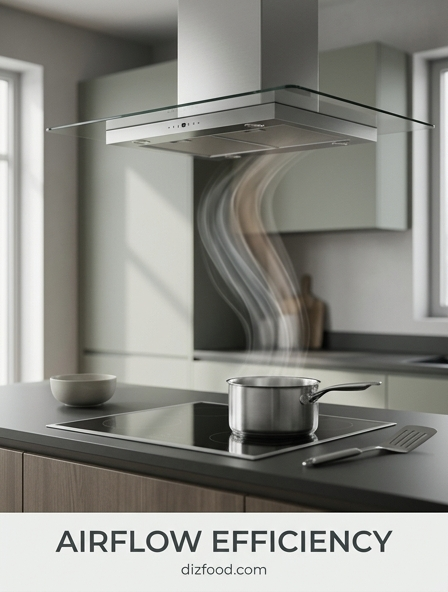
A high-performance range hood is the centerpiece of any kitchen's airflow strategy. Unlike basic recirculating fans that simply move air through a charcoal filter and back into the room, a true extraction hood removes the air entirely. This is crucial for sanitation because it provides a one-way exit for the heat, moisture, and grease that are the primary enemies of a clean kitchen. The sanitation value of a hood is measured by its capture efficiency-how well it directs the "effluent plume" into the filters.
Modern high-end hoods often feature perimeter suction, which increases pressure at the edges to ensure no steam escapes. They also incorporate stainless steel baffle filters that are dishwasher-safe, making it easier to maintain the hygiene of the device itself. By investing in a hood with sufficient power for the stove's BTU output, the user ensures that the chemical byproducts of combustion (such as carbon monoxide and nitrogen dioxide) are safely removed. This protects the respiratory health of the family while keeping the kitchen's physical surfaces pristine and free from the microscopic debris that regular cleaning might miss.
Maintaining Clean Surfaces by Controlling Airflow Patterns
The final goal of airflow efficiency is the maintenance of clean surfaces. When air patterns are chaotic, dust and cooking residues are scattered across the room, landing on everything from the tops of cabinets to the floor. However, when airflow is controlled and predictable, these particles are funneled toward filtration points. This reduces the frequency and intensity of deep-cleaning tasks, as the volume of material settling on horizontal surfaces is drastically lowered.
Controlling these patterns involves balancing the makeup air-the air that enters the kitchen to replace what is being exhausted. If the makeup air is filtered and enters at a low velocity, it does not stir up floor dust. Conversely, if the exhaust is too powerful without a proper inlet, it can create a vacuum effect that pulls dust from other rooms or even from the chimney. By achieving a balanced, "neutral pressure" environment, the kitchen remains a controlled zone. This sophisticated approach to airflow turns the atmosphere into an active participant in the cleaning process, ensuring that the visual and biological cleanliness of the kitchen is preserved with minimal effort.

Comments