
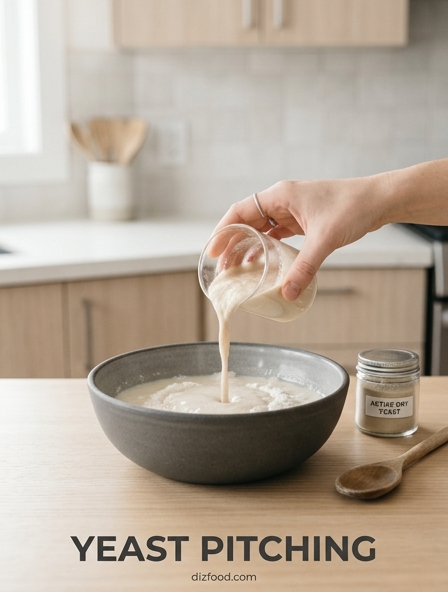
Optimal Yeast Pitching Temperatures
Achieving the correct temperature before introducing yeast to the wort is perhaps the most critical step in ensuring a healthy fermentation. For most ale strains, the ideal pitching range lies between 64°F and 72°F (18°C to 22°C). Pitching yeast when the liquid is too warm can lead to rapid, uncontrolled fermentation that produces harsh chemical notes, while pitching too cold can cause the yeast to remain dormant or drop out of suspension prematurely. Lager yeasts require a significantly cooler environment, typically between 45°F and 55°F (7°C to 13°C), to maintain their clean, crisp profile.
- Ale Strains: 64°F - 72°F for balanced ester production.
- Lager Strains: 45°F - 55°F for sulfur reduction and clarity.
- Kveik Strains: 80°F - 95°F for rapid, high-temperature performance.
- Belgian Strains: 68°F - 78°F to encourage spicy phenol development.
It is generally better to pitch slightly below the target fermentation temperature and allow the natural exothermic heat of fermentation to raise the temperature gradually. This "cool start" approach minimizes the production of fusel alcohols during the initial growth phase when yeast cells are most sensitive to their environment.
The Role of Thermal Consistency in Brewing
Thermal consistency is the cornerstone of repeatability in the home kitchen. When yeast cells encounter wild fluctuations in temperature, they often respond by producing stress-induced compounds that negatively impact the final flavor. A stable environment allows the yeast to follow a predictable metabolic path, ensuring that primary fermentation and the subsequent cleanup phase, where yeast reabsorbs diacetyl, occur efficiently. Fluctuations of even five degrees can cause yeast to "stall," leaving unfermented sugars and resulting in a cloyingly sweet or biologically unstable product.
Consistency also impacts the physical behavior of the yeast. Steady temperatures promote uniform flocculation, meaning the yeast will settle at the bottom of the vessel at the expected time, aiding in clarity. In a kitchen setting, this often requires identifying a location away from ovens, refrigerators, or drafty windows. By mastering the thermal environment, a brewer can ensure that a recipe brewed in July tastes identical to the same recipe brewed in December, regardless of external seasonal shifts.
Essential Tools for Monitoring Wort Temperature
To manage yeast pitching effectively, a brewer must rely on accurate data rather than guesswork. Relying on the "touch test" is insufficient, as the human hand is a poor judge of specific enzymatic and microbial thresholds. Modern kitchen brewers utilize a variety of specialized tools to ensure the wort has reached the precise target before the yeast is pitched. Each tool offers different advantages depending on whether the brewer needs instant feedback or long-term monitoring during the fermentation process.
| Tool Type | Primary Use | Accuracy Level |
|---|---|---|
| Digital Instant-Read | Post-boil check | High (+/- 0.1°F) |
| Infrared Laser | Surface temperature | Moderate (External only) |
| Adhesive LCD Strip | Fermenter monitoring | Low (Ambient sensitive) |
| Thermowell Probe | Internal monitoring | Excellent (Core temp) |
Using a calibrated digital thermometer is the industry standard for the pitching stage. However, for the weeks following the pitch, a thermowell-a stainless steel tube inserted into the fermenter-allows a probe to measure the center of the liquid without risking contamination. This provides the most accurate picture of the yeast's actual working environment.
Avoiding Off Flavors Through Precise Cooling
The cooling phase is a race against time and chemistry. If the wort remains in the "danger zone" between 90°F and 140°F for too long, it becomes highly susceptible to bacterial infection and DMS (Dimethyl Sulfide) production. More importantly, if yeast is pitched while the wort is still above 80°F, the resulting beer often suffers from an abundance of esters and fusel alcohols. These off-flavors can manifest as a harsh solvent-like burn in the throat or an overpowering, artificial banana aroma that masks the intended malt and hop profiles.
Precise cooling also facilitates the "cold break," where proteins and polyphenols coagulate and fall out of suspension. A rapid drop in temperature ensures these solids do not make it into the fermenter, resulting in a clearer finished product. By reaching the target pitching temperature quickly and accurately, the brewer creates an environment where the yeast can dominate the wort immediately, suppressing any competing wild microbes and focusing its energy on clean ethanol conversion rather than managing thermal stress.
Impact of Ambient Room Temperature on Yeast
The temperature of the room where the fermenter is stored acts as a thermal jacket for the yeast. Because fermentation is an exothermic process, the internal temperature of the wort can be 5°F to 10°F higher than the ambient air. If a kitchen pantry is kept at a steady 70°F, the yeast inside a vigorous fermenter might actually be experiencing 78°F, which is near the upper limit for many standard ale strains. Understanding this delta is vital for preventing the yeast from overheating during the first 48 hours of activity.
Ambient factors to consider include:
- Direct Sunlight: Can cause localized heating and "skunking" of hops.
- Floor Material: Concrete floors can act as a heat sink, pulling warmth away.
- Airflow: Drafts from air conditioning vents can cause uneven cooling.
- Elevation: High shelves trap rising heat, while lower areas remain cooler.
Successful brewers often use a dedicated closet or an insulated "swamp cooler" (a water bath) to buffer the fermenter against these ambient shifts. By controlling the surrounding air, you exert indirect but powerful control over the yeast's metabolic rate and the resulting flavor compounds.
Rapid Wort Chilling Techniques for Homebrewers
Moving five gallons of boiling liquid to pitching temperatures quickly is a major hurdle in any kitchen. The most common method is the immersion chiller, a coil of copper or stainless steel that circulates cold tap water through the wort. This method is favored for its simplicity and ease of sanitation. For those seeking even higher efficiency, a plate chiller or counterflow chiller passes the hot wort and cold water in opposite directions through narrow channels, cooling the liquid almost instantly as it flows into the fermenter.
- Ice Bath: Suitable for small batches; involves submerging the pot in a sink of ice.
- Immersion Coil: Dropped into the boil 10 minutes before the end to sanitize.
- Counterflow Chilling: Wort is pumped through a "hose-within-a-hose" system.
- No-Chill Method: Transferring hot wort to a sealed, sanitized container to cool overnight.
While the no-chill method is popular in water-restricted areas, rapid chilling is preferred for maximizing hop aroma and achieving a crisp cold break. The faster the wort reaches the 65°F-70°F range, the sooner the yeast can be safely introduced, reducing the window of vulnerability to airborne contaminants.
Calibrating Kitchen Equipment for Accuracy
A thermometer that is off by just three degrees can be the difference between a successful fermentation and a stalled batch. Calibration should be a routine part of the brewing schedule, ensuring that your tools provide a true reflection of reality. The most reliable way to calibrate a kitchen thermometer is the "ice point" method. Fill a glass with crushed ice and a small amount of water; the probe should read exactly 32°F (0°C) when submerged in the slurry. If it does not, you must adjust the digital offset or manually account for the variance during your brew day.
Additionally, the "boiling point" method can be used, though it requires adjustments for your specific altitude. At sea level, pure water boils at 212°F (100°C), but this temperature drops as elevation increases. By verifying your equipment at both ends of the thermal spectrum, you ensure linearity in your readings. Regular calibration prevents the common frustration of "ghost" temperatures where the brewer believes they are pitching at 68°F, but the actual liquid is closer to 75°F, leading to unexpected ester production and ruined batches.
Managing Fermentation Heat Spikes
Once yeast is pitched, the process enters its most volatile phase. As the yeast consumes sugars, it generates kinetic energy in the form of heat. This phenomenon, known as a heat spike, usually occurs 24 to 48 hours after pitching during the "high krausen" stage. If left unmanaged, the temperature can climb rapidly, causing the yeast to over-produce esters or even die off if the threshold exceeds 85°F. Active cooling management is essential during this window to keep the fermentation within the desired range.
To mitigate these spikes, many brewers use a temperature-controlled fermentation chamber, such as a modified chest freezer. If a dedicated chamber is unavailable, more manual methods can be effective. Wrapping the fermenter in a wet towel and placing a fan nearby utilizes evaporative cooling to drop the temperature by several degrees. Monitoring the airlock activity and the external temperature strip daily allows the brewer to intervene before the heat spike reaches a critical level, preserving the delicate balance of the beer's flavor profile.
Rehydrating Dry Yeast for Thermal Success
While many modern dry yeast manufacturers claim their products can be "sprinkled" directly onto the wort, rehydration remains a best practice for thermal stability. The cell walls of dry yeast are fragile and highly permeable during the first few minutes of moisture contact. If dry yeast is pitched directly into cool wort, the cold shock can damage the cell membranes, leading to a significant loss of viable cells. Instead, rehydrating in warm, sterile water allows the cells to regain their structural integrity before being introduced to the sugary environment of the wort.
The standard rehydration process involves:
- Heating 100ml of water to 90°F-95°F (32°C-35°C).
- Sprinkling the yeast on the surface and letting it sit for 15 minutes.
- Gently stirring the slurry to ensure no clumps remain.
- Attemperating the slurry by adding small amounts of wort until it is within 10°F of the main batch.
This final step-attemperation-is vital. Dropping warm yeast into cool wort causes osmotic shock, which can lead to sluggish fermentations. Matching the temperatures ensures a smooth transition and immediate activity upon pitching.
Maintaining Stable Environments for Consistent Results
The final stage of temperature management in the kitchen involves long-term stability. Once the initial heat of fermentation has subsided, the yeast enters a maturation phase. During this time, the temperature should remain stable or even be raised slightly (a "diacetyl rest") to encourage the yeast to finish any remaining complex sugars and reabsorb fermentation byproducts. Drastic cooling at this stage can cause the yeast to hibernate too early, leaving behind butter-like flavors (diacetyl) or green apple notes (acetaldehyde).
Using a dual-stage temperature controller, such as an Inkbird, is the most effective way to maintain this stability. These devices can trigger a heating pad if the temperature drops too low at night or turn on a cooling element if it rises during the day. This level of automated control removes human error and environmental variables from the equation. In the quest for professional-quality beer in a home kitchen, the ability to maintain a rock-solid thermal environment from pitching to bottling is the single most important factor in achieving consistent, high-quality results.





Comments