
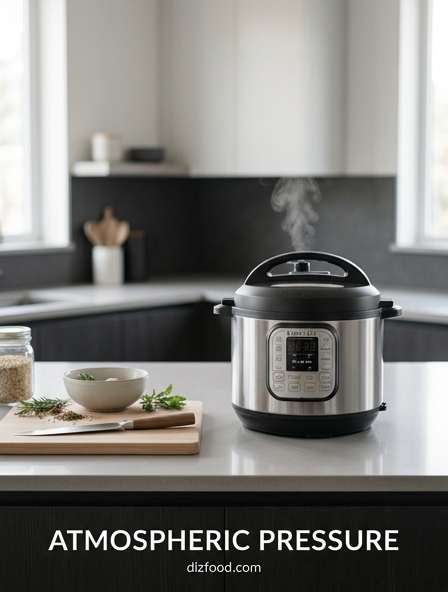
The Mechanics of Atmospheric Pressure in Siphons
Atmospheric pressure is the silent engine behind the functionality of a kitchen siphon. At sea level, the weight of the air above us exerts approximately 14.7 pounds per square inch of force on all surfaces, including the liquids in our pots and decanters. When a siphon tube is submerged into a liquid and primed, it removes the air that would otherwise push back against the fluid inside the tube. This creates a localized area of lower pressure within the conduit. Consequently, the standard atmospheric pressure pressing down on the surface of the liquid in the primary vessel forces the fluid upward into the tube to fill the void.
- Pressure Equilibrium: Atmospheric force acts equally on the liquid surface, pushing it toward the area of lower resistance.
- Gravitational Pull: Once the liquid clears the highest point of the siphon, gravity accelerates the flow into the lower vessel.
- Cohesive Forces: The molecular attraction between liquid particles ensures the stream remains unbroken during transfer.
Without the constant weight of the atmosphere, the siphon would fail to lift the liquid over the crest of the tube. This mechanical process allows chefs and brewers to move large volumes of liquid without mechanical pumps, relying entirely on the natural weight of the air to facilitate the transfer.
Physics of Liquid Movement in Brewing
In the context of specialized brewing, such as using a vacuum pot or syphon brewer, the physics of liquid movement is a delicate balance of thermal expansion and atmospheric weight. As water is heated in the lower bulb, it generates water vapor, which increases internal pressure. This pressure eventually exceeds the external atmospheric pressure, forcing the hot water up through a filter and into the upper chamber where the coffee grounds reside. This phase is characterized by an active battle between localized steam pressure and the surrounding air.
The true magic occurs when the heat source is removed. As the lower bulb cools, the water vapor condenses back into liquid, creating a partial vacuum. The external atmospheric pressure, now significantly higher than the internal pressure of the bulb, pushes the brewed coffee back through the filter. This process provides a remarkably clean cup of coffee because the atmospheric force ensures a consistent and rapid filtration speed that manual pouring cannot replicate. This cycle demonstrates how temperature manipulation allows brewers to "harness" air pressure to move liquids vertically against gravity with immense precision and efficiency.
How Pressure Differentials Create Precision Flow
The movement of fluids in the kitchen is often governed by a pressure differential, or the difference in pressure between two points. To achieve precision flow, a chef must manipulate these variables to ensure a steady stream. When the pressure at the intake point is significantly higher than at the discharge point, the velocity of the liquid increases. This is particularly useful when racking wine or moving clarified stocks where disturbing the sediment is a primary concern. By controlling the height difference between the two containers, the chef adjusts the gravitational potential energy, which effectively widens the pressure gap.
- Establish a height advantage by placing the source vessel on a higher surface.
- Prime the tube to eliminate air pockets that cause turbulence or flow interruption.
- Maintain a submerged intake to prevent atmospheric air from entering the system.
- Regulate the output end to slow the flow, preventing the agitation of settled solids.
Precision is maintained as long as the atmospheric pressure remains constant on the surface of the source liquid. Any interruption in this pressure balance, such as a leak in the siphon line, will immediately stall the flow, highlighting the necessity of an airtight seal.
Siphoning Science for Culinary Accuracy
Culinary accuracy often depends on the ability to separate liquids of different densities or to extract clear fluids from a mixture containing particulates. Siphoning science provides a non-invasive method to achieve this, relying on the predictable behavior of fluids under atmospheric load. Unlike pouring, which creates turbulence and re-mixes layers, a siphon draws liquid from the top down or the bottom up with minimal disturbance. This is critical in high-end gastrique production or when separating fats from consommés.
| Factor | Effect on Accuracy | Control Method |
|---|---|---|
| Tube Diameter | Flow Velocity | Select narrow tubes for delicate extractions. |
| Fluid Density | Required Force | Heavier liquids require greater height differentials. |
| Air Leaks | Flow Termination | Ensure airtight seals at all connection points. |
By understanding that the atmosphere is doing the "heavy lifting," chefs can focus on the positioning of the siphon tip. This allows for the removal of the clearest liquid without the risk of including unwanted debris, leading to a more refined final product with superior clarity and flavor profile.
The Impact of Altitude on Brewing Pressure
Altitude significantly alters the behavior of atmospheric pressure, which in turn impacts kitchen siphoning and brewing techniques. As elevation increases, the column of air above the kitchen thins, resulting in lower atmospheric pressure. For brewers using siphon-based systems, this means there is less force available to push liquid through filters or up tubes. At 5,000 feet, the boiling point of water is lower, but the atmospheric "push" is also diminished, which can lead to slower transfer times and altered extraction rates in vacuum brewing systems.
Furthermore, because the pressure differential between the vacuum chamber and the external environment is narrower at high altitudes, the speed of the "draw-down" phase is reduced. Chefs must often compensate for this by increasing the height difference between vessels or using wider diameter siphons to maintain a functional flow rate. Understanding these localized variations is essential for maintaining consistency across different geographical locations, as a recipe or technique perfected at sea level may require significant mechanical adjustments when performed in a mountain environment where the air is thinner.
Maintaining Vacuum Stability for Liquid Transfer
In manual siphoning, the stability of the vacuum is the most critical factor for a successful liquid transfer. A vacuum in this context isn't a total void, but a region of pressure lower than the surrounding atmosphere. If the vacuum is compromised by the introduction of air, the pressure equilibrium is restored, and the flow stops immediately. This is a common frustration in the kitchen when using flexible tubing that may kink or develop micro-fissures over time.
- Check for micro-bubbles: Small bubbles often indicate a loose connection or a porous tube material.
- Seal Integrity: Use food-grade silicone or specialized clamps to ensure the tube remains airtight at the transition points.
- Submersion Depth: Ensure the intake end remains deep enough to avoid vortexing, which can pull air into the system.
By maintaining a stable environment within the siphon tube, the atmospheric pressure can continue to exert its force on the liquid surface without resistance. This ensures a continuous, laminar flow that is essential for transferring large batches of fermented beverages or infused oils without introducing oxygen, which can lead to spoilage or flavor degradation.
Atmospheric Force and Fluid Displacement Explained
Fluid displacement via siphoning is essentially a game of "musical chairs" played at the molecular level, driven by atmospheric force. When liquid is pulled out of the primary vessel, it creates a displacement volume. The atmosphere, seeking to fill every available space, pushes down on the liquid in the vessel to force it into the tube. This is a manifestation of Pascal's Principle, where pressure applied to a confined fluid is transmitted undiminished in every direction. In an open kitchen pot, the pressure is the weight of the air itself.
The displacement continues because the weight of the liquid in the "downward" leg of the siphon is greater than the weight in the "upward" leg. This weight difference creates a suction effect, but that suction would be powerless without the atmospheric force pushing from the outside. If you were to place the entire kitchen setup in a vacuum chamber, the siphon would cease to function entirely. This highlights that the movement is not just "pulling" from the bottom, but rather "pushing" from the top, a nuance that explains why siphons have a theoretical maximum height limit based on the weight of the air column.
Controlled Siphoning Techniques for Clear Extracts
To achieve the highest level of clarity in extracts and infusions, controlled siphoning is superior to any filtration method that involves pouring. When a chef creates a vanilla extract or a herb-infused oil, fine particulates often settle at the bottom over several weeks. Utilizing atmospheric pressure allows for the extraction of the clarified middle layer without the risk of sediment re-suspension. The technique requires a steady hand and a calculated approach to the physics of flow.
- Position the source container on a vibration-free surface to allow sediment to fully pack.
- Slowly lower the siphon intake, stopping several millimeters above the sediment line.
- Use a flow-control clamp on the discharge end to keep the velocity low, preventing a "whirlpool" effect at the intake.
- Discard the final few milliliters of liquid where the risk of particulate carryover is highest.
This method leverages the constant pressure of the atmosphere to move the fluid gently. Because the force is applied uniformly across the surface, the liquid is moved as a single mass, preserving the stratification of the layers and ensuring the final extract is crystal clear and professionally refined.
The Relationship Between Air Pressure and Flow Rate
The flow rate of a kitchen siphon is directly proportional to the pressure differential between the atmosphere and the internal state of the tube. According to Torricelli's Law, the speed of efflux is related to the height of the liquid. However, the air pressure provides the necessary resistance or assistance to this movement. If the atmospheric pressure is high, the "push" into the siphon is more vigorous. Conversely, friction within the tube acts as a counter-pressure, slowing the liquid down as it interacts with the walls of the conduit.
In practical kitchen applications, the flow rate can be calculated by looking at the density of the liquid and the vertical distance between the two surfaces. Thicker liquids like honey or heavy syrups move more slowly because their internal friction (viscosity) resists the atmospheric push. To maintain a high flow rate with viscous fluids, a chef must increase the height difference or use a wider tube to reduce the relative friction. Understanding this relationship allows for the engineering of efficient transfer systems that save time during high-volume production without sacrificing the integrity of the ingredients being moved.
Engineering Precision in Manual Siphon Systems
Engineering a manual siphon system for kitchen use requires attention to material science and fluid dynamics. The tools used must be capable of maintaining a vacuum while resisting the corrosive nature of certain foods, such as acidic vinegars or high-proof alcohols. Precision engineering ensures that every component-from the bulb pump to the rigid racking cane-works in harmony with atmospheric pressure to provide a seamless user experience. The choice of materials like borosilicate glass or food-grade plastics is vital for maintaining a rigid structure that won't collapse under pressure.
- Rigid Racking Canes: Prevent the tube from curling, allowing for precise placement near the bottom of a vessel.
- Check Valves: Integrated one-way valves allow for easy priming without the need for manual suction, ensuring hygiene.
- Smooth Bore Tubing: Reduces internal turbulence, which helps maintain a laminar flow and prevents the foaming of carbonated liquids.
When these elements are correctly engineered, the siphon becomes an extension of the chef's intent. It transforms a simple principle of physics-atmospheric pressure-into a sophisticated tool for culinary excellence, enabling the transfer of delicate liquids with a level of control that manual pouring can never achieve.

Comments