
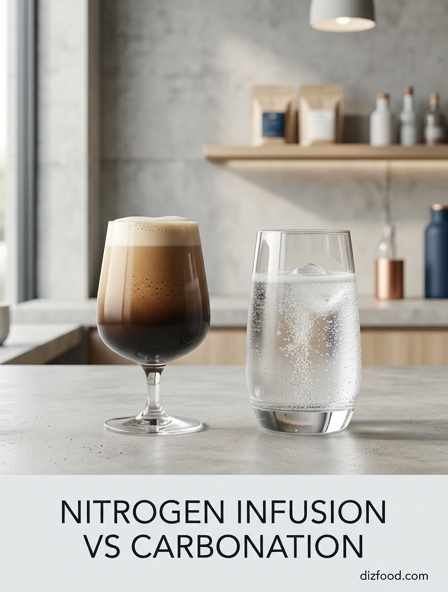
When you're aiming for the ultimate drinking experience, the choice between nitrogen infusion and traditional carbonation is what defines your beverage's personality. While carbonation is the classic go-to for that familiar, sharp "zing" and refreshing acidity found in sodas and seltzers, nitrogen infusion-or "nitro"-is the secret to a luxurious, velvet-like mouthfeel. Carbon dioxide (CO2) creates larger, aggressive bubbles that tingle the tongue, whereas nitrogen utilizes tiny, insoluble micro-bubbles to produce a creamy consistency and a stunning visual cascade. Whether you are crafting a bold cold brew coffee or a smooth craft stout, understanding how these gases interact with liquids is the key to mastering texture and balancing flavor profiles for the perfect pour.
| Feature | Nitrogen Infusion (Nitro) | Carbonation (CO2) |
|---|---|---|
| Bubble Size | Micro-bubbles (tiny & dense) | Large bubbles (visible & active) |
| Mouthfeel | Smooth, creamy, and velvety | Sharp, prickly, and effervescent |
| Flavor Impact | Mutes bitterness; enhances sweetness | Adds acidic "bite"; brightens citrus |
| Visual Appeal | Slow, mesmerizing "cascade" effect | Rapidly rising bubbles; thin foam |
| Top Uses | Cold brew, stouts, creamy cocktails | Sodas, seltzers, lagers, sparkling wine |
| Gas Solubility | Low (requires high-pressure infusion) | High (dissolves easily into liquid) |
Understanding Nitrogen Infusion and Carbonation
The culinary world has long utilized gas infusion to alter the physical and sensory properties of liquids. Carbonation is the most common method, involving the dissolution of carbon dioxide (CO2) gas into water or other beverages under pressure. This process creates carbonic acid, which provides the characteristic "bite" or "zing" associated with sodas, sparkling waters, and many styles of beer. Carbonation has been a staple in the beverage industry since the late 18th century, serving both as a preservative and a flavor enhancer.
In contrast, nitrogen infusion, or "nitro," is a more modern application in the kitchen and bar. While nitrogen gas (N2) makes up about 78% of the air we breathe, it behaves very differently from carbon dioxide when forced into a liquid. Because nitrogen is largely insoluble in water, it does not create an acidic reaction. Instead, it forms thousands of microscopic bubbles that remain suspended in the liquid for a longer duration. This technique was traditionally associated with specific Irish stouts but has recently expanded into coffee, tea, and even cocktails.
- Carbonation: Utilizes CO2, creates carbonic acid, produces large and aggressive bubbles.
- Nitrogenation: Utilizes N2 (or a mix), stays neutral in pH, produces tiny and velvety bubbles.
- Common Applications: Sodas, sparkling wine, and lagers for CO2; Cold brew coffee and stouts for N2.
Understanding the distinction between these two gases is essential for any modern chef or barista. Choosing one over the other can fundamentally change the chemical makeup and consumer perception of a drink, turning a sharp, refreshing beverage into a smooth, dessert-like experience.
The Science of Tiny Bubbles vs Big Fizz
The primary physical difference between nitrogen and carbon dioxide lies in their molecular size and solubility. Carbon dioxide molecules are relatively large and highly soluble in aqueous solutions. When a pressurized container of carbonated liquid is opened, the sudden drop in pressure causes the dissolved CO2 to escape rapidly, forming large, buoyant bubbles that rise quickly to the surface. This creates the "fizz" and "effervescence" that is physically felt on the tongue as the bubbles pop.
Nitrogen molecules are much smaller and significantly less soluble than CO2. To get nitrogen to stay in a liquid, it must be applied at much higher pressures, often using a specialized "restrictor plate" in a faucet to force the gas into the liquid as it is poured. Because the bubbles are so small, they do not rise as quickly as CO2 bubbles. Instead, they create a mesmerizing "cascade" effect where the bubbles appear to flow downward against the glass before eventually forming a thick, stable foam at the top.
| Feature | Carbon Dioxide (CO2) | Nitrogen (N2) |
|---|---|---|
| Bubble Size | Large / Macro | Microscopic |
| Solubility | High | Very Low |
| Visual Effect | Rapid Rising | Cascading / Swirling |
| Head/Foam | Thin and Dissipating | Dense and Persistent |
This scientific variance dictates how the beverage interacts with the glass and the consumer's senses. While CO2 is chaotic and energetic, N2 is structured and calm, leading to two completely different visual presentations in a culinary setting.
Comparing Mouthfeel and Texture Profiles
Mouthfeel is a critical component of the tasting experience, and the choice of gas can alter it more significantly than the ingredients themselves. Carbonation is defined by its "prickle." The bubbles of CO2 provide a tactile stimulation of the trigeminal nerve, which the brain interprets as a sharp, tingling, or even slightly burning sensation. This "bite" is highly effective at cutting through rich or fatty foods, acting as a palate cleanser. It provides a refreshing quality that makes the liquid feel lighter and more active in the mouth.
Nitrogen infusion provides the polar opposite experience. Because the bubbles are so small, they do not pop aggressively on the tongue. Instead, they create a sense of weight and creaminess. A nitrogenated beverage feels thick, velvety, and smooth, often described as having a "silky" texture. This creaminess is achieved without the addition of dairy or fats, making it a powerful tool for creating rich textures in vegan or low-calorie applications. The density of the nitrogen foam (the head) also contributes to this sensation, providing a soft cushion for the lips before the liquid even reaches the tongue.
When comparing the two, carbonation feels like a series of tiny explosions, whereas nitrogen feels like a continuous, flowing ribbon. In a kitchen setting, a chef might choose carbonation for a fruit-based palate cleanser but opt for nitrogen infusion for a savory soup or a dessert-style beverage to enhance the perception of luxury and richness.
Flavor Impacts of Nitrogen vs Carbon Dioxide
The impact of gas on flavor is often overlooked, but it is chemically significant. When carbon dioxide dissolves in water, it reacts to form carbonic acid (H2CO3). This lowers the pH of the beverage, making it more acidic. This acidity adds a sour or tangy note to the flavor profile, which can complement citrus or fruity notes but may mask more delicate flavors. In many sodas, high levels of sugar are required specifically to balance out the harshness of the carbonic acid.
Nitrogen is an inert gas, meaning it does not react chemically with the liquid or change its pH level. Because it lacks the acidic "bite" of CO2, the natural flavors of the base liquid are allowed to shine through more clearly. This often leads to a perception of increased sweetness. In beverages like coffee or stout, nitrogen tempers the perception of bitterness. The creamy texture of the micro-bubbles coats the taste buds, softening the impact of tannins and bitter compounds, which can make the drink taste more balanced and mellow.
- Acidity: CO2 increases acidity; N2 is pH-neutral.
- Bitterness: CO2 can emphasize sharp bitterness; N2 tends to mask or soften it.
- Sweetness: N2 enhances the perception of natural sugars due to its creamy texture.
- Clarity: CO2 provides a "bright" flavor; N2 provides a "round" flavor.
By selecting nitrogen over carbon dioxide, a producer can reduce the amount of added sweeteners or flavorings while still achieving a palatable and enjoyable flavor profile. This makes nitrogen a favorite for craft producers focusing on high-quality raw ingredients.
Nitro Cold Brew vs Carbonated Coffee
Coffee has become the primary battleground for gas infusion techniques. Nitro cold brew is created by infusing cold-steeped coffee with nitrogen gas. The result is a beverage that looks remarkably like a Guinness stout, featuring a rich, creamy head and a cascading body. The nitrogen suppresses the inherent acidity of the coffee beans and the bitterness that can sometimes occur during cold brewing. The result is a drink that is naturally sweet and incredibly smooth, often consumed without the need for cream or sugar.
Carbonated coffee, sometimes called "coffee soda" or "sparkling coffee," offers a completely different experience. Usually made by injecting CO2 into a coffee concentrate or a chilled brew, this beverage is bright, effervescent, and sharp. The carbonation highlights the fruity and floral notes of the coffee, making it feel more like a refreshing tonic than a heavy beverage. It is often paired with citrus syrups or tonic water to lean into its acidic profile.
- Appearance: Nitro is opaque and creamy; Carbonated coffee is clear and bubbly.
- Temperature perception: Nitro feels colder and more refreshing due to the foam insulation.
- Serving: Nitro is served from a tap; Carbonated coffee is often bottled or canned.
While nitro cold brew has dominated the specialty coffee market for the last decade, carbonated coffee remains a niche favorite for those who prefer the "zing" of a soda. The choice between them usually depends on whether the consumer wants a "dessert-like" treat (Nitro) or a "refreshing-pick-me-up" (Carbonated).
Nitrogenated Stout vs Traditional Carbonated Beer
In the brewing world, the distinction between nitrogenation and carbonation is classic. Traditional beers, such as American lagers, IPAs, and Pilsners, are carbonated. The CO2 provides a crisp finish and helps carry the hop aromas to the nose. The high level of effervescence is what gives these beers their refreshing, thirst-quenching quality. Without carbonation, a lager would feel syrupy and flat.
Nitrogenated stouts, most famously Guinness, use a gas blend-typically 70% nitrogen and 30% carbon dioxide. The small amount of CO2 provides enough pressure to move the liquid through the lines, while the nitrogen creates the signature creamy mouthfeel. When poured through a "sparkler" faucet, the nitrogen is forced out of the solution, creating the famous "surge and settle" effect. This process results in a very thick, long-lasting head that stays on the glass until the last sip, a feat carbonated beers rarely achieve.
The difference in head retention is purely scientific. CO2 bubbles are unstable and burst easily, whereas N2 bubbles are small and resilient, forming a structural matrix that supports the foam. In a nitrogenated beer, the bubbles are so small that they actually enhance the perception of the malt's roasted, chocolatey notes by muting the hop bitterness. Conversely, the aggressive bubbles in a carbonated beer "scrub" the tongue, preparing it for another bite of food or another sip of beer, which is why lagers are so frequently paired with heavy bar foods.
Solubility Differences Between N2 and CO2
The solubility of a gas in a liquid is governed by Henry's Law, which states that the amount of dissolved gas is proportional to its partial pressure above the liquid. However, different gases have different "solubility coefficients." Carbon dioxide is highly soluble because it interacts chemically with water molecules. This means that at standard refrigeration temperatures, CO2 will stay dissolved in a beverage with relatively low pressure (around 10-15 PSI).
Nitrogen is almost entirely insoluble in comparison. At the same temperature and pressure, nitrogen is about 50 to 100 times less soluble than carbon dioxide. To get even a small amount of nitrogen to "stick" to the liquid, brewers and baristas must use much higher pressures, often exceeding 40 or 50 PSI. Furthermore, the nitrogen doesn't really "dissolve" in the same way; it is more accurately described as being "entrained" or forced into a suspension.
| Gas Type | Relative Solubility | Required Pressure (Typical) | Temperature Dependency |
|---|---|---|---|
| CO2 | High | 10 - 15 PSI | Very high (Cold is better) |
| N2 | Very Low | 40 - 55 PSI | Moderate |
This difference is why you cannot simply swap a CO2 tank for a nitrogen tank on the same equipment. The higher pressures required for nitrogen can damage standard regulators and lines designed for carbonation. It also explains why nitro drinks go "flat" differently; because the nitrogen isn't chemically bonded, it escapes the liquid more easily once the pressure is released, though the micro-bubbles stay suspended longer than the large CO2 bubbles stay dissolved.
Equipment Requirements for Both Infusion Methods
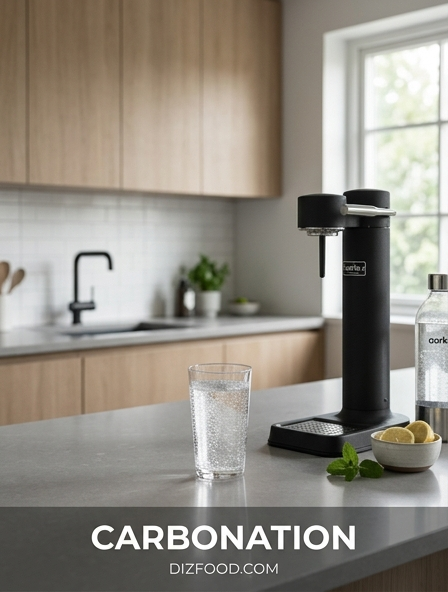
The equipment needed to carbonate a liquid is relatively straightforward and ubiquitous in the kitchen. For small-scale use, a soda siphon or a counter-top carbonator uses small CO2 cartridges. In a commercial setting, a CO2 tank is connected to a regulator, which feeds gas into a keg or a "bright tank." Because CO2 dissolves easily, simply chilling the liquid and applying pressure over 24-48 hours is sufficient to achieve carbonation.
Nitrogen infusion requires more specialized hardware. First, you need a nitrogen tank, which contains gas at much higher pressures than CO2. Second, you need a high-pressure regulator. To achieve the creamy "nitro" pour, a "stout faucet" or "nitro tap" is essential. These faucets contain a "restrictor plate"-a small disc with tiny holes. As the liquid is forced through these holes at high pressure, the nitrogen is "knocked" out of the solution to create the micro-bubbles. Without this plate, a nitro drink would simply come out of the tap like a flat liquid with no head.
- Carbonation Equipment: CO2 tank, standard regulator, standard faucet, or whipping siphon with CO2 chargers.
- Nitrogen Equipment: N2 tank, high-pressure regulator, stout faucet with restrictor plate, or whipping siphon with N2O (Nitrous Oxide) chargers.
- Gas Blends: Many systems use "Beer Gas," a pre-mixed cylinder of both N2 and CO2 to get the benefits of both.
In modern home kitchens, the "whipping siphon" has become a versatile tool. While originally designed for whipped cream using Nitrous Oxide (N2O), which behaves similarly to Nitrogen (N2), it can also be used with CO2 chargers to instantly carbonate fruit or create sparkling cocktails, provided the user has the correct chargers for the desired effect.
Digestive Effects of Nitrogen and Carbonation
The way our bodies process gas-infused liquids varies based on the gas used. Carbonation is well-known for causing bloating and gas. When you consume a carbonated beverage, the CO2 is released from the liquid as it warms up in your stomach. This can lead to belching and a feeling of fullness. For some, the acidity of the carbonic acid can also trigger or exacerbate acid reflux and heartburn. However, the "bite" of carbonation is also known to help settle an upset stomach for certain individuals by encouraging the release of trapped air.
Nitrogen-infused beverages are generally much gentler on the digestive system. Because nitrogen is not acidic, it does not contribute to acid reflux. Furthermore, because the bubbles are so small and the gas is less soluble, the volume of gas that actually reaches the stomach is often lower than in a heavily carbonated soda. People who find sparkling water too "harsh" or "bloating" often find nitro beverages much easier to consume in larger quantities without discomfort. The creamy texture can also act as a buffer for the stomach against the high caffeine levels in coffee.
From a nutritional standpoint, neither gas adds calories, but their effects on appetite can differ. The bloating sensation of CO2 can create a temporary feeling of satiety, while the smooth, drinkable nature of nitro products may lead to faster consumption. For those with sensitive stomachs or conditions like IBS, nitrogen infusion is frequently recommended as a superior alternative to traditional carbonation when looking for a textured beverage experience.
Choosing the Best Infusion for Your Beverage
Selecting between nitrogen and carbon dioxide depends entirely on the desired flavor profile and the "vibe" of the drink. Carbonation is the king of refreshment. If your beverage is fruit-forward, acidic, or intended to be a palate cleanser, CO2 is the correct choice. The acidity of the gas will brighten the flavors of lemon, lime, berries, and ginger, while the fizz provides a lively, energetic experience. It is the best choice for sparkling lemonades, light lagers, and traditional sodas.
Nitrogen is the master of indulgence and depth. If your beverage features flavors like chocolate, vanilla, nuttiness, or toasted grains, nitrogen will enhance these notes by providing a creamy backdrop. It is the ideal choice for cold brew coffee, creamy stouts, and milk-based (or plant-milk) cocktails. Nitrogen is also excellent for "softening" beverages that might otherwise be too harsh or bitter, as the micro-bubbles coat the tongue and provide a smoother transition from the first sip to the finish.
- Pick Carbonation for: Brightness, acidity, refreshing "bite," and palate cleansing.
- Pick Nitrogen for: Creaminess, richness, masking bitterness, and visual "cascade" effects.
- Consider a Blend for: Beverages that need some "pop" but also benefit from a stable, creamy head.
In the modern kitchen, these two gases are no longer just for big manufacturers. With the rise of at-home kegging systems and whipping siphons, enthusiasts can experiment with both. A simple rule of thumb: if you want it to dance on your tongue, carbonate it; if you want it to wrap your tongue in a velvet blanket, nitrogenate it.


Comments