
Finding the perfect balance between ancient tradition and modern convenience is the secret to mastering your daily green tea ritual. When deciding between a traditional bamboo matcha whisk (Chasen) and a handheld electric frother, your choice directly impacts the texture, aroma, and overall flavor profile of your drink. While a bamboo whisk is meticulously designed to break up clumps and create a creamy, suspended micro-foam, an electric frother offers a high-speed, entry-level solution for those on the go. Whether you are aiming for a meditative ceremonial experience or a quick, frothy matcha latte, understanding the mechanical differences between these two tools is essential for achieving that vibrant, clump-free emerald brew every single time.
| Feature | Traditional Bamboo Whisk | Electric Milk Frother |
|---|---|---|
| Material | Sustainable Hand-carved Bamboo | Stainless Steel & Plastic |
| Froth Texture | Silky, dense micro-foam | Large, airy soap-like bubbles |
| Prep Time | 30-60 seconds (Zig-zag motion) | 10-15 seconds (Motorized) |
| Skill Level | Moderate; requires "W" technique | Beginner; one-button operation |
| Maintenance | Gentle rinse; air dry on a holder | Easy rinse or dishwasher safe |
| Best For | Ceremonial grade & tea purists | Matcha lattes & travel use |
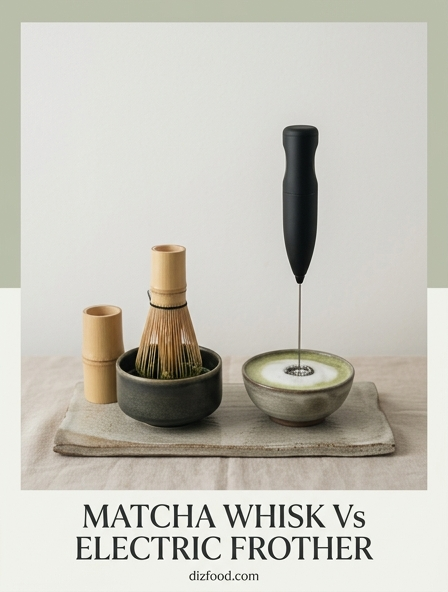
Matcha Whisk vs Electric Frother The Ultimate Showdown
The debate between the traditional bamboo whisk, known as the chasen, and the modern electric milk frother is a central topic for any matcha enthusiast. At its core, this showdown represents a choice between ancient ritual and modern efficiency. The chasen has been the primary tool for preparing matcha for centuries, specifically designed to suspend the finely ground tea powder in hot water. Its many delicate tines are carved from a single piece of bamboo, engineered to break up clumps and create a delicate, creamy froth. On the other hand, the electric frother is a product of the high-speed kitchen era, utilizing a motorized coil to inject air into the liquid within seconds. While both tools aim to achieve a homogeneous mixture, they approach the task with entirely different philosophies and physical mechanisms.
Choosing between them often depends on your lifestyle and your goals for the tea-drinking experience. If you view your morning matcha as a meditative practice, the manual rhythm of the whisk is irreplaceable. However, for those who need a quick caffeine boost before a commute, the electric frother offers a level of convenience that the bamboo whisk cannot match. Beyond speed, these tools also differ in how they interact with the tea's chemical properties. The friction, the temperature retention, and the aeration levels vary significantly between the two, leading to differences in mouthfeel and flavor profile. Understanding these nuances is the first step in mastering the art of the perfect matcha bowl, whether you prefer the Zen of the past or the speed of the present.
Traditional Bamboo Chasen Benefits for Authentic Matcha
The bamboo chasen is more than just a kitchen utensil; it is a specialized instrument crafted specifically for the unique physical properties of stone-ground green tea. Most authentic whisks feature between 80 and 120 fine tines, which are curved at the tips to maximize surface area contact. This design is crucial for "kneading" the matcha into the water rather than just spinning it. One of the primary benefits of using a chasen is the achievement of "koicha" (thick tea) and "usucha" (thin tea) with the correct viscosity. The bamboo material is flexible and soft, meaning it will not scratch the bottom of a ceramic matcha bowl (chawan), preserving your expensive teaware for years.
- Suspension: The tines are designed to break down microscopic clumps that an electric motor might miss, ensuring a smooth, grit-free drink.
- Aroma Release: The manual whisking process gently warms the tea and aerates it, releasing the vegetal and umami aromas more effectively than high-speed blades.
- Mindfulness: Using a chasen encourages a slower pace, turning a simple beverage into a moment of intentionality and calm.
Furthermore, the chasen does not introduce any metallic taste to the tea, which is a common concern for purists. Because matcha is a suspension of whole ground leaves rather than an infusion, the way those particles are dispersed determines the final flavor. The bamboo whisk excels at creating a "crema" that is integrated with the tea, rather than just a layer of bubbles sitting on top. This leads to a more balanced sip where the sweetness and bitterness of the matcha are perfectly harmonized.
Speed and Convenience Why Choose an Electric Frother
In a fast-paced world, the electric frother has become the go-to tool for many home baristas and office workers. The primary advantage of the electric frother is its sheer speed; while a traditional whisking session might take two minutes of vigorous hand movement, an electric frother can achieve a thick foam in fifteen to thirty seconds. This efficiency is a game-changer for those who incorporate matcha into a busy morning routine. Additionally, electric frothers are incredibly user-friendly. They require no special technique-simply submerge the coil and press a button. This eliminates the learning curve associated with the "W" or "M" shaped whisking motion required by the bamboo chasen.
Another significant benefit is the versatility of the electric frother. While a bamboo whisk is strictly for matcha, an electric frother can be used for lattes, protein shakes, or even frothing milk for coffee. This multi-purpose nature makes it a more attractive investment for those with limited kitchen storage. Furthermore, for individuals with wrist pain or conditions like arthritis, the manual exertion of whisking can be difficult or uncomfortable. The motorized action does the heavy lifting, allowing everyone to enjoy a foamy beverage regardless of physical dexterity. When it comes to cleanup, the electric frother is equally convenient, often requiring only a quick rinse under hot water or a brief spin in a cup of soapy water to remain hygienic and ready for the next use.
Texture Comparison Achieving the Perfect Matcha Foam
The texture of the foam is perhaps the most debated aspect of the matcha experience. A traditional bamboo whisk produces a "microfoam" consisting of tiny, uniform bubbles that are densely packed. This creates a velvety mouthfeel that coats the tongue and allows the flavor of the tea to linger. The foam produced by a chasen is structurally integrated with the tea body, meaning it doesn't dissipate quickly. This is essential for ceremonial preparations where the appearance of the foam is just as important as the taste. The gentle, repetitive motion of the bamboo tines ensures that the air is folded into the liquid slowly, resulting in a stable and creamy head of froth.
In contrast, an electric frother produces a "macrofoam." Because the motor spins at such high speeds, it tends to pull in larger volumes of air, creating bigger, more volatile bubbles. While this results in a very high, stiff peak of foam-perfect for aesthetic lattes-the bubbles often sit on top of the liquid rather than being suspended within it. This can lead to a "watery" sensation underneath a layer of dry foam. For those who enjoy a thick, "cloud-like" topping, the frother is excellent. However, for those seeking the traditional "Jade Foam" (Ayame-gusa) that characterizes high-quality Japanese tea, the bamboo whisk remains the superior choice for achieving that specific, silk-like consistency that defines a masterfully prepared bowl of matcha.
Durability and Care Maintenance Tips for Each Tool
Maintenance is where these two tools diverge most sharply. The bamboo chasen is a delicate, organic item that requires specific care to prevent mold and breakage. It must be soaked in warm water before each use to soften the tines and prevent them from snapping. After use, it should never be stored on its side; instead, it should be placed on a ceramic whisk holder (kusenaoshi) to maintain its umbrella shape as it dries. Failure to do this will cause the tines to curl inward or lose their spring. On the other hand, an electric frother is a mechanical device that faces issues like battery depletion or motor failure over time.
| Feature | Bamboo Chasen | Electric Frother |
|---|---|---|
| Cleaning | Rinse with water only; no soap. | Rinse coil; occasionally wipe handle. |
| Storage | Requires a whisk holder. | Can be stored in a drawer or stand. |
| Lifespan | 6-12 months with daily use. | 1-3 years depending on build quality. |
| Fragility | High; tines can snap easily. | Moderate; sensitive to water in motor. |
The lifespan of a chasen is naturally limited because bamboo is a natural fiber that degrades with constant moisture exposure. Even with perfect care, the tips will eventually wear down. The electric frother is more "durable" in terms of physical structure, but it is prone to electronic issues. If water enters the battery compartment or the motor housing, the device is usually ruined. To maintain a frother, you must ensure the wand remains straight, as a bent coil will cause vibration and inefficient frothing. Both tools require a commitment to hygiene, but the chasen demands a higher level of ritualistic care.
Ceremonial Grade Matcha Which Tool Preserves the Flavor
When you invest in high-quality ceremonial grade matcha, the goal is to preserve the delicate L-theanine and antioxidant profile of the leaves. Ceremonial matcha is prized for its "umami" and natural sweetness, which can be easily compromised by improper preparation. The bamboo chasen is generally considered the best tool for this grade of tea because bamboo is a neutral material. It does not conduct heat away from the water rapidly, nor does it react chemically with the tea's compounds. The manual whisking process also prevents the tea from being over-oxygenated too quickly, which can lead to a slight bittering or "flat" taste if the tea is allowed to sit too long after high-speed mixing.
Electric frothers, especially those with metal coils, can sometimes introduce a metallic tang if the quality of the steel is low. Furthermore, the high-speed friction of a motorized frother can slightly increase the temperature of the liquid at the point of contact, potentially scalding the delicate tea particles if the water is already at the upper limit of the recommended temperature (around 175°F). For culinary grade matcha, which is often used in lattes with milk and sweeteners, these subtle flavor shifts are negligible. However, if you are drinking matcha straight with water, the bamboo whisk ensures that the subtle floral and grassy notes of a premium harvest are showcased exactly as the producer intended, without the interference of mechanical vibration or metallic friction.
The Science of Aeration Whisking vs High Speed Mixing
Aeration is the process of incorporating air into a liquid to change its texture and volume. In the context of matcha, this is achieved by breaking the surface tension of the water while simultaneously dispersing the hydrophobic tea particles. The bamboo chasen works through manual "shearing." As you move the whisk in a rapid zig-zag motion, the 100+ tines act as individual blades that cut through the water. This creates a high level of turbulence in a controlled manner, allowing the tea to emulsify with the water. Because the speed is controlled by human hands, the aeration is steady, leading to a more stable emulsion of the tea's natural oils and solids.
The electric frother utilizes centrifugal force. The small, circular coil spins at thousands of revolutions per minute, creating a vortex that sucks air from the surface down into the liquid. This is highly effective for creating volume, but it is less effective at "massaging" the powder into the water. From a scientific perspective, the frother often creates a two-phase system: a liquid phase at the bottom and a foam phase at the top. The chasen, through its unique tine geometry, creates a more homogenized single-phase "colloid." This difference in the science of mixing explains why a whisked matcha feels "thicker" and "richer" even if it has less visual foam on top than a frother-mixed cup. The chasen effectively forces the tea and water to become one, whereas the frother often just forces air into the mixture.
Portable Options Best Tools for Making Matcha on the Go
For those who travel or enjoy matcha at the office, portability is a significant factor. The electric frother is the clear winner in this category. Most handheld frothers are slim, lightweight, and come with a protective travel sleeve or can easily fit into a pencil case. Battery-operated versions don't require an outlet, and newer USB-rechargeable models can be charged via a laptop. This makes them ideal for hotel rooms, camping trips, or quick office breaks. You can simply carry a small tin of matcha and a frother, and you have a cafe-quality beverage anywhere there is hot water. The lack of a need for a specialized bowl also adds to the frother's portable appeal, as it works in any standard mug.
The bamboo whisk is significantly harder to transport. Because it is fragile, it cannot be simply tossed into a bag; it requires a hard-shell case to prevent the tines from being crushed. Furthermore, the need for a whisk holder to dry it properly makes it an awkward travel companion. If you pack a damp chasen into a travel case, you run a high risk of developing mold. However, for the dedicated traveler, there are "travel matcha kits" that include a smaller-scale bamboo whisk and a compact bowl. While these allow for a traditional experience on the road, they require much more space and care than a simple motorized wand. For the majority of people, the convenience of a portable electric tool outweighs the benefits of carrying a full traditional set when away from home.
Cost Analysis Investment in Bamboo vs Battery Power
When analyzing the cost of matcha tools, one must consider both the initial purchase price and the long-term replacement frequency. A high-quality bamboo chasen typically costs between $15 and $30. While this is not a major investment, a chasen is essentially a consumable item. Even with excellent care, a daily matcha drinker will likely need to replace their whisk every six to twelve months as the bamboo loses its shape and the tines begin to break. This creates a recurring cost over the years. Additionally, to maximize the life of the whisk, you really need to buy a whisk holder, which adds another $10 to $15 to the initial setup cost.
- Initial Investment: Electric frothers range from $10 for basic models to $40 for high-end rechargeable versions.
- Operating Costs: Battery-powered frothers require frequent replacement of AA or AAA batteries, which adds to the lifetime cost and environmental impact.
- Durability: A well-made electric frother can last several years, whereas a bamboo whisk is guaranteed to wear out eventually.
- Accessory Needs: Bamboo whisks require a holder; frothers require a stand or a specific storage spot to keep the wand straight.
From a purely financial standpoint, a rechargeable electric frother is the most cost-effective option over a three-year period. It eliminates the need for replacement batteries and outlasts several bamboo whisks. However, many enthusiasts argue that the "cost per use" of a bamboo whisk is justified by the superior quality of the tea it produces. If you are using expensive ceremonial matcha, the tool that maximizes the flavor of that tea might actually save you money by ensuring you get the most out of every gram of powder.
Final Verdict Which Matcha Mixer is Right for You
The choice between a bamboo whisk and an electric frother ultimately comes down to your personal priorities and how you value your time versus the quality of the ritual. If you are a purist who views matcha as a form of art or a meditative break, the bamboo chasen is the only tool that will satisfy you. The tactile feedback, the lack of mechanical noise, and the superior microfoam it produces are essential components of the traditional experience. It is the best choice for those who drink ceremonial grade matcha and want to appreciate the full complexity of the tea's flavor and texture. The requirement for maintenance is not a chore for this user, but rather part of the discipline.
Conversely, the electric frother is the ideal tool for the modern, pragmatic tea drinker. It is perfect for those who primarily make matcha lattes, use culinary grade powder, or are always on the move. Its ability to create a quick, frothy topping without any manual labor or specialized knowledge makes it an accessible entry point for beginners. If your goal is a consistent, fast, and versatile kitchen tool that can handle more than just tea, the electric frother is the logical winner. Ultimately, many matcha lovers find a middle ground by owning both: a bamboo chasen for slow, mindful weekend mornings, and an electric frother for a quick, energizing boost during the work week.




Comments