
Loose Leaf Vs Tea Bags: The Secret To Brewing The Perfect Cup Of Tea!
Ever wondered why your home brew often lacks the depth and vibrancy of a professional tea house experience? The secret usually lies in the fundamental choice between loose leaf tea and traditional tea bags. While tea bags offer undeniable convenience for a busy morning, they typically contain "fannings" and tea dust-tiny particles that lose their essential oils quickly, resulting in a flatter, often more bitter profile. In contrast, loose leaf tea consists of whole or large broken leaves that require room to dance; as they unfurl in hot water, they release a complex spectrum of nuanced flavors, potent antioxidants, and aromatic oils that transform a simple drink into a restorative ritual. Choosing loose leaf isn't just about taste; it's about unlocking the full genetic potential of the tea plant for a truly superior cup.
| Feature | Loose Leaf Tea | Standard Tea Bags |
|---|---|---|
| Leaf Quality | Whole or large leaf grades (SFTGFOP/BOP) | Dust and fannings (lowest industry grades) |
| Flavor Profile | Complex, multi-layered, and nuanced | One-dimensional; prone to high tannins/bitterness |
| Steeping Room | Maximum; leaves expand 3x-5x their size | Restricted; prevents full essential oil release |
| Reusability | High; most can be steeped 2-4 times | None; flavor is exhausted after one use |
| Health Benefits | High retention of L-theanine and antioxidants | Lower nutrient density due to high surface oxidation |
| Eco-Footprint | Zero waste; 100% compostable organic matter | High; often uses bleached paper or microplastics |
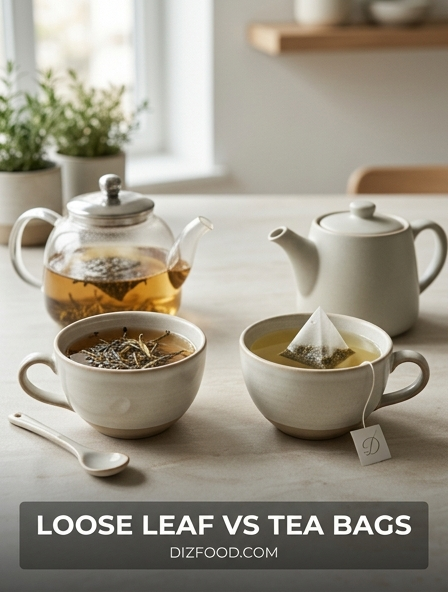
The Fundamental Differences Between Loose Leaf and Tea Bags
In the world of tea, the distinction between loose leaf and bagged varieties begins with the physical integrity of the plant material. Loose leaf tea consists of whole or large pieces of tea leaves that have been harvested, withered, and processed with minimal breakage. Because these leaves remain largely intact, they retain their essential oils and aromatic compounds, which are released slowly during the infusion process. This structural integrity allows for a complex extraction that evolves over several minutes of steeping.
In contrast, standard tea bags typically contain "dust and fannings," which are the smallest particles of tea remaining after higher-quality whole leaves have been sifted out. These fine particles have a high surface-area-to-volume ratio, leading to a rapid release of tannins and color. While this results in a quick brew, it often sacrifices the depth and nuance found in the whole leaf. The primary differences can be summarized by the following factors:
- Expansion: Whole leaves need space to unfurl and hydrate fully to release their flavor, whereas dust in bags requires very little space.
- Processing: Loose leaf involves traditional methods aimed at preserving leaf shape; tea bags are designed for industrial efficiency.
- Varietal Range: Loose leaf offers thousands of single-estate varieties, while bags are often blended for consistency across large batches.
Understanding these fundamental differences is the first step in appreciating why the two methods produce such different sensory results. While both originate from the Camellia sinensis plant, the journey from the farm to your cup follows two distinct paths of quality and intention.
Flavor Profiles and Leaf Quality Comparison
The flavor profile of a tea is directly linked to the concentration of essential oils within the leaf. When tea leaves are crushed or broken into the fannings found in bags, these volatile oils evaporate more quickly, leading to a flatter, more one-dimensional taste. Loose leaf tea, by preserving the leaf's structure, keeps these oils trapped until they are submerged in hot water. This results in a multifaceted flavor profile where one might taste notes of honey, stone fruit, or malt that change as the tea cools.
Quality comparison often highlights the bitterness associated with tea bags. Because fannings have so much surface area exposed to water, they release tannins-the compounds responsible for astringency-almost instantly. This makes it very easy to over-steep a tea bag, resulting in a harsh, bitter cup that often requires milk or sugar to mask. High-quality loose leaf tea is much more forgiving; even if steeped slightly longer than intended, the complexity of the whole leaf tends to balance out the astringency with natural sweetness.
Furthermore, loose leaf tea allows the consumer to see exactly what they are drinking. A visual inspection reveals the color, shape, and health of the leaves. In a tea bag, the contents are hidden, making it difficult to discern the quality of the raw material. This transparency in loose leaf tea ensures that the consumer is getting a premium product rather than the leftovers of the production process.
Evaluating Brewing Convenience and Speed
Convenience is the primary driver for the popularity of the tea bag. In a fast-paced kitchen environment, the ability to drop a pre-measured bag into a mug, add boiling water, and dispose of the bag sixty seconds later is undeniably efficient. There is no need for specialized equipment, measuring spoons, or meticulous cleaning of strainers. For many, this speed makes tea bags the logical choice for early mornings or a busy office setting where time and resources are limited.
Brewing loose leaf tea requires a slightly more involved process, which many enthusiasts view as a positive ritual rather than a chore. However, from a purely utilitarian standpoint, it involves several extra steps:
- Measurement: You must determine the correct ratio of leaves to water, usually around one teaspoon per six ounces.
- Equipment: An infuser, a French press, or a teapot with a built-in strainer is necessary to separate the leaves from the liquid.
- Cleanup: Used leaves must be knocked out of the infuser and the equipment rinsed, which can be messy if not handled over a compost bin.
Despite these steps, modern kitchen gadgets have narrowed the convenience gap. Travel mugs with integrated baskets and "brew-and-go" systems allow loose leaf drinkers to enjoy high-quality tea with nearly the same speed as bagged tea. Ultimately, the choice depends on whether the user prioritizes the three-minute efficiency of a bag or the five-minute ritual of the leaf.
The Environmental Impact of Tea Packaging
Environmental sustainability is an increasingly important factor in kitchen choices. On the surface, tea seems like a low-impact product, but the packaging of tea bags presents significant ecological challenges. Many traditional tea bags are sealed using a small amount of polypropylene plastic to ensure they don't fall apart in boiling water. This means that even if the tea inside is compostable, the bag itself may leave behind microplastics in the soil. Furthermore, many brands individually wrap each bag in plastic or foil envelopes, creating a high volume of single-use waste.
Loose leaf tea is significantly more eco-friendly. It is typically sold in larger tins or compostable paper bags, reducing the amount of packaging per gram of tea. Because there are no individual bags, tags, strings, or staples, the only waste produced after brewing is the organic tea leaves themselves. These leaves are nitrogen-rich and make an excellent addition to garden compost or indoor plant soil.
When evaluating the environmental footprint, one must also consider the supply chain. Loose leaf tea is often sourced from smaller estates with more transparent labor and environmental practices. By contrast, the mass-market tea found in bags is frequently sourced from large-scale industrial plantations where biodiversity may be lower. Choosing loose leaf often aligns better with a zero-waste lifestyle, reducing both landfill contributions and the chemical footprint associated with bleached paper and plastic sealants.
Nutritional Benefits and Antioxidant Levels
Both loose leaf and bagged tea contain polyphenols, specifically catechins and l-theanine, which are celebrated for their health-promoting properties. However, the integrity of the leaf plays a crucial role in how many of these nutrients actually reach your cup. Because tea bags contain broken leaves and dust, the increased surface area leads to faster oxidation during storage. Oxidation gradually degrades the antioxidant content, meaning that a tea bag that has sat on a grocery shelf for six months may have significantly fewer active nutrients than a fresh tin of loose leaf.
The "room to bloom" factor also impacts nutritional extraction. For the water to pull out the vitamins and minerals effectively, it needs to circulate around the leaf. In a cramped, standard-sized tea bag, the leaves are often too packed to allow for full water circulation, leading to an incomplete extraction of the beneficial compounds. Loose leaf tea, when brewed in a spacious infuser, allows the leaves to fully expand and interact with the water, maximizing the release of antioxidants.
Additionally, some studies suggest that the materials used in tea bags might introduce unwanted elements. High-end "silken" tea bags, which are often made of nylon or PET plastic, can release billions of microplastic particles into the hot water. By choosing loose leaf, you avoid the potential ingestion of these particles while ensuring you are getting the most potent dose of the tea's natural health benefits.
Cost Per Cup Analysis for Both Methods
The perception that loose leaf tea is more expensive than tea bags is a common misconception when looking at the "cost per cup" rather than the "cost per box." While a tin of premium loose leaf tea might have a higher upfront price point than a box of 20 tea bags, the value is often found in the longevity and quality of the product. Many loose leaf varieties, particularly oolongs and pu-erhs, are designed to be steeped multiple times, with each infusion offering a slightly different flavor profile.
| Feature | Standard Tea Bags | Premium Loose Leaf |
|---|---|---|
| Initial Cost | Low ($4 - $8 per box) | Moderate ($12 - $25 per tin) |
| Servings per unit | 1 steep per bag | 2 to 5 steeps per serving |
| Cost Per Cup | $0.20 - $0.40 | $0.10 - $0.30 |
When you account for the fact that 100 grams of loose leaf tea can yield 30 to 50 servings, and many of those servings can be re-steeped two or three times, the cost per cup often drops below that of a mid-to-high-range tea bag. Additionally, with loose leaf, you are paying for the tea itself, whereas with bags, a significant portion of the price covers the manufacturing of the bags, the strings, the tags, and the individual packaging. For the budget-conscious tea drinker who values quality, loose leaf provides a superior return on investment.
Understanding Tea Grades Fannings Versus Whole Leaf
The tea industry utilizes a complex grading system to categorize leaves based on their size and condition. At the top of this hierarchy is "Whole Leaf" tea, which includes grades like SFTGFOP (Special Finest Tippy Golden Flowery Orange Pekoe). These grades represent the youngest buds and most intact leaves, which offer the most refined and nuanced flavors. In the kitchen, these are the leaves that will provide the most luxurious experience, characterized by a smooth mouthfeel and lack of harshness.
Below whole leaf are "Broken Leaf" grades, which are still high quality but produce a darker, stronger liquor more quickly. However, the majority of the world's tea bags are filled with "Fannings" and "Dust." These are essentially the crumbs left behind at the end of the sorting process. While fannings are not inherently "bad," they are designed for a specific purpose: to provide color and strength instantly. They lack the structural complexity to offer a multi-layered tasting experience.
Understanding these grades helps consumers make informed purchasing decisions. If you see a tea bag advertised as "Orange Pekoe," it technically refers to the leaf grade rather than a flavor. However, if that leaf has been crushed into dust to fit into a bag, the benefits of that grade are largely lost. Truly experiencing a specific grade of tea requires the whole leaf format, where the physical characteristics of the pluck-such as the presence of golden tips-are visible and contribute to the final brew.
Storage Requirements and Freshness Longevity
Proper storage is essential for maintaining the integrity of tea, regardless of the format. Tea has four main enemies: light, heat, moisture, and odors. Because tea is hygroscopic, it easily absorbs moisture and scents from the surrounding environment, which can quickly ruin a delicate batch. Loose leaf tea is typically sold in airtight, opaque tins or heavy-duty resealable pouches, which are ideal for long-term storage. When kept in a cool, dark cupboard, loose leaf tea can remain fresh for six months to a year, or even longer for fermented varieties like pu-erh.
Tea bags, particularly those sold in cardboard boxes without individual foil wrapping, are much more susceptible to going stale. The cardboard is porous, allowing air and kitchen smells (like spices or coffee) to penetrate the tea. Because the tea inside is already broken into small particles with a high surface area, it loses its flavor and aroma much faster than whole leaves. A box of tea bags left open in a pantry will often taste like "dust" within just a few weeks.
To maximize freshness in your kitchen, follow these guidelines:
- Store tea in a dedicated cupboard away from the stove to avoid heat.
- Use airtight containers; glass jars are only acceptable if they are kept in a completely dark drawer.
- Avoid storing tea near strong-smelling items like garlic or onions.
By respecting the storage needs of the leaf, you ensure that every cup tastes as the producer intended.
The Sensory Experience of Traditional Brewing
The act of brewing loose leaf tea engages all five senses in a way that a tea bag cannot. Visually, there is the beauty of the dry leaves-their shapes ranging from tightly rolled pearls to long, needle-like spears. Once water is added, the "agony of the leaves" begins, a poetic term for the way the leaves unfurl and dance in the water. Watching the water change color from clear to vibrant greens, golds, or deep reds provides a visual indicator of the tea's strength and readiness.
Auditory and tactile elements also play a role; the sound of water hitting the leaves and the feel of a ceramic teapot contribute to a sense of mindfulness. The aroma of loose leaf tea is significantly more potent, filling the room with complex scents that change from the dry leaf to the wet leaf and finally to the liquor itself. This olfactory experience is a major part of the "flavor" we perceive when drinking.
Finally, the taste and mouthfeel of whole leaf tea are distinct. It often possesses a "body" or "thickness" that is missing from the thin, astringent liquid produced by tea bags. This sensory richness turns a simple caffeine fix into a culinary event. For many, the kitchen becomes a place of brief meditation during the few minutes it takes to brew a pot of loose leaf tea, providing a much-needed break from the digital noise of modern life.
Making the Right Choice for Your Lifestyle
Ultimately, the choice between loose leaf and tea bags depends on your personal priorities, lifestyle, and the specific moment in your day. Neither is objectively "wrong," but they serve different functions within the kitchen. A well-stocked pantry often includes both to cover various scenarios. For the morning rush when you simply need a quick, reliable jolt of caffeine before heading out the door, a high-quality tea bag is a practical tool. It provides a consistent, strong cup with zero cleanup time.
However, for moments of relaxation, weekend brunches, or when you wish to explore the vast world of tea origins and processing styles, loose leaf is the superior choice. It offers a level of quality and environmental responsibility that bags cannot match. If you are new to loose leaf, you might start with a simple stainless steel basket infuser that fits inside your favorite mug, bridging the gap between convenience and quality.
Consider the following when deciding:
- Time: Do you have 5-10 minutes for a ritual, or only 2 minutes for a quick fix?
- Flavor: Are you looking for subtle, complex notes or a bold, consistent strength?
- Values: Is reducing plastic waste and supporting sustainable farming a priority for you?
By understanding the nuances of both methods, you can tailor your tea-drinking habits to fit your needs, ensuring that every cup you brew is satisfying and well-suited to your current environment.

Comments