
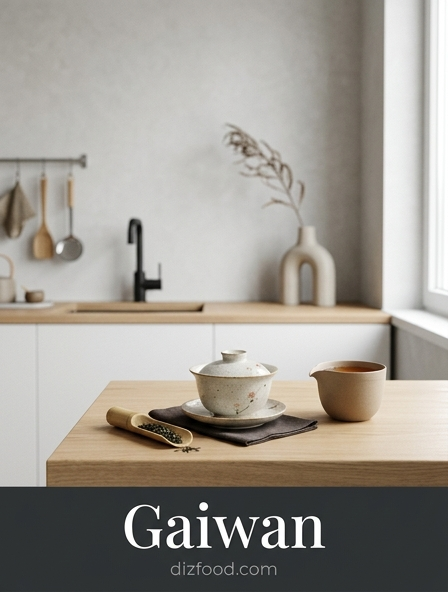
The Design of the Gaiwan
The gaiwan, often referred to as the "lidded bowl," is a cornerstone of Chinese tea culture, embodying a philosophy of simplicity and efficiency. Its design consists of three distinct components that work in harmony to facilitate the perfect brew. The saucer provides stability and protects the user's hands from heat, while the bowl acts as the steeping vessel, and the lid serves as both a cover and a filter. This triad represents the traditional cosmic hierarchy: the saucer as the earth, the lid as the sky, and the bowl as humanity.
- The Lid (Gai): Used to stir leaves, concentrate aroma, and strain the liquid during pouring.
- The Bowl (Wan): The primary vessel where leaves unfurl and interact with water.
- The Saucer (Tuo): Prevents spills and insulates the table from thermal transfer.
Unlike a teapot with a fixed spout, the gaiwan allows for an adjustable gap between the lid and the rim. This flexibility gives the brewer total control over the flow rate and the filtration of tea leaves. Its minimalist construction ensures that it is easy to clean, making it a practical and elegant tool for daily use in any kitchen setting.
Precision Temperature Control
Mastering temperature is essential for extracting the nuanced flavors of premium tea without introducing unwanted bitterness. The gaiwan excels in this regard due to its wide opening and specific material properties. Unlike heavy cast iron or thick ceramic pots that retain heat for extended periods, a standard porcelain gaiwan allows the brewer to monitor and adjust the water temperature rapidly. This is particularly vital when handling delicate green or white teas that can easily scald in a high-heat environment.
| Tea Type | Ideal Temp (°C) | Gaiwan Benefit |
|---|---|---|
| Green Tea | 75-80 | Fast cooling prevents astringency |
| Oolong | 90-95 | Wide rim allows excess steam to escape |
| Black Tea | 95-100 | Lid retains sufficient heat for oxidation |
By tilting the lid slightly during the steep, one can release excess steam, ensuring that the water does not "cook" the leaves. This level of precision allows for a more vibrant cup, as the user can react in real-time to the tea's behavior. The ability to pour quickly also means the leaves do not sit in hot water longer than intended, preserving their integrity through multiple rounds of brewing.
Capturing Complex Tea Aromas
One of the most sensory-rich aspects of using a gaiwan is the ability to capture and appreciate the "fragrance of the lid." Because the lid fits loosely within the rim, it becomes coated with the volatile aromatic compounds released during the steeping process. As the tea steeps, steam rises and condenses on the underside of the lid, concentrating the scent. Experienced practitioners often lift the lid to their nose before pouring, using the aroma to gauge the progress of the infusion and the quality of the leaf.
- Initial Aroma: The scent of dry leaves after being placed in a pre-warmed gaiwan.
- Wet Leaf Aroma: The transformation of scent immediately after the first rinse.
- Lid Fragrance: The concentrated essence captured on the porcelain during the steep.
This direct engagement with the tea's olfactory profile is difficult to achieve with closed teapots. The wide aperture of the bowl also allows the aroma to disperse more freely into the immediate environment, creating an immersive experience. For aromatic teas like Dancong or Jasmine, the gaiwan acts as an olfactory amplifier, revealing layers of floral and roasted notes that might otherwise remain hidden.
Visualizing Oolong Leaf Expansion
Brewing tea in a gaiwan is as much a visual art as it is a culinary one. The open-top design provides an unobstructed view of the tea leaves as they interact with water. This visibility is particularly important for Oolong teas, which are often tightly rolled into small pearls or twisted into long strips. Watching these leaves slowly unfurl is not only aesthetically pleasing but also serves as a crucial indicator of the tea's state of extraction and overall hydration level.
- The Awakening: Rolled leaves begin to loosen and expand during the initial rinse.
- The Expansion: Leaves swell and occupy significantly more volume in the bowl.
- The Full Bloom: By the third or fourth infusion, the leaves are fully open and supple.
By observing the color and shape of the leaves, the brewer can determine if the water was too hot or if the steeping time needs adjustment. For instance, if the leaves appear dull or limp, the heat might be too high. Conversely, if they remain tightly shut, more time or higher heat may be required. This visual feedback loop turns the kitchen counter into a laboratory for sensory exploration.
Porcelain Neutrality and Flavor Purity
In the world of tea connoisseurship, the material of the vessel is paramount. While unglazed clay pots like Yixing are prized for their ability to absorb flavors over time, porcelain gaiwans are celebrated for their absolute neutrality. Because porcelain is non-porous and finished with a smooth glaze, it does not interact chemically with the tea or retain oils from previous sessions. This makes the gaiwan the gold standard for evaluating new teas, as it presents the flavor profile exactly as it is.
| Material | Porosity | Impact on Flavor |
|---|---|---|
| Porcelain | Non-porous | Zero interference; presents pure taste |
| Yixing Clay | Porous | Mutes bitterness; rounds out the body |
| Glass | Non-porous | Neutral; allows for high heat loss |
This purity is essential when switching between different types of tea in a single sitting. One can brew a pungent, smoky Lapsang Souchong and then, after a quick rinse, move to a delicate Silver Needle without any flavor carryover. For a professional or home enthusiast, the gaiwan ensures that the unique terroir and processing of each leaf are the only things being tasted, providing an honest and transparent brewing experience.
Mastering Multiple Short Infusions
The gaiwan is the primary tool for the Gongfu style of brewing, which emphasizes a high leaf-to-water ratio and multiple short infusions. Instead of steeping a small amount of tea for several minutes, the gaiwan allows for 10 to 30-second bursts of extraction. This method reveals the "story" of the tea, as the flavor profile evolves significantly from the first pour to the tenth. The small capacity of the gaiwan ensures that the tea is always fresh and served at the optimal temperature.
- First Steep: Often light and aromatic, focusing on volatile high notes.
- Middle Steeps: The body develops, revealing the core flavor profile and texture.
- Late Steeps: Lingering sweetness remains while the heavier tannins begin to fade.
Achieving this requires a vessel that can be emptied almost instantly. The gaiwan's lid can be adjusted to create a wide gap, allowing the liquor to pour out in seconds into a fairness cup. This speed prevents the leaves from over-extracting in the residual water. By controlling these short intervals, the brewer can micro-manage the balance between sweetness and astringency throughout the entire session.
Maximizing Aromatic Oolong Profiles
Aromatic Oolongs, such as Tieguanyin or Phoenix Dancong, require a specific brewing environment to express their complex floral and fruity bouquets. The gaiwan is uniquely suited for this task because it does not "trap" the aromatics in the same way a deep, narrow teapot might. The shallow bowl and wide surface area allow the volatile oils to rise quickly. When the lid is used to agitate the water slightly, it helps release these aromatics into the steam, which can then be concentrated under the lid.
- Pre-heat: Thoroughly warm the vessel to prime the porcelain for aromatic release.
- Awaken: Perform a quick flash-rinse to open the leaf pores and release the scent.
- Control: Infuse for short durations to prevent bitter compounds from masking the aroma.
Because Oolongs can be quite robust, the ability to pour the tea out quickly is essential. A delay of even five seconds can turn a fragrant Oolong into something overly bitter. The gaiwan provides the dexterity needed to hit the "sweet spot" of extraction. For those who prioritize the olfactory experience, the gaiwan is an indispensable tool in the kitchen for exploring complex perfumes.
Traditional Gongfu Brewing Advantages
Traditional Gongfu brewing is centered on the concept of "skill" or "effort" applied to tea. The gaiwan is the quintessential instrument for this practice because it offers unparalleled control over every variable of the brewing process. Unlike automated machines or Western-style pots, the gaiwan requires the brewer's full attention and manual dexterity. This manual involvement allows for an intuitive connection with the tea leaves, where the brewer can adjust their technique based on the steam, the scent, and the visual appearance of the brew.
- Control: Total authority over water flow and filtration speed.
- Inspection: Easy access to inspect leaves between infusions for quality control.
- Minimalism: A design that reduces the risk of flavor contamination and mineral buildup.
Beyond technical benefits, there is an inherent elegance and meditative quality to using a gaiwan. The fluid motions of pouring and the rhythmic cycles of steeping create a focused environment. In a busy kitchen, this ritual provides a moment of calm. Furthermore, the gaiwan's compact size makes it highly portable and easy to store, fitting perfectly into the minimalist aesthetic of modern tea enthusiasts.
Comparing Gaiwans to Western Teapots
Choosing between a gaiwan and a Western teapot often depends on the type of tea and the desired experience. Western-style brewing typically involves a lower leaf-to-water ratio and a single, long infusion. This method is convenient for large volumes but often misses the nuances of high-quality whole-leaf teas. The gaiwan, by contrast, is designed for concentration and iteration. It is a tool for exploration rather than just simple consumption, allowing for deep dives into a tea's character.
| Feature | Gaiwan | Western Teapot |
|---|---|---|
| Brewing Style | High leaf, many infusions | Low leaf, single infusion |
| Flavor Profile | Dynamic and evolving | Consistent and mellow |
| Maintenance | Easy to clean; no spout | Harder to reach corners |
While a teapot is excellent for serving a group or for a quick breakfast cup, the gaiwan is superior for technical tasting. One of the most practical kitchen advantages of the gaiwan is its ease of cleaning. Without a spout or handle where tannins and mineral deposits can hide, a simple rinse is usually sufficient. This hygiene, combined with the ability to appreciate the tea's evolution, makes the gaiwan a more versatile tool for the serious hobbyist.
Heat Dissipation for Delicate Leaves
Managing heat is particularly difficult when brewing delicate green or white teas, which are susceptible to "burning" if kept in a closed, high-temperature environment. The gaiwan's open design is a natural solution to this problem. Because the lid is not airtight, heat can dissipate much faster than in a traditional teapot. This ensures that the water temperature drops slightly during the steeping process, protecting the fragile amino acids that provide sweetness and preventing the release of harsh tannins.
- Lid Removal: Leave the lid off completely for extra-delicate teas to maximize cooling.
- Side Pouring: Pour water along the inner walls to avoid direct thermal shock to the leaves.
- Wall Thickness: Use thin-walled porcelain gaiwans to encourage rapid heat transfer away from the water.
This characteristic allows the brewer to let the tea "breathe." If the leaves look like they are overcooking or turning yellow prematurely, simply removing the lid for a few seconds can save the batch. This responsiveness is what makes the gaiwan the preferred choice for early spring harvests. In the kitchen, the gaiwan acts as a manual thermal regulator, giving the user the power to protect sensitive leaves from heat damage.


Comments